

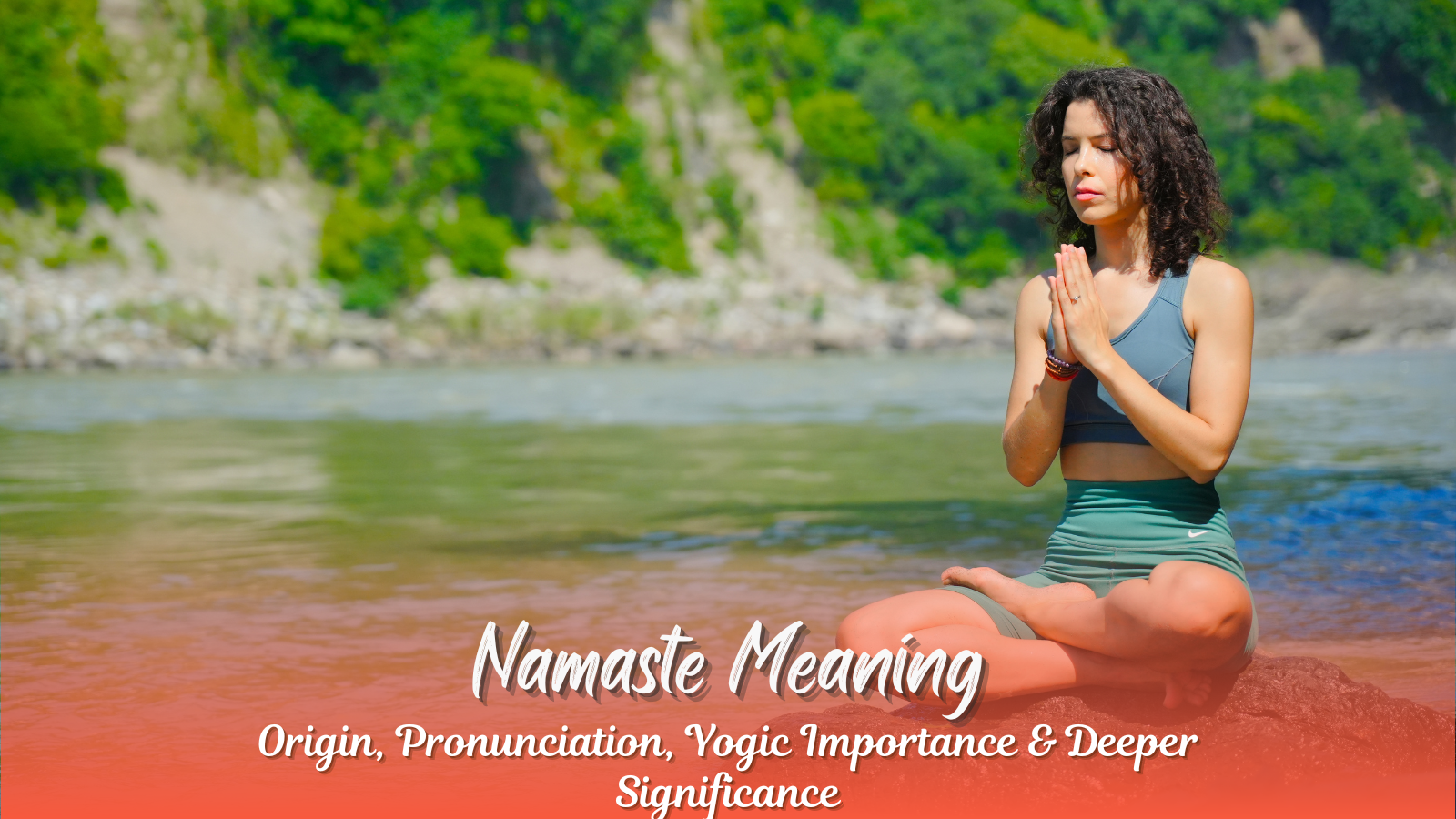
Namaste is one of the most recognized and sacred gestures in Indian culture. It is more than a greeting—it is an acknowledgment of the divine essence in every being. In the yoga tradition, Namaste is a symbol of humility, interconnectedness, and conscious awareness. Whether used in the yoga shala, during meditation, in temples, or in everyday interactions, this gesture embodies respect, gratitude, and unity.
At Gurukul Yogashala, we begin and end every yoga class with Namaste—not as a ritual, but as a profound reminder of yogic values. The gesture serves as a bridge between teacher and student, between self and the universe, between the physical and the spiritual.
In this detailed exploration, we dive into the meaning, pronunciation, symbolism, and yogic effects of Namaste. This article is crafted based on our decades of experience as a traditional yoga school in Rishikesh, honoring both classical teachings and experiential wisdom.
What is the Meaning of Namaste
Namaste Symbol Meaning comes from the Sanskrit words:
- “Namaḥ” → bow, adoration
- “Te” → to you
Meaning: “I bow to the divine in you.”
“The divine light in me acknowledges and respects the divine light in you.”
It is performed with Anjali Mudra (palms together at the heart center), which expresses:
- humility
- gratitude
- unity
- connection between two souls
Deeper Yogic Meaning:
In yogic philosophy, Namaste signifies the recognition that all beings are interconnected. When you say Namaste from the heart, you acknowledge the sacredness, goodness, and consciousness in the other person.
The gesture formed while saying Namaste is called Anjali Mudra, where palms join in front of the heart center (Anahata Chakra). This mudra is an expression of reverence, balance, and unity.
✔ How to Perform Namaste Correctly
- Sit or stand comfortably with an erect spine.
- Bring both palms together.
- Place the thumbs gently against the sternum.
- Keep fingers pointing upward.
- Close eyes if guided.
- Whisper or internally say: NAH-muh-stay.
When performed with mindfulness, this simple gesture connects the practitioner to inner stillness, devotion, and self-awareness.
Symbolism and Spiritual Implications
Namaste is not just a physical gesture; it symbolizes profound yogic principles:
- Union of Body, Mind & Soul
Bringing palms together balances the masculine and feminine energies (Shiva & Shakti).
- Alignment of the Brain Hemispheres
The gesture integrates both hemispheres, enhancing coordination, clarity, and emotional balance.
- Activation of the Heart Chakra
When the thumbs gently touch Anahata Chakra, the heart opens, radiating compassion and love.
- Harmonizing Ida & Pingala Nadis
Joining the hands symbolizes the unification of the lunar and solar energy channels, creating inner harmony.
- Transmission of Energy
In yogic philosophy, the palms direct pranic flow. Namaste Meaning Yoga creates an energetic loop that stabilizes your aura.
At Gurukul Yogashala, we teach these subtle meanings to help students transform Namaste from a greeting into a spiritual experience.
Pronunciation and Ancient Roots
Namaste is pronounced as:
NAH-muh-stay
Though used widely in India, its origin is deeply rooted in Vedic literature and yogic scriptures. Some ancient interpretations even link the gesture to the sacred vibration of Om, representing creation and universal consciousness.
Yogic Context of Namaste
In yoga, Namaste symbolizes the acknowledgment of the divine light within each individual. Teachers use it to set the tone of the class—invoking presence, humility, and connectedness.
According to yogic philosophy:
“Yoga is the union of individual consciousness with universal consciousness.”
Namaste is the gesture that expresses this union.
The moment palms meet, the practitioner becomes centered, aware, and receptive. In classrooms at Gurukul Yogashala, this gesture builds a shared intention between teacher and student.
Effects of Namaste During Different Stages of Yoga Practice
Namaste is not limited to greetings. It plays a role across various stages of yoga practice, each with its own significance.
1. At the Beginning of Practice: Setting Intention
Performing Namaste before beginning asanas:
- Aligns mental and physical energies
- Helps the nervous system prepare for practice
- Encourages grounding and focus
- Activates the parasympathetic nervous system
It creates an entry point into the “yogic state,” shifting the practitioner from the external world toward internal awareness.
2. During Yoga Poses: Deepening Presence
Namaste (Anjali Mudra) is used in several foundational asanas:
- Tadasana (Mountain Pose)
- Vrikshasana (Tree Pose)
- Vajrasana (Thunderbolt Pose)
- Padmasana (Lotus Pose)
When performed within a posture, Namaste:
✔ Stimulates subtle energy centers
✔ Helps maintain spinal alignment
✔ Enhances concentration & balance
✔ Deepens breath awareness
This helps practitioners transition from physical exertion to inner stillness.
3. At the End of Practice: Integration & Calm
After completing asanas, Namaste:
- Normalizes breath and heart rate
- Calms the nervous system
- Balances circulating prana
- Encourages gratitude for the body and teacher
- Marks the integration of practice
This final gesture gently brings the practitioner out of the yoga journey and back into waking consciousness.
At Gurukul Yogashala, we encourage students to stay in the Namaste mudra for a few breaths, allowing the benefits of practice to settle deeply.
Namaste & Body Placement: Different Positions, Different Effects
Namaste can be performed in front of different chakras, each with unique effects:
1. In front of the Forehead (Ajna Chakra)
- Enhances intuition
- Strengthens inner guidance
- Supports awareness and decision-making
2. In front of the Throat (Vishuddha Chakra)
- Improves communication
- Enhances clarity in speech
- Opens self-expression
3. In front of the Heart (Anahata Chakra)
- Develops compassion
- Strengthens emotional stability
- Harmonizes relationships
At Gurukul Yogashala, students learn to explore these subtle variations to deepen their yogic experience.
Applying the Meaning of Namaste in Daily Life
Namaste is not confined to yoga mats or spiritual gatherings—it is a lifestyle.
When applied daily:
✔ It cultivates humility
✔ Reduces ego-driven reactions
✔ Enhances mindful communication
✔ Strengthens emotional intelligence
✔ Encourages compassion & unity
Namaste helps practitioners recognize divinity in others and themselves, transforming relationships and inner dialogue.
You don’t have to bow to everyone externally—but cultivating the attitude of Namaste leads to greater inner peace, balance, and emotional grounding.
Namaste at Gurukul Yogashala – A Living Tradition
At our traditional yoga school in Rishikesh, Namaste is an embodiment of our teaching philosophy. Every class begins and ends with this sacred gesture. It:
- Honors the lineage of yoga
- Connects teacher and student
- Establishes sacredness in each session
- Reinforces yogic values of respect, gratitude, and oneness
Our students learn not only the physical gesture but also the emotional and spiritual depth behind it.
Namaste is not performed out of habit—it is performed with full awareness, the way it has been practiced by sages, yogis, and teachers for thousands of years.
FAQs
1. What does Namaste truly mean in yoga?
Namaste means “I bow to the divine in you.” In yoga, it symbolizes respect, humility, and the acknowledgment of shared universal consciousness.
2. Why do yoga teachers start and end class with Namaste?
Because Namaste establishes connection, sets intention, cultivates gratitude, and helps students transition into and out of yogic awareness.
3. Is Namaste the same as Anjali Mudra?
Anjali Mudra is the hand gesture; Namaste is the verbal expression accompanying it. Together, they create a harmonious greeting.
4. What is the spiritual significance of Namaste?
It activates the heart chakra, unites energy channels, quiets the ego, and promotes compassion and unity.
5. How should Namaste be pronounced?
It is correctly pronounced as NAH-muh-stay.
6. Can Namaste be used outside yoga class?
Absolutely. Namaste can be used in daily life to express respect, gratitude, and mindful communication.
7. Does Namaste have healing benefits?
Yes. It reduces stress, improves focus, balances energy, and calms the nervous system.
8. What is the connection between Namaste and chakras?
Depending on palm placement (heart, throat, third eye), Namaste activates different chakras and influences emotional and spiritual states.
9. Why is Namaste significant in Indian culture?
It is a timeless gesture symbolizing unity, humility, and reverence, rooted deeply in Vedic tradition.
10. Where can I learn the deeper meaning of Namaste?
At Gurukul Yogashala, students learn traditional yogic philosophy, including the significance of Namaste, as part of Yoga Teacher Training in Rishikesh.
Conclusion
Namaste is far more than a gesture—it is a living philosophy that bridges the external world with inner consciousness. Rooted deeply in yogic traditions, it teaches humility, compassion, awareness, and unity. When practiced with intention, Namaste harmonizes the mind, activates the heart chakra, and reconnects the practitioner with the essence of yoga itself.
At Gurukul Yogashala, we honor Namaste as an integral part of our lineage and teachings. As a traditional yoga school in Rishikesh and one of the best yoga school in India, we ensure that students not only learn asanas but also the spiritual foundations that make yoga a complete lifestyle. Whether you join our 200 Hour Yoga Teacher Training in Rishikesh, advanced courses, or daily asana sessions, Namaste becomes a tool for mindfulness, respect, and self-elevation.
Choosing Gurukul Yogashala means learning the authentic meaning of yoga—not just the physical but the emotional, philosophical, and spiritual dimensions. Here, the gesture of Namaste becomes a heartfelt reminder that the light in me honors the light in you, creating a sacred atmosphere among students and teachers.
As you carry Namaste into your daily life, let it guide your thoughts, interactions, and inner journey. With continuous practice and awareness, this simple gesture transforms into a powerful spiritual discipline—one that embodies peace, connection, and universal love.
Namaste from all of us at Gurukul Yogashala—your home for authentic and traditional yoga in Rishikesh.