
Have you ever felt stuck – physically, emotionally, or mentally – but have struggled to explain why? Maybe you went to a yoga class and the instructor mentioned “the chakras,” and you nodded your head along but were secretly asking yourself, “What the heck are the chakras?!”
You’re not by yourself if that’s how you feel. The chakras are probably the most discussed reference in yoga and wellness, yet they also continue to be one of the most misunderstood ideas out there. However, once you truly comprehend the chakras – meaning you get what they are and what they represent – they’ll no longer appear to be an abstract notion but will instead become one that is uniquely yours.
The purpose of this guide is to take you step-by-step through each of the seven chakra symbols, explain to you what they represent, how they affect your energy system, and ultimately, show you ways you can incorporate the chakras into your everyday life.
What Are Chakras?
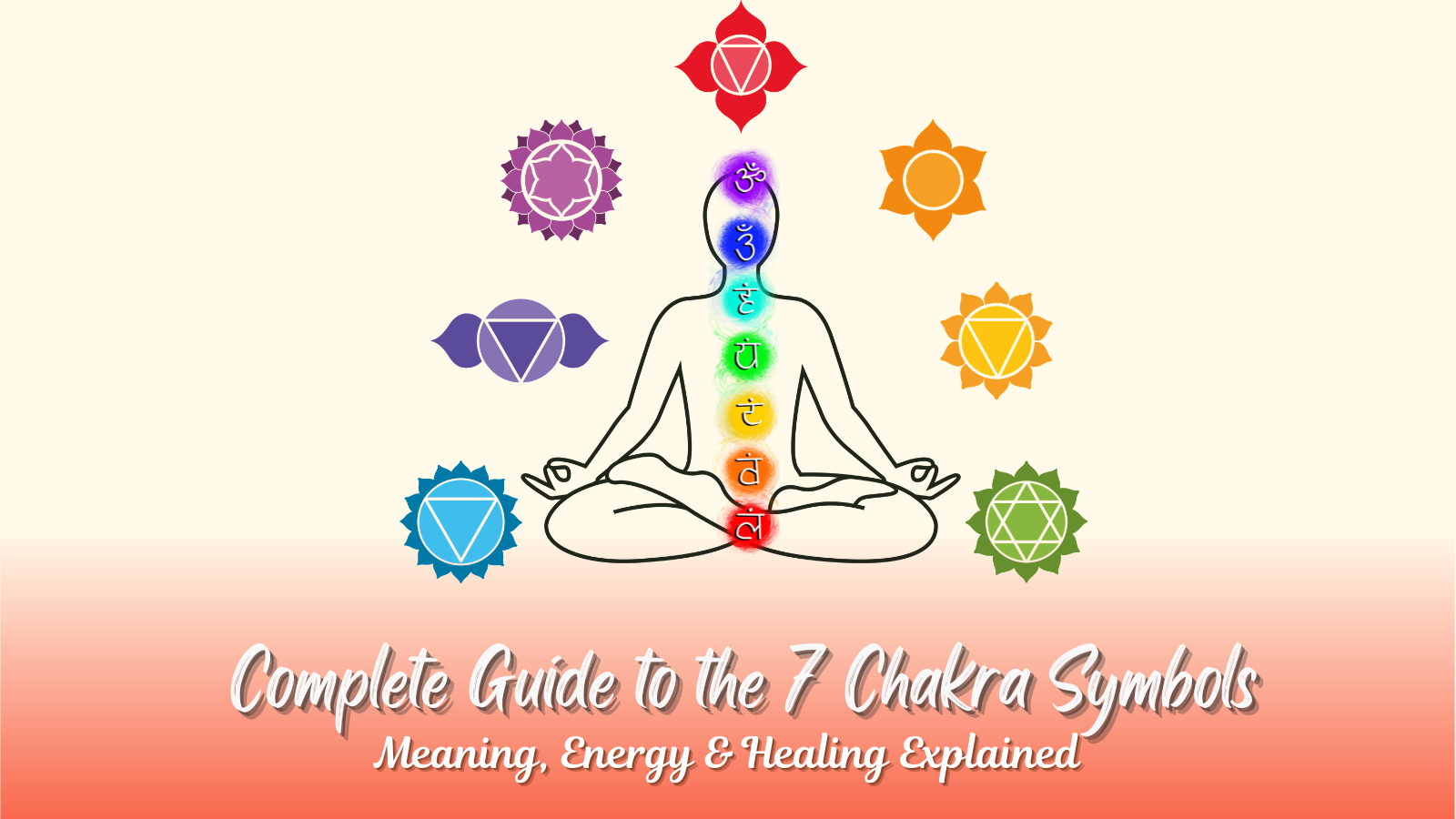
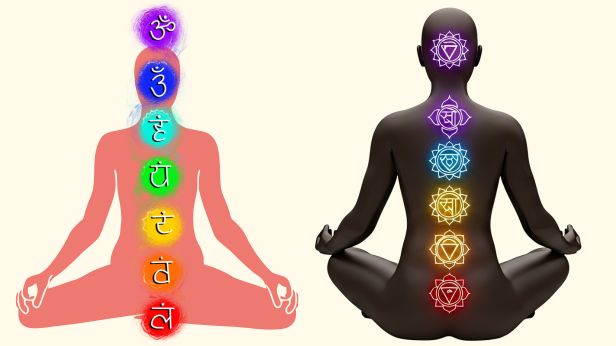
The term “chakra” is derived from the word “chakra” in the ancient language of Sanskrit, meaning “wheel” or “cycle.” Chakras are the rotating centers or vortices of power (or energy) along the axis of the body – from the base of the spinal column (root) to the top of the head (crown). The chakra system contains 7 major energy centers with their own corresponding emotional, physical, and sensory properties.
While most people think of chakras as a new concept that has only recently emerged within our modern society, in fact, the chakra system has been utilized in some form for over 3,000 years as part of India’s ancient spiritual philosophies (the Vedas, the Upanishads).
When your energies (chakras) are open and balanced, your life force (qi, prana, ether, etc.) flows smoothly through both your physical and subtle bodies; you will experience health and happiness as a result of having a balanced system of energy flowing through both your physical body and your subtle body. Conversely, if one or more of your chakras is either blocked or overly active, there will be a disruption in the flow of energy throughout your body (i.e. you may feel anxious, suffer from persistent physical pain, have difficulties in relationships, lack self-confidence, or feel disconnected from who you are).
Let’s connect!
1. Muladhara – The Root Chakra
Location: Base of the spine
Color: Red
Symbol: A four-petalled lotus with a square and downward-pointing triangle at the center
The root chakras is your foundation and represents your sense of safety, stability, belonging, and basic needs for survival (food, shelter, financial security, etc.), and the assurance that you have the right to exist and the space to take up in this world.
When you are in balance, you will feel grounded, secure, and calm (even in times of uncertainty). When you are blocked, fear, anxiety, and an overall feeling of instability will most likely prevail.
Signs of imbalance: chronic anxiety, financial issues, pain in the lower back, and feeling disconnected from the body.
How to activate it: through foot contact with the earth, grounding in yoga positions, using the seed mantra LAM, and using a red stick are good ways to balance your root chakra.
2. Svadhisthana – The Sacral Chakra
Location: Lower abdomen, just below the navel
Color: Orange
Symbol: A six-petalled lotus with a crescent moon inside
This chakra is responsible for your creativity, pleasure, emotions and relationships. It governs the way in which you connect to others, experience joy, and relate to your own feelings and desires.
When the sacral chakra is open and balanced, your life feels ‘juicy;’ you create freely, connect easily with others and emotionally flow. Conversely, when it’s blocked you may feel emotionally numb, creatively stuck or experience mood swings between extreme ends of the emotional spectrum.
Signs of imbalance: low libido; creative blocks; emotional rigidity; tightness in your hips; or feeling guilty about enjoying pleasure.
How to activate it: doing hip-opening poses like Baddha Konasana; dancing; expressing your creativity; using water; chanting the seed mantra for the sacral chakra which is “VAM”; and surrounding yourself with orange.
3. Manipura – The Solar Plexus Chakra
Location: Upper abdomen, stomach area
Color: Yellow
Symbol: A ten-petalled lotus with a downward-pointing triangle
Manipura means ‘place for storing jewelry’. It is where you find your personal strength (will), self-belief (confidence), discipline, and sense of self. It is the heat in your belly (inner fire).
When it is in balance, you can pursue your goals with clarity and confidence. However, if it is in a depleted state, you may feel powerless, overly controlled by others or become domineering and controlling.
Signs of imbalance: low self-esteem, digestive problems, excessive desire to please others or controlling/aggressive behaviours.
How to activate it: Trying yoga poses focusing on strengthening your core, complete and active Kapalabhati breathing, chanting ‘RAM’ as a seed mantra, eating foods that are yellow (e.g., bananas, turmeric), and getting outside in natural sunlight.
4. Anahata – The Heart Chakra
Location: Center of the chest
Color: Green
Symbol: A twelve-petalled lotus with two overlapping triangles forming a six-pointed star
The term “Anahata” means “unstruck sound,” which denotes the creation of sound before all things have been created.
The Heart Chakra is the gateway between the three lower: 1) Base, 2) Sacral; and 3) Solar Plexus chakras and the three upper: 4) Throat; 5) Third Eye; and 6) Crown chakras. When the Heart Chakra functions at its highest potential, you are able to love fully (self and others) without becoming lost in the process. When it becomes blocked, it may feel like a wall around the chest, an inability to trust, or anguish that will not move.
Signs of imbalance: feeling lonely; having difficulty forgiving; becoming co-dependent on others for love; tightness in the chest and shallow breathing.
How to activate it: performing back-starting/heart-opening poses, such as Ustrasana and Bhujangasana, meditating using “loving-kindness” techniques, using YAM as a seed sound; and spending time outdoors in places that are rich in green plants and trees
5. Vishuddha – The Throat Chakra
Location: Throat
Color: Blue
Symbol: A sixteen-petalled lotus with a downward-pointing triangle and circle inside
The concept of Vishuddha means “purity,” representing the expression of one’s truthful communication with self and others while also being able to listen fully during discussions or conversations.
When your throat chakra is open, you have the ability to express yourself with genuine words and emotions. You are capable of following through with your convictions, saying “yes” to what you truly want, and remaining silent when you have no desire to speak.
Signs of imbalance: difficulty speaking your truth, feeling fear of being judged, and talking too much or too little.
How to activate it: you can chant, journal, perform Jalandhara Bandha (throat lock), use the seed mantra “HAM,” or talk openly and truthfully.
6. Ajna – The Third Eye Chakra
Location: Between the eyebrows
Color: Indigo
Symbol: A two-petalled lotus with an inverted triangle and the Om symbol inside
This chakra represents the concept of “command” and “perception.” In addition to being associated with intuition, inner wisdom, clarity, and insight, this is also your ability to understand those things that are beyond the capability of the logical mind; that still small voice within that you often refer to as intuition and usually leads you to a correct conclusion.
When balanced and functioning correctly, you are able to trust your intuition, see things as they really are, and feel confident in your own decisions based on solid intuition. When you are in a state of imbalance, typically you may find yourself confused, overthinking everything, and unable to trust what your inner voice is telling you.
Signs of imbalance: headaches, indecision, inability to focus, ignoring gut feelings and/or relying too heavily on the opinions of other people.
How to activate it: engage in trataka (candle gazing), practice silent meditation, work with yoga nidra, use the seed sound mantra (OM), and limit their use of electronic devices to create space for yourself mentally.
7. Sahasrara – The Crown Chakra
Location: Top of the head
Color: Violet or white
Symbol: A thousand-petalled lotus
The Sahasrara Chakra represents pure consciousness, spiritual connection, and a sense of being part of something larger than yourself. While it is not religion-based, it is the feeling that life is meaningful and that you are not separate from it.
When your Sahasrara is open, it provides you with a sense of peace that does not rely on external conditions. When your Sahasrara is blocked, you may feel that there is no meaning in your life, that you are disconnected, or that your life is mechanical.
Signs of imbalance: Spiritual disconnection, a cynical outlook on life, feeling empty all the time, or having an excessive attachment to material possessions.
How to activate it: Deep meditation, silence, spending time outdoors, using breathwork techniques, and practicing surrender – letting go of control over everything
Going Deeper – Learning Chakras Through Yoga Teacher Training
Gaining information about chakras is nice, but in reality, real knowledge of chakras, experiencing them yourself, teaching them to others, involves a different level of working with the information.
This is precisely the kind of knowledge that can be gained during a residential yoga teacher training in Rishikesh. Because not only is it taught through reading and studying, but also by way of experience through the daily yoga and meditation practice and the energy of one of the most spiritual cities in the world.
Chakra philosophy, pranayama and meditation are integrated into all levels of training at the Gurukul Yogashala. The 200 hour yoga teacher training in Rishikesh gives you the complete system of chakras along with asana, anatomy and yogic philosophy – promoting a well-rounded and strong grounding. For those interested in delving further into energy anatomy, subtle body work and the all-encompassing yogic tradition the 200 hour yoga teacher training in Rishikesh leads to the 300 hour yoga teacher training in Rishikesh.
If you are destined to walk the entire professional path with all the trimmings and trappings from the get-go, the 500 hour yoga teacher training in Rishikesh condenses everything -from root to crown- in one all-encompassing, life-altering experience.
And if you have ever been in a yoga class and felt something change in your chest during a heart-opening pose and thought, What just happened – then the Yoga Teacher Training in Rishikesh is for you.
Final Thoughts
You do not need to memorize the seven chakras as they are not merely concepts but a living, breathing representation of your inner world. All your emotions and physical sensations, the recurring patterns of your relationships, and all other aspects of your life have a spot on the map that the chakras represent, so they are a roadmap of your inner world.
To work with the chakra symbols is not to become a spiritual being out in the ether but to be more honest about yourself, more aware, and to embody your wholeness. You will find the chakra that you are experiencing the most resonance with and sit in front of its symbol, breathe in the area where it resides within you, and observe what you notice.
The journey inward is the most significant journey that one will take, and it starts at the place you are now.
Frequently Asked Questions
1. What are the 7 chakra symbols and what do they represent?
The seven chakras are Muladhara, Svadhisthana, Manipura, Anahata, Vishuddha, Ajna, and Sahasrara. Each chakra has a name, a symbol, a color, a location on the body, and an area of life that the chakra regulates (from basic survival and safety to spiritual consciousness).
2. What is the meaning of each chakra symbol?
There are seven chakra symbols, which are all lotus blossoms with a different number of petals; each symbol also has different geometry that corresponds to the vibrational frequency of the energy center it represents, and each chakra symbol has letters written in Sanskrit that represent the vibrational frequency of the energy center. For example, the root chakra symbol (Muladhara) has the square shape because it corresponds to the earth and/or the stability associated with that location; whereas, the heart chakra symbol (Anahata) has the six-pointed star shape because it corresponds to the union between earth and heaven.
3. How do chakra symbols affect energy and healing?
Chakra symbols are used as visual tools for meditation and intention; focusing on a specific chakra symbol helps you draw awareness towards that energy center, thereby activating it, and supporting the clear removal of blockages that may be present. Once you focus on that energy center for a long time period (with breathwork and movement) it creates measurable changes in both your physical and emotional feelings.
4. How can I activate or balance my chakras?
You can activate the energy in your chakras through yoga asana, pranayama, meditation, chanting seed mantras, visualization, sound healing, and nature. Each energy center has a corresponding color, sound, food and other practices, so chakra work is very personal and can be tailored to the individual.
5. What are the signs of blocked chakras?
Each chakra has different symptoms of being blocked. Common symptoms are chronic anxiety or fear (root), creative block (sacral), low self-confidence (solar plexus), unable to express love or forgive (heart), trouble communicating the truth (throat), over-analysis or numb to your intuition (third eye) and disconnected from your spiritual self or lack of spirit (crown).
6. Why are chakra symbols used in meditation?
Chakra symbols act as yantras (a form of concentration tool). You can focus on them while meditating in order to help still the mind that is scattered and create an inward flow of the energy to the different centres of the body using higher frequencies than those found in the outer world. By using visual symbols of an energetic nature the mind has something tangible to focus on while practicing.
7. What colors are associated with each chakra symbol?
Root – Red
Sacral – Orange
Solar Plexus – Yellow
Heart – Green
Throat – Blue
Third Eye – Indigo
Crown – Violet or White
These colours correlate to the vibrational frequencies associated with each of the chakras and can be used to create a visualisation, wear as clothing, use crystals or incorporate as part of your environment to achieve balance.
8. Can chakra symbols really help with emotional healing?
Yes – if they are used on a consistent basis and with intention. Working through your chakras provides a framework for understanding the emotional patterns that reside in your body, and how to address them. The combination of chakra work with yoga and meditation is an extremely powerful method of processing the feelings of grief, anxiety, anger, and disconnection in a grounded and embodied manner.
9. How do beginners start working with chakra symbols?
The best way to start is to keep it simple. Gather the information about the location and color of all of your chakras, and then select one chakra with which you feel connected to your current emotional state. Sit still, put your hand on the area of the body where that chakra resides, breathe deeply and visualize the color and symbol for that chakra. Doing this just five times a week for five minutes will create awareness and change the energy in a particular area of your body over time.