
The pelvis is the foundation of stability and balance for the human body, but it is often overlooked or disregarded. If you are someone who wants to improve your physical stability and find emotional balance, learning to strengthen your pelvis is critical. At Gurukul Yogashala, we believe that health begins at the source. If you want to reset your mind and body with a 14-day yoga retreat in Rishikesh, or are interested in improving your yoga practice through Yoga Teacher Training in Rishikesh, strengthening your pelvic floor is an important aspect of developing your overall health.
Understanding the Pelvic Floor
The pelvic floor is a funnel-shaped group of muscles that support your bladder, bowel, uterus and all other organs of your pelvis. You can think about your pelvic floor like a hammock; it holds everything in place. Building strength and flexibility in the muscles of your pelvic floor will help you create a stable core, improve your sexual health and help you to eliminate waste from your body more efficiently.
Alignment and Posture Guide: The Foundation of Strength
In order to properly exercise, one must first address proper alignment. If you have postural problems, such as slumping your shoulders or having an excessive arch in your lower back, you are stressing your pelvic floor more than necessary.
- Neutral Position: Standing with your feet at hip width, make sure that your tailbone is neither tucked too far under nor sticking out too far behind your body.
- Stacked Spinal Posture: Make sure your ears are aligned over your shoulders, your shoulders are aligned over your hips, and your hips are aligned over your ankles. This “stacked” posture allows the diaphragm and pelvic floor to move together in a coordinated manner.
- Posture while sitting: When you are sitting, you want to be sitting on your sit bones (ischial tuberosities), not your sacrum, in order to maintain the natural curvature of the lumbar spine.
Steps to Strengthen the Pelvic Floor
1. Identification (The “Lift”)
Before strengthening the pelvic floor muscles you need to be able to identify them. An example of identifying your pelvic floor is to use the feeling of trying to stop your pee from coming out, or holding in gas…. You should be squeezing and lifting in your pelvic floor muscles as opposed to pushing down.
2. The Slow Squeeze (Endurance)
- Begin squeezing the pelvic floor muscles.
- Hold for 3-5 seconds while breathing normally.
- Relax for 5 seconds.
- Repeat 10 times.
3. The Quick Squeeze (Power)
- Squeeze and release the pelvic floor muscles as quickly as possible.
- Repeat 10-15 times.
- This type of exercise will train your pelvic floor muscles to respond to sudden stress, such as when you sneeze or cough.
Yoga for Pelvic Floor Health
Yoga has a well-rounded way to support pelvic health through breathing and physical activity. The 200 hour yoga teacher training in Rishikesh will focus on how these asanas form a complete therapeutic therapeutic practice.
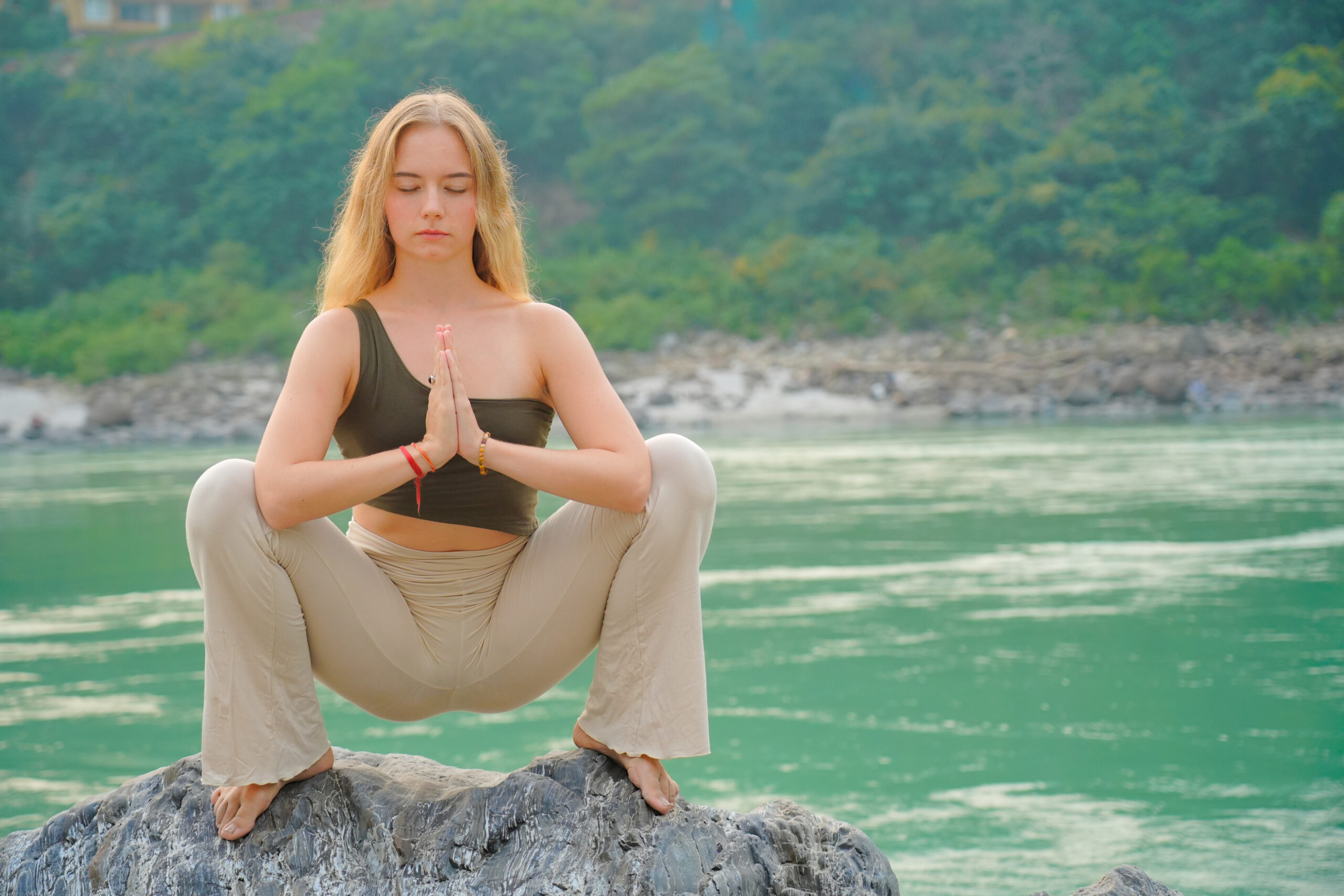
- Malasana (Garland Pose) – This deep squat stretches the pelvic floor and also tones it. Apana vayu is encouraged to flow down through the body.
- Setu Bandhasana (Bridge Pose) – By raising the hips, we bring both the gluteus and pelvic floor into active control.
- Virabhadrasana II (Warrior II) – Strongly develops the stability of the pelvis and supports the adductors as they stabilize and strengthen the pelvic floor.
- Baddha Konasana (Bound Angle Pose) – This asana is amazing at opening the hips and relieving tightness in the pelvic area.
Exercise and Functional Training
In addition to the asanas, following are some functional exercises that will be helpful to the reader:
- Hip lunges – These exercises help strengthen the pelvic muscles, thereby strengthening the external pelvic structures.
- Bird-dog – This core exercise supports the pelvic floor by teaching the core muscles to keep the trunk stable while moving the limbs.
- Resistance band squats – This exercise has a resistance aspect that will activate the deep stabilizers of the hip along with the pelvic floor.
Meditation and Breathwork
Your Pelvic floor moves with your Diaphragm. The pelvic floor releases as you breathe in, and lifts as you exhale.
Meditation Technique
From a comfortable position, close your eyes, envisioning your pelvic floor as a lotus flower, blooming as you inhale, and gently closing as you exhale. This Biofeedback Meditation technique encourages reduced hypertonicity (excess tension) of muscles.
Chakra Healing: Muladhara and Swadhisthana
Chakras (energy centres) are a key component of your pelvic health. As taught at Gurukul Yogashala;
Muladhara (Root Chakra)
The Muladhara (Root) chakra is located at the base of your spine and associated with the element of earth. It is responsible for feelings of safety and security. A weak pelvic region can manifest as an unstable foundation, resulting in feelings of anxiety, while strengthening this area supports grounding the energy in your body.
Swadhisthana (Sacral Chakra)
The Swadhisthana (Sacral) chakra is located above your pubic bone and is responsible for your creativity, emotions, and reproductive health. Working on the pelvic region will release any blockages in this energy centre and regulate your emotions, thereby enhancing your vitality.
Benefits of a Strong Pelvic Floor
- Urinary/Bowel Control: Prevents urinary/bowel incontinence and prevents the urge to go.
- Core Strength: Creates a strong base of support for the abdominal muscles.
- Improving Recovery: Essential for recovery after delivery and for supporting pelvic organs.
- Improved Sexual Satisfaction: Increased blood flow and control of the muscles improve your sexual experience.
- Postural Stability: When you support the spine below, you can reduce chronic lower-back pain.
Precautions to Consider
- Avoid Bearing Down: Do not apply excessive pressure to your pelvic region when trying to have a bowel movement; doing so will weaken the pelvic floor muscles and cause prolapse.
- Do Not Breath Hold: Keep your breathing steady to manage intra-abdominal pressure while performing exercises.
- Avoid Overuse: The pelvic muscles will become fatigued or hypertonic (too tight) just like any other muscle. A balance of strength and relaxation should be maintained.
- Contact a Professional: If you have sharp pain, or you have been diagnosed with a prolapse, contact a physiotherapist for help with your pelvic floor.
Final Thoughts
Focusing on developing a strong pelvic region goes beyond simply having strong muscles; having a solid support system underpins the entire human body. By paying attention to proper posture, doing yoga, and understanding what energy resides in your body, you will create a healthier lifestyle and be able to connect better with your body through grounding techniques.
Whether you are going about your day or learning more at a Yoga Teacher Training in Rishikesh, keep in mind that having a good pelvic floor allows you to move freely and gives you a sense of peace within your physiological self, so continue to improve yourself gradually.
We believe that when your base is established, your physical, mental and spiritual well-being will thrive at Gurukul Yogashala.
FAQ
1. What is the fastest way to strengthen the pelvic floor?
To see results within four to six weeks, do both ‘slow lifts’ and ‘quick squeezes’ (Kegels) three times a day.
2. Which yoga poses help strengthen the pelvic floor naturally?
The following are just a few: Malasana (squatting position), Setu Bandhasana (bridge) Utkatasana (chair). All of these poses utilize gravity and alignment to give your pelvic stabilizers an opportunity to work naturally.
3. How does posture (alignment) affect pelvic floor strength?
Once the pelvis is in either an anterior tilt or posterior tilt, your pelvic region muscles are too ‘overstretched’ or too ‘bunched up’ for them to contract properly. When you are properly aligned with your pelvis, your pelvic floor muscles will be at their optimal lengths to produce power.
4. What are the benefits of strengthening the pelvic floor?
In addition to preventing leakage, if your pelvic floor is strong it will assist in supporting your spine and reducing back pain, increase sexual pleasure and help you feel more “grounded” emotionally (i.e., through the root chakra).
5. What precautions should I take while doing pelvic floor exercises?
When performing pelvic exercises, remember not to clench your breath, glutes or thighs tightly. Only work on internal motion. Stop and realign your posture if you cannot feel any pressure coming downward versus upward.
6. Can meditation help improve pelvic floor strength?
Yes, meditation can assist in the identification of chronic tension held within the body. Stress is commonly stored in the pelvis; thus through calming the mind, one can relieve hypertonic muscles, allowing for better functioning and strengthening of those muscles.
7. How are the Muladhara and Swadhisthana chakras connected to pelvic health?
The Muladhara (root) and Swadhisthana (sacral) chakras work together to support pelvic health. The Muladhara creates a stable base for the body, while the Swadhisthana governs the fluid movement and reproductive aspects of the pelvic area. By creating balance in both of these chakras, you create stable and flowing energy in the pelvic region.
8. What are simple daily exercises to improve pelvic floor strength?
The elevator exercise is a simple way to build strength in the pelvic floor on a daily basis. Visualize your pelvic floor as an elevator: First, lift yourself up to the first floor; then to the second; and finally to the third. Hold on the third floor for a moment, and then lower down to the first floor again. This can be done while brushing your teeth or waiting for your coffee!