How to stregthen pelvic floor | Gurukul Yogashala

How to Strengthen Pelvic Floor: Steps, Precautions and Benefits

The pelvis is the foundation of stability and balance for the human body, but it is often overlooked or disregarded. If you are someone who wants to improve your physical stability and find emotional balance, learning to strengthen your pelvis is critical. At Gurukul Yogashala, we believe that health begins at the source. If you want to reset your mind and body with a 14-day yoga retreat in rishikesh, or are interested in improving your yoga practice through Yoga Teacher Training in rishikesh, strengthening your pelvic floor is an important aspect of developing your overall health.

Understanding the Pelvic Floor

The pelvic floor is a funnel-shaped group of muscles that support your bladder, bowel, uterus and all other organs of your pelvis. You can think about your pelvic floor like a hammock; it holds everything in place. Building strength and flexibility in the muscles of your pelvic floor will help you create a stable core, improve your sexual health and help you to eliminate waste from your body more efficiently.

Alignment and Posture Guide: The Foundation of Strength

In order to properly exercise, one must first address proper alignment. If you have postural problems, such as slumping your shoulders or having an excessive arch in your lower back, you are stressing your pelvic floor more than necessary. 

  • Neutral Position: Standing with your feet at hip width, make sure that your tailbone is neither tucked too far under nor sticking out too far behind your body. 
  • Stacked Spinal Posture: Make sure your ears are aligned over your shoulders, your shoulders are aligned over your hips, and your hips are aligned over your ankles. This “stacked” posture allows the diaphragm and pelvic floor to move together in a coordinated manner. 
  • Posture while sitting: When you are sitting, you want to be sitting on your sit bones (ischial tuberosities), not your sacrum, in order to maintain the natural curvature of the lumbar spine.

Steps to Strengthen the Pelvic Floor

1. Identification (The “Lift”)

Before strengthening the pelvic floor muscles you need to be able to identify them. An example of identifying your pelvic floor is to use the feeling of trying to stop your pee from coming out, or holding in gas…. You should be squeezing and lifting in your pelvic floor muscles as opposed to pushing down. 

2. The Slow Squeeze (Endurance)

  • Begin squeezing the pelvic floor muscles. 
  • Hold for 3-5 seconds while breathing normally. 
  • Relax for 5 seconds. 
  • Repeat 10 times. 

3. The Quick Squeeze (Power)

  • Squeeze and release the pelvic floor muscles as quickly as possible. 
  • Repeat 10-15 times. 
  • This type of exercise will train your pelvic floor muscles to respond to sudden stress, such as when you sneeze or cough.

Yoga for Pelvic Floor Health

Yoga has a well-rounded way to support pelvic health through breathing and physical activity. The 200 hour yoga teacher training in Rishikesh will focus on how these asanas form a complete therapeutic therapeutic practice.

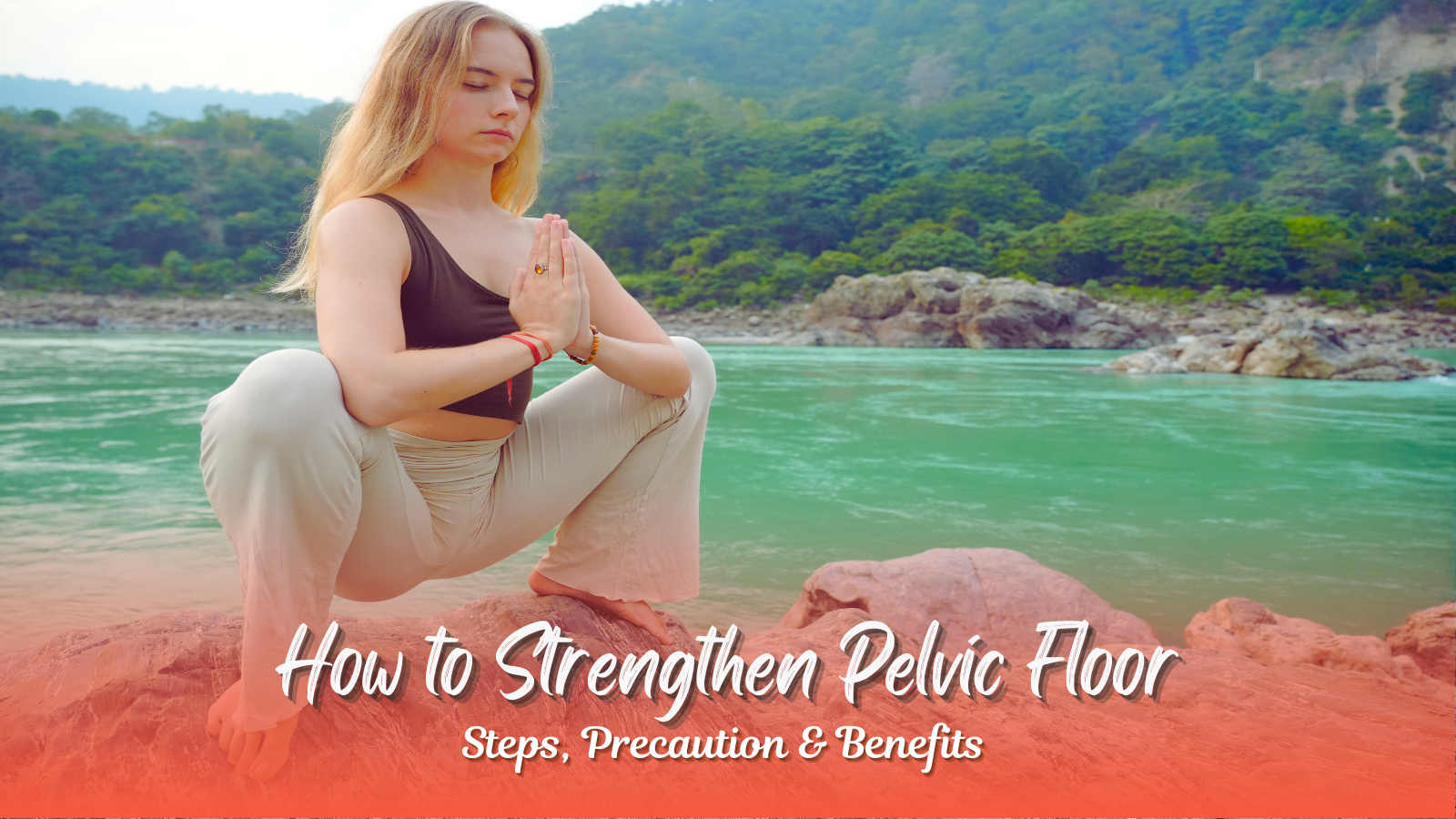
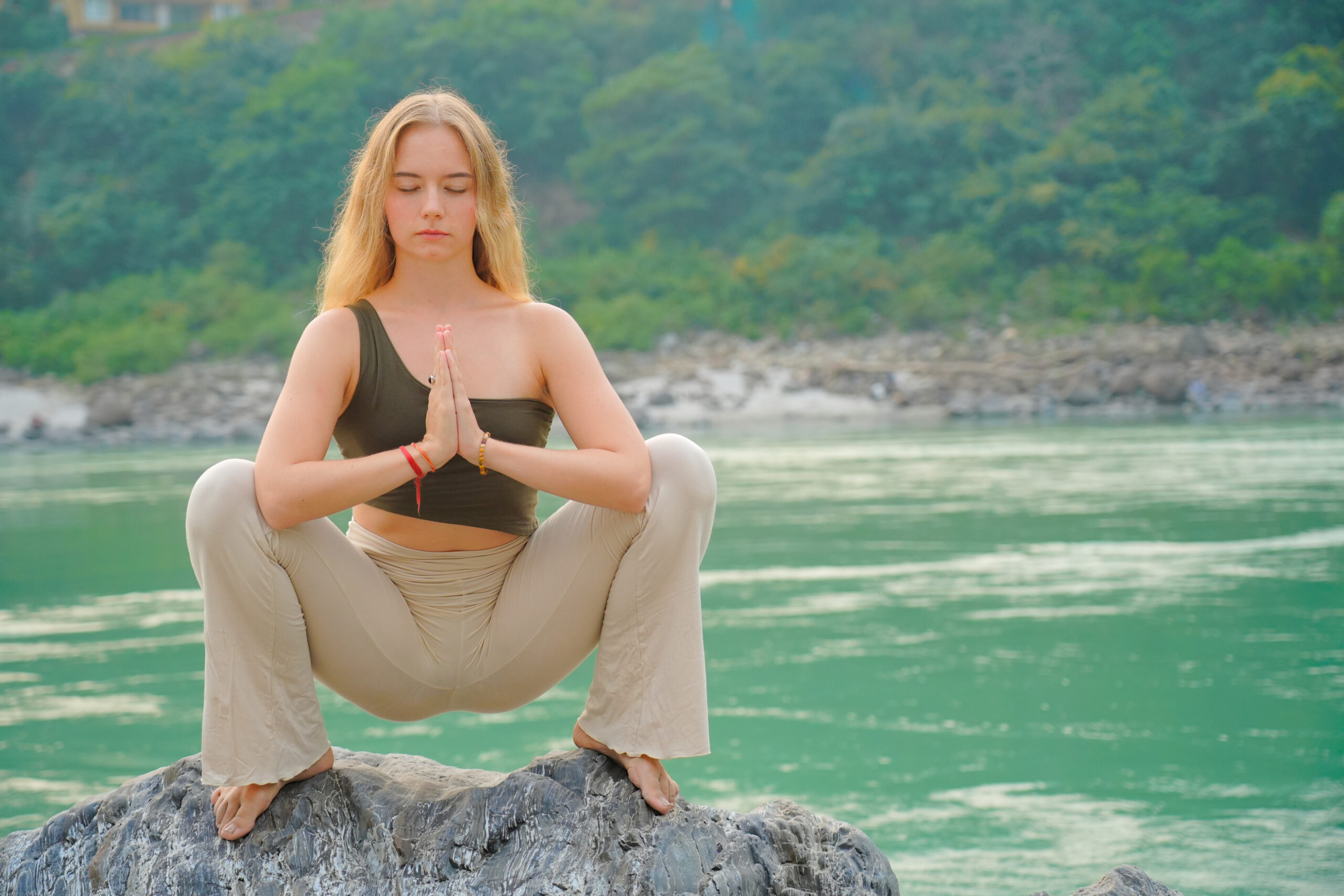
  • Malasana (Garland Pose) – This deep squat stretches the pelvic floor and also tones it. Apana vayu is encouraged to flow down through the body.
  • Setu Bandhasana (Bridge Pose) – By raising the hips, we bring both the gluteus and pelvic floor into active control.
  • Virabhadrasana II (Warrior II) – Strongly develops the stability of the pelvis and supports the adductors as they stabilize and strengthen the pelvic floor.
  • Baddha Konasana (Bound Angle Pose) – This asana is amazing at opening the hips and relieving tightness in the pelvic area. 
How to strengthen pelvic floor | Gurukul Yogashala

Exercise and Functional Training

In addition to the asanas, following are some functional exercises that will be helpful to the reader:

  • Hip lunges – These exercises help strengthen the pelvic muscles, thereby strengthening the external pelvic structures.
  • Bird-dog – This core exercise supports the pelvic floor by teaching the core muscles to keep the trunk stable while moving the limbs.
  • Resistance band squats – This exercise has a resistance aspect that will activate the deep stabilizers of the hip along with the pelvic floor. 

Meditation and Breathwork

Your Pelvic floor moves with your Diaphragm. The pelvic floor releases as you breathe in, and lifts as you exhale.

Meditation Technique

From a comfortable position, close your eyes, envisioning your pelvic floor as a lotus flower, blooming as you inhale, and gently closing as you exhale. This Biofeedback Meditation technique encourages reduced hypertonicity (excess tension) of muscles. 

Chakra Healing: Muladhara and Swadhisthana

Chakras (energy centres) are a key component of your pelvic health. As taught at Gurukul Yogashala;

Muladhara (Root Chakra)

The Muladhara (Root) chakra is located at the base of your spine and associated with the element of earth. It is responsible for feelings of safety and security. A weak pelvic region can manifest as an unstable foundation, resulting in feelings of anxiety, while strengthening this area supports grounding the energy in your body.

Swadhisthana (Sacral Chakra)

The Swadhisthana (Sacral) chakra is located above your pubic bone and is responsible for your creativity, emotions, and reproductive health. Working on the pelvic region will release any blockages in this energy centre and regulate your emotions, thereby enhancing your vitality. 

Benefits of a Strong Pelvic Floor

  • Urinary/Bowel Control: Prevents urinary/bowel incontinence and prevents the urge to go.
  • Core Strength: Creates a strong base of support for the abdominal muscles.
  • Improving Recovery: Essential for recovery after delivery and for supporting pelvic organs.
  • Improved Sexual Satisfaction: Increased blood flow and control of the muscles improve your sexual experience.
  • Postural Stability: When you support the spine below, you can reduce chronic lower-back pain. 

Precautions to Consider

  • Avoid Bearing Down: Do not apply excessive pressure to your pelvic region when trying to have a bowel movement; doing so will weaken the pelvic floor muscles and cause prolapse.
  • Do Not Breath Hold: Keep your breathing steady to manage intra-abdominal pressure while performing exercises.
  • Avoid Overuse: The pelvic muscles will become fatigued or hypertonic (too tight) just like any other muscle. A balance of strength and relaxation should be maintained.
  • Contact a Professional: If you have sharp pain, or you have been diagnosed with a prolapse, contact a physiotherapist for help with your pelvic floor. 

Final Thoughts

Focusing on developing a strong pelvic region goes beyond simply having strong muscles; having a solid support system underpins the entire human body. By paying attention to proper posture, doing yoga, and understanding what energy resides in your body, you will create a healthier lifestyle and be able to connect better with your body through grounding techniques.

Whether you are going about your day or learning more at a Yoga Teacher Training in Rishikesh, keep in mind that having a good pelvic floor allows you to move freely and gives you a sense of peace within your physiological self, so continue to improve yourself gradually.

We believe that when your base is established, your physical, mental and spiritual well-being will thrive at Gurukul Yogashala.

FAQ

1. What is the fastest way to strengthen the pelvic floor? 

To see results within four to six weeks, do both ‘slow lifts’ and ‘quick squeezes’ (Kegels) three times a day. 

2. Which yoga poses help strengthen the pelvic floor naturally? 

The following are just a few: Malasana (squatting position), Setu Bandhasana (bridge) Utkatasana (chair). All of these poses utilize gravity and alignment to give your pelvic stabilizers an opportunity to work naturally. 

3. How does posture (alignment) affect pelvic floor strength? 

Once the pelvis is in either an anterior tilt or posterior tilt, your pelvic region muscles are too ‘overstretched’ or too ‘bunched up’ for them to contract properly. When you are properly aligned with your pelvis, your pelvic floor muscles will be at their optimal lengths to produce power. 

4. What are the benefits of strengthening the pelvic floor? 

In addition to preventing leakage, if your pelvic floor is strong it will assist in supporting your spine and reducing back pain, increase sexual pleasure and help you feel more “grounded” emotionally (i.e., through the root chakra). 

5. What precautions should I take while doing pelvic floor exercises? 

When performing pelvic exercises, remember not to clench your breath, glutes or thighs tightly. Only work on internal motion. Stop and realign your posture if you cannot feel any pressure coming downward versus upward. 

6. Can meditation help improve pelvic floor strength? 

Yes, meditation can assist in the identification of chronic tension held within the body. Stress is commonly stored in the pelvis; thus through calming the mind, one can relieve hypertonic muscles, allowing for better functioning and strengthening of those muscles. 

7. How are the Muladhara and Swadhisthana chakras connected to pelvic health?

The Muladhara (root) and Swadhisthana (sacral) chakras work together to support pelvic health. The Muladhara creates a stable base for the body, while the Swadhisthana governs the fluid movement and reproductive aspects of the pelvic area. By creating balance in both of these chakras, you create stable and flowing energy in the pelvic region. 

8. What are simple daily exercises to improve pelvic floor strength? 

The elevator exercise is a simple way to build strength in the pelvic floor on a daily basis. Visualize your pelvic floor as an elevator: First, lift yourself up to the first floor; then to the second; and finally to the third. Hold on the third floor for a moment, and then lower down to the first floor again. This can be done while brushing your teeth or waiting for your coffee!

Arm Balance Tips

Protect Your Wrists: Safe Arm Balance Tips for Yogis

When you look at arm balances from a distance, they simply look amazing. However, if you try them out, without understanding the background prep and the nuances, you will be in for a rude shock. Yes, you can seriously injure yourself, while doing arm balances, if you do not do them the right way. That is why, you must join a yoga school in Rishikesh for proper guidance on such postures that require you to hold your own body weight with the help of your arms.

Today, you will gain complete knowledge of various arm balances and how you can acquire the skills to do them safely. Let us delve into the details.

Arm Balances In Yoga

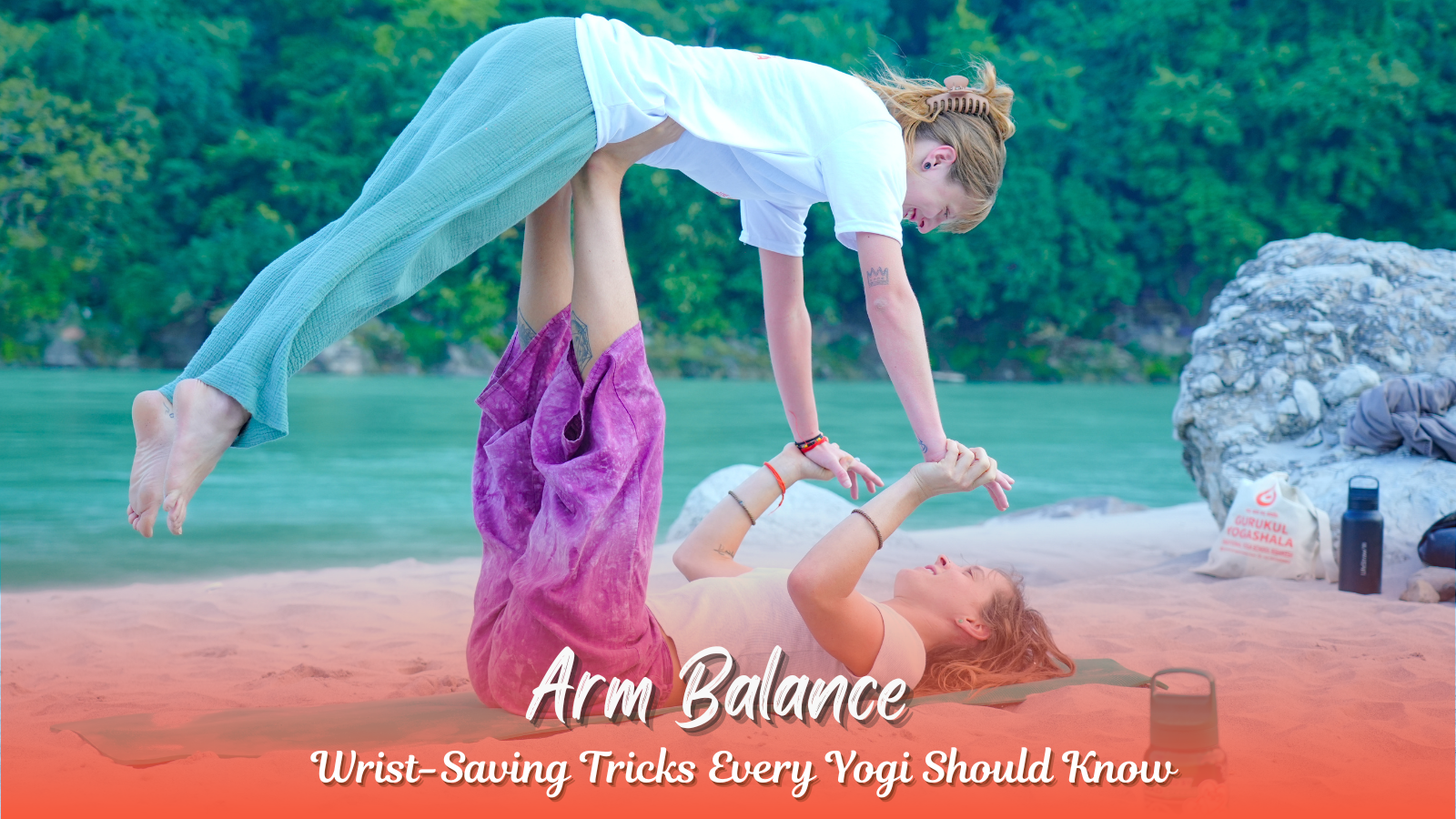
Yoga arm balances are challenging poses that require the practitioner to have a lot of shoulder, arm and wrist strength. These poses mainly involve balancing the entire weight of the body on the hands, while engaging the core muscles. The legs are floating most of the time, in arm balance poses. You will likely gain in terms of a fitter core, improved balance and focus. Some of the most popular arm balance poses that you may come across are Bakasana, Kakasana, Eka Hasta Bhujasana, Vrschikasana and Parsva Bakasana. You can join a yoga teacher training india, to get down to the details.

Most beginners fail to do these arm balances, for lack of strength and power. They also require you to be a bit flexible. However, there are tons of benefits that you can derive from them. One of them is, it sharpens your mental focus. These poses challenge the mind to remain balanced no matter what happens. You can also get the power to face your insecurities, through regular practice of arm balances. Such practices also make you more adaptive to your surroundings. You can now learn about them in complete detail, as a part of the yoga teacher training in Rishikesh.

Why Wrist Health Is Important In Arm Balances?

You have to pay a lot of attention to your shoulders, triceps, forearms and the core if you want to practice arm balances, without stress. However, the wrists are the most important, as they are the point of contact between the body and the floor. If you have never lifted weights then your arms may not be as strong.

However, arm balances can train your upper body strength and help you to navigate through arm balances effortlessly. There are three main things, through which you can keep your wrists happy in various ways, so as to reduce the risk of injuries. They are correct warmups, strengthening exercises, correct alignments and therapeutic exercises. Gurukul Yogashala’s yoga teachers have complete knowledge about the above nuances and will definitely guide you through it.

As a part of the yoga teacher training in Rishikesh, you will learn about the anatomy first. This is extremely important before you embark on a series of practices to enhance your wrist strength. Let us find out how you can go about it.

Wrist Anatomy Decoded

The wrist has 8 small carpal bones, which form the carpus. These are strung together, providing stability. The bottom side of the carpus is concave, thereby creating a channel through which tendons, nerves and ligaments navigate. This is collectively called the Carpal tunnel.

The carpal bones connect to the end of the bones, radius and ulna, along with the five metacarpals. The joint has a web of ligaments, for mobility and stability. When you keep the joints mobile, they remain mobile. When you exercise the joints, the gel-like material remains in a fluid condition.

If you stop movement, it solidifies. Thus, you must engage in various exercises to keep the wrists functioning smoothly. In Hatha Yoga, joint health gets a lot of importance, as it helps in achieving finesse in your poses. Learn about these through diagrams at Gurukul Yogashala, as a part of their 200 hours yoga teacher training in Rishikesh.

How To Prepare The Wrists With Warm-Up Exercises?

Here are a few warm-ups as suggested by the yoga school, that will keep your wrists mobile, so that you can develop their strength with better engagement.

  • Wrist Rotations – You can stretch the arms in front of you and rotate the wrists towards the left and right. This is an excellent way to mobilize the wrists.
  • Anjali Mudra – This is another important practice to strengthen the wrists. You can start by sitting with your arms on a table for support. Press the palms against one another, while allowing the elbows to rest on the table. Slowly, you can lower your hands towards the table and that is when you feel a stretch.
  • Hand Lifts – You can also practice hand lifts, by keeping your hands on a table, with the hands hanging downward from the free edge. A rolled up towel underneath the wrists can make it better. While keeping the fingers free, you can just rotate your hands upwards and then come back.

These are excellent preparatory exercises for the wrists, before you embark on the arm balance journey.

Proper Alignment In Arm Balances

Alignment is very important, when it comes to arm balances. Take the example of Bakasana. It is the easiest one of the lot. If you can get through the Bakasana, without any injuries, then you can do any of the arm balances without any difficulty.

You can start in the Malasana pose, with knees jutting out and the feet flat on the ground. Keep the hands on the ground before you, with the palms in contact with it.

Various Techniques For Arm Balance – By Yoga Experts

A few techniques that should help you with your arm balances are:

  • Improving your wrist flexibility
  • Knowing where to exert your weight
  • Building scapular strength
  • Learning core stability
  • Adding mindfulness to the movements

These are a few techniques that should help you to get your arm balances right. Learn about the above in more detail at the yoga school in Rishikesh.

FAQS

1. How do you protect your wrists during arm balances?

Protect your wrists by warming up with gentle stretches, spreading the fingers wide, pressing evenly through the palms and keeping the shoulders aligned over the wrists. Strengthening the forearms and engaging the core also reduces excess pressure.


2. Why do my wrists hurt during arm balances?

Wrist pain occurs when too much weight collapses into the palms, poor alignment, weak forearms, tight shoulders or lack of warm-up. Incorrect hand placement or overuse can also strain the wrist joints.


3. How can I strengthen my wrists for yoga?

Practice exercises like wrist circles, fist push-ups, fingertip holds, forearm strengthening and weight-bearing drills such as tabletop and Plank Pose. Regular mobility work improves flexibility and endurance.


4. Are arm balances safe for beginners?

Yes, arm balances are safe for beginners when practiced with proper alignment, warm-up, wrist preparation and guidance from a certified instructor. Starting with beginner-friendly poses like Crow Pose reduces risk.


5. Should I avoid arm balances if I have wrist pain?

If your wrists hurt, avoid intense arm balances until the pain reduces. Rest, stretch gently, strengthen the wrist muscles and correct alignment before attempting weight-bearing poses again.


6. How can I improve my wrist mobility for yoga?

Practice daily mobility drills such as flexion/extension stretches, palm lifts, wrist waves and forearm stretches. Slow, controlled movements increase joint range and reduce stiffness.


7. What are the safest arm balances for weak wrists?

Beginner-friendly and wrist-safe options include Dolphin Pose, Forearm Crow and modified Crow using blocks. These poses reduce pressure by shifting weight toward the forearms and shoulders.


8. Does wrist alignment matter in arm balances?

Yes. Proper wrist alignment—fingers spread, weight evenly distributed, shoulders stacked over wrists—prevents strain and enhances stability. Misalignment is a major cause of pain and injury.


9. How long does it take to build wrist strength for arm balances?

With consistent practice, most yogis notice improved wrist strength in 2–6 weeks. Progress depends on regular warm-ups, alignment awareness and strengthening exercises.


10. Can yoga props help protect the wrists?

Absolutely. Blocks, wedges and straps reduce pressure, improve alignment, elevate the palms and make arm balances more accessible for those with wrist sensitivity.

Conclusion

At Gurukul Yogashala, during the asana practice and alignment practices, the teachers and the gurus understand your problems related to alignments. As a part of the teacher training courses, you can understand how to avoid injuries yourself and also for your students. Gurukul Yogashala is a Yoga Alliance registered yoga school, where you will learn alignments, adjustments and modifications in complete detail, not just related to arm balances, but to all poses. This will help you to initiate a safe practice in your sessions.

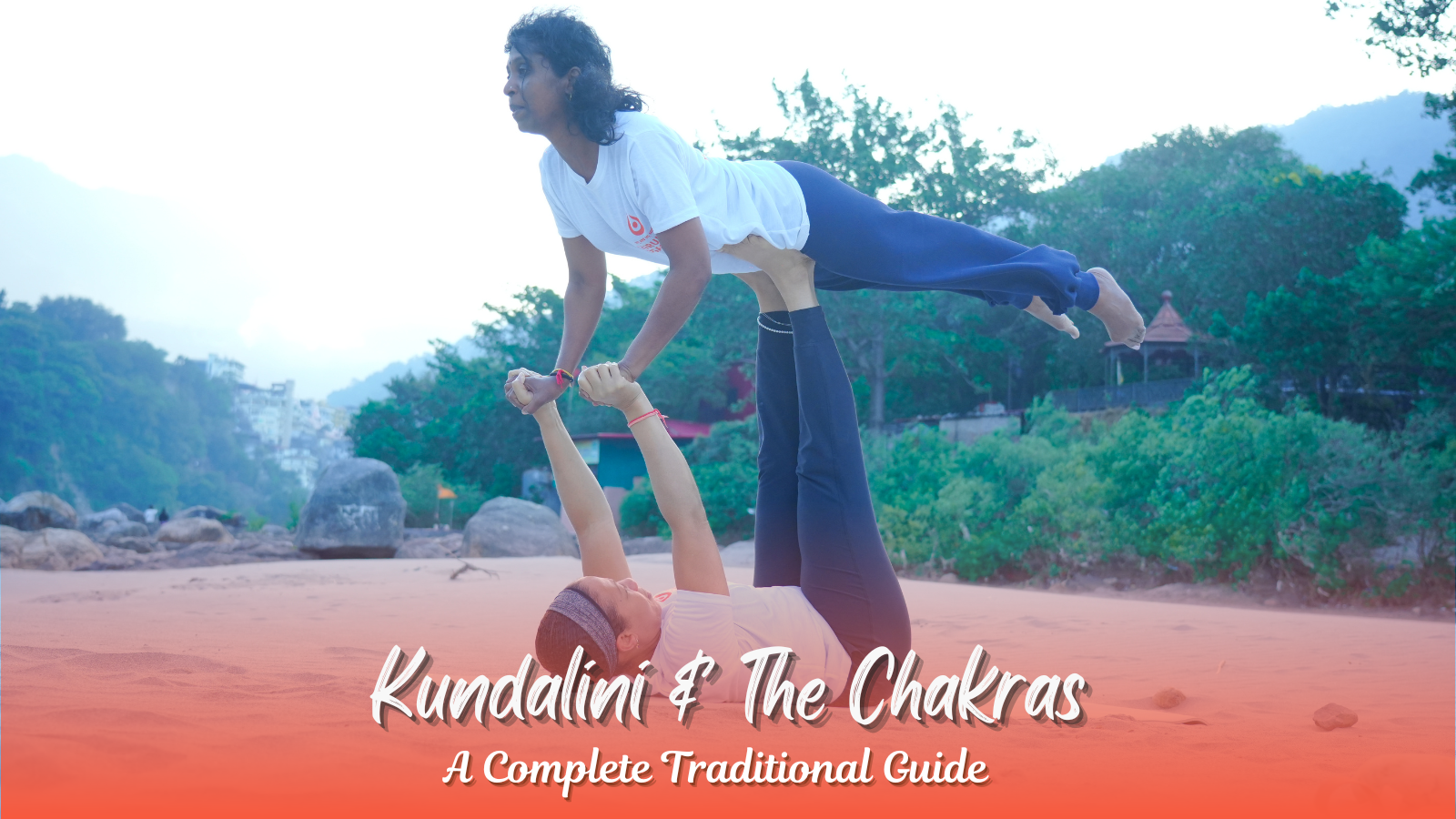
Kundalini & The Chakras: A Complete Traditional Guide

Kundalini & The Chakras: A Complete Traditional Guide

Introduction — The Sacred Science of Kundalini

For thousands of years, India has preserved the deepest yogic secrets through its ancient lineages, scriptures and living traditions. Among these sacred sciences, Kundalini Yoga is considered the highest and most transformative path — the path that awakens the dormant spiritual energy within every human being.

In yogic philosophy, Kundalini is described as the divine force of Śakti, resting at the base of the spine, coiled like a serpent, waiting for the seeker’s readiness. When awakened through discipline, purity, mantra, meditation and the guidance of a Guru, this sacred energy rises through the chakras, purifying the physical, mental and spiritual layers of the being, finally merging into Śiva-consciousness at the crown.

At Gurukul Yogashala, Yoga School in Rishikesh our traditional teachers carry this ancient wisdom with deep reverence. Through authentic practices rooted in Himalayan yogic traditions, seekers are guided toward self-realization with patience, purity and divine grace.

Kundalini Yoga is not merely a practice — it is a transformational journey of consciousness, awakening the inner light, expanding awareness and revealing one’s true nature.

What is Kundalini? – The Traditional Understanding

Kundalini (Kuṇḍalinī Śakti) is described in yogic scriptures as the primordial cosmic energy within human beings. The word “Kundalini” comes from the Sanskrit root “kundal”, meaning coiled, referring to the three-and-a-half coils of the spiritual force resting at the Mūlādhāra Chakra.

Traditional texts such as the Śiva Saṁhitā, Hatha Yoga Pradipika, and Gheranda Samhita describe Kundalini as the Mother of Yoga, the inner Guru and the ultimate gateway to liberation (moksha).

Kundalini energy is:

  • The source of life
  • The force behind spiritual growth
  • The power of awareness
  • The essence of prana
  • The key to higher consciousness

When awakened, Kundalini travels upward through the central channel Sushumna Nadi, piercing each chakra until it reaches the Sahasrara, where Śakti unites with Śiva — the union of pure energy and pure consciousness.

This is the true purpose of yoga: union of the individual self with the universal self.

Why Kundalini Awakening is Important

A human being lives only a fraction of their true potential. Our perception is limited, consciousness is fragmented and prana remains confined to lower centers. Kundalini awakening:

  • Expands awareness
  • Awakens intuition
  • Purifies karma
  • Enhances inner strength
  • Activates hidden potentials
  • Connects the practitioner to their spiritual purpose

Kundalini Yoga does not add anything new — it simply reveals what already exists within you.

Who Can Awaken Kundalini?

Traditionally, Kundalini was taught only to disciplined practitioners who lived a sattvic life and practiced under the direct guidance of a Guru. Today, seekers from all walks of life can begin the journey, provided they approach it with:

  • Purity
  • Discipline
  • Patience
  • Devotion
  • Humility
  • Guidance from a knowledgeable teacher

At Gurukul Yogashala, students are trained through a structured, safe and authentic path, ensuring Kundalini rises naturally, not forcefully.


Kundalini Physiology — The Yogic Body

Modern science studies the physical body; yoga studies the subtle body — the energetic dimension beyond material existence.

Kundalini Yoga works through:

  • Chakras (energy centers)
  • Nadis (energy channels)
  • Prana (life force)
  • Bindu (nectar points)
  • Koshas (five layers of existence)
  • Granthis (energetic knots)

Kundalini awakening is possible only when:

  • the nadis are purified,
  • the prana flows correctly,
  • and the mind becomes still through spiritual practice.

The main channel of Kundalini awakening is the Sushumna Nadi, flanked by Ida and Pingala, forming the sacred yogic trinity.

The Seven Chakras — The Sacred Pathway of Kundalini

The chakras are not physical organs but energetic spiritual centers within the subtle body, controlling emotions, awareness, prana flow and consciousness.

Below begins the full rewritten section of each chakra.

1. Mooladhara Chakra — The Root of Existence

Location: Base of the spine
Element: Earth
Seed Mantra: LAM
Color: Red
Deity: Ganesh, the remover of obstacles

Mooladhara is the foundation of physical existence. Here lies the sleeping Kundalini Shakti. This chakra governs survival, stability, grounding and the instinctual mind.

When balanced, you feel secure and connected to life.
When imbalanced, fear, anxiety and instability arise.

Kundalini begins her journey from this sacred root.

2. Swadhisthana Chakra — Seat of Emotions & Creativity

Location: Sacral region
Element: Water
Seed Mantra: VAM
Color: Orange

This chakra governs creativity, emotions, sensuality and fluidity of prana. Blockages here create emotional instability, addictions and creative stagnation.

Purification of Swadhisthana through mantra, pranayama and meditation helps the seeker rise above desires and emotional turbulence.

3. Manipura Chakra — Fire of Transformation

Location: Navel center
Element: Fire
Seed Mantra: RAM
Color: Yellow

Manipura is the chakra of power, will, discipline and transformation. A strong Manipura gives:

  • Confidence
  • Vitality
  • Strong digestion
  • Clarity
  • Courage

This chakra fuels the upward movement of Kundalini.

4. Anahata Chakra — The Heart of Consciousness

Location: Center of the chest
Element: Air
Seed Mantra: YAM
Color: Green

This is the chakra of unconditional love, compassion, balance and inner peace.

Awakening Anahata connects the seeker to higher intuition and divine love.

5. Vishuddhi Chakra — Center of Purification

Location: Throat
Element: Ether
Seed Mantra: HAM
Color: Blue

This chakra governs communication, truth, creativity and purification of prana. A balanced Vishuddhi leads to pure expression and spiritual clarity.

6. Ajna Chakra — The Third Eye of Wisdom

Location: Between the eyebrows
Element: Mind
Seed Mantra: OM
Color: Indigo

Ajna Chakra is the seat of intuition, inner vision and spiritual insight. Activation of Ajna grants:

  • clairvoyance
  • intuitive knowledge
  • deep meditation
  • mastery of the mind

7. Sahasrara Chakra — The Thousand-Petaled Lotus

Location: Crown of the head
Element: Beyond elements
Mantra: Silence

This is the final destination of Kundalini. When Shakti reaches Sahasrara, the practitioner experiences:

  • Samadhi
  • bliss
  • unity consciousness
  • liberation

This is the true goal of yoga.

Nadis — The Sacred Channels of Pranic Flow

In yogic anatomy, Nadis are subtle energy channels through which prana (life force) flows. Though thousands of nadis exist, three are of supreme importance in Kundalini Yoga:

1. Ida Nadi — The Lunar Channel

  • Represents moon, cooling energy, intuition
  • Flows on the left side
  • Controls the parasympathetic system
  • Associated with calmness, creativity, emotions

When Ida dominates, the mind becomes inward, reflective and peaceful.

2. Pingala Nadi — The Solar Channel

  • Represents sun, heat, vitality
  • Flows on the right side
  • Controls the sympathetic system
  • Associated with action, logic, strength

When Pingala dominates, the body becomes active and energetic.

3. Sushumna Nadi — The Central Channel

This is the royal path for Kundalini’s ascent.
Ida and Pingala must be balanced for prana to enter Sushumna.

When prana flows through Sushumna:

  • Meditation deepens
  • The senses withdraw
  • The mind becomes silent
  • Kundalini begins to rise

This is the most sacred moment in a yogi’s journey.

Kundalini and the Human Brain

Ancient yogic texts reveal that the brain has subtle energetic centers that work in harmony with the chakras.
When Kundalini awakens:

  • Dormant brain regions activate
  • Pineal gland (Ajna center) awakens
  • Perception expands beyond the physical senses
  • New neural pathways form
  • Intuition and insight increase
  • Thought patterns dissolve into clarity

Modern neuroscience now confirms many of these effects, proving the depth of ancient yogic wisdom.

The Process of Kundalini Awakening

Kundalini awakening cannot be forced. It must unfold naturally through purification, discipline and divine grace.

1. Purification (Śodhana)

The nadis must be cleansed through:

  • Pranayama
  • Asana
  • Meditation
  • Mudras & bandhas

2. Activation (Uddhāra)

Awakening begins at Mooladhara through practices such as:

  • Moola bandha
  • Ashwini mudra
  • Bhastrika pranayama
  • Kriya Yoga

3. Ascension (Arohana)

Kundalini then rises through the chakras in the Sushumna, purifying each center.

4. Union (Samavesha)

At Sahasrara, union with Shiva-consciousness occurs.
This is enlightenment — the final goal of yoga.

Types of Kundalini Awakenings

There are three classical awakenings:

1. Nadi Awakening

Here the nadis are purified, preparing the path for future ascent.
This is the safe and gradual awakening.

2. Chakra Awakening

Each chakra awakens individually. Sensitivity increases and deep emotional and energetic cleansing occurs.

3. Sushumna Awakening

The most powerful and transformative.
Prana enters the central channel and ascends uninterrupted.

This awakening is considered the true Kundalini rise.

Signs of Kundalini Awakening

The classical signs are described in the Tantras:

  • Blissful sensations
  • Heat or energy rising in the spine
  • Spontaneous breath suspension
  • Enhanced intuition
  • Emotional purification
  • Inner visions or light
  • Deep silence of mind
  • Connection to divine presence
  • Expansion of consciousness

These signs vary according to the seeker’s karma, purity and readiness.

Experiences During Awakening

Depending on one’s mental, emotional and energetic health, experiences may be:

Pleasant:

  • Joy
  • Lightness
  • Clear mind
  • Heightened perception

Challenging:

  • Emotional release
  • Restlessness
  • Heat
  • Sudden shifts in awareness

These experiences are temporary and part of the purification process.

Under proper guidance, the journey becomes smoother and deeply transformational

Kriya Yoga — The Fastest Path to Awakening

Kriya Yoga, passed down through ancient Himalayan masters, is a powerful method that purifies the nadis and accelerates spiritual growth.

Kriya Yoga includes:

  • Breath control (pranayama)
  • Internal locks (bandhas)
  • Psychic gestures (mudras)
  • Energy circulation techniques
  • Chakra concentration
  • Mantra repetition

When practiced regularly, Kriya Yoga harmonizes prana and prepares the seeker for Kundalini awakening.

Bandhas — The Locks of Pranic Flow

Bandhas are energetic locks that guide prana into Sushumna.

1. Moola Bandha

A contraction at the perineum that awakens Mooladhara.

2. Uddiyana Bandha

Abdominal lift that directs prana upward.

3. Jalandhara Bandha

Throat lock that prevents prana from leaking upward.

4. Maha Bandha

All three locks applied together — the king of bandhas.

These practices must be learned with proper instruction.

Mudras — Gestures for Kundalini Activation

Traditional mudras help seal energy and awaken internal awareness.

Important Kundalini mudras include:

  • Khechari Mudra
  • Yoni Mudra
  • Shambhavi Mudra
  • Ashwini Mudra
  • Vajroli Mudra

Each mudra activates specific chakras and enhances meditation.

Diet for Kundalini Awakening

A sattvic diet supports the purification process.

Foods that increase prana:

  • Fresh fruits
  • Vegetables
  • Grains
  • Nuts
  • Seeds
  • Herbal teas
  • Cow’s milk (for those who take dairy)

Foods to avoid:

  • Meat
  • Alcohol
  • Processed foods
  • Excessive spices
  • Overstimulation

Purity of diet creates purity of mind.

Risks of Improper Kundalini Awakening

Improper practice can cause:

  • Emotional imbalance
  • Overstimulation
  • Confusion
  • Energetic discomfort

This is why ancient texts insist on Guru guidance.

At Gurukul Yogashala, students learn Kundalini gradually, safely and with full understanding.

Chakra Sadhana — Complete Yogic Practice

Each chakra is awakened using:

  • Mantra
  • Meditation
  • Pranayama
  • Visualization
  • Yantra
  • Mudra
  • Bandha

Chakra sadhana cleanses karmic impressions and strengthens energetic stability.

The Goal — Union of Shiva and Shakti

The true purpose of Kundalini Yoga is not physical sensation or curiosity.
It is to awaken the sacred energy of Shakti and merge it with Shiva at the crown chakra.

This is the final goal of all yoga.

Conclusion — Begin Your Kundalini Journey at Gurukul Yogashala

Kundalini Yoga is the most sacred, powerful and transformative path of yoga. It awakens the dormant divine energy within, purifies the chakras and leads the practitioner toward ultimate liberation.

But this journey must be approached with purity, humility and proper guidance.
In the spiritual environment of Rishikesh, surrounded by the Himalayas and the holy Ganga, Gurukul Yogashala, best yoga school in rishikesh carries forward the ancient lineage of Kundalini and Chakra teachings with authenticity and devotion.

If you feel called to explore your inner awakening, deepen your spiritual practice and learn traditional Kundalini techniques safely and correctly, the doors of Gurukul Yogashala are always open.

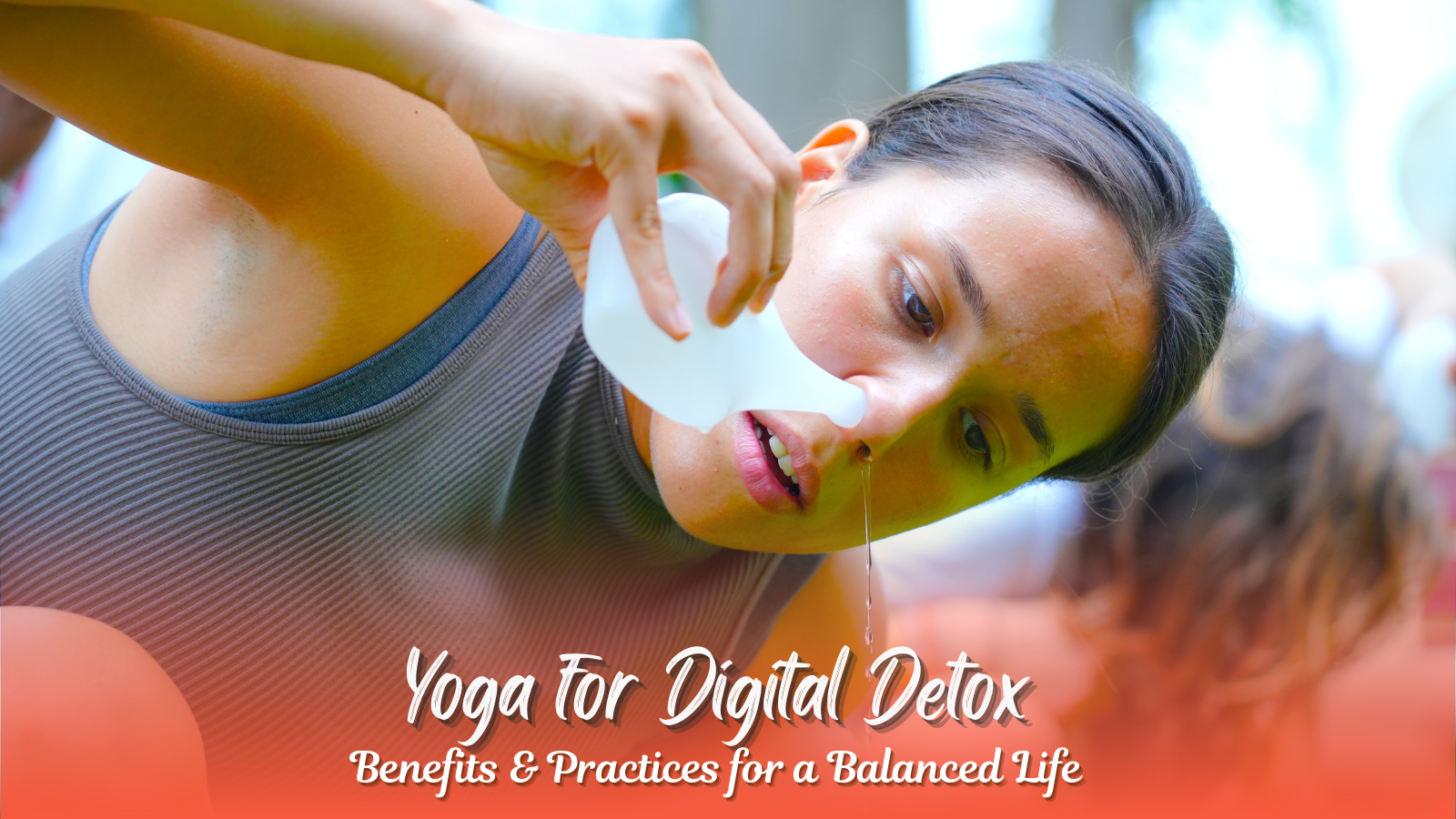
Yoga for Digital Detox: Simple Steps, Benefits & Practices for a Balanced Life

Yoga for Digital Detox: Simple Steps, Benefits & Practices for a Balanced Life

In today’s digital age, we are more connected than ever. We use smartphones, laptops and tablets for everything—work, entertainment, shopping, socializing and even relaxing. While technology has made life more convenient, it has also created new problems. Spending too much time in front of screens is now affecting our physical and mental health.

Digital detox is becoming a necessity, not just a trend. And one of the best and most natural ways to detox from digital overload is Yog. In this article, we will explore why screen time is harmful, why we are so addicted to it and how yoga for detox and reset can bring balance, peace and wellness back into our lives.

Harmful Effects of Excessive Screen Time & Why Yoga Helps

We use screen for almost everything these days. But excessive screen time comes with serious downsides. Here are a few:

  1. Mental Fatigue: When we constantly check our phones, switch between apps, notifications, our brain gets overloaded. This leads to mental fatigue, reduced concentration and poor memory.
  2. Anxiety and Depression: Comparison on social media, Whatsapp status updates, Instagram posts may cause anxiety and stress leading to burnout. Those who are already suffering from depression or loneliness may react intensely to certain social media posts or reels.
  3. Sleep Disturbance: Too much use of screen-especially before bed disrupts production of melatonin (a hormone that regulates sleep). This cause insomnia and sleep disturbance. 
  4. Neck and Back Pain: Constantly looking down at the phone or sitting in front of the computer leads to poor posture and over a long period of time cause chronic neck, shoulder and back pain.
  5. Eye Strain and Headaches: Screen light is not good for our eyes. It cause eye strain, dryness & itching, blurred vision and frequent headaches.
  6. Hormonal Imbalance: Chronic stress from digital stimulation increases cortisol—the stress hormone. High cortisol levels disturb our hormonal balance and affect digestion, mood and immunity.
  7. Affects Relationships and leads to Loneliness: Spending too much time on digital devices can make our loved ones feel neglected. It causes lack of connection and intimacy, further leads to loneliness.

Why Digital Detox is Essential for Mental & Physical Health

These days our phone has become the part of us now. According to a 2024 report by Statista, over 90 % of adults in India use smartphones, and screen time has gone up even more since the pandemic. Because of this, more people are feeling tired, stressed, facing eye problems and burning out from too much screen time. Now digital detox is not just something fancy thing to do- it’s something we need for our mental and physical health. Taking regular breaks from screens helps us feel less stressed, focus better, sleep well and be more present in life. It’s a simple way to disconnect from online world and reconnect to the reality.

10 Simple Ways to Practice Digital Detox with Yoga

Digital devices are not all bad as they helps us stay connected, provide information and have other benefits too but it becomes important to create a balance that works for individual so that one may stay connected when necessary (like emergency and work) and have that awareness and mindfulness to stay unplugged from digital devices when not required. Here digital detox refers to taking a break or disconnecting from the digital/electronic devices (e.g., smartphones, tablets, and computers) for a certain amount of time in order to recharge, revitalise, reflect and reconnect with ourselves and the environment around us. Some simple steps can make a difference such as:

  • Track your screen time daily. Awareness is the first step to change.
  • Start small, even 10-minute breaks from screens can help.
  • Set specific no-screen times during the day. For example, avoid using your phone during meals or one hour before going to bed.
  • Turn off notifications for apps that aren’t important. This helps you stay focused and not get distracted all the time.
  • Take regular breaks from screens. Go for a short walk, stretch, or read a book instead.
  • Make tech-free zones in your home. Keep places like the bedroom or dining table free from phones and other gadgets.
  • Do activities without screens. Try things like hiking, cooking, playing board games or just spending time with family and nature.Bottom of Form
  • Use paper journals. Replace apps with notebooks for goals and thoughts.

How Yoga Reduces Loneliness & Builds Inner Connection

At this point, it is worth remembering a powerful teaching from Lord Krishna in the Bhagavad Gita:

अनित्यमसुखं लोकमिमं प्राप्य भजस्व माम्
(Anityam asukham lokam imam prapya bhajasva mam)
“This world is temporary and full of sorrow—connect with Me, worship Me.”

This shloka reminds us that lasting peace and happiness cannot be found in the outside world. Many of us feel lonely, anxious or stressed because we are constantly seeking satisfaction from external things—social media, attention or success. But Krishna tells us to turn inward, to connect with the Divine within.

Yoga offers the path to this connection. As explained in Patanjali’s  Yoga Sutras:

योगश्चित्तवृत्तिनिरोधः
(Yogaś citta vṛtti nirodhaḥ)
“Yoga is the stilling of the mind’s fluctuations.”

Through practices like asana (postures), pranayama (breath control), and meditation, yoga calms the mind and brings us back to the present moment. This helps reduce feelings of loneliness and emotional overwhelm.

Yoga also teaches self-acceptance and compassion. Instead of judging ourselves or feeling like we don’t belong, yoga helps us see our worth. By becoming more aware of our breath, body and thoughts, we build inner resilience, improve emotional health and develop deeper connections—with ourselves and with others.

In this way, yoga for detox becomes more than just a break from screens—it becomes a way to heal from within and feel whole again.

Yoga for Digital Detox: Best Asanas, Pranayama & Meditation

Yoga for detox and reset is one of the best tools to overcome digital addiction.  At Gurukul Yogashala we believe that yoga teaches us to be more aware and mindful of our habits, which is far beyond than switching off our phone or putting it on silent mode.

Benefits of Practicing Yoga:

1. Releases Digital Stress

Yoga (Asana and Pranayama) helps reduce cortisol levels in the body. This is why many practitioners say yoga works like a cortisol detox—it relaxes the nervous system and brings mental peace.

To lower cortisol levels, practice restorative and gentle yoga poses like  Viparita Karani (Legs-Up-the-Wall)  to calm the nervous system, Savasana (Corpse Pose) and Balasana (Child’s Pose) to encourage relaxation, and Cat-Cow pose to gently mobilize the spine and support breath. Combine these poses with deep, mindful breathing and potentially techniques like Nadi Shodhan (Alternate Nostril Breathing) to activate the parasympathetic “rest and digest” nervous system.

2. Improves Posture and Mobility

Sitting for long hours damages the spine. Yoga poses like Setubandhasana (Bridge Pose), Bhujagasana (Cobra Pose), Marjariasana (Cat-Cow Stretch) and Sarpasana improve posture, release neck and shoulder tension and bring flexibility back.

3. Increases Mindfulness

Yoga teaches you to be present and mindful. This breaks the cycle of mindless scrolling and constant digital stimulation. Adding breathwork (like Nadi Shodhana) and guided meditation enhances the detox process and improves emotional clarity.

4. Promotes Better Sleep

Yoga poses like Paschimottanasana, Ustrasana and Balasana (child’s pose) helps regulate hormones and calms the mind, promoting deeper and better-quality sleep. Practicing Yoga Nidra, also known as yogic sleep, can deeply relax the mind and body, helping restore natural sleep cycles.

5. Reduces Loneliness

Yoga encourages self-connection and community. Group yoga sessions or joining a yoga school in Rishikesh can offer real human interaction, healing loneliness and digital isolation.

Yoga for Digital Detox: Best Asanas, Pranayama & Meditation

Yoga is not just about postures—it’s a way of life that invites awareness, balance and intentional living. In today’s world, filled with constant digital noise and distractions, digital detox through yoga becomes more than a break from screens—it becomes a return to our true self.

Many people who visit yoga ashram in Rishikesh discover that disconnecting from digital devices opens up a deeper connection to nature, inner peace and to the present moment. At a Yoga School in Rishikesh, students not only learn physical asanas, but also how to live with simplicity and mindfulness.

Courses like the 200 Hour Yoga Teacher Training in Rishikesh and the 300 Hour Yoga Teacher Training in Rishikesh includes specific guidance on how to create healthy boundaries with technology, how to reduce screen time and how to reconnect through breathwork, meditation and yogic living. Even a 7-day yoga retreat can help reset your mind, body and soul.

If you’re searching for a yoga school in India to help reset your lifestyle, you’ll find that many of them in Rishikesh encourage digital detox as part of their teachings. Just as yoga without gratitude feels incomplete, so does yoga practice that ignores the need for silence, simplicity and digital balance in our modern lives.

FAQs

1. What is a digital detox and why is it important?

A digital detox is a break from screens to reduce stress, improve sleep and reconnect with real life. It helps restore mental and emotional balance.

2. How does yoga support digital detox?

Yoga calms the mind, lowers stress and encourages mindfulness, helping you break free from constant screen use.

3. Can yoga help with loneliness caused by screen time?

Yes. Yoga builds self-awareness and emotional connection, reducing feelings of isolation and improving inner peace.

4. Why choose a yoga school in Rishikesh for digital detox?

Yoga schools in Rishikesh offer a peaceful, tech-free space to focus on yoga, nature and personal growth—away from digital distractions.

5. Are there specific yoga poses for digital detox?

Yes. Poses like Balasana (Child’s Pose), Viparitakarani (Legs-Up-the-Wall), Marjariasana (Cat-Cow Stretch) and Pachimottanasana (Seated Forward Fold) are gentle and effective for releasing stress and resetting the nervous system. Adding breathwork (like Nadi Shodhana) and guided meditation enhances the detox process and improves emotional clarity.

Final Thoughts: Why Yoga is the Best Digital Detox Tool

We are living in a time where digital devices are everywhere, but real connection and peace often feel far away. Screen time may help us feel “busy” or “entertained,” but it does not nourish our soul.

Yoga offers a simple yet powerful way to break free from digital dependence. It helps you feel calm, focused, and more in tune with your true self. From detox yoga poses to yoga for cortisol detox, the practices are deeply healing.

You don’t need to quit technology forever. But you can choose to pause, breathe and move mindfully every day. Yoga is your natural digital detox tool—always available, always powerful.

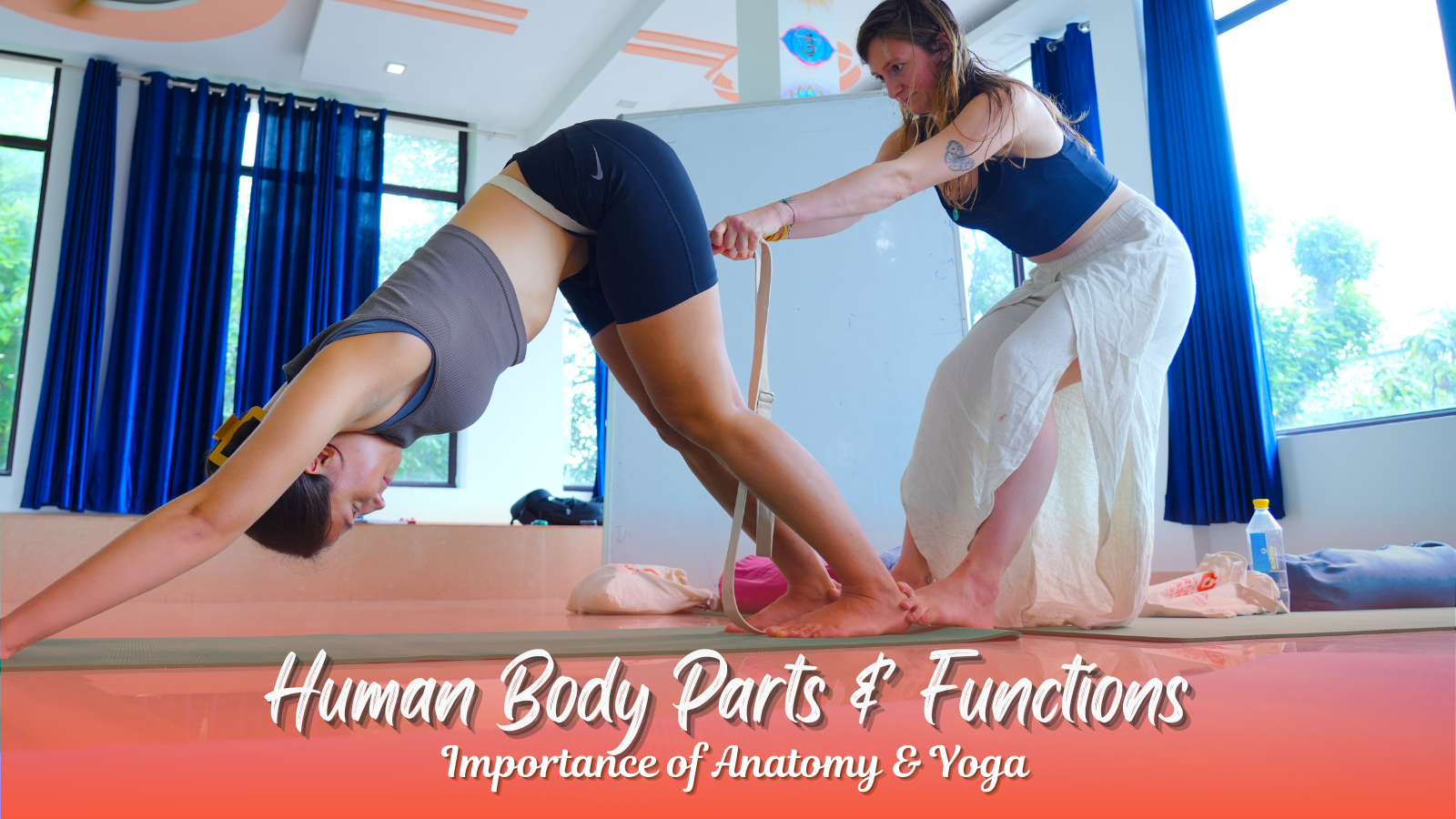
Human Body Parts & Functions and Importance of Anatomy & Yoga

Human Body Parts & Functions and Importance of Anatomy & Yoga

Human anatomy is the miraculous work of design. This complex mechanism comprises organs, tissues, bones and systems that interact with each other to coordinate and maintain a person’s life. With the smallest cell to even the most exquisite organ in the body, each part plays a special role. Knowledge about the parts of our human body, what they do and how significant they are can make us treasure the task of living an outstanding life and remind us to take more care of our health.

This blog shall unpack the various forms of the body parts, organs and systems, and their importance. We will also discuss how a personal step as yoga teacher training in Rishikesh, can improve the physical and mental performance through physical as well as mental unity.

Human Body Parts Overview: Structure and Anatomy

The human body structure consists of a trillion cells, which are the building blocks of life. Such cells make tissues, tissues make organs and organs interact in systems that maintain balance (homeostasis).

In studying the human body anatomy, we divide it into:

  • Head, neck, trunk, arms and legs are some of the external body parts.
  • Internal body parts (organs): the heart, the lungs, the liver, the brain, the stomach, the kidneys etc.
  • Systems: Circulatory, respiratory, digestive, nervous, skeletal, muscular and reproductive and even more.

A human body diagram tends to aid in the comprehension of the relationship of these parts to each other and how they relate and operate.

Important Human Body Organs and Their Functions Explained

The human internal organs are the most important means of survival. The following ones are the most important:

  • Brain: The control center of the body that entails thinking, memory, feeling, movement and coordination.
  • Cardiovascular: Pumps blood to your cells to supply the cells with oxygen and nutrients.
  • Lungs:  Allow breathing in and out to exchange oxygen and carbon dioxide.
  • Liver: Considers the nourishment, removes valuable contaminants and facilitates digestion.
  • Stomach: digests/breaks food down and starts the digestion process.
  • Kidneys: They filter waste products in the blood and control the fluid balance.
  • Skin: The most significant body covering and defending the body against infection, regulates heat.
  • Intestines (small and large): Absorb the nutrients and excrete body waste.
  • Pancreas: It produces enzymes of digestion and controls the blood sugar level.
  • Reproductive organs: They are vital in reproduction and the regulation of hormones.

Human Body Systems: Circulatory, Respiratory, Digestive & More

Every human organ is part of the definite system. Some of the major systems are:

  • Circulatory System:  Heart, blood and blood vessels, the portion of the body that develops and circulates nutrients and oxygen.
  • Respiratory System: Lungs, Trachea, Diaphragm that contributes to the intake of oxygen and the release of carbon dioxide.
  • Digestive System: stomach, intestines, liver, pancreas; food breaks down and extracts nutrients.
  • Nervous System: Brain, spinal cord and nerves that control the functions of the body and body responsiveness.
  • Skeletal System: The skeleton gives support and protection.
  • Muscular System: Muscles, in charge of movement and posture.
  • Endocrine System Endocrine system: Glands such as the thyroid, pituitary that have hormonal control.
  • Reproductive System: Ovaries, testes, uterus; is responsible for continuing life.

Why Understanding Human Anatomy is Important for Health

The human body anatomy is not limited to just doctors or medical students, but it needs to be addressed by all. Understanding the way our human body works can assist in:

  • Eating healthy, working out and being rested.
  • The detection of diseases through early signs and symptoms.
  • Improving health by increasing fitness through yoga, meditation and holistic techniques.

Ensuring a better lifestyle, like correction of posture, stress management and balanced living.

Yoga Teacher Training in Rishikesh: Anatomy and Practice

Yoga goes beyond flexibility; it is about equalizing the body, mind and spirit. The Anatomy at Home, being a leading yoga school in Rishikesh, focuses a lot on anatomy within its training packages. With knowledge of the human body parts and their functions, yoga students can adapt postures (asanas), breathing (pranayama) and meditation to achieve overall health.

For example:

  • A knowledge of the backbone arrangement is important to safely undertake backbends.
  • Knowledge of the respiratory system will promote pranayama.
  • Concentration on both muscles and joints minimizes injuries during the yoga positions.

Typical anatomy classes in the Best Yoga School in Rishikesh are frequently grouped with other subjects, such as philosophy, so the student comes away with a complete view of the entire body, both physical and spiritual.

Yoga Teacher Training and Anatomy

In case you are interested not only in yoga but also in the further study of the body, these courses offered in Rishikesh will become an ideal option:

India is home to some of the best yoga schools in India, and hence going to the best yoga school in India goes a long way in not only empowering you with knowledge on yoga techniques but also a deeper understanding of the possibilities of the human structure.

Amazing Facts About the Human Body Parts and Functions

The human body is a creation of nature and is full of wonders, still enough to amaze scientists, doctors, and yoga practitioners. When looking at these human body parts and their special capabilities, we develop an additional reverence towards our own homo sapiens existence. The following are some points about the human body anatomy that are quite interesting to hear.

  • It includes more than 600 muscles and 206 bones that make up the main human structure, providing us with the force, stability and movement possibilities.
  • The small intestine is 22 feet long and is a vital component of the digestive system because it leads to the effective assimilation of nutrients.
  • The largest of all the human body organs, the skin renews itself every 27 days and acts as the first defense mechanism of the body.
  • The human body has about 37 trillion cells, which play important roles in keeping the body alive.
  • The heart is one of the most significant human organs that pumps almost 2,000 gallons of blood every single day, beating around 100,000 times in a day to nourish the whole body.

Other interesting revelations about human anatomy are as follows:

  • The lungs hold approximately 300 million small air sacs (alveoli), which are involved in the transfer of oxygen and carbon dioxide.
  • The biggest internal organ is the liver and it performs over 500 functions, comprising detoxification and storing energy.
  • Blood is a connective tissue that moves around the human body diagram, with almost 60,000 miles of blood vessels within the body to supply oxygen and nourishment to every cell.
  • Our brain, weighing only approximately 3 pounds, consists of about 86 billion nerve cells, which puts it in the top spot of the most complex organ in the known universe.
  • The eyes, commonly known as the windows to the soul, can differentiate 10 million colours.

Knowing these facts not only enhances the diversity of our knowledge about human internal organs but also illustrates the reason why it is so crucial to take care of our body anatomy. Yoga, meditation and pranayama, which are part of the Best Yoga School in Rishikesh, help to maintain these miraculous systems at their optimum levels.

Whether you are participating in the 200 Hour Yoga Teacher Training Program in Rishikesh, the advanced 300 Hour Yoga Teacher Training in Rishikesh, or the 3-Day Yoga Retreat in Rishikesh, you’ll know how body organs and systems are affected by yoga asanas, pranayamas, and meditation. This optimal combination of knowledge of the human anatomy and yoga gives one the power to take the health into his or her own control, but with a sense of respect for the marvel of the human body.

Human Body FAQs: Organs, Cells, and Systems

What is the function of each body organ?

Every organ performs a certain role. To illustrate, the heart pumps blood the lungs through breathing, the liver dispenses nutrients, the kidneys strain waste and the brain regulates all body functions.

What type of tissue is blood?

Blood is a connecting tissue used to move throughout the body to deliver oxygen, nutrients, hormones and excretory products.

What are organs?

Organs: The organs are the clusters of tissues combining their efforts to fulfill definite functions. Examples are the heart, lungs, kidneys and stomach.


How many cells are in the human body?

The human body is projected to comprise 37 trillion cells.

Conclusion: Human Body, Yoga and the Best Yoga School in Rishikesh

The human body parts are not merely physical entities- but amazing systems coordinated to bring life. It is by learning how to study human body anatomy and human body organs that understanding how our human structure functions, at the cellular level to that of the intricate organ systems, is even better understood. A combination of this knowledge and mindfulness exercises, such as yoga, assists them in gaining physical and emotional well-being as well as overall betterment.

Any individual who may want to explore this correlation finds a great opportunity in joining the Best Yoga School in Rishikesh to learn the science of the human body and the art of yoga. Courses like the 200 Hour Yoga Teacher Training in Rishikesh, 300 Hour Yoga Teacher Training in Rishikesh, or 100 Hour Yoga Teacher Training in Rishikesh offer a fantastic introduction to body anatomy, physiology, yoga philosophy and yoga teaching methodology. With little time to spare, a 7-14-day Yoga Retreat in Rishikesh will also serve your purpose of relaxation and finding the inner self.

Selecting your best yoga school in India will help you derive the real teachings, systematic training and better knowledge of the human body diagram and its meaning in the yoga practice. These courses not only get you more acquainted and informed about the human internal organs and the body anatomy, but also enable you to make your yoga practice in sync with the natural rhythm of your body.

At the end of the day, the learning mission that one goes through to learn human anatomy is really a personal learning mission. Respecting your human body parts, practicing mindful yoga and learning with the best yoga teacher training in Rishikesh, you can reach harmony with your body, mind and spirit.

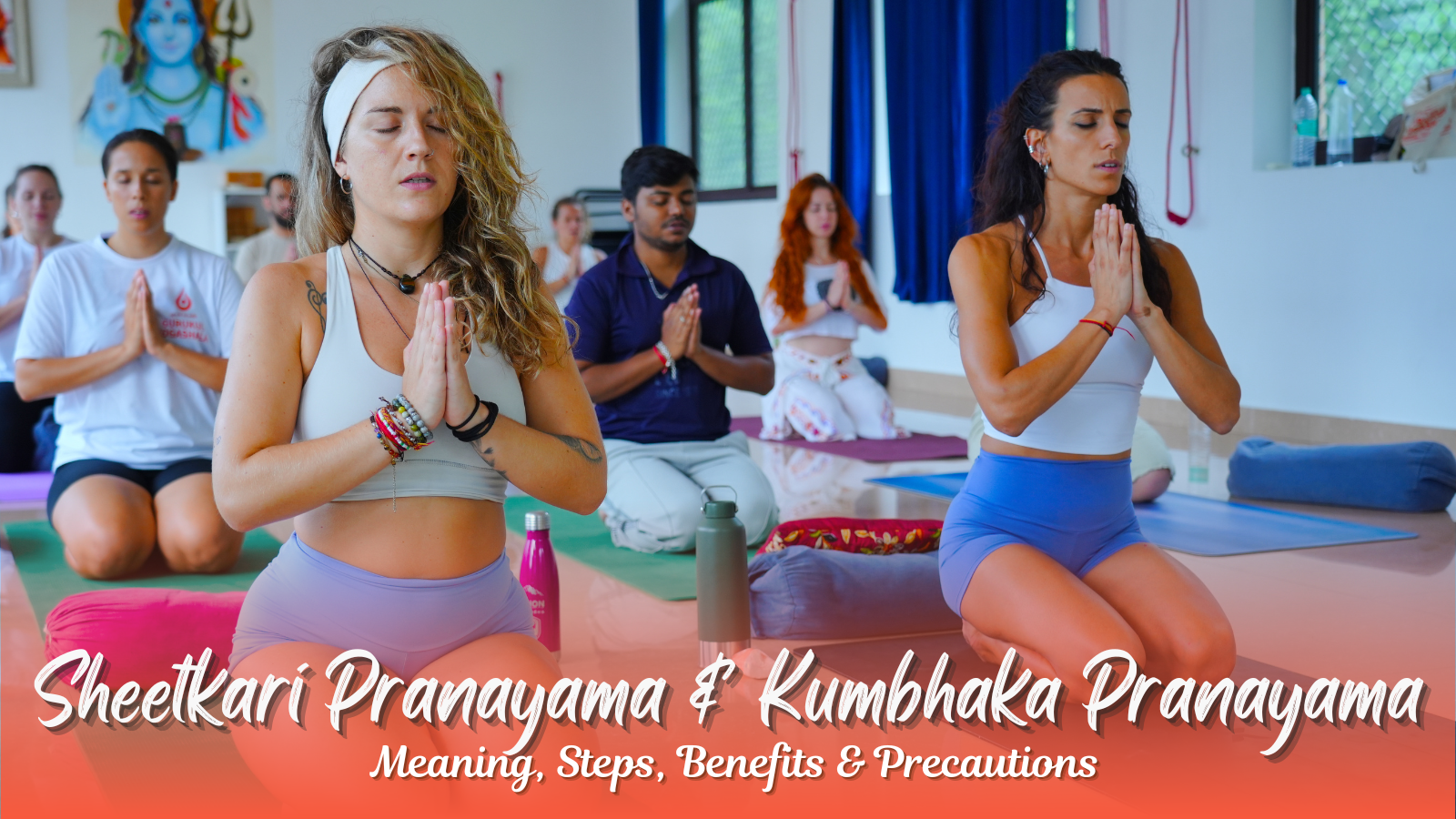
Sheetkari Pranayama & Kumbhaka Pranayama – Steps, Benefits & Precautions

Sheetkari Pranayama & Kumbhaka Pranayama – Steps, Benefits & Precautions

Pranayama is an ancient practice that focuses on the breath. Prana and ayama are the two Sanskrit words combined together to make Pranayama. “Prana” is the Sanskrit word that means “life force or life energies“ while “Ayama” means “to control, suspension or extension”. Sheetkari Pranayama (Sitkari) and Kumbhaka Pranayama are two ancient yogic breathing techniques that improve concentration, balance prana (life force) and promote overall health. Practiced in yoga school in Rishikesh and worldwide, these pranayamas are known for their cooling, calming and energizing effects.

Some commonly practiced type of pranayamas are Anulom Vilom, Bhramari, Bhastrika, Sheetali, Sheetkari, Kapalabhati and Ujjayi. In this guide, we will explore Sheetkari Pranayama steps, Sheetkari Pranayama benefits, Kumbhaka Yoga techniques, Ashta Kumbhaka and Abhyantara Pranayama, along with practice tips.

What is Sheetkari Pranayama (Sitkari)? – Cooling Breath Technique

“Sheet” is a Sanskrit word means “cool”. Sheetkari also known as Sitkari Pranayama or Shitkari is a yogic breathing technique designed to bring cooling and calmness to the body and mind. It has similar effects as of Shitali Pranayama.

How to Practice Sheetkari Pranayama – Step by Step Guide

  • Sit in a comfortable meditation asana, can be sukhasana, padmasana or siddha asana with hands resting on your knees and your spine straight and shoulder relaxed.
  • Close your eyes and observe your body as it is. Then take a few deep and calming breaths to relax the whole body.
  • Gently clench your teeth together and separate your lips.
  • The tongue may be rolled upward into Khechari Mudra, with the sides touching the palate or left flat in a natural position.
  • Inhale slowly and deeply through the gaps in your teeth, producing hissing sound. Feel the cool air entering your body.
  • Close your mouth and exhale slowly and completely in a controlled manner through your nose. This makes one round.
  • Repeat for 5-10 rounds.

Duration: 5 to 10 rounds is sufficient for beginner. Gradually can increase 10 to 15 or as comfortable.

Time of practice: Best time to practice is early in the morning or after sunset.

Benefits of Sheetkari Pranayama (Sitkari Breath)

If practiced regular Sheetkari or Sitkari Pranayama provides multiple benefits. Few are mentioned below:

  • Cools the body and mind and reduces excess heat.
  • Reduces stress, anger, emotional agitation, anxiety by calming down the nervous system.
  • Improves skin health, giving it natural glow and reduces pimple.
  • Helpful for people with high blood pressure and hypertension.
  • Pacify Pitta related disorders in Ayurveda such as acidity, inflammation, indigestion, burning eyes etc.
  • Improves focus, concentration for meditation practice

Sheetkari Pranayama is especially beneficial for people living in hot climate or those experiencing excess internal heat.

Sheetkari Pranayama Precautions & Who Should Avoid

  • Sheetkari should not be practiced during cold weather and polluted atmosphere
  • People suffering cold, cough, asthma,  any other respiratory problems should not practice this pranayama as it has cooling effect so it will increase kapha(mucus)
  • Avoid in case of extremely low BP
  • Teeth infection, missing or sensitivity in teeth should avoid this pranayama
  • Because it has cooling effect so people suffering from chronic constipation should avoid

What is Kumbhaka Pranayama? – Breath Retention Technique

Kumbhaka means “breath retention”. The word Kumbhaka was derived from Sanskrit word “Kumbha” means “pot”. In yoga, the pot represents our belly. In Kumbhaka the breath is consciously held either after inhalation or exhalation. Kumbhaka is the most important part of any Pranayama. But to master Kumbhaka one must develop step by step control over the respiratory functions. Therefore, at the beginning more importance has been given to inhalation and exhalation to prepare or strengthen the lungs for further practices.

There are two categories of Kumbhaka:

  • Antar or Abhyantara Kumbhaka (Internal breath retention)

It involves inhaling deeply and holding the breath inside.

  • Bahir or Bahya Kumbhaka (external breath retention)

In this breath is retained after complete exhalation.

Both these forms strengthen lungs capacity, improves focus and enhance energy.

Note: Breath retention should only be practised for as long as is comfortable. Never strain in any way or it may cause harm to body or mind.

How to practice Antar or Abhyantara Kumbhaka?

  • Sit in a comfortable meditation asana, can be sukhasana, padmasana or siddha asana with hands resting on your knees and your spine straight and shoulder relaxed.
  • Close your eyes and observe your body as it is. Then take a few deep and calming breaths to relax the whole body.
  • Take a deep breath through your nose to the count of five (counting should be done in mind). Then tuck your chin into your chest in jalandhara bandh and hold the breath to the count of five.
  • Lift your head and exhale slowly and in controlled manner through nose to the count of ten.
  • Exhalation should be double of inhalation as in this example of ratio 1-1-2.
  • Take two to three normal breaths before starting the next round.
  • Repeat the cycle for 5-10 min for beginners.

How to practice Bahir or Bahya Kumbhaka?

  • Sit in a comfortable meditation asana, can be sukhasana, padmasana or siddha asana with hands resting on your knees and your spine straight and shoulder relaxed.
  • Close your eyes and observe your body as it is. Then take a few deep and calming breaths to relax the whole body.
  • Take a deep breath through your nose to the count of five (counting should be done in mind).
  • Exhale slowly and in controlled manner through nose to the count of ten. Then tuck your chin into your chest in jalandhara bandh and hold the breath to the count of five.
  • Exhalation should be double of inhalation as in this example of ratio 1-1-2.
  • Take two to three normal breaths before starting the next round.
  • Repeat the cycle for 5-10 min for beginners.

Tips for practicing Kumbhaka Pranayama:

  • Don’t hold your breath by force, don’t go beyond your capacity.
  • Don’t practice Antara Kumbhaka before mastering puraka (inhale) and rechaka (exhale).
  • Don’t practice Bahya Kumbhaka before mastering Antara Kumbhaka.
  • Always practice sitting or laying down, never standing.
  • Practice this pranayama on an empty stomach .

There are eight sub-types of Kumbhaka known as Ashta Kumbhaka described in Hatha Yoga Pradipika:

  1. Sahita Kumbhaka
  2. Surya Bhedana
  3. Ujjayi
  4. Bhastrika
  5. Sheetkari
  6. Sheetali
  7. Bhramari
  8. Plavini

Benefits of Kumbhaka Pranayama for Mind & Body

Practicing Kumbhaka regularly can benefit both body and mind such as:

  • Expands lung capacity and strengthens the respiratory system
  • Increases oxygen absorption and energies cells
  • Improves concentration and meditation
  • Helps control cravings and stabilises emotions
  • Supports detoxification and better circulation

Kumbhaka Pranayama Contraindications & Safety Tips

Kumbhaka Pranayama should not be practiced by people suffering from underlying conditions:

  • Lung disease and respiratory conditions
  • Nasal congestion, sinus, ENT infection
  • Serious heart related problems, hypertension and extremely high or low blood pressure
  • In case of clinical anxiety
  • Pregnancy

These are the main precautions, but others may apply. If you have any health concerns, consult a doctor or a qualified yoga teacher before practicing either form of Kumbhaka Pranayama.

FAQs on Sheetkari & Kumbhaka Pranayama

  • In which disease is Sheetkari Pranayama beneficial?

It is helpful in hypertension, hyperacidity, stress-related disorders, skin disease and excessive body heat.

  • How to perform Sitkari Pranayama?

Close your teeth lightly, open your lips, inhale through the teeth making a hissing sound and exhale through the nose. This is the Sitkari Pranayama steps method.

  • What are the 7 types of pranayama?

Commonly practiced are Anulom Vilom, Bhastrika, Kapalabhati, Bhramari, Ujjayi, Sheetali and Sitkari Pranayama.

  • Who cannot do Sheetkari Pranayama?

People with asthma, cold, cough, sinusitis, or low blood pressure should avoid Shitkari Pranayama.

Final Thoughts – Practicing Pranayama with Yoga in Rishikesh

In today’s fast-paced lifestyle, stress, anxiety, hypertension, and digestive issues  are common. By practicing Sheetkari Pranayama (for cooling and relaxation) and Kumbhaka Pranayama (for inner strength and focus), one can restore balance.

For those seeking a deeper yogic journey, enrolling in the Best Yoga School in Rishikesh for a Yoga Teacher Training in India is a transformative step. Rishikesh, the birthplace of yoga, offers authentic guidance on pranayama, meditation and philosophy.

If you want to deepen your pranayama practice, join our 200 Hour Yoga Teacher Training in Rishikesh at Gurukul Yogashala – the best yoga school in India for authentic learning.

Bhadrasana (Gracious Pose): Meaning, Steps, Benefits & Precautions

Bhadrasana (Gracious Pose): Meaning, Steps, Benefits & Precautions

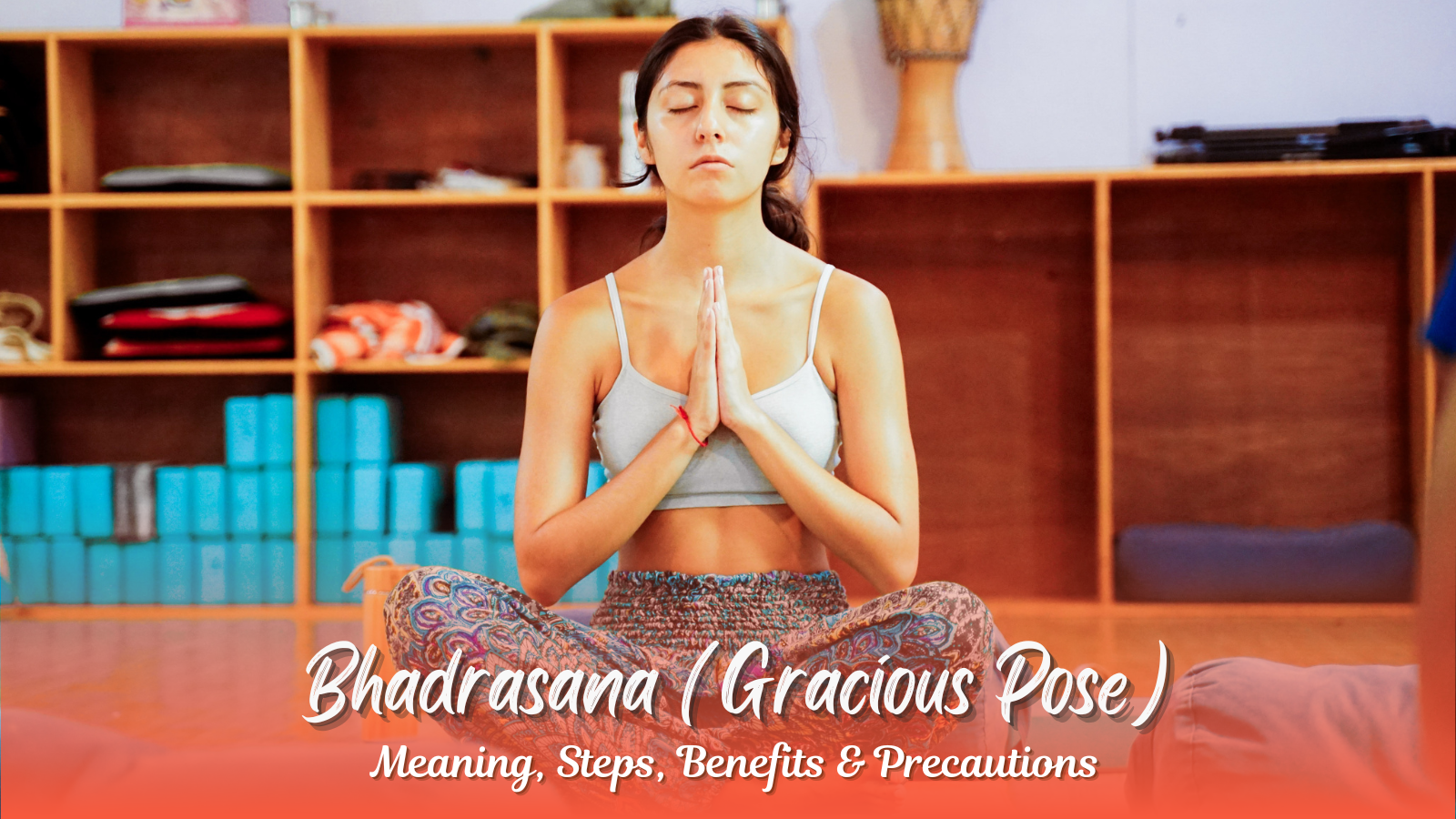
Bhadrasana, also known as the Gracious Pose, is a traditional yoga pose for meditation and pranayama that promotes stillness, inner composure, and balance. Practicing Bhadrasana yoga pose regularly can reduce stress, improve flexibility and deepen meditation.

The Sanskrit language defined Bhadra as elegant, noble, or auspicious. As the name shows, Bhadrasana is the posture that guides its practice into a state of poise and tranquility, and one that offers many physical and psychological benefits. You may not even work up a sweat in this asana, but you will develop two of the most important resources you can have: steadiness and serenity.

In comparison with many forms of yoga poses, which are aimed at fitness training or body stamina, bhadrasana yoga is one of the traditional yoga poses of meditation. Yogis at all times have preferred it to mantra-repeating, pranayama and other long meditations because it reduces the distractions arising in the body. Even today, it is extremely timely- serving as a natural antidote to stress, restlessness and sedentary fatigue.

Bhadrasana Meaning: What Does Gracious Pose Represent?

The Sanskrit term Bhadra is translated as graceful, blessed, or auspicious. Therefore, Bhadrasana is the Gracious Pose or Auspicious Pose. The terms of this “bhadra” can be simulated by understanding how it gives purity, calmness and inward grace already existing in terms of yogic philosophy.

The posture is mentioned in both the Hatha Yoga Pradipika and Gheranda Samhita as an essential sitting posture upon which pranayama and meditation can be practiced. Unlike other new-fangled postures, Bhadrasana does not require flexibility and composure to the extreme, which is why it can be offered to both novices and diligent practitioners.

Bhadrasana Pose Images & Correct Posture Guide

A bhadrasana image would normally have a seated yogi who is sitting in an erect position:

  • Soles of feet pressed
  • Knees spread wide, his heels down toward the floor
  • Spine stretched and shoulders dropped
  • When not moving, the hands rest either on the feet or up the thighs

Before performing bhadrasana, viewing the bhadrasana poses and bhadrasana images of this pose can aid in finding the correct position or posture and preventing errors like slouching or hurting the knees.

Bhadrasana Pose Images & Correct Posture Guide

Speaking of bhadrasana steps, it does not emphasize athleticism but on establishing a proper base. The following is the bhadrasana procedure in detail:

Begin in Dandasana (Staff Pose)

  • Sit with straight out legs in front.
  • Stay up on the back, shoulders relaxed, hands by the hips.

Bring Feet together

  • Bend your knees to the floor and touch the heels of your feet.
  • As you pull the heels to the perineum, do not force them.

Open the Knees

  • Have your knees fall outward, making a diamond shape of your legs.
  • Squeezing them down is unnecessary; time and gravity will render them more flexible.

Hand Placement

  • Grip firmly with both hands and the feet.
  • Alternatively, place the palms on the knees and practice meditation.

Align and breathe

  • Keep the spine straight, the chin slightly tucked in.
  • Breathe deeply, paying attention to the filling of the chest of breath and even rhythm.

Duration

  • Those new to it can rest after 1-2 minutes.
  • Increase to 10-15 minutes, especially during meditation or pranayama.

This order of bhadrasana steps is easy and yet efficient, and one of the friendliest to yoga practitioners.

Bhadrasana Benefits: Physical, Mental & Spiritual

The bhadra yoga benefits are wide-ranging; it promotes physical health along with a clear mind. The main bhadrasana benefits are as follows:

Physical Benefits

  • Flexibility of the Hips and thighs: The chest stretches the inner thighs, knees.
  • Tones pubic muscles: helps maintain reproductive health and urinary system.
  • Helps with digestion: Stimulates the abdominal organs and helps enhance digestion.
  • Strengthens the neck: Helps to increase neck stability.

Mental and Mental Benefits

  • Driver of stress and anxiety: Branches off stress and anxiety.
  • Pros: Provides a steady surface that can be used to meditate.

Heightens concentration: Promotes silence and enhances concentration.

Spiritual Benefits

  • Moderates prana (life energy): Helps to have energy in the body.
  • Introduces grounding: Increases a sense of stability and grace.

It is this blend of physical and meditative that supports the fact that bhadrasana yoga is being practiced to date in most traditions.

Bhadrasana Contraindications & Precautions

Bhadrasana, like the rest of the asanas, requires Bhadrasana contraindications to be followed:

  • Avoid when there is a serious knee, ankle or hip injury.
  • Individuals with sciatica or acute lower back pain should exercise care.
  • When pregnant, they should be taught the beneficial effect of support below the thighs and be practiced only under expert supervision.
  • Do not strain or over-pull down the knees
  • Never practice yoga without utilizing a yoga mat or cushion.
  • Making practice conscious is the safest way of achieving greater gains.

How to Include Bhadrasana in Daily Yoga Practice

Bhadrasana yoga may be practiced.

  • Heat-up of hip-opening in the preparation of active movements.
  • A step-to breathwork.
  • A meditation seat on which a mantra is sung or meditations are sat.
  • A restorative one that grounds and follows intense yoga practices.

Due to its flexibility, numerous educators recommend using Bhadrasana daily- even a few minutes a day.

Bhadrasana in Rishikesh: Learning at the Source

Rishikesh is sometimes referred to as the Homeland of Yoga in the World. In case you want to increase your knowledge of Bhadrasana and other basics of Asanas, a Yoga Teacher Training School in Rishikesh will help you become much more knowledgeable.

In an Ashtanga Yoga School in Rishikesh, people learn the bhadrasana procedure, not only in a physical manner but also energetically and philosophically. Ashtanga Yoga Teacher Training in Rishikesh, trainees discuss:

  • Alignment and anatomical dissection of asana such as Bhadrasana
  • Sequencing is part of the conventional forms of yoga
  • Instructions on how to teach entry-level and higher-level students
  • Yogic philosophy links postures with inner consciousness

Best Yoga Teacher Training in Rishikesh takes a balanced position between tradition and the current understanding. Regardless of whether you are seeking the Best Yoga TTC in Rishikesh to attain certification or simply exploring the Best Yoga School in Rishikesh to educate yourself, Bhadrasana will be the way of being rather than a mere posture.

FAQs on Bhadrasana

What are the benefits of Bhadrasana?

It helps to make hips and thighs more flexible, develops pelvic muscles, good digestion, reduces stress and provides a solid base on which to sit during meditation and pranayama.

Which disease is cured by Bhadrasna?

Yoga does not directly act as a medication for the disease, but Bhadrasana helps settle uncomfortable digestive problems, slightly dull fatigue, imbalance of the reproductive system and stressful afflictions.

What is the meaning of bhadrasana?

Its meaning is Gracious Pose or Auspicious Pose and represents stability and grace with an inward gaze.

How to perform Bhadrasana?

Sit with the legs open, bend the knees, and place the soles of the feet together, bringing the knees to drop out, maintain the spine straight and hold the feet or the thighs, breathe deeply.

Conclusion

Bhadrasana yoga pose is more than a posture—it’s a meditation seat, a stress reliever and a gateway to inner calm. Whether you’re a beginner or advancing in your practice, adding Bhadrasana to your routine can transform your yoga journey. Ready to deepen your practice? Explore traditional yoga training in Rishikesh and experience yoga at its source

In addition to its physical virtues, the asana produces inner stillness; the sort of inner tranquility that enables one to breathe more easily, think more clearly and sleep more fully. It provides a very accessible way into yoga as a first-time practitioner. To experienced practitioners, it can be a solid support in meditation and pranayama. In both, it affirms the yogic value that one finds equilibrium not through blockage, but through yielding.

To those who believe they are called to take it further, it could be life-changing to be able to explore the Bhadrasana in the beautiful surroundings of Rishikesh. Practicing this asana during an Ashtanga Yoga Teacher Training in Rishikesh gives not only correct alignment procedures, but also spiritual parameters that turn this simple pose into a meditative technique. With the applied knowledge of professionals in yoga under the management of the knowledgeable teachers in any Ashtanga Yoga school or Yoga teacher training school in Rishikesh, the students are equipped with more than physical knowledge; they develop deeper insights into yoga as a life.

Making the Best Yoga Teacher Training in Rishikesh or the Best Yoga TTC in Rishikesh can make all the difference, as you can combine ancient knowledge with modern one. And to those who only desire to expand personal practice, a journey to the Best Yoga School in Rishikesh is the chance to latch onto the balance between mind, body and breath in an atmosphere drenched with yoga tradition.

Bhadrasana is basically not a posture, but a philosophy in action. It reminds us that grace is not complicated, but it is present, and it is not a struggle but a standstill. Whether only a few minutes are spent at home or Bhadrasana is studied in an organized course, the practice provides a silent channel to stability, base and inner calmness.

Perfect Yoga Breakfast – What to Eat Before & After Yoga for Energy & Balance

Perfect Yoga Breakfast – What to Eat Before & After Yoga for Energy & Balance

Perfect Yoga Breakfast – What to Eat Before & After Yoga for Energy & Balance

An energizing yoga breakfast sets the tone for your day, keeping you light, focused and ready for your yoga practice—whether it’s gentle Hatha vs Vinyasa. Maybe you are starting your day off with a light stretch or feeling like something more intense, like a vinyasa practice, but what you eat before and after class can significantly affect how energized you feel as well as your digestion and state of mind.

What to eat before yoga is a question that some first-time yoga class participants often ask, as well as more experienced yoga practitioners taking part in a 200 Hour Yoga Teacher Training in Rishikesh. Do I even eat anything? So, what should we eat after yoga to re-energize with smart foods? This guide will look into the main aspects of the yogi diet, the best breakfast time and new nutrition methods that we can use to complement ancient yogic knowledge.

Whether you are training at a Yoga School in Rishikesh or just keeping up with your home practice, the right yoga breakfast, one that is harmonized with your dosha, way of life and yoga style, can maximize the physical and spiritual benefits.

What is a Yoga Breakfast?

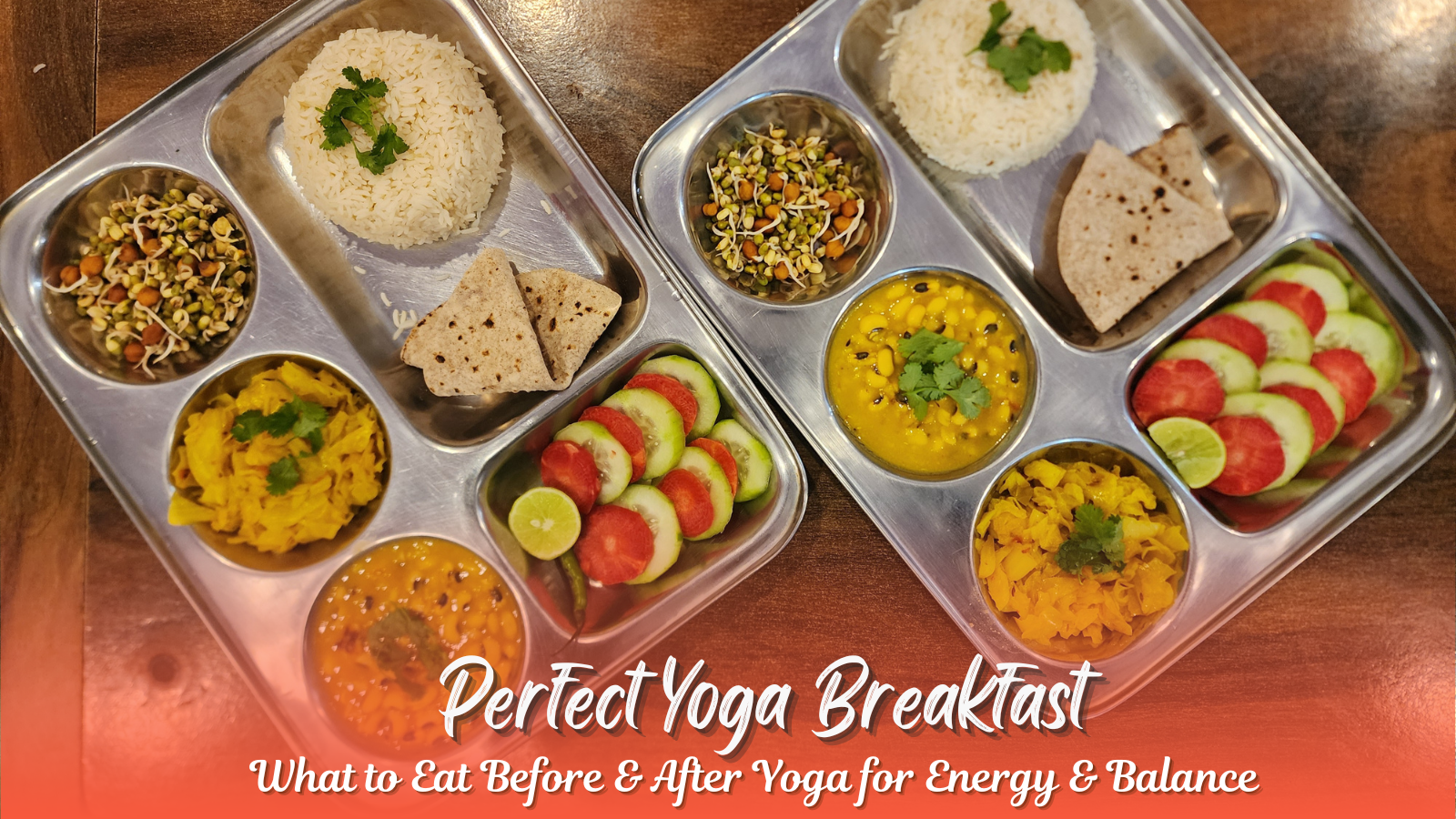
Best breakfast for yoga that assists your body and mind before and after yoga is called a yoga breakfast. A yogi breakfast is Satvic (pure), light in quantity and should be easily digestible, unlike a heavy Western breakfast, so that you can be focused, supple and remain calm throughout your session.

It usually consists of whole foods, natural, plant-based foods, including:

  • Hot salty herbal teas or lemon water
  • Date, raisin or soaked almonds
  • Seasonal fruits
  • Steamed vegetables
  • Oatmeal or rice porridge, Simple whole grains
  • Green juices or fresh coconut water

These foods are also rich in prana (life force) and will keep you energized without making you feel like you are stopped up. One should ideally take a pre-yoga breakfast 1-2 hrs before one head to the yoga session, particularly when the yoga is fairly physical.

Best Breakfast Before Yoga

If you’re doing yoga at home or attending a 200-hour Yoga Teacher Training in Rishikesh, the best breakfast before yoga is always light, nourishing and sattvic. Ideally, the food must be:

  • Light and well-digestible
  • Energy and nutriment-enriching
  • Not one working with stimulants, e.g., caffeine and sugar
  • Alkaline-forming to curb inflammation

Top Pre-Yoga Breakfast Options:

  • Fruit Salad with Chia Seeds: It contains natural sugar, hydration and fiber.
  • Soaked Almonds or Soaked Walnuts: A Nice source of protein and healthy fat.
  • Banana cinnamon oatmeal: Keeps blood sugar and helps maintain energy.
  • Avocado Toast on Multigrain Bread: The best option is for those who are into vinyasa or power yoga.
  • Yoga Bar Breakfast Protein Bar: It is easy, well-balanced and targeted to physically active yogis. The Yoga Bar Breakfast Protein Bar benefits are a portable breakfast, natural foods and increased energy.

When you practice early in the morning, you might like to have a very light meal and/or forgo solids. In this case, one can do with herbal tea or warmed lemon water with honey.

Can I Do Yoga After Breakfast?

Yes, you can practice yoga after breakfast, but timing is key. Most yoga teachers in Rishikesh recommend waiting 30–120 minutes depending on your meal size.

Yoga done when the stomach is full might cause pain or cause gas, or lethargy. That is why at most of the best schools, such as the Best Yoga School in Rishikesh, the tutors encourage yoga in the morning on an empty stomach or just after an extremely light breakfast. The practice coincides with Ayurvedic teachings and helps to achieve the best energy movement in asanas.

To the question in the mind of many, especially those who have yoga breakfast, when should you practice yoga? The answer is a good rule of thumb:

  • Light meal (fruits and tea): 30-45 minutes wait
  • Medium meal (ex, oats or toast): wait 1-1.5 hours
  • Full meal (such as a full Indian breakfast): take time 2-3 hrs

Yoga on an Empty Stomach vs After Breakfast

“Yoga with an empty stomach or after eating breakfast?” The answer varies as everybody’s metabolism, schedule & goals are different.

Pros of Practicing on an Empty Stomach:

  • Improved digestion
  • Enhanced mind state and focus
  • Energy flow is better during pranayama and meditation
  • Perfect to use in the mornings

Pros of Practicing After a Light Breakfast

  • More endurance for long or high-level workouts
  • Helps to prevent low blood sugar or dizziness
  • Suitable for mid-morning or pm practices

When you are pregnant, or doing Pre-Natal Yoga Teacher Training in Rishikesh, a little healthy snack before practice is mandatory. Sometimes listen to your body.

Post Yoga Breakfast: Refueling Mindfully

Your post-yoga breakfast is also as critical as pre-yoga. Your body should:

  • Rehydrate
  • Replenish electrolytes
  • Recover muscle (particularly after powerful asana classes)
  • Support digestion

Best Post Yoga Breakfast Ideas:

  • Protein Powder, Banana and Spinach Smoothie
  • Lemon and Coconut Mung Bean Sprout Salad
  • Ayurvedic Kitchari (Rice and Lentil Porridge)
  • Veggie Tofu Scramble
  • Herbal tea with yoga Breakfast Protein Bar of Yoga Bar

Chia seeds, nuts and plant proteins would be an addition to your breakfast that will bring life back to it, making your body feel steady and light.

Yogi Diet – Eating the Yogic Way

It is a diet that holds Ayurvedic and sattvic concepts. It focuses on an emphasis on clean, whole, and natural foods that bring unclouded health, life and soul improvement.

These are some of the tenets of a yogi breakfast:

  • No storage (no leftovers or packaged junk)
  • Degree of simplicity (stomach-friendly and to the senses)
  • Seasonality (Eating with the natural cycles)
  • Mindfulness (presence and gratitude when eating)

During a Yoga Teacher Training in India or 200 Hour Yoga Teacher Training in Rishikesh, one may learn about yogic nutrition as well as asana, pranayama, and meditation. Food is not treated as a part of the practice but as an object on its own.

FAQs: Answering Common Questions

Q1: What do yoga people eat for breakfast?

Fruit and herbal tea, soaked nuts almond, walnut and oatmeal are usually taken by Yogis. A good number of them add Ayurvedic foods in the form of kitchari, sprouts or warm spiced porridge.

Q2: What does Sadhguru eat for breakfast?

Light or natural foods are something Sadhguru talks about a lot. He does not usually eat breakfast, but his first meal is at lunchtime due to his yogic way of life and rhythms of digestion.

Q3: Is yoga good for breakfast?

Although it may not be food, yoga could be a vocal morning fillip. It enhances metabolism, lowers stress and preconditions the positive start of a day.

Q4: Can I drink water before yoga?

Yes, 20–30 minutes before practice, drink warm or room-temperature water. Do not take cold drinks just before yoga.

Q5: What is the best time to eat for yoga?

Take a minimal meal 1-2 hours before yoga. After practice, it is better to wait 15 to 30 minutes before eating so that your body can rest.

Final Thoughts: Eating with Intention

Want to deepen your practice and learn more about yogic nutrition? Join our Yoga Teacher Training in Rishikesh and explore the ancient art of mindful eating. As you sit down to a yoga breakfast during a sunrise session or as you go through a module at the Yoga School in Rishikesh, your yoga eating habit can even become a part of your spiritual practice. It is time to recharge not only the body, but the soul as well.

When you match what you eat with your practice, making sattvic meal choices, eating at the best times, and listening to your body, your yoga, and everyday life can rise. Whether it is eating a Yoga Bar Breakfast Protein Bar before a busy day at the office or a bowl of warm kitchari after practice, proper eating decisions make a difference.

On your journey further into yoga, may that same intention guide you- maybe through a Yoga Teacher Training in India or a Prenatal Yoga Teacher Training in Rishikesh – remembering that the life of the yogi is a life of awareness, simplicity, and conscious living. A good place to start is your yogi breakfast.

Gurukul Yogashala Rishikesh Yoga teachers in india Top yoga teacher in India 2024

Top 10 Yoga Teachers in India (2024) – Best-Rated Gurus, Schools & Career Insights

Top 10 Yoga Teachers in India (2024) – Best-Rated Gurus, Schools & Career Insights

India, the home of yoga, has presented to the world ancient knowledge, eternal practices and some of the most enigmatic yoga teachers. From the Himalayan foothills to Goa’s seashores and Rishikesh, the spiritual core of India, yoga teachers in India provide much more than a sequence of postures and flows they provide a journey of transformation.

Whether you are a beginner wanting to discover your inner calm or an experienced practitioner wanting more, your search for the best yoga teacher in India is critical to your quest. In this blog post, we present to you a carefully selected list of some of the best-rated yoga teachers and schools that you must know of.

We start with one of the most highly regarded yoga schools of Rishikesh: Gurukul Yogashala

Gurukul Yogashala – Respecting the Traditional Origins of Yoga

 Address: Laxman Jhula Rd, Swarg Ashram, Rishikesh, Uttarakhand

‍Specialties: Hatha Yoga, Vinyasa Yoga, Pranayama, Philosophy of Yoga

Gurukul Yogashala is one of the best yoga school in Rishikesh based on its strong roots in the traditional Gurukul system. Situated in the holy womb of India—Rishikesh—this school is renowned for its disciplined but loving method of teaching yoga.

Arvind Ji, an intuitive and committed yoga teacher, guides the classes here. Her teaching is soft yet deep, combining Vedic wisdom, Ayurveda and traditional Hatha Yoga into every class. He is greatly revered not just for his yogic knowledge but also for his spiritual guidance and empathetic leadership.

Why Gurukul Yogashala Is Among the Top Yoga Schools in Rishikesh

•Focus on 100-hour and 200-hour Rishikesh yoga teacher training

•True ashram-style living experience

•Traditional Indian scriptures-based teachings

•One-on-one attention in small class sizes

•Certification from Yoga Alliance International

If you’re looking for yoga teacher training in India that’s immersive, disciplined and spiritually nourishing—this is where you want to be.

Top-Rated Yoga Instructors in India (Detailed List)

‍Dr. Hansaji Yogendra – Director, The Yoga Institute, Mumbai

 Location: Mumbai, Maharashtra

‍Specialties: Classical Yoga, Lifestyle Management, Therapeutic Yoga

Dr. Hansaji Yogendra is one of India’s most prominent figures in the yoga world and today’s director of the world’s oldest established yoga center, The Yoga Institute, which was founded in 1918. She has transformed the methodology of classical yoga by bringing it to contemporary life and well-being requirements.

A spiritual force in herself, Dr. Hansaji’s teachings are rooted in the eight limbs of Ashtanga Yoga, with a focus on ethics, mental discipline, and holistic health. Her training programs are perfect for those looking to integrate yoga into everyday living.

Sadhguru – Founder, Isha Foundation

 Location: Coimbatore, Tamil Nadu

‍Specialties: Inner Engineering, Hatha Yoga, Meditation

One of the world’s best-known spiritual gurus and yoga teachers from India, Sadhguru Jaggi Vasudev founded Isha Yoga. His courses—particularly the life-changing Inner Engineering—have drawn millions of seekers around the world.

His system is based on traditional yogic science and the Shiva tradition, providing instruments for inner alignment (inner engineering), mental clarity and spiritual growth.

Isha Hatha Yoga School provides senior-level training in Hatha Yoga and Kriya practices and their teacher training is rigorous and authentic.

‍Yogrishi Vishvketu – Founder, Akhanda Yoga Institute

Location: Rishikesh, Uttarakhand

‍Specialties: Akhanda Yoga, Pranayama, Holistic Living

A Himalayan master and one of the world’s most respected yoga teachers, Yogrishi Vishvketu (Vishva-ji) is recognized for his distinctive approach—Akhanda Yoga—that weaves asana, pranayama, mantra, and yogic philosophy into a harmonious practice.

His 200-hour yoga teacher training in Rishikesh is a world favorite and one of India’s most in-depth courses for becoming a yoga teacher. With his soothing teaching style and profound yogic understanding, Vishva-ji focuses on self-discovery, healing, and bliss.

Baba Ramdev – Patanjali Yogpeeth, Haridwar

 Location: Haridwar, Uttarakhand

 Specialties: Pranayama, Ayurveda, Naturopathy

A national name in India, Baba Ramdev has been instrumental in getting yoga popularised as a mass movement. Through Patanjali Yogpeeth, he provides mass yoga training, Ayurvedic therapy, and open yoga camps.

Although his approach is populist and physical in form, his lectures on Pranayama and natural healing are highly beneficial for beginners venturing into yoga and health.

Anand Mehrotra – Founder, Sattva Yoga Academy

 Where: Rishikesh, Uttarakhand

 What they’re known for: Sattva Yoga, Kriya, Meditation

Anand Mehrotra is a young spiritual teacher from India and the creator of Sattva Yoga—a powerful fusion of ancient Himalayan wisdom and Kundalini, Tantra, and Vinyasa flow.

His Rishikesh yoga school is located in the peaceful foothills and teaches 200-hour and 300-hour yoga teacher training, retreats, and higher self-mastery programs. Sattva Yoga emphasizes individual evolution, emotional cleansing, and spiritual growth.

Read More About: AAMAX

Mini Thapar Shastri – Yoga Expert & Wellness Guide

Location: Delhi, India

Specialties: Therapeutic Yoga, Prenatal Yoga, Mindfulness

Mini Thapar Shastri is a familiar name in the urban wellness circuit. Her therapeutic yoga and women’s wellness interventions have changed numerous lives, particularly in Delhi and metropolitan cities.

An ever-present face on wellness panels and yoga television shows, Mini emphasizes personalized practice based on individual requirements—whether it is hormonal balance, spinal health, or mental peace.

Her sessions are commonly portrayed as soulful, healing, and utterly grounding.

Deepika Mehta – Ashtanga Yoga & Strength Training Specialist

Location: Mumbai, Maharashtra

Specialties: Ashtanga Yoga, Strength Training, Core Power Yoga

Deepika Mehta is one of India’s strongest and most empowering female yoga teachers. Famous for training celebrities and fitness gurus, her specialty is in Ashtanga Yoga, strength training, and contemporary yoga flows.

She blends the strict tradition of Mysore-style Ashtanga with breathing-led movement. Her workshops and teacher training courses regularly sell out worldwide.

If you’re looking for a contemporary yet traditional yoga practice, Deepika is someone you’d do well to learn about.

Namita Piparaiya – Holistic Wellness Educator

Location: Mumbai

Specialties: Hatha Yoga, Ayurveda, Breathwork

A corporate executive by past experience but now a full-time yoga teacher, Namita Piparaiya offers a scientific and integrative approach to yoga and Ayurveda. Her instruction involves breathwork, balancing the doshas and aligning lifestyles with yogic knowledge.

Her content is widely followed on digital platforms, and her approach appeals especially to working professionals and urban audiences looking to reconnect with their well-being.

Other Noteworthy Mentions:

•             Bharat Thakur – Founder, Artistic Yoga

•             Seema Sondhi – The Yoga Studio, Delhi

•             Nupur Biswas – Yoga Chakra Founder

•             Rupali Tigga – Power Yoga Specialist, Bangalore

•             Moksha Priya Ji – Senior Teacher at Parmarth Niketan Ashram

Why Choose an Experienced Yoga Guru Over Just a Course?

India has numerous yoga schools, yet not all yoga teachers provide the depth, lineage and discipline necessary to grow as a student or a teacher.

Whether you’re joining a 100 hour yoga teacher training in Rishikesh, a vinyasa yoga training in Goa, or looking for the top yoga school in India, it is actually the authenticity of the teacher that makes the real difference.

Excellent yoga teachers in India:

•Maintain the spiritual purity of yoga

•Unite yogic philosophy with asana

•Facilitate self-inquiry and awareness

•Lead students outside of the mat as well

•Provide certification courses such as Yoga Alliance TTC

FAQs About Yoga Teachers, Training & Careers in India

1. Who is India’s No. 1 Yoga Teacher

India has numerous famous yoga gurus, each being great in his or her own school of yoga. It’s hard to declare a single “No. 1” yoga teacher, but listed below are some of the most respected across the board:

 India’s Top Yoga Teachers (World-Recognized):

•             Dr. Hansaji Yogendra – Director, The Yoga Institute, Mumbai; one of the world’s oldest yoga institutions.

•             Sadhguru (Jaggi Vasudev) – Founder of Isha Foundation; famous for spiritual yoga and Inner Engineering courses.

•             Baba Ramdev – Made yoga popular among the masses with public camps and media.

•             Arvind Singh (Gurukul Yogashala, Rishikesh) – Famous for classical yoga teacher training based on Vedic knowledge.

•             Yogrishi Vishvketu – Founder of Akhanda Yoga, famous for international teacher training.

•             Anand Mehrotra – Founder of Sattva Yoga Academy; specializes in Kundalini, meditation, and self-control.

 What sets them apart as top-rated

• Authentic lineage and Vedic training

• Contribution to yoga teaching in India and worldwide

• Ongoing focus on whole-being wellness—mind, body and spirit

• Pioneering work in teacher training programs such as 200-hour YTT in Rishikesh

So, while the “No. 1” might differ depending on preference and path, India’s best yoga teachers are respected for their integrity, expertise and life-changing impact.

2. How Much Does a Yoga Trainer Cost in India

The cost of employing a yoga instructor in India can differ greatly by location, experience level, training style and mode (group-private-online).

 Indian Yoga Trainers’ average cost:

 1. Home-based One-on-One Private Yoga Instructor

•Metro Cities (Delhi, Mumbai, Bangalore): ₹800 – ₹2500 per session

•Tier 2 Cities: ₹500 – ₹1500 per session

•Rural or Ashram Situations: Usually donation-based or part of retreat charges

 2. Offline Group Yoga Class

• Monthly packages start from ₹1500 – ₹5000, depending on frequency of classes

 3. Online Yoga Classes (Zoom-YouTube-Apps)

• Per session: ₹300 – ₹800

• Monthly Subscription plans: ₹1000 – ₹3000

 4. Corporate Workshop Yoga Sessions

• Daily workshops: ₹5000 – ₹15,000

• Weekly-monthly corporate plans can reach up to ₹50,000 – ₹1 lakh+ based on the reputation of the instructor and years of experience

✅ Factors that determine pricing:

• Certification (Yoga Alliance, International boards)

• Location (yoga trainer in India vs yoga teacher training in Rishikesh)

• Specialization (Prenatal, Therapeutic, Power Yoga, etc.)

• Popularity or celebrity clientele of the instructor

3. How Much Does a Yoga Instructor Make in India

The salary of a yoga instructor in India can be significantly different depending on experience, certification and employment type (freelancer, institute, online etc.)

 Breakdown of Yoga Instructor Income:

‍1. New Yoga Teachers (0–2 Years Experience)

• ₹15,000 – ₹30,000 month at yoga schools or studios

• Freelancers might make ₹300–₹800 per session

•Following 200 hour yoga teacher training in Rishikesh, most become assistants

‍2. Mid-Level Instructors (2–5 Years Experience)

•₹30,000 – ₹70,000 month, particularly in tier 1 cities

•Part-time freelance trainers can earn ₹1000–₹2000 session

•Teaching own classes & retreats increases earnings

 3. Advanced Yoga Teachers (5+ Years Experience)

•₹80,000 – ₹2,00,000+month from a mix of:

  • Studio classes
  • Private clients
  • Retreats and workshops
  • YouTube influencer presence
  • Collaborations with wellness resorts

 4. Internationally Certified Trainers

With Yoga Alliance Certification, instructors can:

  • Teach abroad
  • Operate yoga teacher training in India (100 hr, 200 hr)
  • Charge high prices: ₹3000–₹5000+class

 5. Celebrity Yoga Instructors

• Earnings range from ₹5 lakhs to ₹15 lakhs/month based on brand endorsement deals, clientele and social media reach

4. Is Yoga Instructor a Good Career in India

Yes, it is as much a satisfying spiritual calling as an ever-more plausible long-term career option, particularly in the expanding health and wellness sector.

 Why Yoga is a Fulfilling Profession:

✅ 1. Huge Demand for Trained Trainers

•Wellness consciousness is booming in India and worldwide

•Schools, corporates, resorts and hospitals are recruiting yoga professionals

✅ 2. Diversified Income Sources

•Offline + Online sessions

•YouTube-Instagram monetization

•Corporate sessions and workshops

•Retreats and international training courses

•Affiliate with top yoga school in Rishikesh

✅ 3. Inner Satisfaction

•A profession built on healing, mindfulness and serving others

•A harmonious lifestyle that matches inner well-being

✅ 4. International Career Horizon

• With 100 hour yoga teacher training or 200 hour YTT certification in Rishikesh, teachers can:

o Work in foreign resorts and wellness centers

o Have international student pools

o Operate yoga classes in Europe, the USA, Southeast Asia and the Middle East

✅ 5. Easy Work-Life

• Set your own schedule, students and teaching methodology

• Most instructors turn into digital nomads with virtual yoga classes

Challenges to Remember:

•Competition market—standing out is a continuous effort and marketing

•Needs passion, discipline and learning continuously

•Physical strain and burnout are possible without self-care

•Establishing a stable client base takes time, particularly in the early stages

How to Succeed as a Yoga Teacher in India:

1.  Get trained at well-known institutions like Gurukul Yogashala, Rishikesh

2. Choose a niche (prenatal, therapy, vinyasa yoga Rishikesh, etc.)

3. Establish a good personal brand online

4. Obtain 200 hour or 300 hour yoga teacher training Rishikesh Uttarakhand

5. Begin small private, small group instruction

6. Partner with spas, resorts and corporate wellness programs

7. Understand the business side pricing, retention, outreach and licensure

8. Keep current with workshops, new flows and health trends

9. Create a multilingual offering (Hindi + English) to expand reach

10. Teach from the heart and with authenticity students will return for energy, not technique

How to Become a Certified Yoga Instructor in India

Pursuing a career as a yoga teacher in India is not only a job—it’s a vocation. As India sits at the center of the world yoga phenomenon, this is an optimal moment to join the field of work, particularly with yoga teacher training in Rishikesh or 500 hour yoga teacher training in Rishikesh, India.

Whether you aspire to teach in studios, open your own yoga school, or travel the world as a spiritual educator, the opportunities are abundant—and growing.

Namaste Pose Yoga Hands Gesture Yoga Teacher Teaching Namaste Pose

What Is Namaste Pose? Symbolism, Benefits & How to Practice It

What Is Namaste Pose? Symbolism, Benefits & How to Practice It

In yoga practices, sacred gestures exist that go beyond body positions and introduce deep spiritual and mindful traditions reflecting cultural heritage. Throughout a variety of settings and rituals, Namaste Pose maintains its place as a significant, powerful symbol. The Namaste Pose stands as a simple yet major symbolic gesture that people commonly use for yoga classes and spiritual sessions and ordinary everyday interactions. The Sanskrit name Anjali Mudra embodies unity, together with humility and inner peace, which form the foundation of yoga when used as Namaste Pose.

Your understanding of the Namaste posture will bring significant transformation to your yoga practice, regardless of where you stand as a beginner or experienced practitioner. Through its symbolic nature, Namaste functions as both a physical body position that links the practitioner to greater forces, yet also connects them to universal unity and personal self.

This detailed guide examines Namaste Pose meaning alongside its historical roots and religious significance, together with its health advantages as well as different performing techniques and instructions for practicing it. Understanding Namaste Pose requires studying at the Best Yoga School in Rishikesh or participating in a Yoga Teacher Training in India, where one can discover its significance in the field of yoga pose names.

What is the Namaste Pose?

Performing Namaste Pose means holding Anjali Mudra position by elevating the palms towards the Anahata Chakra heart center while creating a prayerful union in front of the body. People use this hand stance together with head bowing while shutting their eyes to demonstrate respect alongside humility.

The Namaste pose yoga begins with this hand position before and after practice to respect self and others as well as honor mindfulness and gratitude. This gesture currently exists in global culture as it stands as a customary form of respect in spiritual practices and meditative ceremonies.

Namaste posture provides practitioners with two key functions by establishing a foundation in body posture while representing our fundamental bond with others. The pose merges the body with inhalation and focus, which reflects the core principles of yogic wisdom.

The educational approach in various yoga schools in India incorporates this gesture as a regular spiritual routine for their students participating in Yoga Teacher Training programs in Rishikesh.

What Does Namaste Mean in Yoga?

Namaste is a Sanskrit combination of “Nama” which means bow and “Te” which represents you, so it carries roughly the meaning of “I bow to you”. By expressing Namaste, a person acknowledges the divinity that resides within another person.

The Deeper Symbolism:

  • Spiritual Connection: Namaste expresses the divine essence that exists within every person because of the universal connection between them. According to yogic beliefs, every being maintains a universal connection through the sharing of universal consciousness.
  • Respect and Humility: Namaste represents both a symbolic gesture and physical action which manifests respect and humble acknowledgment while strengthening mutual relationships between teachers and their students or between any individuals who perform it.
  • Inner Peace and Unity: Through this pose, one finds inner peace while building unity by directing attention toward the heart area to preserve our inner center.

The Three Meanings of Namaste:

  • Recognition of the Divine Within: Honoring the sacred in others.
  • Connection of Souls: A shared understanding exists that all souls rest within a single connection.
  • Gratitude and Respect: A symbolic offering of peace and kindness.

The Yoga School in Rishikesh teaches an elaborate version of these concepts while respecting their spiritual elements and symbolic practices.

What Is the Gesture at Namaste?

The traditional Anjali Mudra gesture, which people refer to as Namaste, represents more than a static body movement. This pose links both the material world and spiritual consciousness. This gesture unites gestures and breath alongside the alignment of subtle energies with body movement. Here’s how it’s typically performed:

  • Position yourself either standing or sitting in an easy posture.
  • Place your palms in front of the heart center point.
  • Holding your breath, you should gently bow your head downward while keeping your eyes shut.
  • Take in a complete deep breath through your nose while expressing the air slowly while you concentrate on your heart area.

The ritual hand placement is a standard component in numerous yoga poses names, and their associated sequences because it is used most prominently during initial standing Namaste poses or during final meditative postures.

Advanced practitioners use this sacred gesture to improve focus and grounding during their body flex transition and other poses.

Physical and Spiritual Benefits of Namaste Pose

The benefits of Namaste Pose provide multiple advantages that exceed physical exercise parameters. Namaste Pose constitutes a practice that creates harmony between your physical body and mental state, emotional processes and spiritual nature.

1. Promotes Mindfulness and Inner Stillness

Your practice of mindfulness develops through the Namaste pose by keeping awareness of the present moment. Through this pose, people can experience updated mental clarity, which brings them to full focus on the present moment during their practice times or daily activities.

2. Center Energy at the Heart Chakra

Anahata functions as the heart chakra, which serves as the center for emotional sensations of compassion and love according to yogic anatomy principles. You will activate and bring alignment to your heart chakra by placing your palms on this area, which leads to emotional equilibrium.

3. Improves Body Awareness and Posture

During the standing Namaste Pose, drawing the shoulders backward together with spine extension helps people maintain better body alignment and proper posture.

4. Enhances Respect and Gratitude

Through this physical position, the body demonstrates honor for others as well as for oneself. The Namaste attitude stands as a vital cornerstone of yoga ethics (Yamas and Niyamas).

5. Cultural and Spiritual Connection

The Namaste gesture increases your understanding of the cultural heritage of yoga. The practice ties you to the historical yoga heritage along with traditional practices when learning Yoga Teacher Training in India.

How to Do Namaste Pose Correctly

The Namaste Pose practice remains straightforward while generating profound effects for everyone wishing to perform it. The practice exists in three forms, including physical performance when practicing yoga, along with its use as meditation, and occurs in daily situations through hand gestures which function as silent greetings and blessings.

Steps to Practice:

  • The Namaste Pose starts from either a seated, kneeling or standing beginning position.
  • Maintain Anjali Mudra by holding your palms together at your heart center.
  • The practice requires embracing the palms with balanced pressure between them.
  • Close your eyes followed by three deep breaths.
  • Bow your head slightly as a sign of humility.
  • Inside, repeat the word Namaste by heart or speak Namaste aloud for practice.

People typically use this hand position during the movement from the rising yoga pose to meditative states or at the end of meditations. Precisely this stance will achieve a hallowed stopping point within your exercise practice while extending its significance to your everyday lifestyle.

Namaste Pose Variations

Namaste pose variations allow yoga practitioners to maintain all the different gestures and adapt to different intentions and settings:

This Namaste pose variation is performed during postures that require Tadasana for standing namaste pose and centering.

Seated Namaste Pose functions as a body position during meditation or pranayama practice to deepen breathing and mental concentration.

The gesture of Namaste at the forehead or crown revolutionised its purpose for sacred worship during spiritual prayer.

Namaste with a Deep bow serves religious and devotional yoga ceremonies alongside participating rituals.

Every energy signature and postural variation in Namaste carries distinct power that improves the entire yoga session.

Namaste Pose in Yoga Teacher Training

Different names of yoga poses contain Namaste pose as a component to symbolize transition, together with grounding or respect, among other functions.

Common poses include:

The Mountain Pose in Tadasana presents the Namaste hand gestures to maintain stillness along with proper alignment.

With Namaste hands held in balance and focus position, we perform Vrksasana (Tree Pose)

Using Namaste hands, skeptical people can detoxify their body while opening their chest through Revolved Prayer Twist.

Various yoga poses names can use Namaste Pose together with other components, so this posture stands as an extremely adaptable name in contemporary and classical styles of yoga.

People studying movement arts can recognize universal spiritual and emotional communication through a comparison of ballet poses names and yoga body positions.

Deepening Your Practice: Yoga Schools in India

Studying at a Yoga School in India provides the best opportunity to learn Namaste Pose and embody its essence. Students find the Best Yoga School in India offers an optimal environment because it is situated next to the Ganges River, inside the Himalayan natural surroundings along the holy river.

Why Rishikesh?

Rishikesh positions itself as the main spiritual center for all matters related to yoga. The Namaste Pose at sunrise, in combination with Sanskrit yoga poses names learning, and cave meditation, establishes a deep source connection to yoga.

Yoga Teacher Training in Rishikesh

The physical boundaries of a Yoga Teacher Training course, either in Rishikesh or another Indian location, offer both personal practice enhancement and training to become an instructor. You’ll explore:

  • Alignment and anatomy of poses like Namaste
  • Philosophy and ethics behind gestures and postures
  • Mantras, meditation, and pranayama

These programs teach people to embrace the Namaste posture as a comprehensive lifestyle system.

FAQs About Namaste Pose

What is the Namaste Pose?

People use Anjali Mudra as a hand gesture to join their palms at the heart while practicing yoga and demonstrating respect as well as spiritual connection.

What is the benefit of Namaste Asana?

The practice encourages mindfulness while improving posture, it centers energy and strengthens mutual respect, together with gratitude expression.

What is the gesture at namaste?

People use both their physical posture of palm-to-palm chest placement with head bow and sometimes eye closure to enhance their spiritual awareness.

What are the 3 meanings of Namaste?

Recognition of the divine, mutual respect and return to inner peace.

What is the ritual of Namaste?

When used traditionally, these prayers serve to generate and conclude yoga sessions and spiritual meetings for expressing connection and gratitude while maintaining humility.

Final Thoughts

Ready to explore yoga deeper? Join our 200 Hour Yoga Teacher Training in Rishikesh at Gurukul Yogashala.

Through the Namaste Pose, practitioners embody more than conventional hand movements because it serves as an honored spiritual expression from the yogic tradition. Indian cultural practices gave birth to Namaste, which then became a global element recognized in contemporary yoga studios, where it perpetuates spiritual reverence and a sense of connection and peace.

The Namaste pose will give depth to your everyday life when you practice it and study it more deeply at a Best Yoga School in Rishikesh while respecting yoga’s rich historical heritage.

Your hand gesture, along with your lowered head, serves as more than a movement because it represents a combined message about unity, combined with light and love.