What is Sarpasana (Snake Pose) in Yoga?

Sarpasana (Snake Pose) – Steps, Benefits, Precautions & Practice Guide

YogaAsana— Yoga is a practice that involves the body, mind, and spirit, while asana refers to the physical postures performed in yoga. These postures can be simple, like sitting poses, or more advanced, such as inversions, standing, and reclining positions. Asanas help improve strength, flexibility, and blood circulation, and are an important part of Hatha Yoga, helping to prepare the body for meditation and spiritual growth.

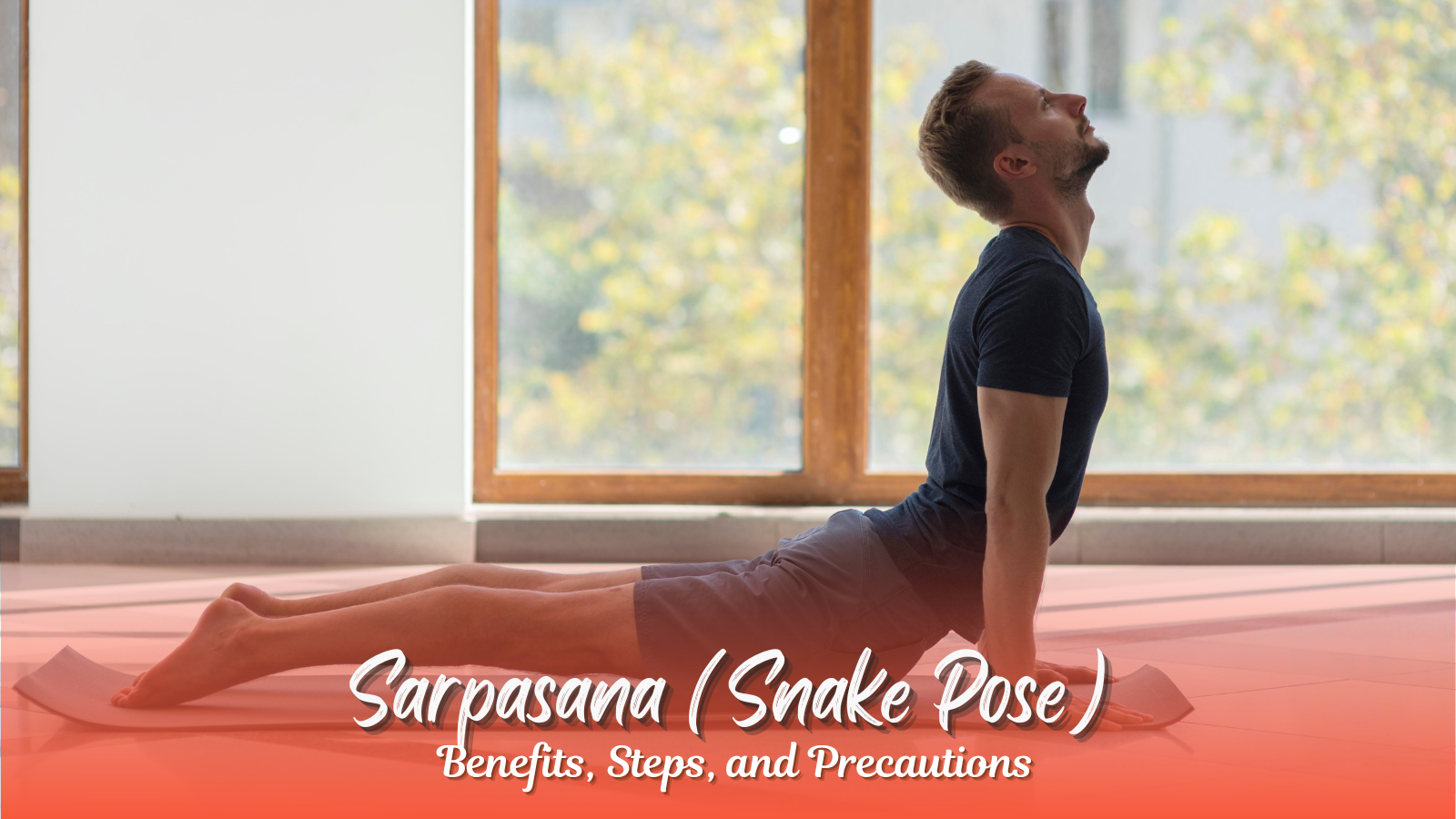
Among the various asanas, Sarpasana also known as the Snake Pose, is known for it’s ability to strengthen spine, improve flexibility and stimulate internal organs. It’s a back-bending posture, and while practicing it, one should follow necessary precautions and be aware of  contraindications to ensure maximum health benefits.

What is Sarpasana (Snake Pose) in Yoga?

Sarpasana is derived rom a Sanskrit word “Sarpa” means snake, resembles the graceful flowing movement of a snake. Accordingly to practice this one need to lie down keeping the navel on the ground, lifting up the upper body supported by hands. In contrast to the well-known Bhujangasana (Cobra Pose), Sarpasana emphasises a more dynamic, flowing movement and provides unique benefits for the spine and abdominal organs.

Sarpasana vs. Bhujangasana – Key Differences Between Snake Pose & Cobra Pose

AspectSarpasana (Snake Pose)Bhujangasana (Cobra Pose)
MovementTypically more fluid, imitating the slithering of a snakeMore static, focusing on lifting the chest
Arm PositionArms are often kept extended forward or back, depending on variationHands usually under shoulders, elbows close to body
Spine EngagementEmphasises dynamic flexibility and flowFocuses on strengthening the lower back and opening the chest

How to Do Sarpasana (Snake Pose) Step by Step

  1. Starting position: Lie flat on stomach with legs straight and feet together. Interlock your fingers and place the hands on top of your buttocks place the chin on the floor and inhale deeply and slowly.
  2. Engage core: Activate your abdominal muscles and press your pubic bone into the floor.
  3. Lift Chest and abdomen: Inhale deeply and slowly lift your chest off the floor, imitating the lifting motion of a snake rising. Push the hands further back Imagine the arms being pulled from behind. Keep raising the upper body as high as possible and look forward. Keep your shoulders away from your ears.

Variation: For an easier version one can keep the hands by their sides, while to increase the intensity in this variation a block can be held between both palms and gently squeezed with palms only during the pose.

  • Hold the Position: Maintain the posture for 10 to 30 seconds as per your comfort, focusing on steady breathing. Avoid overextending the neck.
  • Release Gently: Exhale slowly and lower your body back to the mat in a controlled manner.
  • Repeat: Perform 3 to 5 times depending on your comfort and experience level.

Benefits of Sarpasana (Snake Pose) for Spine, Core & Digestion

  • Spinal Flexibility and Strength: Enhances mobility of the spine and strengthens the muscles around it.
  • Improves Digestion: Pressure on the abdomen stimulates abdominal organs, improving digestion and metabolism. It stimulates the appetite, relieves flatulence and constipation.
  • Improves Heart Health: The heart becomes stronger and healthier because the increased pressure in the chest gently massages it. Which also helps to release blocked emotions.
  • Reduces Stress and Anxiety: In final position the body’s weight presses the diaphragm up, helping to open lung air sacs and improve breathing, promoting relaxation and reducing stress.
  • Improves Posture: Helps in correcting rounded shoulders and postural imbalances caused by prolonged sitting.
  • Boosts Circulation: Stimulates blood flow, especially in the abdominal and pelvic region.
  • Tones Core Muscles: Pressure on the abdomen engages the core muscles, aiding in better body stability.

Precautions & Contraindications of Sarpasana (Snake Pose)

While Sarpasana offers numerous benefits, it’s crucial to practice safely:

  • Always try to practice this asana empty stomach in the morning. If not possible then in the evening, make sure to perform it after 4-5 hours of your main meal.
  • Ensure you have done some basic warm up and stretching exercise to loosen your arm, shoulder, neck and back.
  • Practice this under the guidance of a trained teacher.
  • Senior citizens or pregnant women should avoid this as it puts immense pressure on abdomen
  • Avoid if you have severe back and wrist injuries, shoulder dislocation, herniated discs, or recent abdominal surgery.
  • Pregnant women should practice only under expert guidance.
  • Ensure not to overstrain the lower back or neck.
  • Practice on a well-cushioned yoga mat to prevent discomfort.
  • People with heart condition and high blood pressure should not strain too much while performing this asana.

Counter Pose: The best counter-pose for Sarpasana (Snake Pose) is a forward bend like Child’s Pose (Balasana), which helps relax the back and return the spine to a neutral position.

Why Learn Sarpasana at the Best Yoga School in Rishikesh?

Sarpasana is not an easy posture so learning this asana under the guidance of a good yoga teacher and in good yoga school ensures you practice it safely with the correct posture, correct alignment, avoid injuries and get the most benefits by following proper techniques and breathing.

Since Rishikesh is globally known as the yoga capital of the world. A 200 hour Kundalini Yoga Teacher Training in Rishikesh offers comprehensive learning, not just about asanas like Sarpasana, but also pranayama, meditation, and yogic philosophy. Opting for a Yoga School in Rishikesh ensures expert guidance, traditional practices, and a serene environment perfect for deep learning.

Who Can Practice Sarpasana (Snake Pose)?

Sarpasana is suitable for practitioners with a basic understanding of yoga asanas. Beginners should start with easier variations such as the Half Cobra Pose or practice under supervision in a certified yoga school.

Best Alternative Poses for Beginners Before Practicing Sarpasana

For beginners, the Half Cobra Pose (Ardha Bhujangasana) is recommended. It provides the fundamental benefits of spinal extension and abdominal engagement without the intensity of full Sarpasana.

FAQs on Sarpasana (Snake Pose) – Steps, Benefits & Practice Tips

1. What are the benefits of Sarpasana?

Sarpasana improves spinal flexibility, strengthens the core, aids digestion, enhances posture, boosts circulation, and helps in stress relief.

2. What is the difference between Sarpasana and Bhujangasana?

While Sarpasana emphasises a fluid, snake-like movement involving both the upper and lower body lift, Bhujangasana is a more static backbend focusing on lifting the chest with support from hands.

3. How to do Sarpasana?

Lie flat on your stomach, engage your core, lift your chest up while keeping arms extended at the back or by your side, hold for 10–30 seconds as per your comfort, then release slowly.

4. Which pose is best for beginners?

The Half Cobra Pose (Ardha Bhujangasana) is ideal for beginners as it is less intense and focuses on building strength and flexibility gradually.

5. How to do Sarpasana for beginners?

Start with lifting the chest only, keeping legs on the floor and hands by your sides. Hold for 10–15 seconds and repeat 3–5 times with proper rest between each attempt.

Conclusion

Sarpasana is a posture that not only works on the spine but also has many therapeutic effects on our body. This asana improves digestion, increases metabolism tone core, good for heart health, helpful for females with PCOS, and so many other benefits. So wether you are an intermediate or advance practitioner, practicing Sarpasana with correct technique and alignment can be very useful for your health. It’s better to learn a proper way to practice this asana than getting some injuries.

So if you want to deepen your own practice or want to become a certified yoga teacher, it’s best to learn under the guidance of a knowledgeable yoga teacher in the best yoga Teacher Training School in Rishikesh.

Practice Sarpasana regularly to unlock the ancient wisdom that helps build strength, flexibility, and mindful awareness.
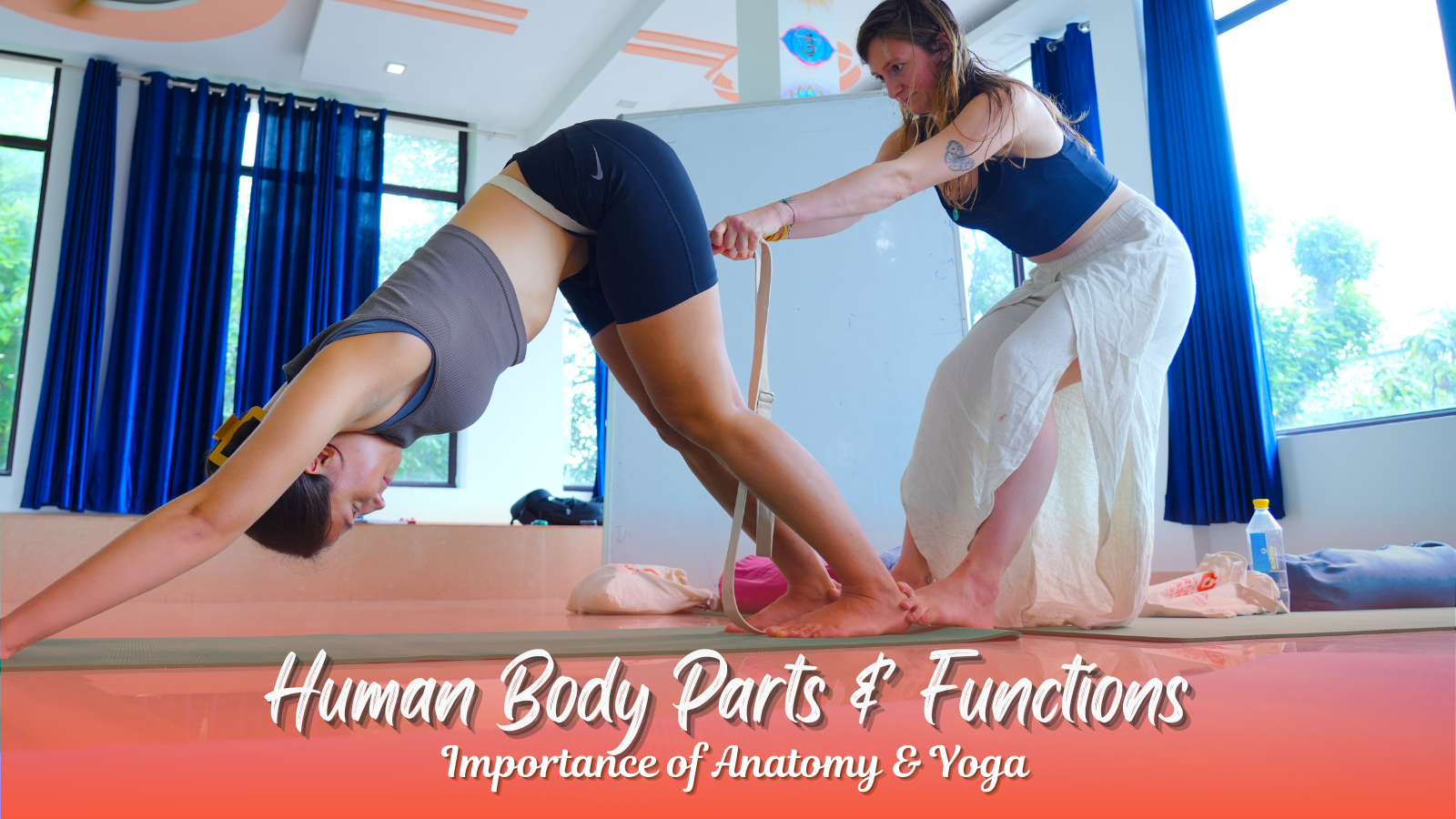
Human Body Parts & Functions and Importance of Anatomy & Yoga

Human Body Parts & Functions and Importance of Anatomy & Yoga

Human anatomy is the miraculous work of design. This complex mechanism comprises organs, tissues, bones, and systems that interact with each other to coordinate and maintain a person’s life. With the smallest cell to even the most exquisite organ in the body, each part plays a special role. Knowledge about the parts of our human body, what they do, and how significant they are can make us treasure the task of living an outstanding life and remind us to take more care of our health.

This blog shall unpack the various forms of the body parts, organs, and systems, and their importance. We will also discuss how a personal step as yoga teacher training in Rishikesh, can improve the physical and mental performance through physical as well as mental unity.

Human Body Parts Overview: Structure and Anatomy

The human body structure consists of a trillion cells, which are the building blocks of life. Such cells make tissues, tissues make organs, and organs interact in systems that maintain balance (homeostasis).

In studying the human body anatomy, we divide it into:

  • Head, neck, trunk, arms, and legs are some of the external body parts.
  • Internal body parts (organs): the heart, the lungs, the liver, the brain, the stomach, the kidneys, etc.
  • Systems: Circulatory, respiratory, digestive, nervous, skeletal, muscular, and reproductive, and even more.

A human body diagram tends to aid in the comprehension of the relationship of these parts to each other and how they relate and operate.

Important Human Body Organs and Their Functions Explained

The human internal organs are the most important means of survival. The following ones are the most important:

  • Brain: The control center of the body that entails thinking, memory, feeling, movement, and coordination.
  • Cardiovascular: Pumps blood to your cells to supply the cells with oxygen and nutrients.
  • Lungs:  Allow breathing in and out to exchange oxygen and carbon dioxide.
  • Liver: Considers the nourishment, removes valuable contaminants, and facilitates digestion.
  • Stomach: digests/breaks food down and starts the digestion process.
  • Kidneys: They filter waste products in the blood and control the fluid balance.
  • Skin: The most significant body covering and defending the body against infection, regulates heat.
  • Intestines (small and large): Absorb the nutrients and excrete body waste.
  • Pancreas: It produces enzymes of digestion and controls the blood sugar level.
  • Reproductive organs: They are vital in reproduction and the regulation of hormones.

Human Body Systems: Circulatory, Respiratory, Digestive & More

Every human organ is part of the definite system. Some of the major systems are:

  • Circulatory System:  Heart, blood, and blood vessels, the portion of the body that develops and circulates nutrients and oxygen.
  • Respiratory System: Lungs, Trachea, Diaphragm that contributes to the intake of oxygen and the release of carbon dioxide.
  • Digestive System: stomach, intestines, liver, pancreas; food breaks down and extracts nutrients.
  • Nervous System: Brain, spinal cord, and nerves that control the functions of the body and body responsiveness.
  • Skeletal System: The skeleton gives support and protection.
  • Muscular System: Muscles, in charge of movement and posture.
  • Endocrine System Endocrine system: Glands such as the thyroid, pituitary that have hormonal control.
  • Reproductive System: Ovaries, testes, uterus; is responsible for continuing life.

Why Understanding Human Anatomy is Important for Health

The human body anatomy is not limited to just doctors or medical students, but it needs to be addressed by all. Understanding the way our human body works can assist in:

  • Eating healthy, working out, and being rested.
  • The detection of diseases through early signs and symptoms.
  • Improving health by increasing fitness through yoga, meditation, and holistic techniques.

Ensuring a better lifestyle, like correction of posture, stress management, and balanced living.

Yoga Teacher Training in Rishikesh: Anatomy and Practice

Yoga goes beyond flexibility; it is about equalizing the body, mind, and spirit. The Anatomy at Home, being a leading yoga school in Rishikesh, focuses a lot on anatomy within its training packages. With knowledge of the human body parts and their functions, yoga students can adapt postures (asanas), breathing (pranayama), and meditation to achieve overall health.

For example:

  • A knowledge of the backbone arrangement is important to safely undertake backbends.
  • Knowledge of the respiratory system will promote pranayama.
  • Concentration on both muscles and joints minimizes injuries during the yoga positions.

Typical anatomy classes in the Best Yoga School in Rishikesh are frequently grouped with other subjects, such as philosophy, so the student comes away with a complete view of the entire body, both physical and spiritual.

Yoga Teacher Training and Anatomy

In case you are interested not only in yoga but also in the further study of the body, these courses offered in Rishikesh will become an ideal option:

  • 100 Hour Yoga Teacher Training in Rishikesh-This is a beginner program that has yoga fundamentals and yoga anatomy training.
  • 200 Hour Yoga Teacher Training in Rishikesh -It is a basic course in which students study yoga poses, breathing method, philosophy, and human body anatomy.
  • 300 Hour Yoga Teacher Training in Rishikesh– It is an advanced training program that entails more in-depth information about anatomy, meditation, and teaching techniques.
  • 3 Days Yoga Retreat in Rishikesh-This is a short yoga retreat to rejuvenate, relax, and focus on the body.

India is home to some of the best yoga schools in India, and hence going to the best yoga school in India goes a long way in not only empowering you with knowledge on yoga techniques but also a deeper understanding of the possibilities of the human structure.

Amazing Facts About the Human Body Parts and Functions

The human body is a creation of nature and is full of wonders, still enough to amaze scientists, doctors, and yoga practitioners. When looking at these human body parts and their special capabilities, we develop an additional reverence towards our own homo sapiens existence. The following are some points about the human body anatomy that are quite interesting to hear.

  • It includes more than 600 muscles and 206 bones that make up the main human structure, providing us with the force, stability, and movement possibilities.
  • The small intestine is 22 feet long and is a vital component of the digestive system because it leads to the effective assimilation of nutrients.
  • The largest of all the human body organs, the skin renews itself every 27 days, and acts as the first defense mechanism of the body.
  • The human body has about 37 trillion cells, which play important roles in keeping the body alive.
  • The heart is one of the most significant human organs that pumps almost 2,000 gallons of blood every single day, beating around 100,000 times in a day to nourish the whole body.

Other interesting revelations about human anatomy are as follows:

  • The lungs hold approximately 300 million small air sacs (alveoli), which are involved in the transfer of oxygen and carbon dioxide.
  • The biggest internal organ is the liver, and it performs over 500 functions, comprising detoxification and storing energy.
  • Blood is a connective tissue that moves around the human body diagram, with almost 60,000 miles of blood vessels within the body to supply oxygen and nourishment to every cell.
  • Our brain, weighing only approximately 3 pounds, consists of about 86 billion nerve cells, which puts it in the top spot of the most complex organ in the known universe.
  • The eyes, commonly known as the windows to the soul, can differentiate 10 million colours.

Knowing these facts not only enhances the diversity of our knowledge about human internal organs but also illustrates the reason why it is so crucial to take care of our body anatomy. Yoga, meditation, and pranayama, which are part of the Best Yoga School in Rishikesh, help to maintain these miraculous systems at their optimum levels.

Whether you are participating in the 200 Hour Yoga Teacher Training Program in Rishikesh, the advanced 300 Hour Yoga Teacher Training in Rishikesh, or the 3-Day Yoga Retreat in Rishikesh, you’ll know how body organs and systems are affected by yoga asanas, pranayamas, and meditation. This optimal combination of knowledge of the human anatomy and yoga gives one the power to take the health into his or her own control, but with a sense of respect for the marvel of the human body.

Human Body FAQs: Organs, Cells, and Systems

What is the function of each body organ?

Every organ performs a certain role. To illustrate, the heart pumps blood, the lungs through breathing, the liver dispenses nutrients, the kidneys strain waste, and the brain regulates all body functions.

What type of tissue is blood?

Blood is a connecting tissue used to move throughout the body to deliver oxygen, nutrients, hormones, and excretory products.

What are organs?

Organs: The organs are the clusters of tissues combining their efforts to fulfill definite functions. Examples are the heart, lungs, kidneys, and stomach.


How many cells are in the human body?

The human body is projected to comprise 37 trillion cells.

Conclusion: Human Body, Yoga, and the Best Yoga School in Rishikesh

The human body parts are not merely physical entities- but amazing systems coordinated to bring life. It is by learning how to study human body anatomy and human body organs that understanding how our human structure functions, at the cellular level to that of the intricate organ systems, is even better understood. A combination of this knowledge and mindfulness exercises, such as yoga, assists them in gaining physical and emotional well-being as well as overall betterment.

Any individual who may want to explore this correlation finds a great opportunity in joining the Best Yoga School in Rishikesh to learn the science of the human body and the art of yoga. Courses like the 200 Hour Yoga Teacher Training in Rishikesh, 300 Hour Yoga Teacher Training in Rishikesh, or 100 Hour Yoga Teacher Training in Rishikesh offer a fantastic introduction to body anatomy, physiology, yoga philosophy, and yoga teaching methodology. With little time to spare, a 3-day Yoga Retreat in Rishikesh will also serve your purpose of relaxation and finding the inner self.

Selecting your best yoga school in India will help you derive the real teachings, systematic training, and better knowledge of the human body diagram and its meaning in the yoga practice. These courses not only get you more acquainted and informed about the human internal organs and the body anatomy, but also enable you to make your yoga practice in sync with the natural rhythm of your body.

At the end of the day, the learning mission that one goes through to learn human anatomy is really a personal learning mission. Respecting your human body parts, practicing mindful yoga, and learning with the best yoga teacher training in Rishikesh, you can reach harmony with your body, mind, and spirit.

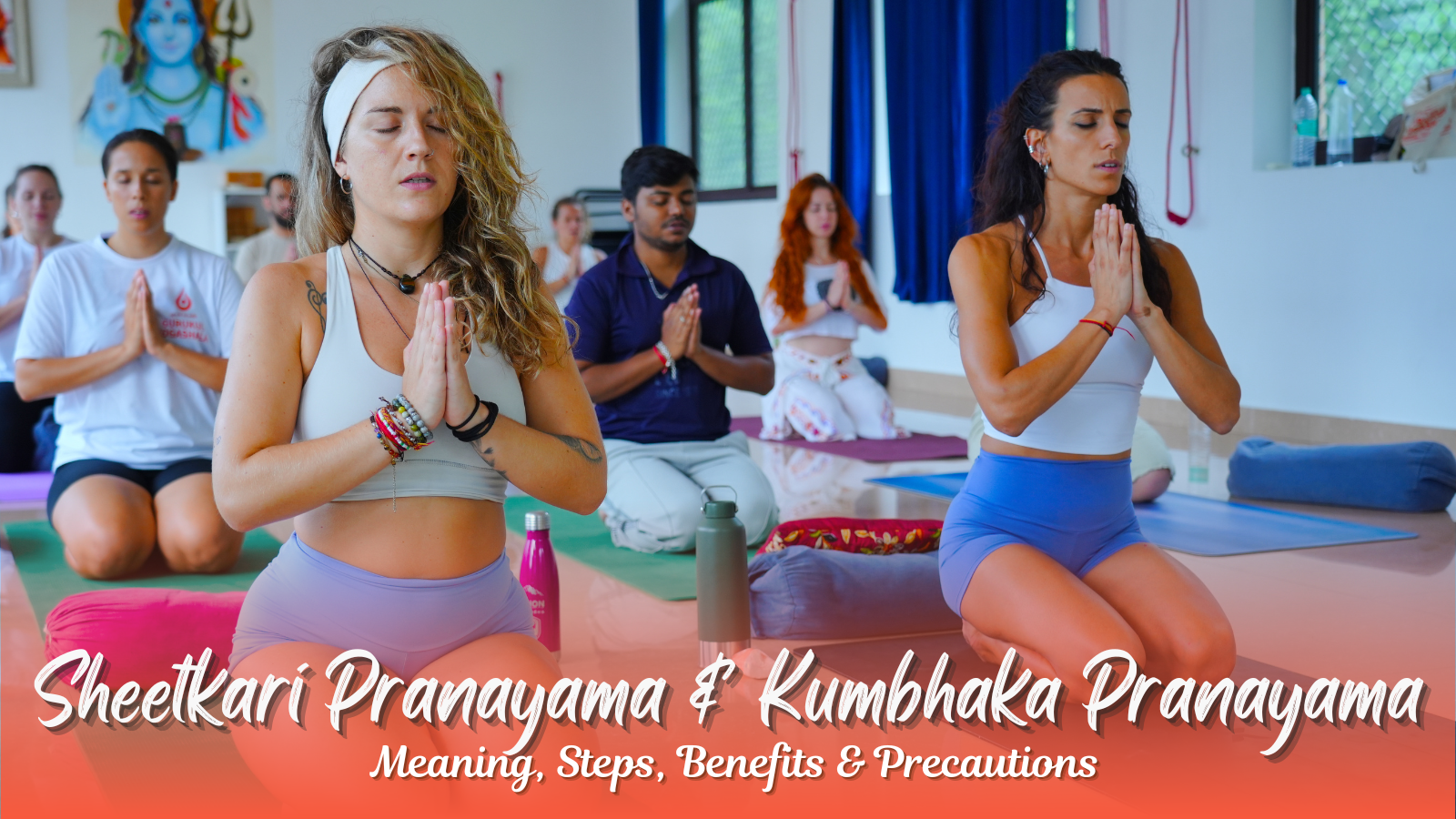
Sheetkari Pranayama & Kumbhaka Pranayama – Steps, Benefits & Precautions

Sheetkari Pranayama & Kumbhaka Pranayama – Steps, Benefits & Precautions

Pranayama is an ancient practice that focuses on the breath. Prana and ayama are the two Sanskrit words combined together to make Pranayama. “Prana” is the Sanskrit word that means “life force or life energies“ while “Ayama” means “to control, suspension or extension”. Sheetkari Pranayama (Sitkari) and Kumbhaka Pranayama are two ancient yogic breathing techniques that improve concentration, balance prana (life force), and promote overall health. Practiced in yoga school in Rishikesh and worldwide, these pranayamas are known for their cooling, calming, and energizing effects.

Some commonly practiced type of pranayamas are Anulom Vilom, Bhramari, Bhastrika, Sheetali, Sheetkari, Kapalabhati and Ujjayi. In this guide, we will explore Sheetkari Pranayama steps, Sheetkari Pranayama benefits, Kumbhaka Yoga techniques, Ashta Kumbhaka, and Abhyantara Pranayama, along with practice tips.

What is Sheetkari Pranayama (Sitkari)? – Cooling Breath Technique

“Sheet” is a Sanskrit word means “cool”. Sheetkari also known as Sitkari Pranayama or Shitkari is a yogic breathing technique designed to bring cooling and calmness to the body and mind. It has similar effects as of Shitali Pranayama.

How to Practice Sheetkari Pranayama – Step by Step Guide

  • Sit in a comfortable meditation asana, can be sukhasana, padmasana or siddha asana with hands resting on your knees and your spine straight and shoulder relaxed.
  • Close your eyes and observe your body as it is. Then take a few deep and calming breaths to relax the whole body.
  • Gently clench your teeth together and separate your lips.
  • The tongue may be rolled upward into Khechari Mudra, with the sides touching the palate, or left flat in a natural position.
  • Inhale slowly and deeply through the gaps in your teeth, producing hissing sound. Feel the cool air entering your body.
  • Close your mouth and exhale slowly and completely in a controlled manner through your nose. This makes one round.
  • Repeat for 5-10 rounds.

Duration: 5 to 10 rounds is sufficient for beginner. Gradually can increase 10 to 15 or as comfortable.

Time of practice: Best time to practice is early in the morning or after sunset.

Benefits of Sheetkari Pranayama (Sitkari Breath)

If practiced regular Sheetkari or Sitkari Pranayama provides multiple benefits. Few are mentioned below:

  • Cools the body and mind and reduces excess heat.
  • Reduces stress, anger, emotional agitation, anxiety by calming down the nervous system.
  • Improves skin health, giving it natural glow and reduces pimple.
  • Helpful for people with high blood pressure and hypertension.
  • Pacify Pitta related disorders in Ayurveda such as acidity, inflammation, indigestion, burning eyes etc.
  • Improves focus, concentration for meditation practice

Sheetkari Pranayama is especially beneficial for people living in hot climate or those experiencing excess internal heat.

Sheetkari Pranayama Precautions & Who Should Avoid

  • Sheetkari should not be practiced during cold weather and polluted atmosphere
  • People suffering cold, cough, asthma,  any other respiratory problems should not practice this pranayama as it has cooling effect so it will increase kapha(mucus)
  • Avoid in case of extremely low BP
  • Teeth infection, missing or sensitivity in teeth should avoid this pranayama
  • Because it has cooling effect so people suffering from chronic constipation should avoid

What is Kumbhaka Pranayama? – Breath Retention Technique

Kumbhaka means “breath retention”. The word Kumbhaka was derived from Sanskrit word “Kumbha” means “pot”. In yoga, the pot represents our belly. In Kumbhaka the breath is consciously held either after inhalation or exhalation. Kumbhaka is the most important part of any Pranayama. But to master Kumbhaka one must develop step by step control over the respiratory functions. Therefore, at the beginning more importance has been given to inhalation and exhalation to prepare or strengthen the lungs for further practices.

There are two categories of Kumbhaka:

  • Antar or Abhyantara Kumbhaka (Internal breath retention)

It involves inhaling deeply and holding the breath inside.

  • Bahir or Bahya Kumbhaka (external breath retention)

In this breath is retained after complete exhalation.

Both these forms strengthen lungs capacity, improves focus, and enhance energy.

Note: Breath retention should only be practised for as long as is comfortable. Never strain in any way or it may cause harm to body or mind.

How to practice Antar or Abhyantara Kumbhaka?

  • Sit in a comfortable meditation asana, can be sukhasana, padmasana or siddha asana with hands resting on your knees and your spine straight and shoulder relaxed.
  • Close your eyes and observe your body as it is. Then take a few deep and calming breaths to relax the whole body.
  • Take a deep breath through your nose to the count of five (counting should be done in mind). Then tuck your chin into your chest in jalandhara bandh and hold the breath to the count of five.
  • Lift your head and exhale slowly and in controlled manner through nose to the count of ten.
  • Exhalation should be double of inhalation as in this example of ratio 1-1-2.
  • Take two to three normal breaths before starting the next round.
  • Repeat the cycle for 5-10 min for beginners.

How to practice Bahir or Bahya Kumbhaka?

  • Sit in a comfortable meditation asana, can be sukhasana, padmasana or siddha asana with hands resting on your knees and your spine straight and shoulder relaxed.
  • Close your eyes and observe your body as it is. Then take a few deep and calming breaths to relax the whole body.
  • Take a deep breath through your nose to the count of five (counting should be done in mind).
  • Exhale slowly and in controlled manner through nose to the count of ten. Then tuck your chin into your chest in jalandhara bandh and hold the breath to the count of five.
  • Exhalation should be double of inhalation as in this example of ratio 1-1-2.
  • Take two to three normal breaths before starting the next round.
  • Repeat the cycle for 5-10 min for beginners.

Tips for practicing Kumbhaka Pranayama:

  • Don’t hold your breath by force, don’t go beyond your capacity.
  • Don’t practice Antara Kumbhaka before mastering puraka (inhale) and rechaka (exhale).
  • Don’t practice Bahya Kumbhaka before mastering Antara Kumbhaka.
  • Always practice sitting or laying down, never standing.
  • Practice this pranayama on an empty stomach .

There are eight sub-types of Kumbhaka known as Ashta Kumbhaka described in Hatha Yoga Pradipika:

  1. Sahita Kumbhaka
  2. Surya Bhedana
  3. Ujjayi
  4. Bhastrika
  5. Sheetkari
  6. Sheetali
  7. Bhramari
  8. Plavini

Benefits of Kumbhaka Pranayama for Mind & Body

Practicing Kumbhaka regularly can benefit both body and mind such as:

  • Expands lung capacity and strengthens the respiratory system
  • Increases oxygen absorption and energies cells
  • Improves concentration and meditation
  • Helps control cravings and stabilises emotions
  • Supports detoxification and better circulation

Kumbhaka Pranayama Contraindications & Safety Tips

Kumbhaka Pranayama should not be practiced by people suffering from underlying conditions:

  • Lung disease and respiratory conditions
  • Nasal congestion, sinus, ENT infection
  • Serious heart related problems, hypertension and extremely high or low blood pressure
  • In case of clinical anxiety
  • Pregnancy

These are the main precautions, but others may apply. If you have any health concerns, consult a doctor or a qualified yoga teacher before practicing either form of Kumbhaka Pranayama.

FAQs on Sheetkari & Kumbhaka Pranayama

  • In which disease is Sheetkari Pranayama beneficial?

    It is helpful in hypertension, hyperacidity, stress-related disorders, skin disease and excessive body heat.

    • How to perform Sitkari Pranayama?

    Close your teeth lightly, open your lips, inhale through the teeth making a hissing sound, and exhale through the nose. This is the Sitkari Pranayama steps method.

    • What are the 7 types of pranayama?

    Commonly practiced are Anulom Vilom, Bhastrika, Kapalabhati, Bhramari, Ujjayi, Sheetali, and Sitkari Pranayama.

    • Who cannot do Sheetkari Pranayama?

    People with asthma, cold, cough, sinusitis, or low blood pressure should avoid Shitkari Pranayama.

    Final Thoughts – Practicing Pranayama with Yoga in Rishikesh

    In today’s fast-paced lifestyle, stress, anxiety, hypertension, and digestive issues  are common. By practicing Sheetkari Pranayama (for cooling and relaxation) and Kumbhaka Pranayama (for inner strength and focus), one can restore balance.

    For those seeking a deeper yogic journey, enrolling in the Best Yoga School in Rishikesh for a Yoga Teacher Training in India is a transformative step. Rishikesh, the birthplace of yoga, offers authentic guidance on pranayama, meditation, and philosophy.

    If you want to deepen your pranayama practice, join our 200 Hour Yoga Teacher Training in Rishikesh at Gurukul Yogashala – the best yoga school in India for authentic learning.

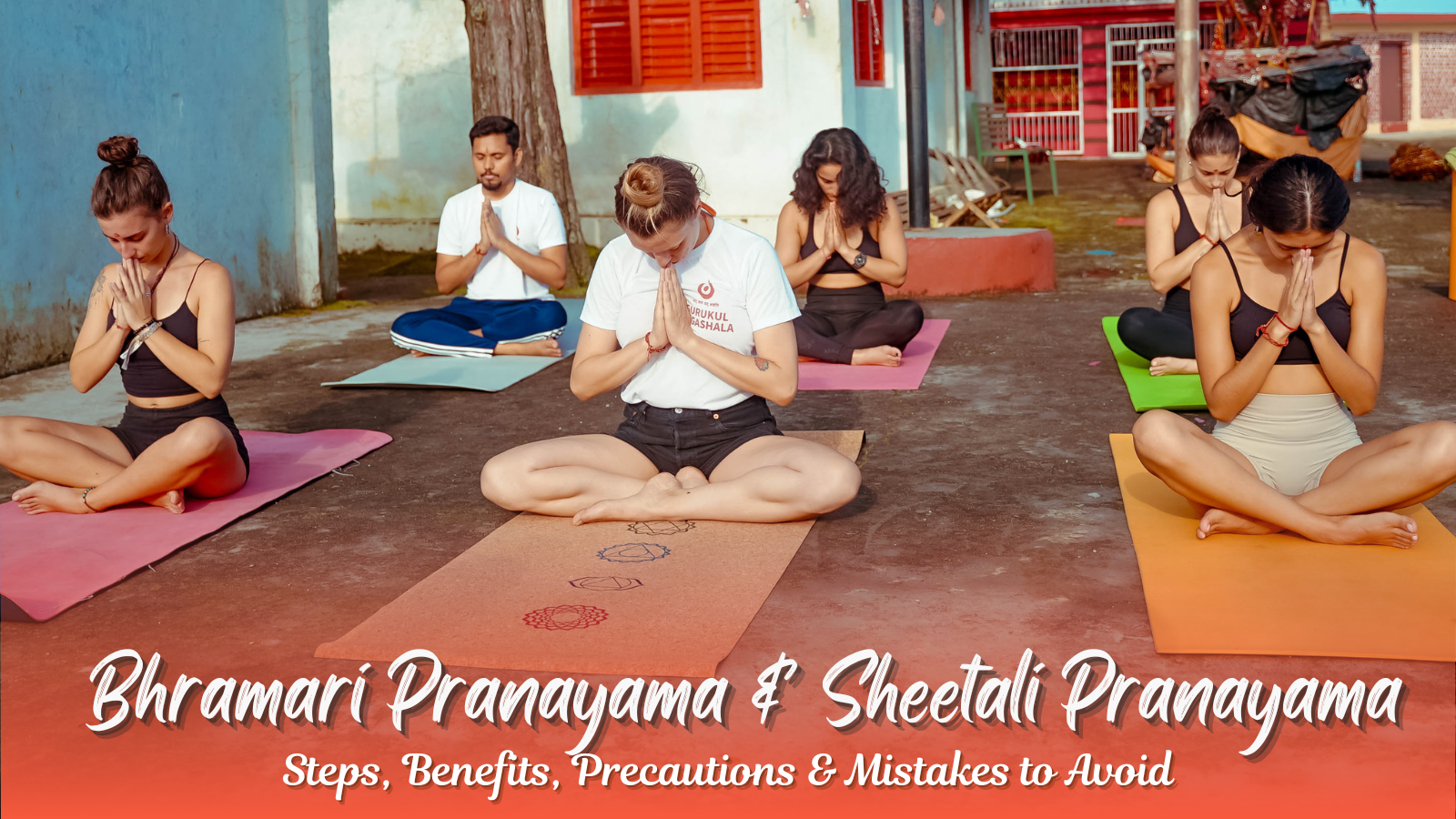
    Bhramari Pranayama & Sheetali Pranayama – Steps, Benefits, Precautions & Mistakes to Avoid

    Bhramari Pranayama & Sheetali Pranayama – Steps, Benefits, Precautions & Mistakes to Avoid

    Breath is the bridge between body and mind, and ancient yogic breathing technique—Pranayama—have been practiced for centuries to cultivate balance, health, and spiritual awareness. “Prana” and “ayama” are the two root words that make the word pranayama. Prana is a Sanskrit word that means “life force or vital energy” while ayama means to control, restrain or extension. It is a means to control, extend, and distribute the body’s internal energy (prana) to enhance well-being. Among the many types of Pranayama, Bhramari Pranayama and Sheetali Pranayama stand out for their simplicity and profound effects. This article explores their steps, benefits, precautions, and mistakes to avoid, with insights from traditional yoga schools in India and Rishikesh.

    What is Bhramari Pranayama (Bee Breath)? – Meaning & Basics

    Bhramari pranayama also known as “humming bee breath” is a calming breathing practice. Bhramari word derived from the Sanskrit word “Bhramara” meaning bee, so while practicing this pranayama produce a gentle humming sound like a black bee while exhaling and listen to that sound vibration by closing the ears with the hands. This vibration creates a soothing effect on the mind and nervous system, making it one of the best pranayama for stress relief, improved sleep, and enhanced focus.

    How to Practice Bhramari Pranayama – Step by Step Guide

    This is a rather simple pranayama anyone can practice this following below mentioned steps for Bhramari Pranayama

    • Sit in a comfortable meditation asana, can be sukhasana, padmasana or siddha asana with hands resting on your knees and your spine straight and shoulder relaxed..
    • Close your eyes and observe your body as it is. Then take a few deep and calming breaths to relax the whole body.
    • The lips gently closed with teeth slightly apart throughout the practice to hear and feel the sound vibration.
    • Then place your thumb gently in your ears or gently press the flaps of the ears without inserting the thumb. And with rest of the fingers gently cover your eyes, nose and mouth (using Shanmukhi mudra)
    •  Bring the  awareness to the centre of the head and keep the body still. Then inhale through your nose.
    • Exhale slowly and in controlled manner and while exhaling make a deep humming sound like a black bee. This is one round.
    • Inhalation and exhalation should be smooth and controlled.
    • Be aware of the vibration in your head and body.
    • Repeat this for 5-10 rounds.

    Duration:  5 to 10 rounds is sufficient for the beginner, then slowly increase to 10 to 15 minutes.

    Time of practice: Best time to practice is early in the morning or late at night.

    Top Benefits of Bhramari Pranayama for Mind & Body

    Bhramari pranayama benefits both physical and mental health. Along with physical and mental well-being it also plays important role in one’s spiritual journey. The benefits are as follows:

    Mental benefits

    • Bhramari relieves stress and cerebral tension, which helps people with anger, anxiety and insomnia.
    • It improves concentrate, mental clarity and boots memory.
    • It opens the blockage and gives the feeling of happiness to mind and brain.
    • With regular practice Bhramari helps in relieving from hypertension and sleep disorders.
    • Bhramari pranayama can instantly calm mind down. B.K.S. Iyengar has also stated that this pranayama relieves stress, removes anger, anxiety and insomnia.

    Physical benefits

    • Increases the healing capacity of the body.
    • It strengthens and improves the voice.
    • Buzzing sound stimulates the ears which might benefit in Tinnitus( ringing in the ear due to hearing loss)
    • It may helps in boosting the brain functions.
    • It helps people with high blood pressure and heart problems by lowering stress level.
    • It helps in curing paralysis and mild migraines.
    • In pregnancy it helps to maintain and regulate the functioning of endocrine system.
    • It’s very good for Alzheimer disease.

    Spiritual benefits

    Bhramari brings a meditative state by calming the mind and directing the awareness inward. That’s how it aids in spiritual practices.

    Precautions & Who Should Avoid Bhramari Pranayama

    Generally everyone can practice Bhramari  Pranayama but there are few precautions to consider.

    • Bhramari should not be performed in lying position.
    • This pranayama should be practiced empty stomach.
    • People with severe migraines should avoid practicing, with mild migraine can practice with eyes open and under the guidance of a qualified yoga instructor.
    • People suffering from ear or nose infection should refrain from practicing this pranayama until recovery.
    • People with heart disease must practice for shorter period of time and without breath retention.
    • Women should avoid Bhramari during menstruation as it might induce cramps.

    What is Sheetali (Shitali) Pranayama – The Cooling Breath Explained

    Sheetali Pranayama is yoga’s natural remedy for cooling down the body, calming stress, and easing anger or irritation. Sheetali Pranayama (sometimes written as Shitali Pranayama, Sitali Pranayama,or Sheethali Pranayama) means the “cooling breath.” The word Sheetal in Sanskrit means calmness and peacefulness. Sheetali Pranayama comes from the ancient practice of Hatha Yoga. It is a gentle breathing practice that helps cool down the body and calm the mind, especially when Pitta (heat) is high in our body according to Ayurveda. The best part is its simplicity — you can practice it anytime and anywhere to feel relaxed and at ease.

    How to Do Sheetali Pranayama (Cooling Breath) – Steps for Beginners

    • Sit in a comfortable meditation asana, can be sukhasana, padmasana or siddha asana with hands resting on your knees and your spine straight and shoulders relaxed.
    • Close your eyes and observe your body as it is. Then take a few deep and calming breaths to relax the whole body.
    • Extend your tongue outside as far as possible without strain. Roll the sides of the tongue up to form a tube.
    • Inhale deeply through the rolled tongue (feeling the coolness on the tongue and the roof of the mouth).
    • At end of inhalation bring the tongue back in and exhale through the nose in a controlled manner. This is one round.
    • Inhalation and exhalation should be smooth and controlled.

           Duration: 9 to 15 rounds is sufficient for the beginner, then slowly may increase upto 60 rounds in very hot weather.

    (Note: If you cannot roll your tongue, simply place the tip of the tongue on the roof of your mouth and bring your teeth lightly together. Exposing teeth inhale through your mouth — this is also called Sitkari Pranayama.)

    Health Benefits of Sheetali Pranayama – Cooling & Calming Breath

    • Helps regulate body temperature and keeps the system cool.
    • Brings relaxation to both mind and body.
    • Reduces stress, emotional agitation, and mental tension.
    • Encourages muscular relaxation and a sense of calmness.
    • Supports better control over hunger and thirst.
    • Promotes even flow of prana (life force energy) throughout the body.
    • Can be used as a natural tranquilliser to calm the nervous system.
    • Generates a pleasant feeling of inner satisfaction and peace.
    • Pacify Pitta related disturbances in the body such as inflammation, acid indigestion, burning eyes, heat rash etc.

    Precautions of Sheetali Pranayama

    • Do not practice in a polluted atmosphere or during cold weather.
    • Do not practice if have cold, cough or respiratory issue as it has cooling effect so will increase Kapha (mucus)
    • If practicing with breath retention hold for a short time only as holding for longer has a heating effect.

    Contraindications of Sheetali Pranayama

    • Avoid if suffering from low blood pressure or respiratory disorders such as asthma, bronchitis, excessive mucus.
    • People with heart disease should practice without breath retention.
    • Because of it’s cooling effect avoid if suffering from chronic constipation.

    General Pranayama Steps for Beginners – Quick Guide

    If you are new to pranayama, always follow these general pranayama steps:

    • Sit in a quiet place, in a comfortable meditative posture.
    • Keep your spine upright and shoulders relaxed.
    • Start with normal breathing before moving into specific techniques.
    • Practice for 3–5 minutes initially, gradually increasing duration.
    • Always end with a few minutes of meditation or Shavasana for relaxation.

    If you want to dive deeper into pranayama, meditation, and yoga philosophy, learning from the Best Yoga School in Rishikesh is highly recommended.

    Rishikesh is called the Yoga Capital of the World and offers immersive Yoga Teacher Training in Rishikesh, where you can study pranayama, asanas, and Ayurveda in depth. Practicing Pranayama during a Yoga Teacher Training in Rishikesh deepens spiritual awareness, calms the mind, strengthens the body, and builds inner balance that supports both in teaching as well as in daily life. Many international students also choose Yoga Teacher Training in India for an authentic experience. Whether you are looking for a Yoga School in Rishikesh or a Yoga School in India, make sure to select one that is Yoga Alliance certified for global recognition.

    FAQs on Bhramari & Sheetali Pranayama (Bee Breath & Cooling Breath)

    1. What is Bhramari Pranayama good for?

    It is excellent for stress relief, reducing anxiety, improving sleep, and calming the nervous system. It also supports better concentration and voice quality.

    2. What is the mudra for Bhramari Pranayama?

    You use Shanmukhi Mudra, where the fingers gently close the ears, eyes, and lips to withdraw senses and focus inward.

    3. Which sound is produced by Bhramari Pranayama?

    A gentle humming sound similar to that of a black bee.

    4. How to do Bhramari correctly?

    Sit comfortably, close your ears, eyes, nose and mouth with your fingers, inhale deeply, and exhale slowly while making a soft humming sound. Focus on the vibration in your head.

    5. Which Pranayama is best for memory power?

    Bhramari Pranayama is considered one of the best for memory, focus, and mental clarity because of its calming effect on the brain.

    Final Thoughts on Bhramari & Sheetali Pranayama – A Path to Inner Calm

    Both Bhramari Pranayama and Sheetali Pranayama are powerful techniques for overall well-being. While Bhramari calms and soothes the nervous system, Sheetali cools the body and balances energy. Practicing them regularly — with correct posture, awareness, and moderation — can bring deep transformation to your physical and mental health.

    If you are serious about learning pranayama in depth, consider joining a Best Yoga Teacher Training in Rishikesh to experience authentic teachings from the roots of yoga.

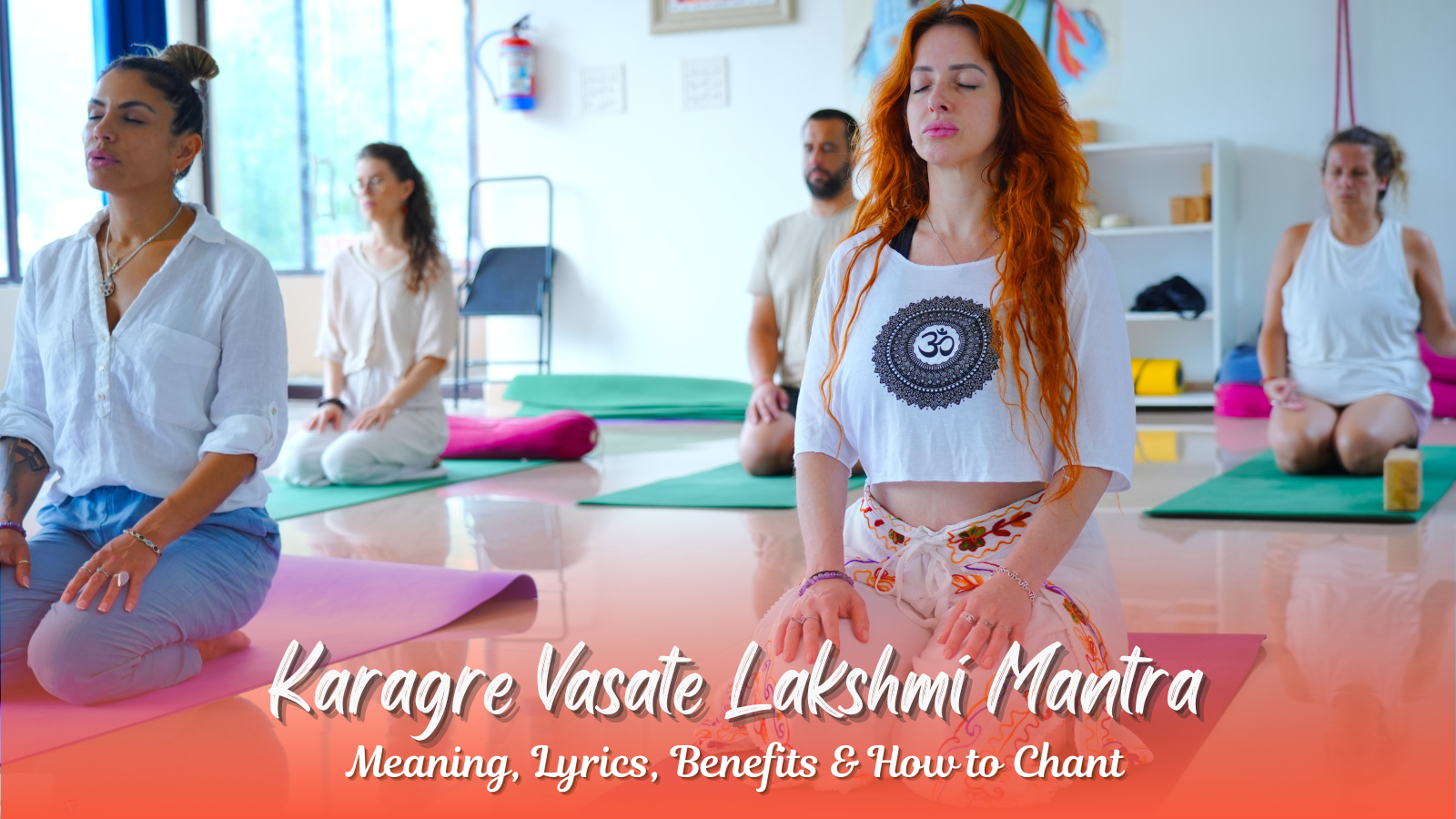
    Karagre Vasate Lakshmi Mantra – Meaning, Lyrics, Benefits & How to Chant

    Karagre Vasate Lakshmi Mantra – Meaning, Lyrics, Benefits & How to Chant

    What is the Karagre Vasate Lakshmi Mantra?

    Start your day with the sacred Karagre Vasate Lakshmi Mantra, a morning prayer invoking Goddess Lakshmi, Saraswati, and Govinda. This powerful Sanskrit shloka is believed to bring prosperity, wisdom, and protection. In this guide, we’ll explore the meaning, lyrics, spiritual significance, benefits, and the right way to chant Karagre Vasate Lakshmi Mantra.

    The mantra of three goddesses, Lakshmi (goddess of wealth and prosperity), Saraswati (goddess of knowledge, wisdom, and learning), and Govinda (Lord Vishnu, the preserver of life and cosmic balance), that is, karagre vasate lakshmi, is pronounced. In combination, they symbolize wealth, intelligence, and power, the three basic ingredients to a healthy and worthwhile life.

    Reciting this Karagre Vasate Lakshmi Shloka every morning inspires the devotee with this good omen, mental sharpness, and helps him to be rooted spiritually. This is one of the mantras that many yoga seekers and yoga practitioners who visit yoga school in Rishikesh, or those undergoing a 200 Hour Yoga Teacher Training Course in Rishikesh, practice in their day-to-day practice. Even during a short 3-day yoga Retreat in Rishikesh or during a 100 Hour Yoga Teacher Training in Rishikesh, the karagre vasate lakshmi full mantra chanting practice is encouraged in an effort to develop daily mindfulness at the beginning of the day.

    Focusing on the palm when chanting the karagre vasate lakshmi mantra lyrics is purported to serve as a reminder that prosperity, wisdom, and strength are not only things sent upon us by the deities but exist within us in the hands. That is why such a mantra is frequently introduced in the best yoga school in Rishikesh and the best yoga school in India as a part of yoga sadhana and the self-discovery process.

    Karagre Vasate Lakshmi Mantra Lyrics (with English Translation)

    The verse of this mantra is as follows:

    • Karagre Vasate Lakshmi
    • Karamadhye Saraswati
    • Karamule Tu Govinda
    • Prabhate Kara Darshanam

    This mantra is commonly recited in the early hours of the morning, immediately after waking up, and by gazing at the palms.

    • Karagre Vasate Lakshmi: At the ends of the hands, there is Lakshmi.
    • Karamadhye Saraswati: At the midpoint of the hands is Goddess Saraswati.
    • Karamule Tu Govinda: Govinda is at the bottom of the hands – Vishnu.
    • Prabhate Kara Darshanam: So, it is important to check their palms during the earliest portions of the morning.

    Meaning of Karagre Vasate Lakshmi Mantra

    By mentioning Karagre Vasate Lakshmi slokam, you really mean a daily reminder: money, intelligence, and divine power are not remote; they dwell in your own hands.

    Lakshmi at the fingertips: This symbolizes debt, wealth, and prosperity.

    The center of the palm displays Saraswati in the middle: This represents knowledge, artistic expression, and study.

    Govinda at the foot: Symbolizes that which is an anchor of stability, a support, a preservation.

    You are requesting harmony in life: material wealth, intellectual development, and spiritual roots by singing this karagre vasate laxmi mantra.

    Spiritual Significance of the Mantra

    It is quite simple yet impressive in its mantra:

    • Promotes thankfulness before your day
    • Reminds you that you have shaped your own fate (hands).
    • Mindfulness in the sense of showing you to be mindful of yourself as you act in a balanced way.

    This shloka resonates well with the principles of yoga practitioners and meditation practitioners of divinity being in and around us at all times.

    There is a harmony of spirituality and the sense of essence of everything close to meditation and yoga in this karagre vasate laxmi mantra.

    This shloka has become an introduction to many morning practices done in many traditional yoga schools in India, including among the best yoga schools in Rishikesh, India. In a 200 Hour Yoga Teacher Training in Rishikesh or a 300 Hour Yoga Teacher Training in Rishikesh, many students usually start off the morning by chanting a mantra to unlock the harmony of the body, mind, and spirit. The Karagre Vasate Lakshmi full mantra can also be chanted during shorter training as a 100 Hour Yoga Teacher Training in Rishikesh or in a 3-Day Yoga Retreat in Rishikesh to remind that yoga is beyond physical exercises.

    With these Karagre Vasate Lakshmi Shlok lyrics, there is a reminder provided to seekers every day that wealth, knowledge, and power do not come only outside the seeker. They are internalized and come out through mindfulness, conscious life, and action. Through these techniques, the mantra gets the stamp of a guiding light, touching the mundane world to eternal spirituality.

    Benefits of Karagre Vasate Lakshmi Mantra

    • Generates Positive Energy: Creates a favorable vibe in the day.
    • Increases Concentration: By worshiping Saraswati, the concentration is developed.
    • Brings Wealth: The presence of Lakshmi is reported as bringing fortune and wealth.
    • Enhances Faithfulness: Govinda at the base brings firmness and boldness.
    • Mind-Body Connection: Paying attention to the hands as they recite creates a link with thinking and doing.

    This Karagre Vasate Lakshmi full mantra is a favorite of many yoga practitioners and spiritual seekers, reciting this mantra during their daily sadhana.

    Karagre Vasate Lakshmi Mantra

    Interestingly, that is frequently presented in traditional yoga school in India as part of routine morning rituals. At a Yoga School in Rishikesh, they ask students to start off the day by chanting a mantra first and then practicing asanas.

    Students who acquired a 200 Hour Yoga Teacher Training in Rishikesh also know about yoga philosophy, where such mantras have an application.

    Mantra chanting is a daily anchor when proceeding to the 300 Hour Yoga Teacher Training in Rishikesh, as deeper meditative practices are now introduced.

    Even brief immersions like a 100 Hour Yoga Teacher Training in Rishikesh or a 3-Day Yoga Retreat in Rishikesh commonly include mantra sessions, which assist in aligning body, mind, and soul.

    This is the reason why Asana, Pranayama, Meditation, and the recitation of mantras tend to be the Best Yoga Teacher Training in Rishikesh. Vocalization of Karagre Vasate Lakshmi before yoga practice acts as a reminder to the aspirant that yoga is beyond physicality; it is spiritual in nature.

    How to Chant Karagre Vasate Lakshmi Mantra (Step-by-Step)

    • Timing: On waking up early in the morning.
    • Posture: Sit a little bit deeper in the bed to place position feet on the floor.
    • Gesture: Bring both hands together, dimly on them.
    • Chanting: Repeat the shloka 3 times sincerely.
    • Mindset: Take gratitude for wealth, wisdom, and life.

    FAQs about Karagre Vasate Lakshmi Mantra

    What does Karagre vasate Lakshmi Slokam Mean?

    This mantra means that “At the tips of the hands resides Lakshmi, at the center resides Saraswati, at the base resides Govinda. Therefore, one should look at the hands in the morning”.

    What is the mantra of Karagre Lakshmi?

    The mantra can be chanted as a short morning prayer, and this describes Karagre Vasate Lakshmi, Karamadhye Saraswati, Karamule Tu Govinda, Prabhate Kara Darshanam.

    Can I chant karagre vasate lakshmi?

    It can be chanted by anybody. It does not have to be initiated. Just repeat it as a devotion and as a mindfulness routine each day.

    What is the meaning of the Laxmi Gayatri Mantra?

    Unconsciously compared to the Karagre Vasate shloka, the Lakshmi Gayatri Mantra is a longer version of the prayer where the divine energy of Goddess Lakshmi is called upon to bring wealth and spiritual prosperity. It plays an important role in meditation and especially in festivals such as Diwali.

    Final Thoughts

    The Karagre vasate Lakshmi Mantra is a philosophy in itself and not a mere morning verse. It is a reminder that the divine is not external but within the actions of our own. Through saying this karagre vasate lakshmi shlok every day, we affirm that our hands are blessed by Lakshmi, Saraswati, and Govinda to instruct us to follow abundance, knowledge, and protection.

    When combined with activities such as yoga and meditation, the mantra becomes a daily mantra, whether it be in a yoga school in India or within the confines of a locked room. The through recitation of this karagre vasate lakshmi sloka in the morning enhances the awareness of many seekers who join a 200 Hour Yoga Teacher Training in Rishikesh or a 300 Hour Yoga Teacher Training in Rishikesh and eases them into their process of self-discovery. Gratitude and mindfulness. These first two mantras establish a foundation that is deeply rooted in gratitude and mindfulness, even in shorter programs such as a 100 Hour Yoga Teacher Training in Rishikesh or a 3-Day Yoga Retreat in Rishikesh.

    The best yoga school in Rishikesh follow this tradition by also teaching mantras in classes on asana, pranayama, and meditation. That is why a lot of practitioners consider that joining the best yoga teacher training in Rishikesh is not merely a way to improve physical postures only but to follow the idea of the self-transformative spirit of yoga.

    Reciting the Karagre Vasate Lakshmi mantr lyrics every morning is equivalent to sowing seeds of wealth, knowledge, and power. These seeds grow into the day, becoming clarity, balance, and good energy. Whichever way you choose to interpret it, as a prayer, meditation, or a simple mindfulness act, this karagre vasate lakshmi full mantr helps remind you that everything that you might need in this life, wealth, learning, and divine favor, is already in your hands.

    Ultimately, blessing, knowledge, and power are soon to follow. They stand in the center of your hands, waiting to be ignited with interest and consciousness.

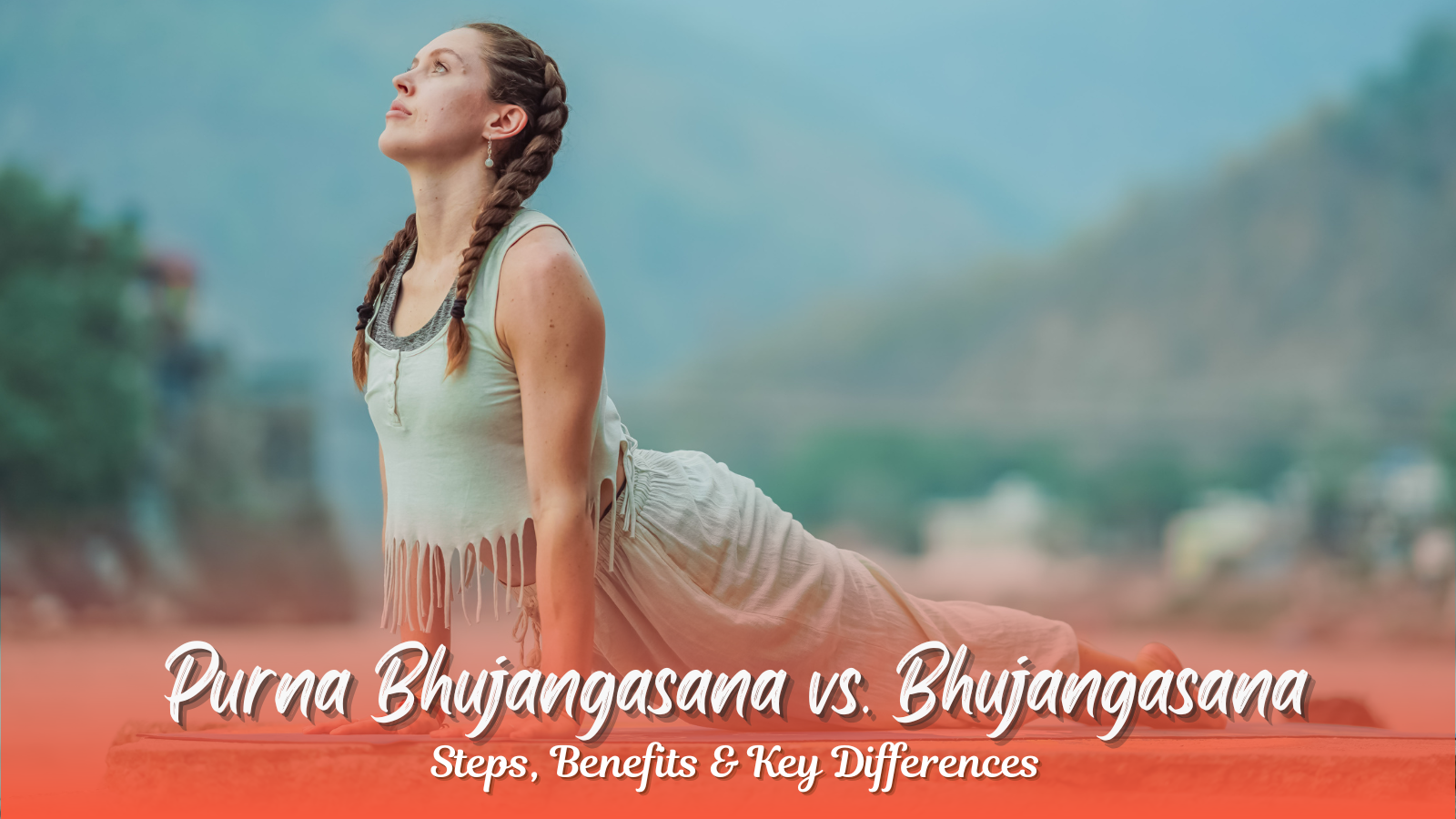
    Purna Bhujangasana vs. Bhujangasana – Steps, Benefits & Key Differences

    Purna Bhujangasana vs. Bhujangasana – Steps, Benefits & Key Differences

    Bhujangasana (Cobra Pose) and its advanced form Purna Bhujangasana (Full Cobra Pose) are two powerful backbends in yoga. In this guide, we’ll explore their meanings, step-by-step practice, benefits, contraindications, and key differences, helping you choose the right pose for your yoga journey.

    Here in this in-depth review, we are going to talk about Purna Bhujangasana vs Bhujangasana in detail – their meanings, stepwise process, varieties, advantages, disadvantages, and guidelines for securely practicing the asanas. Whether you are a beginner reading the basics or whether you’re an advanced yogi practicing at the best yoga school in Rishikesh, this article will guide you to learn these two beautiful backbends.

    What is Bhujangasana (Cobra Pose) in Yoga?

    The word Bhujangasana is the name of the Sanskrit “Bhujanga (English “Snake” or “Cobra”) and the word Asana (English “pose”) is obtained. In English, it is usually referred to as the Crowley or Cobra Yoga Pose or Cobra Pose.

    You lie down on your stomach in Bhujangasana and flex your chest, keeping your lower part fixed. This stretches out the psoas muscle in a gentle way, and stretches out the spine and the abdominal organs.

    Bhujangasana Meaning

    In yogic mythology, the cobra represents consciousness, illumination, and the raising of kundalini (a supposed psycho-spiritual force stored in the base of the spine) up the spine. Bhujangasana yoga is included as one of the 12 steps of Surya Namaskar (Sun Salutation YOGA) and the basis for the majority of back flexion postures.

    What is Bhujangasana (Cobra Pose) in Yoga?

    One of those positions is Purna Bhujangasana or Full Cobra Pose (as well as Purn Bhujangasana), an advanced variation of the simple Cobra Pose. The backbend is deeper in this pose, with head and feet approaching one another to provide an even more intense spine stretch.

    Purna is the word that means complete, which means that the cobra stretch has the farthest advancement in this particular stage of the stretch. It needs the extreme flexibility of the spine, well-developed back muscles, and open shoulders.

    Key Differences Between Bhujangasana and Purna Bhujangasana

    Although Bhujangasana and Purna Bhujangasana are based on similar postures, the variation lies in depth, muscles involved, and physical aspect of the asanas.

    FeaturesBhujangasana (Cobra Pose)Purna Bhujangasana (Full Cobra Pose)
    LevelBeginner to intermediateAdvanced
    Backbend DepthMild to moderateDeep, extreme arch
    Leg PositionStays on the floorLegs may lift with feet close to the head
    Muscle EngagementBack, shoulders, chestEntire spine, deep back muscles, legs
    Flexibility NeedModerateVery high
    PurposeStrength, mild stretchMaximum flexibility, deep spine work

    How to Do Bhujangasana – Step-by-Step Instructions

    • Lying flat on your stomach with your legs straight, the tops of your feet on the mat.
    • Put your palms on your shoulders.
    • Exhale, then raise your chest lightly with elbows close to your body.
    • Ram inwards against the palm of your hands, arching your back without straining.
    • Make the pubic bone and legs stable.
    • Do maintain 15-30 seconds of steady breathing.
    • Breathe out and slowly go down.

    There are also Bhujangasana steps with pictures to guide the visual learners on how to align the body during this pose.

    How to Practice Purna Bhujangasana (Full Cobra Pose) – Steps

    • Starting with the Bhujangasana yoga pose position.
    • On the inhale, drive down into your palms further and lift your chest further up.
    • Use your lower back muscles to straighten out and bend your knees in bringing your feet towards your head.
    • Complete arching of the spine to ascertain that the toes are stretched towards the top of the head.
    • Just breathe deeply; that is not to strain your neck.
    • But when comfortable, hold 10 to 15 seconds.
    • And breathe out, straighten up the legs, then slowly lower down.

    Different Variations of Bhujangasana (Cobra Pose)

    • Half Cobra Pose (Ardha Bhujangasana): A Useful pose even in the beginning.
    • Salamba Bhujangasana: Cobra resting on forearms on the floor.
    • Purna Bhujangasana: The full advanced variation.
    • Dynamic Bhujangasana: Dynamic Bhujangasana in and out of cobra.

    Top Benefits of Purna Bhujangasana (Full Cobra Pose)

    • The Purna Bhujangasana benefits the body as well as the mind:
    • Improves spinal flexibility and movements.
    • Tightens the entire back, shoulders, and arms.
    • Opens the lungs and chest and enhances breathing capacity.
    • Activates the abdominal organs, improving digestion.
    • Corrects posture and alleviates the hardness.
    • Stimulates the heart chakra (anahata chakra), which makes a person emotionally balanced.

    Health Benefits of Bhujangasana (Cobra Pose)

    The following are some of the most outstanding bhujangasana benefits:

    • Makes the back stronger and tones back muscles.
    • Works the chest, lungs, shoulders, and abdomen.
    • Lowers the rigidity of the back.
    • Aids in getting rid of anxiety and tiredness.
    • Increases the flow of blood.

    To regional audiences, bhujangasana benefits in Bengali, bhujangasana ke labh in Hindi, or bhujangasana benefits in English can be sought to understand these benefits in a better manner.

    Contraindications of Bhujangasana and Purna Bhujangasana

    The following cases are where both Bhujangasana and Purna Bhujangasana are not to be performed:

    • Abdominal surgery within the last few months.
    • Sore back or persistent vertebral problems.
    • Unless under supervision (in a Pre-Natal Yoga Teacher Training in Rishikesh).
    • Conditions of hernia or ulcer.
    • Severe CTS (carpal tunnel syndrome).

    Before doing bhujangasana, one should always check bhujangasana contraindications as well as bhujangasana procedure benefits and contraindications.

    Bhujangasana and Purna Bhujangasana

    AspectBhujangasanaPurna Bhujangasana
    BenefitsBack strength and flexibilityFull back strength and deep flexibility
    ContradictionsPregnancy and back injurySame, but avoid spinal surgery
    LevelBeginner-friendlyAdvanced only

    Bhujangasana in Different Languages (Hindi, Tamil, Kannada)

    • Bhujangasana in Hindi – भुजंगासन
    • Bhujangasana in Tamil – புஜங்காசனம்
    • Bhujangasana in Kannada – ಭುಜಂಗಾಸನ
    • Bhujangasana Information in English – This is commonly known as Cobra Yoga Pose.
    • Bhujangasan Ki Vidhi – The procedure of doing the cobra pose in Hindi.

    Learning Bhujangasana & Purna Bhujangasana in Yoga Teacher Training (YTT)

    When you are determined to perfect Purna Bhujangasana (Full Cobra Yoga Pose) and Bhujangasana (Cobra Yoga Pose), then one of the best things is a 200 Hour Yoga Teacher Training in Rishikesh or a certified Yoga Teacher Training in India, since these two are very efficient to proceed safely.

    At Top Yoga School in Rishikesh, through professional training, the purna bhujangasana step by step will be covered, including practice stretches, your introduction to backbends, and backbends that precede Bhujangasana yoga, and eventually leading up to full spinal flexibility of the full cobra pose.

    An organized teacher training session not only discusses the alignment principles and bhujangasana variations, but it also explains the bhujangasana procedure benefits and contraindications; therefore, you will know the times when you should practice or when not to practice certain poses. This will assure adaptability of the asanas to various body types and levels of fitness, a very important attribute on your part in the event you want to teach.

    You will also discover the therapeutic nature of bhujangasana benefits and purna bhujangasana benefits (spinal health, better posture, lung capacity, and emotional release), under the guidance of experienced yoga masters. Anatomy, yoga philosophy, and breathwork are further integrated in Rishikesh, especially those accredited as the Best Yoga School in Rishikesh, which provide you with a wholesome idea of how these poses impact the body and mind.

    In the case of attaining specialized certifications such as Pre Natal Yoga Teacher Training in Rishikesh you will be taught how to safely adjust/massage out bhujangasana yoga pose and softer alternatives to purna bhujangasana so that they are safe and allow flexibility in the spine and stability of core muscles, and safe to practice during pregnancy.

    Whether you are interested in personal achievement or career development as a teacher, learning purna bhujangasana and bhujangasana in a regimented teacher training program offers the skills, information, and confidence to teach and practice safely and authentically.

    FAQs (Frequently Asked Questions)

    1. What is Purna Bhujangasana?

    Purna Bhujangasana, or Full Cobra Pose, is the advanced variation of bhujangasana yoga with a deeper backbend.

    2. What is the World Record for Purna Bhujangasana?

    Some yoga practitioners have held Purna Bhujangasana for several minutes in competitions.

    3. What are the three types of Bhujangasana?

    Ardha Bhujangasana, standard Bhujangasana, and Purna Bhujangasana.

    • Ardha Bhujangasana (Half Cobra Pose): A gentle backbend suitable for beginners.
    • Bhujangasana Yoga Pose (Standard Cobra Pose): The classic version found in Surya Namaskar.
    • Purna Bhujangasana (Full Cobra Pose): The deepest variation offering maximum spinal extension.

    4. What is the main benefit of Bhujangasana?

    Improved spinal flexibility and posture.

    5. Which disease is cured by Bhujangasana?

    This supports back pain relief and digestion.

    • Mild back pain and stiffness, poor posture
    • Constipation and indigestion respiratory issues due to restricted chest expansion

    6. What are the 12 steps in Surya Namaskar?

    • Pranamasana (Prayer Pose)
    • Hastauttanasana (Raised Arms Pose)
    • Hastapadasana (Standing Forward Bend)
    • Ashwa Sanchalanasana (Equestrian Pose)
    • Dandasana (Stick Pose)
    • Ashtanga Namaskara (Eight Limbs Pose)
    • Bhujangasana (Cobra Pose)
    • Adho Mukha Svanasana (Downward-Facing Dog)
    • Ashwa Sanchalanasana
    • Hastapadasana
    • Hastauttanasana
    • Pranamasana

    7. Is Bhujangasana good for belly fat?

    Yes, it tones the abdomen and boosts metabolism.

    Bhujangasana vs Purna Bhujangasana – Which One Should You Practice?

    Transformation Bhujangasana (Cobra Yoga Pose) as well as Purna Bhujangasana (Full Cobra Pose) are a change in spinal extension asanas, which provide a broad scope of physical, mental, and energy development. Although bhujangasana yoga is a basic backbend, which develops spinal flexibility, chest opening, and deepens the lung capacity, purna bhujangasana moves the experience to a higher, more advanced level, requiring more strength, flexibility, and body consciousness.

    As a beginner, it is important to understand the purna bhujangasana step by step progression concerning bhujangasana and align it correctly before getting to the more strenuous movement of doing purna bhujangasana. Doing a full cobra pose too soon can be difficult on the lower-back muscles; therefore, it is wise to slowly make the body suppler through preparatory asanas and bhujangasana variations.

    Also, purna bhujangasana benefits include a better posture, the strength of the back muscles, digestion, and energy flow up the spine. In the meantime, there are the bhujangasana benefits, which include the relief of stress, better breathing, and the eradication of minor back pain. At the same time, both poses are supposed to be practiced consciously, observing the bhujangasana contraindications, especially for those who have herniated discs, people who have undergone abdominal operations, or pregnant women.

    Are you looking for professional advice? Then get training at the Best Yoga School in Rishikesh, or a 200 Hour Yoga Teacher Training in Rishikesh, or a certified Yoga Teacher Training in India, where you will learn not only the bhujangasana procedure benefits and contraindications, but also safe variations of the asana and proper breathing exercises. On these structured programs, you will have the opportunity to learn more about related backbends, variations of the backbends, and applications in therapeutic processes.

    For expectant women or students undergoing the Pre-Natal Yoga Teacher Training in Rishikesh program, instructors will provide safe modifications of the bhujangasana yoga pose and other gentle backbends, ensuring spinal movement is performed safely without excessive pressure.

    Be it the perfect setting of a Yoga School in Rishikesh, India, or the comfort of your living room, you should keep in mind that yoga is the process, not a race. Patience, commitment, and regular practice will gradually unlock the power of both bhujangasana and purna bhujangasana, making your yoga practice more balanced, safe, and profoundly rewarding.

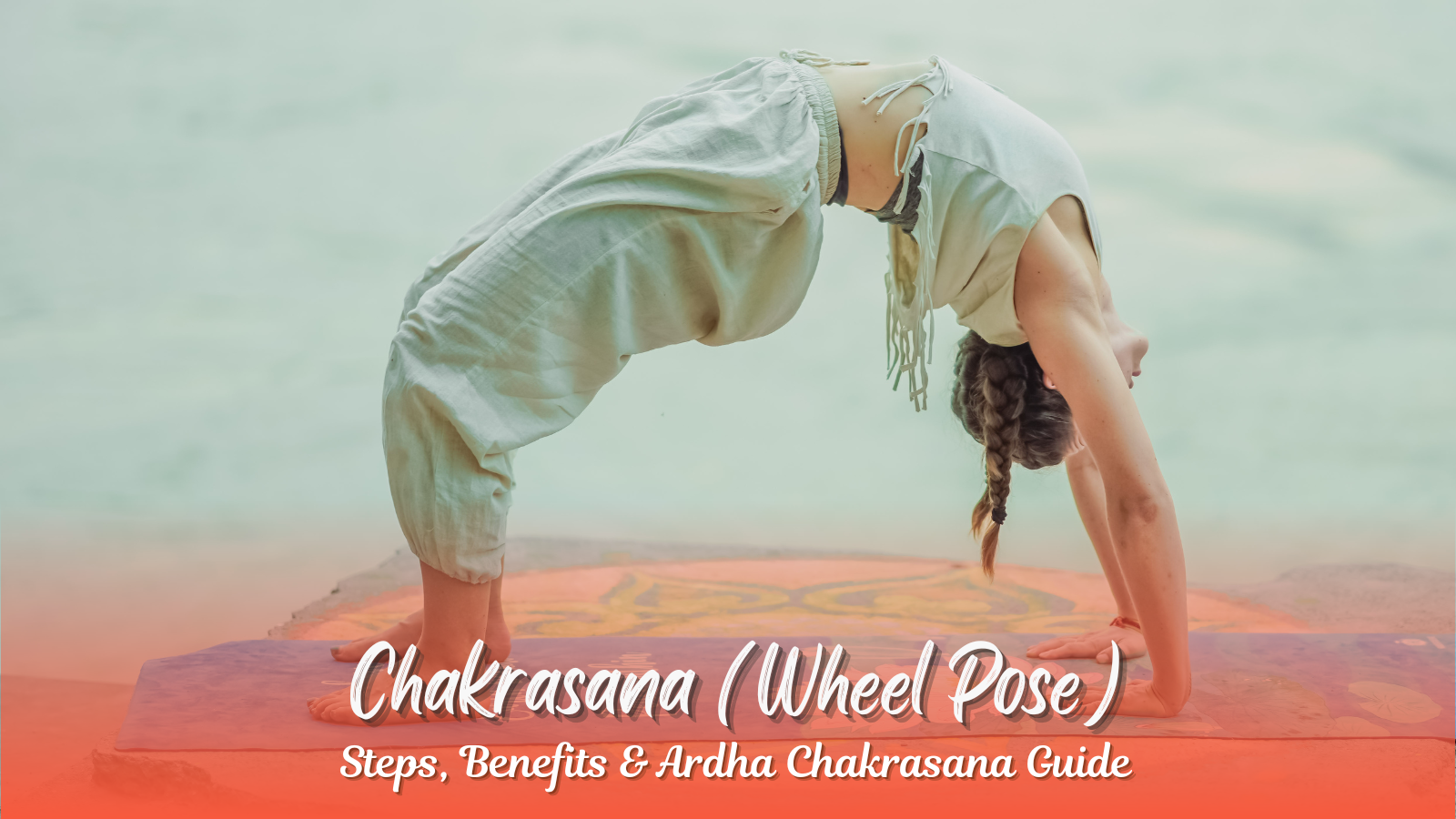
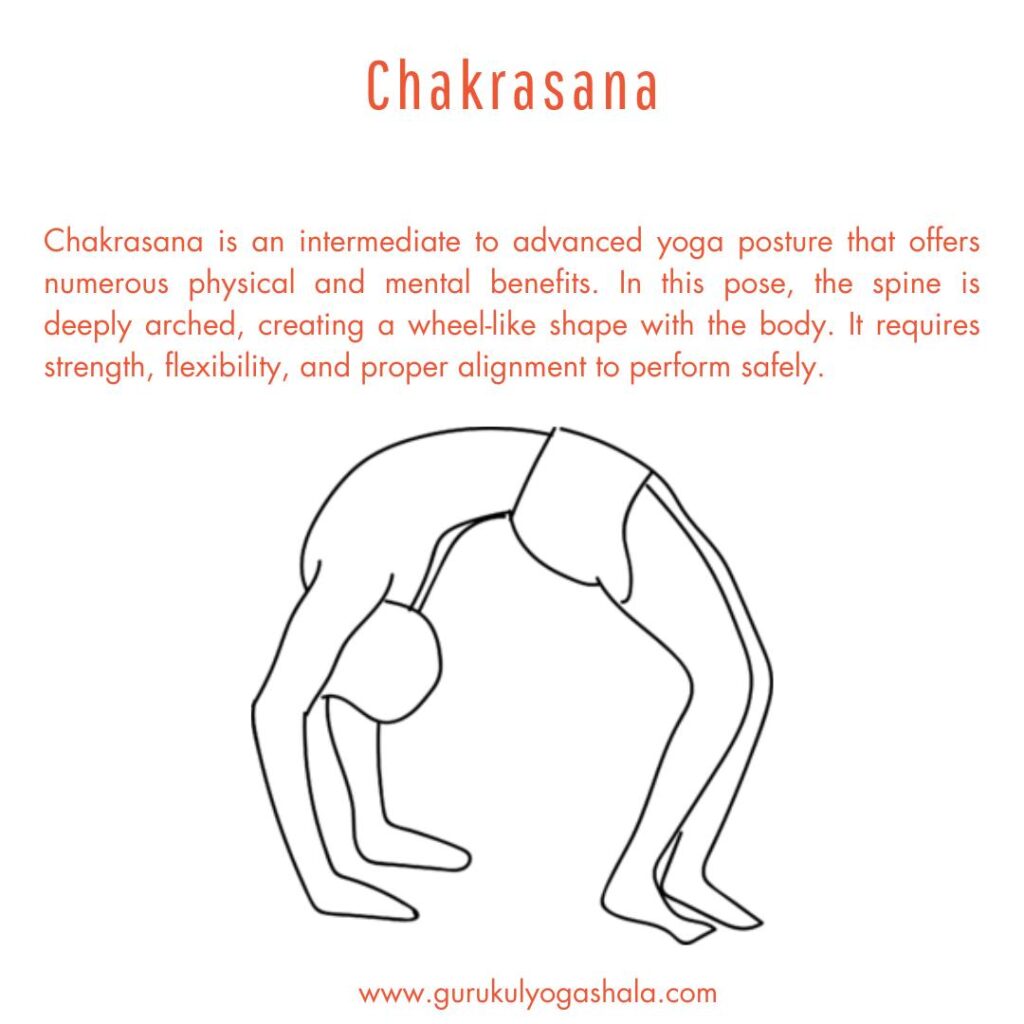
    chakrasana-wheel-pose-steps.jpg

    Chakrasana (Wheel Pose) in Yoga: Steps, Benefits & Ardha Chakrasana Guide

    Chakrasana (Wheel Pose), also known as Urdhva Dhanurasana, is one of the most powerful backbends in yoga. Practicing this asana improves flexibility, strengthens the spine, opens the chest, and energizes the body. In this guide, you’ll learn Chakrasana steps, benefits, variations like Ardha Chakrasana (Half Wheel Pose), and important precautions to practice safely.

    In this post, we shall talk about the Chakrasana meaning, chakrasana steps, chakrasana benefits, chakrasana variations, chakrasana contraindications, as well as we shall discuss the Ardha Chakrasana (Half Wheel Pose) and its exclusive advantages. Whether you are keen on gaining yoga practice or are going to attend a 200 Hour Yoga Teacher Training Course in Rishikesh, it is vital to learn this posture carefully.

    What is Chakrasana (Wheel Pose) in Yoga?

    Chakrasana, or the Wheel Pose, or Urdhva Dhanurasana (Upward Bow Pose), is another incredibly active yoga pose that brings about life, energy, and continuity of life. The term Chakra, in Sanskrit, translates to the word wheel, and Asana means pose; combining translates to Wheel Pose, Chakrasana. This shape of the body is considered to represent expansion, openness, and flexibility when doing the posture; the body stands in the shape of a wheel, i.e., the spine deeply curved, arms powerfully stretched, and the legs sitting firmly on the ground.

    It is an extreme backbend asana that requires shoulder, arm, leg, and back muscles. Yoga: Chakrasana Practicing regularly will open up the chest, give more capacity to the lungs, and promote free flow of energy to the entire body. It is also referred to by many yoga practitioners as Chakrasana yoga posture due to the fact that it relates to the subtle body and subtle energy channels.

    Chakrasana may be difficult to practice, especially for first-time beginners; however, with practice and the help of other poses like Bhujangasana (Cobra Pose) and Setu Bandhasana (Bridge Pose), the pose becomes easier. As a physical exercise as well as a prana-activating posture, balancing of the nervous system and restoring the mind, chakrasana works on many levels.

    Chakrasana Meaning & Yoga Philosophy (Wheel Pose Spiritual Benefits)

    According to the yoga philosophy, each of the asanas has a sort of symbolic meaning, and Chakrasana meaning is not limited by physical flexibility. The wheel symbolizes motion, perpetuity, and spiritual development. Similar to a wheel having no end, as it keeps moving, Chakrasana practice helps us recollect how our energy and everything keeps changing all the time.

    Chakra asana has been noted to activate the seven chakra (energy centers) in the subtle body. That is why Chakrasana is also attributed to emotion balancing and raising higher awareness. Specifically, the posture activates:

    Anahata (Heart Chakra): Expanding the chest allows for love, compassion, and emotional balance.

    Vishuddha (Throat Chakra): Neck extensions help to achieve effective communication and vocal expression.

    Ajna (Third Eye Chakra): Regular practice develops concentration and awareness, which leads to developed intuition.

    Spiritually, Chakrasana is not merely a body pose: it is the transition gate to uniting internal power and energy. Yogis maintain that the chakrasana yoga practice, especially in the form of Chakrasana, leads to opening the channels that block the spine where most body energy channels (nadis) join, hence enabling the free movement of prana.

    Learned during the chakrasana steps and chakrasana benefits in a yoga class, in an advanced yoga learning as 200 Hour Yoga Teacher Training Course in Rishikesh, knowing the chakrasana meaning in yoga philosophy enriches the physical, as well as spiritual dimensions of the yoga practice.

    Chakrasana Steps: How to Do Wheel Pose Safely

    Many practitioners wonder how to perform Chakrasana correctly, and for this, here’s a simple step-by-step guideline:

    Preparatory poses

    Warming up with

    • Bhujangasana (Cobra Pose)
    • Setu Bandhasana (Bridge Pose)
    • Dhanurasana (Bow Pose)
    • Ardha Kati Chakrasana (Half Waist Bend Pose)

    Chakrasana steps

    • Starting Position: lie on your back with your feet hip-distance apart. Kneel and bend your knees such that the feet are near the buttocks.
    • Position of hands: Bend your arms and bring your hands next to your ears, pointing fingers in the direction of your shoulders.
    • Breathe in & Rise: Press your palms and feet into the floor. Now, raise your shoulders and hips and spine slowly, bringing them all together to form an arch.
    • Wheel Position: When you feel comfortable, attempt to straighten your arms and legs as much as you can adopt that wheel pose.
    • Hold the Pose: Hold the position up to 15- 30 seconds, and breathe deeply.
    • Exhaling: Relaxation of breath by letting it out slowly and lowering your back, one vertebra at a time. Rest in Shavasana.

    Chakrasana Images & Alignment Tips (Wheel Pose)

    The perception of seeing is very pertinent in yoga. In order to learn about the alignment, posture, and breathing pattern of the chakrasana, reading about the steps may not suffice to completely inform many beginners. This is the place where the images of the chakrasana turn out to be quite beneficial. Through these chakrasana images, one can easily determine how the body achieves the arch, where the palms and the feet will be seated, as well as how the spine will be curved in the shape of a wheel.

    Chakrasana images for step-by-step learning

    Inserting the images into your yoga manual or blog, you will be able to use them in a step-by-step order:

    • The starting position is lying down on the mat.
    • With the knees bent and the feet toward the hips.
    • Hands on the sides of the ears.
    • Slow lifting of hips and chest.
    • The finishing position is a full wheel position where the body is arched.

    Thus, pictures of Ardha Chakrasana may be introduced to illustrate the asana of standing backbend. The demonstration of chakrasana yoga and ardha chakrasana pictures will provide the learner with a comparative overview of the movement to enable one to proceed with the exercises safely.

    Where to use Chakrasana images?

    • Yoga and yoga tutorials.
    • The manual and guides of the best yoga teacher training school in Rishikesh.
    • To motivate students to have proper posture, social media is used to post.

    You can study materials in the 200 Hour Yoga Teacher Training in Rishikesh, especially to describe how chakrasana should be practiced, chakrasana advantages, and chakrasana contraindications.

    The visual representation of chakrasana through images and a clear explanation about the steps and chakrasana benefits make it known that practitioners read as well as visualize chakrasana practices and consequences.

    Chakrasana Benefits: Physical & Mental Health Advantages

    Chakrasana is a strength practice yoga posture that has many physical and psychological health advantages. Now it is time to discover 5 benefits of Chakrasana and beyond:

    Physical Benefits

    • Enhances Strength of the Spine: promotes flexibility and eliminates stiffness.
    • Strengthens the Lungs: Opens the chest and strengthens breathing.
    • Strengthens the immune system: Stimulation of the organs and enhancement of blood circulation.
    • Strength Muscles: Works the arms, legs, shoulders, and abdominal muscles.
    • Makes one posture better: It straightens one up and makes the back strong.

    Mental Benefits

    • Stress and fatigue are decreased.
    • Activates the brain and concentration.
    • Enhances circulation and boosts morale.

    Chakrasana Contraindications: Who Should Avoid Wheel Pose

    Although Chakrasana has immeasurable advantages, it should not be practiced by some people.

    Who cannot do Chakrasana?

    • Individuals who have experienced back injury or people with serious spine issues
    • Individuals with dental problems such as heart disease or high blood pressure
    • Patients undergoing surgery on the abdomen or their hernia
    • The first-time users who do not properly warm up or are not advised on what to do

    It is always necessary to be under the guidance of a qualified yoga tutor, more so when you are new to yoga.

    Ardha Chakrasana (Half Wheel Pose): Steps & Benefits

    Ardha Chakrasana (Half Wheel Pose) is a less intense variation and is a good way to practice the full wheel pose, helping lead the mind into being ready before actually taking the full wheel pose.

    Ardha Chalrasana Steps

    • Stand erect with feet apart and at the width of your hips.
    • Use the lower back by placing palms on it.
    • Breathe in and slowly bend the torso.
    • Stay on the feet with legs straight.
    • Using 10-20 second holds and then back to standing.

    Ardha Charasana Benefits

    • Makes the spine flexible.
    • Builds back and core.
    • Improves the working of the lungs and breathing abilities.
    • Burns belly fat through extending the muscles of the abdomen.
    • It has a digestive property and acts on the kidneys.

    Ardha Chalkrasana Contradictions

    • Individuals who have terrible back pain or those who have experienced some form of spinal damage.
    • Patients who have vertigo or balance issues.
    • People undergoing hernia or abdominal surgery.

    Chakrasana Variations: Different Wheel Pose Modifications

    To further extend your practice then experiment with the following variations of Chakrasana:

    • One -Legged Wheel Pose (Eka Pada Chakrasana)
    • Forearm Wheel Pose
    • Dimbasana (Bow Like Wheel Pose)
    • Wall-supported chakrasana

    The variations emphasized muscles differently and improved balance, strength, and flexibility.

    Chakrasana in 200 Hour Yoga Teacher Training in Rishikesh

    Chakrasana falls somewhere on the asana curriculum of one of the Yoga Teacher Training Schools in Rishikesh, in case you are considering joining. Included in all Yoga Teacher Training Courses in Rishikesh: comprehensive Chakrasana alignment, anatomy, of benefits, and methodology of teaching. A lot of schools also incorporate this with Sound Healing Yoga Teacher Training, which adds the whole package of the yoga experience.

    The best yoga school in Rishikesh are located in Rishikesh, which is also known as the Yoga Capital of the World, because in this place you will learn traditional yoga under the care of the professionals and get to experience the spirituality of the Himalayas.

    FAQs

    1. What is called Chakrasana?

    Ans: Wheel Pose or Chakrasana is a yoga pose in which the body resembles the shape of a wheel, arch, depicting the idea of power and outreach.

    2. How to Perform Chakrasana?

    Ans: Lie on your back → bend knees → put the palms on the sides of your ears → lift the spine upward → hold → release gradually.

    3. Can we do Chakrasana daily?

    Ans: Yes, practiced with caution and warm-up, Chakrasana can be done every day as exercise towards flexibility, strength, and energy.

    4. Who cannot do Chakrasana?

    Ans: Individuals who are severely suffering from backache, hernia, blood pressure problems, or recent surgery are advised not to practice Chakrasana. Practicing it is also not advisable for pregnant women.

    Final Thoughts: Why Practice Chakrasana (Wheel Pose Yoga)

    Whether you are deepening your practice at home or joining a yoga teacher training in Rishikesh, Chakrasana and Ardha Chakrasana can transform your physical and mental well-being. Always practice mindfully and under guidance for maximum benefits.

    Ardha Chakrasana (Half Wheel Pose) is also encouraged to be practiced by those just starting with it, since it would allow them to reap plenty of the same benefits but at a more manageable level. Practicing Ardha Chakrasana steps, students learn to warm up their body and step-by-step to ready themselves to undertake a more intense backbend with full Chakrasana. Both types of variations, i.e., Ardha Chakrasana and the full Chakrasana, have colossal benefits such as an increase in flexibility, lung capacity, better posture, and lucidity.

    Nevertheless, going into the chakrasana steps and benefits, it is also important to know the chakrasana contraindications. People who have high blood pressure, have had recent surgeries, those with heart diseases, and those with serious back problems should avoid the practice or even practice under a professional supervisor. Learning the exact process of the chakrasana and the chakrasana contraindications would help professionals get efficient and secure outcomes.

    Chakrasana is an exercise that all students must learn when they want to advance their yoga practice with the right guidance. Studying at a 200 Hour Yoga Teacher Training Course in Rishikesh enables one to learn the inner nature of the yoga practices in detail. In this type of training, students get to know the chakrasana steps, chakrasana variations, ardha chakrasana benefits, and other great yoga poses in the right alignment, breathing, and philosophy.

    Rishikesh is the place, which is also called the yoga capital of the world; moreover, there are the best yoga school in Rishikesh where teachers offer students asanas, pranayama, meditation, and other holistic self-healing approaches. The learning process in many such schools would be enhanced further as many of them also incorporate contemporary wellness practices such as Sound Healing Yoga Teacher Training.

    Finally, chakra asana practice is first and foremost to do with flexibility, but it is also to do with discovering oneself, balancing our energy, and transformation within. With practice and patience, through the practice of chakrasana yoga and Chakrasana practices, one will learn in due time to awaken the physical being as well as the spiritual being.

    Plavini Pranayama in Rishikesh Yoga Teacher Training

    Plavini Pranayama: Steps, Benefits, Precautions & Complete Guide

    There is the practice of breathing with mind, body, and spirit, namely Pranayama, which is one of the most potent yogic concepts. Plavini Pranayama is one of the most difficult pranayama techniques, unique and rare amongst the high-tech ones. In many books and articles, it has been referred to as the yogic art of floating, as ancient scriptures state that a yogi mastering Plavini would be able to float on water with ease for hours.

    Although many practitioners find such mystic advantages intriguing, Plavini is not only a means to benefit physically and have more control over your own body, but also an effective method to cleanse and energize the organism, bringing it closer to the state of meditation. This article will bring you through how to practice Plavini Pranayama, the benefits, precautions, and frequently asked questions to learn all about this ancient breathing practice in Yoga.

    What is Plavini Pranayama? (Floating Breath Explained)

    The name of this word Plavini is a derivative of the Sanskrit root Plu, which means to float. Plavini: In yogic practices, this is commonly known as the floating breath, since a practitioner draws air into the stomach and the lungs, thus making the body buoyant. Given appropriate exercise, through this special method, we can learn to float in water without effort, and that is why most people also refer to it as the art of yogic floating.

    Plavini Pranayama is explained in the classical texts of yogis such as the Hatha Yoga Pradipika and Gheranda Samhita as one of the more advanced pranayamas. It is perceived as a cleanse of the digestive system, a metabolism enhancer, and used to stabilize the inner organs. Even traditional yogis believed that the knowledge of Plavini could make life time longer, their immunity stronger, and could assist them in manifesting higher levels of consciousness.

    As opposed to normal breathing mechanics, plavini does not merely concern inhalation and exhalation of air; it also deals with the process of swallowing and retaining air in the stomach, resulting in an airy and weightless sensation all throughout the body. The reason is that there are some advanced pranayamas practised along with this, and the others include Kevali Pranayama.

    Plavini Pranayama is also linked to general well-being by modern yoga masters. It enhances the capacity of the lungs, facilitates emotional balance, and gets the mind ready to meditate. Plavini is taught at many yoga schools, notably the Best Yoga School in Rishikesh, India, as an advanced practice, such as the 200 Hour Yoga Teacher Training in Rishikesh or the 300 Hour Yoga Teacher Training in Rishikesh. And, in short retreats, some even offer guided practice e.g, 3-Day Yoga Retreat in Rishikesh, so even the curious learners or spiritual seekers can get to know it.

    Metaphorically speaking, more than a breathing exercise, Plavini teaches the gateway to mastering prana (life-force energy). When taken in a disciplined manner and trained by a specialist, it can make meditation more thorough, stimulate the body, and form the gateway to spiritual illumination.

    Plavini is not really just a breathing exercise; it is a gateway to the mastering of prana (life-force energy in the form of breathing). With training and when practiced diligently, it has the potential to further meditation, enhance physical health and vitality, and open the way to spiritual awakening.

    How to Practice Plavini Pranayama Step-by-Step

    Prior to laying out the procedure, it should be mentioned that Plavini Pranayama is one of the advanced techniques and should be performed under instructions issued by an older yoga instructor. One must avoid Plavini until the other simple pranayamas, such as Anulom Vilom, Kapalabhati, Bhastrika are learnt by the learner.

    Here is a step-by-step guide for Plavini Pranayama:

    Stage 1: Preparation

    • Take a comfortable posture of meditation, like Padmasana or Siddhasana.
    • Maintain the spine straight, shoulders in a relaxed position, and soft-closed eyes.
    • Training should be based in a peaceful, clean area or by the water when trying out the method of floating.

    Stage 2: Inhalation

    • Breathe slowly in and out by using the nose.
    • Open the chest as wide as possible, and give the air a chance to be held in the stomach, nearly like blowing up a balloon.
    • As opposed to other pranayamas, in this one, the focus is on slowly swallowing air into the stomach.

    Stage 3: Retention (Kumbhaka)

    • Keep the wind in without stress.
    • The belly is supposed to be open, leading to lightness of the body.
    • Here, think about the energy that is increasing inside.

    Stage 4: Exhalation

    • Let the breath slowly release from the nose.
    • Let the body completely relax between rounds.

    Stage 5: Repetition

    • At the commencement, practice 5-7 rounds.
    • Over time, the length of retention can be intensively prolonged by the practitioners.

    Note: Attempting Plavini in water, yogis got into the habit of doing it in rivers or ponds, stuffed the belly to the gills with air, and floated along weightlessly. Nevertheless, it is only supposed to be when it is under the supervision of experts.

    Plavini Pranayama Benefits for Body, Mind & Spirit

    Plavini offers both spiritual and physical benefits. There are some major advantages as well, and these are as follows:

    1. Physical Benefits

    • Better digestion: Aids in cleaning the stomach and intestines, so there is less indigestion and lower acidity.
    • Improves lung capacity: widens the airways and the lungs as well as strengthens the breathing organs.
    • Helps to become buoyant: Yogic books state that by this, he or she can easily float on water.
    • Increase immune system: Increases pranic energy so that the body becomes less susceptible to disease.
    • Slows down aging: Once the oxygen circulation and vitality are enhanced, it slows down the process of getting old.

    2. Mental and Spiritual benefits

    • Relax the mind: Deep breathing is a stress and anxiety reliever.
    • Increases meditation: Remains in the mind, allowing for the calm inward focus.
    • Balances prana (life-force energy): Equalizes the prana-energy channels (nadis) in the body.
    • Aids higher states of consciousness: Believed to stimulate inner awareness & intuition.

    Plavini Pranayama Precautions & Safety Tips

    Plavini, it would be well to observe that, just as with other advanced yogic practices, they should be executed with caution. These are some of the key Pranyama precautions:

    • Never train your stomach full. Try to leave at least 3/4 hours’ gaps after meals.
    • Initiatives are not advised to engage in excessive retention of air due to the dizziness that may come along.
    • Patients with asthma, heart disease, high blood pressure, or stomach-related disorders are advised to approach a physician before practicing.
    • Do not engage in practicing in dusty or noisy areas.
    • Do not float in the water without good enough training and supervision.
    • When improperly practiced, it can lead to uneasiness, as it does with bhastrika pranayama side effects, such as hyperventilation or tiredness.

    Plavini Pranayama vs Kevali Pranayama: Key Differences

    There is confusion between Plavini Pranayama with Kevali Pranayama among many practitioners. Although they are both advanced practices, they are used in different ways:

    Plavini Pranayama: this is aimed at retaining air in the stomach, beneficial in buoyancy and digestion.

    Kevali Pranayama: Called the breathless state, the achievement of which is the natural retention of breath by the yogi, entering into deep meditation.

    Both of the methods are sophisticated, and they need the controlled direction of an experienced yoga school.

    Learn Plavini Pranayama in 200 Hour Yoga Teacher Training in Rishikesh

    In case you are actually interested in being serious with exercising Plavini Pranayama, then it is suggested that you join a Yoga School in Rishikesh. Yoga is one of the most popular disciplines, which also contributes to the great popularity of Rishikesh, the so-called Yoga Capital of the World, which hosts some of the best yoga schools in India.

    These are the possible structured learning:

    • 100 Hour Yoga Teacher Training in Rishikesh: The best option when starting.
    • 200 Hour Yoga Teacher Training in Rishikesh: The globally accepted foundation course.
    • 300 Hour Yoga Teacher Training in Rishikesh: This is advanced training to intensify your practice.
    • 3 days yoga retreat in Rishikesh: Short programs to detox and relax.

    By Training with the Best Yoga Teachers in Rishikesh, you can learn with authentic traditions with the help of master masters who are experienced and safe in learning great techniques such as Plavini.

    Plavini Pranayama Images

    Yoga exercises can be explained easily with the help of visual instructions. Although education by a teacher is the best practice, most yoga schools offer Plavini Pranayama images so that learners can see how they ought to orient their bodies and breathe. Never memorize or expect an image to accurately define itself. Compare it with correct guidance.

    Plavini Pranayama FAQs (Beginner’s Guide)

    1. How to perform Plavini Pranayama?

    Plavini consists of forceful drawing of air into the lungs and into the stomach, keeping it awhile, and releasing it gradually. It must be done in a seated position or even floating in water with expert instructions.

    2. What are the benefits of Plavini Pranayama?

    It aids in digestion, strengthens lung capacity, immunity, decreases stress, and is reported to increase life expectancy as well as aid spiritual development.

    3. What is the Plavini Pranayama in water?

    Plavini enables the practitioner to float in the water with ease, where one inhales air until the stomach and the lungs are full. That is the reason why it is also referred to as the floating breath.

    4. What is the Miracle of Pranayama?

    The miracle behind pranayama is that of controlling prana (life force). Through breath control, yogis not only become healthier and have a calmer mind but also gain supernatural powers such as being able to withhold their breath longer and an increased awareness.

    Final Thoughts: Why Practice Plavini Pranayama?

    Named Plavini Pranayama, this unique and very strong breathing discipline can improve not only physical health, but spiritual consciousness as well. Although some people are mesmerized by the idea of floating on water, the theory behind the whole aspects of Plavini is balancing the prana and advancing meditation. It is an intermediate practice, unlike the simplest ones, and is usually presented in combination with Kevali Pranayama, other advanced yogic types of breathing.

    When it comes to obtaining authentic learning, joining the Best Yoga School in Rishikesh can matter a lot. In Rishikesh, the so-called yoga capital of the world, there are numerous established schools that provide training in the traditional methods. Be it a 100 Hour Yoga Teacher Training in Rishikesh, a 200 Hour Yoga Teacher Training in Rishikesh, or an advanced 300 Hour Yoga Teacher Training in Rishikesh, you will find programs that operate in a structured format that focuses on pranayama, meditation, and philosophy to your core knowledge.

    With limited time at hand, a 3-day yoga Retreat in Rishikesh or a short course at the best yoga school in India can help you in exploring the pranayama techniques, such as Plavini, in a comfortable and healthful setting. The programs also do not concentrate on the asanas, but also give information on pranayama precautions, so you get to know how to practice them properly without the fear of feeling discomfort and even the side effects, like occasionally being experienced on the Bhastrika Pranayama.

    The way of pranayama leads finally not only to physical perfection but also to spiritual enlightenment. Plavini Pranayama, with the right instructions, patience, and practice, will make your yogic life worthwhile, strengthen bodily necessities, and create an entry point to new levels of awareness.

    Perfect Yoga Breakfast – What to Eat Before & After Yoga for Energy & Balance

    Perfect Yoga Breakfast – What to Eat Before & After Yoga for Energy & Balance

    Perfect Yoga Breakfast – What to Eat Before & After Yoga for Energy & Balance

    An energizing yoga breakfast sets the tone for your day, keeping you light, focused, and ready for your yoga practice—whether it’s gentle Hatha vs Vinyasa. Maybe you are starting your day off with a light stretch or feeling like something more intense, like a vinyasa practice, but what you eat before and after class can significantly affect how energized you feel as well as your digestion and state of mind.

    What to eat before yoga is a question that some first-time yoga class participants often ask, as well as more experienced yoga practitioners taking part in a 200 Hour Yoga Teacher Training in Rishikesh. Do I even eat anything? So, what should we eat after yoga to re-energize with smart foods? This guide will look into the main aspects of the yogi diet, the best breakfast time, and new nutrition methods that we can use to complement ancient yogic knowledge.

    Whether you are training at a Yoga School in Rishikesh or just keeping up with your home practice, the right yoga breakfast, one that is harmonized with your dosha, way of life, and yoga style, can maximize the physical and spiritual benefits.

    What is a Yoga Breakfast?

    Best breakfast for yoga that assists your body and mind before and after yoga is called a yoga breakfast. A yogi breakfast is Satvic (pure), light in quantity, and should be easily digestible, unlike a heavy Western breakfast, so that you can be focused, supple, and remain calm throughout your session.

    It usually consists of whole foods, natural, plant-based foods, including:

    • Hot salty herbal teas or lemon water
    • Date, raisin, or soaked almonds
    • Seasonal fruits
    • Steamed vegetables
    • Oatmeal or rice porridge, Simple whole grains
    • Green juices or fresh coconut water

    These foods are also rich in prana (life force) and will keep you energized without making you feel like you are stopped up. One should ideally take a pre-yoga breakfast 1-2 hrs before one head to the yoga session, particularly when the yoga is fairly physical.

    Best Breakfast Before Yoga

    If you’re doing yoga at home or attending a 200-hour Yoga Teacher Training in Rishikesh, the best breakfast before yoga is always light, nourishing, and sattvic. Ideally, the food must be:

    • Light and well-digestible
    • Energy and nutriment-enriching
    • Not one working with stimulants, e.g., caffeine and sugar
    • Alkaline-forming to curb inflammation

    Top Pre-Yoga Breakfast Options:

    • Fruit Salad with Chia Seeds: It contains natural sugar, hydration, and fiber.
    • Soaked Almonds or Soaked Walnuts: A Nice source of protein and healthy fat.
    • Banana cinnamon oatmeal: Keeps blood sugar and helps maintain energy.
    • Avocado Toast on Multigrain Bread: The best option is for those who are into vinyasa or power yoga.
    • Yoga Bar Breakfast Protein Bar: It is easy, well-balanced, and targeted to physically active yogis. The Yoga Bar Breakfast Protein Bar benefits are a portable breakfast, natural foods, and increased energy.

    When you practice early in the morning, you might like to have a very light meal and/or forgo solids. In this case, one can do with herbal tea or warmed lemon water with honey.

    Can I Do Yoga After Breakfast?

    Yes, you can practice yoga after breakfast, but timing is key. Most yoga experts in Rishikesh recommend waiting 30–120 minutes depending on your meal size.

    Yoga done when the stomach is full might cause pain or cause gas, or lethargy. That is why at most of the best schools, such as the Best Yoga School in Rishikesh, the tutors encourage yoga in the morning on an empty stomach or just after an extremely light breakfast. The practice coincides with Ayurvedic teachings and helps to achieve the best energy movement in asanas.

    To the question in the mind of many, especially those who have yoga breakfast, when should you practice yoga? The answer is a good rule of thumb:

    • Light meal (fruits and tea): 30-45 minutes wait
    • Medium meal (ex, oats or toast): wait 1-1.5 hours
    • Full meal (such as a full Indian breakfast): take time 2-3 hrs

    Yoga on an Empty Stomach vs After Breakfast

    “Yoga with an empty stomach or after eating breakfast?” The answer varies as everybody’s metabolism, schedule, & goals are different.

    Pros of Practicing on an Empty Stomach:

    • Improved digestion
    • Enhanced mind state and focus
    • Energy flow is better during pranayama and meditation
    • Perfect to use in the mornings

    Pros of Practicing After a Light Breakfast

    • More endurance for long or high-level workouts
    • Helps to prevent low blood sugar or dizziness
    • Suitable for mid-morning or pm practices

    When you are pregnant, or doing Pre-Natal Yoga Teacher Training in Rishikesh, a little healthy snack before practice is mandatory. Sometimes listen to your body.

    Post Yoga Breakfast: Refueling Mindfully

    Your post-yoga breakfast is also as critical as pre-yoga. Your body should:

    • Rehydrate
    • Replenish electrolytes
    • Recover muscle (particularly after powerful asana classes)
    • Support digestion

    Best Post Yoga Breakfast Ideas:

    • Protein Powder, Banana, and Spinach Smoothie
    • Lemon and Coconut Mung Bean Sprout Salad
    • Ayurvedic Kitchari (Rice and Lentil Porridge)
    • Veggie Tofu Scramble
    • Herbal tea with yoga Breakfast Protein Bar of Yoga Bar

    Chia seeds, nuts, and plant proteins would be an addition to your breakfast that will bring life back to it, making your body feel steady and light.

    Yogi Diet – Eating the Yogic Way

    It is a diet that holds Ayurvedic and sattvic concepts. It focuses on an emphasis on clean, whole, and natural foods that bring unclouded health, life, and soul improvement.

    These are some of the tenets of a yogi breakfast:

    • No storage (no leftovers or packaged junk)
    • Degree of simplicity (stomach-friendly and to the senses)
    • Seasonality (Eating with the natural cycles)
    • Mindfulness (presence and gratitude when eating)

    During a Yoga Teacher Training in India or 200 Hour Yoga Teacher Training in Rishikesh, one may learn about yogic nutrition as well as asana, pranayama, and meditation. Food is not treated as a part of the practice but as an object on its own.

    FAQs: Answering Common Questions

    Q1: What do yoga people eat for breakfast?

    Fruit and herbal tea, soaked nuts, and oatmeal are usually taken by Yogis. A good number of them add Ayurvedic foods in the form of kitchari, sprouts, or warm spiced porridge.

    Q2: What does Sadhguru eat for breakfast?

    Light or natural foods are something Sadhguru talks about a lot. He does not usually eat breakfast, but his first meal is at lunchtime due to his yogic way of life and rhythms of digestion.

    Q3: Is yoga good for breakfast?

    Although it may not be food, yoga could be a vocal morning fillip. It enhances metabolism, lowers stress, and preconditions the positive start of a day.

    Q4: Can I drink water before yoga?

    Yes, 20–30 minutes before practice, drink warm or room-temperature water. Do not take cold drinks just before yoga.

    Q5: What is the best time to eat for yoga?

    Take a minimal meal 1-2 hours before yoga. After practice, it is better to wait 15 to 30 minutes before eating so that your body can rest.

    Final Thoughts: Eating with Intention

    Want to deepen your practice and learn more about yogic nutrition? Join our Yoga Teacher Training in Rishikesh and explore the ancient art of mindful eating. As you sit down to a yoga breakfast during a sunrise session or as you go through a module at the Yoga School in Rishikesh, your yoga eating habit can even become a part of your spiritual practice. It is time to recharge not only the body, but the soul as well.

    When you match what you eat with your practice, making sattvic meal choices, eating at the best times, and listening to your body, your yoga, and everyday life can rise. Whether it is eating a Yoga Bar Breakfast Protein Bar before a busy day at the office or a bowl of warm kitchari after practice, proper eating decisions make a difference.

    On your journey further into yoga, may that same intention guide you- maybe through a Yoga Teacher Training in India or a Pre-Natal Yoga Teacher Training in Rishikesh – remembering that the life of the yogi is a life of awareness, simplicity, and conscious living. A good place to start is your yogi breakfast.

    Try Hanumanasana daily for 5 minutes to see gradual flexibility improvements.

    Hanumanasana (Monkey Pose) – Benefits, Steps, Variations, and Precautions for Beginners

    Hanumanasana (Monkey Pose) – Benefits, Steps, Variations, and Precautions for Beginners

    Hanumanasana yoga, as practiced in the yogic tradition, is crossing a chasm physically and overcoming mental boundaries, doubt, and fear. Not only is it learning to do the full front split, but it is also learning to be balanced, patient, and have faith in the process.

    An ongoing practice of the hanumanasana steps gives flexibility to hamstrings, hips, and quadriceps and strengthens the pelvic floor, along with providing benefits of increased body alignment. It is commonly encompassed in 200 Hour Yoga Teacher Training in Rishikesh, Pre Natal Yoga Teacher Training at Rishikesh with the modified versions, and post-advanced in the Best Yoga School at Rishikesh, where students would get the right hanumanasana precautions to avoid injuries.

    Hanumanasana Name Meaning and Significance in Yoga

    The name Hanumanasana is fairly literal, as the Sanskrit word Hanuman means the Monkey Pose, and this pose refers to the great leap of the hero Lord Hanuman. It is best known as Monkey Pose Yoga in English, but can be simply called the front split in non-yogic fitness circles. Nevertheless, when compared to a gymnastic split, the choice of hanumanasana variations only in yoga puts an emphasis on the elements of breath control, conscious use of muscles, and the flow of energy.

    It is a famous pose to ensure the stretch of the hips, hamstring muscles, groin, and quadriceps to the maximum and provide a mental challenge. It reigns supreme in Hatha Yoga and Vinyasa sequences, and is the star of the shows in numerous yoga teacher training courses in India, particularly within the top yoga school of Rishikesh.

    The Story Behind Hanumanasana (Monkey Pose) in Ramayana

    The name derives from a mythical event in the Ramayana. During the period when Sita, wife of Lord Rama, was kidnapped and taken to Lanka island, Hanuman jumped a mammoth leap from the southernmost tip of India to the Lanka, carrying the message of Rama. This big step symbolizes not merely prowess but valor and commitment.

    The message of Hanumanasana story is that the pose involves more than physical struggle; it is a metaphor of overcoming challenges through faith and persistence.

    Top Hanumanasana (Monkey Pose) Benefits for Flexibility, Strength & Mind

    The practice of hanumanasana yoga yields many physical, mental, and emotional advantages:

    • Makes You More Flexible – Stretches the hamstrings, hip flexors, and quadriceps very deeply.
    • Tones the Legs and Core – Need to have a good leg focus and core support.
    • Increases flexibility of hips– opens up tight hips due to a sedentary lifestyle.
    • Improves Postural Alignment/ Postural Alignment Awareness – Increases the awareness of the pattern of the spine and pelvis placement.
    • Increases Circulation– it stimulates blood circulation to the pelvis.
    • Helps Release Emotionals– Hip-opening poses such as the monkey pose release tensions and stress stored.
    • Enhances posture & Coordination– Promotes conscious use of muscles.

    How Hanumanasana Helps in Weight Loss & Body Toning

    Although not exactly a super high-calorie-burning exercise, such as intense cardio, hanumanasana (Monkey Pose Yoga) is still an important part of yoga set in a weight management yoga routine. This pose causes activation of large muscle groups and encompasses the hamstrings, quadriceps, hip flexors, and glutes, which also aids in raising metabolic rate. As a dynamic vinyasa pose or as a component of sequences that include ardha hanumanasana (half monkey pose), it balances out other, more dynamic styles of yoga that serve to burn fat and lose weight.

    Further, hanumanasana yoga enhances circulation, posture, and energy state, which are some contributing factors to sustainable weight reduction, albeit indirectly. The practitioners in the field of 200 Hour Yoga Teacher Training in Rishikesh usually include the poses of hanumanasana variations along with the strength-building poses in order to develop an overall holistic yoga program that enables the practitioner to achieve improved stamina, tone, and overall body coordination. On the contrary, this pose, when accompanied by a healthy yogi diet, is an efficient part of a mindful weight loss journey.

    Special Hanumanasana Benefits for Women’s Health

    Hanumanasana benefits women well beyond flexibility during childbirth, it can be a great help in ensuring healthy reproductive health and pelvic well-being. This pose is used to alleviate menstrual pain, circulate better in the hips, and balance out our hormones because of the deep hip and groin opening in this position. This qualifies it to be specifically beneficial in women’s yoga sequences, and most especially when safe and proper alignment is in mind.

    During Pre Natal Yoga Teacher Training in Rishikesh, altered hanumanasana steps may be introduced due to the practiced guidance of experts to prepare the body to face pregnancy and childbirth. These subtle movements increase pelvic flexibility, build pelvic floor muscles, and promote greater body awareness for pregnant women.

    Also, through hanumanasana yoga, women would be able to eliminate the accumulated emotional stress that the hips usually hold, which can be attributed to stress and hormonal imbalance. One of the things the students can benefit from after attending the Best Yoga School in Rishikesh is learning to integrate variations of the hanumanasana pose variations daily, therefore, maintaining pelvic health and postnatal recovery as a way of achieving additional levels of physical and emotional balance.

    How to Do Hanumanasana (Monkey Pose) Step-by-Step for Beginners

    Be patient and prepare your best friends when you are a newcomer to Hanumanasana for beginners. This is a challenging stretch that ought to be tackled in stages.

    Hanumanasana Step-by-Step:

    • Warm Up: Start with sun salutations or a dynamic warm-up to stretch the hips and hamstrings.
    • Beginning with Low Lunge:
    • Step between the hands, downward dog, with your right foot. Stay down on your back knee.
    • Ardha Hanumanasana Straighten the Front Leg (Straighten the Front Leg)
    • Backshift the hips, straighten the front leg, and lengthen the spine. The best prep is this half monkey pose.
    • Slide Forward: Slide steadily, two to two heels run forward and back knee. Get assistance with yoga blocks.
    • Squaring the Hips: Twisting should be avoided by squaring your hips.
    • Occupy the Core: Pull the belly inwards to stabilize yourself.
    • Hold & Breathe: Remain 5-10 deep breaths with soft eyes.
    • Release Safely: Then softly go back to ardha hanumanasana and into a low lunge.

    Popular Hanumanasana Variations for All Levels

    • Adha Hanuransana (Half Monkey Pose): A good pose to introduce flexibility to a novice.
    • Supports Hanumanasana: Use bolsters or blocks under thighs.
    • Lotus with backbend Hanumanasana: an advanced one that includes adding spinal extension.
    • Twisted Hanumanasana: Opens spine, shoulders.

    Important Hanumanasana Precautions & Safety Tips

    Some things to bear in mind before Hanumanasana pose:

    • Do not do straight leg raises in case of a hamstring or groin injury.
    • Warm up before exercises to avoid strain on the muscles.
    • During pregnancy, women are only supposed to practice with guidance (Pre Natal Yoga Teacher Training in Rishikesh).
    • In case of flexibility shortage, one should use props.
    • Do not be in a hurry to stretch; be progressive.

    Hanuman Dand ke Fayde

    Hanumanasana can be confused with Hanuman Dand, yet another yoga poses, by some practitioners. Benefits of Hanuman dand or Hanuman Dand ke Fayde include strengthening of the arms, shoulders, and chest, and successful stamina-building, which is an excellent counterpart to the monkey pose yoga.

    Practicing Hanumanasana in a Guided Yoga Class

    Unless you aim to learn how to master hanumanasana step by step, there can be no better learning experience than learning at the Best Yoga School in Rishikesh. In this case, you will be trained to acquire proper alignment, progressive development, and spirituality of the pose as one of the processes of a 200 Hour Yoga Teacher Training in Rishikesh. Top Yoga School in Rishikesh also conducts specific classes on flexibility and hip-opening sequences of Asanas.

    FAQs About Hanumanasana

    Q1: What are the Hanumanasana Benefits?

    It enhances flexibility, builds legs, improves posture, and facilitates emotional expression.

    Q2: What does the Hanumanasana symbolize?

    It is a representation of commitment, strength, and breaking boundaries.

    Q3: Which asana is called Hanumanasana?

    The Monkey Pose, a deep forward split, is referred to as Hanumanasana.

    Q4: Which asana is called Queen of asana?

    It is quite an adequate explanation why Sarvangasana (Shoulder Stand) is referred to as the Queen of asanas.

    Q5: What is the story of Hanumanasana?

    It was adapted from Ramayana, where Hanuman jumped across the ocean to Lanka in aid of lord Rama.

    Final Thoughts – Why Hanumanasana is More Than a Yoga Pose

    Hanumanasana, or Monkey Pose Yoga is much more than an amazing pose of flexibility; it is a journey of patience, diligence, and spiritual enlightenment. Derived from the mythical jump of Lord Hanuman in the Ramayana, this asana makes you feel strong, devoted, and fearless at the same time. Both in ardha hanumanasana (half monkey pose) as an advanced yoga pose and the goal of performing more advanced hanumanasana variations, it is the intention behind the practice that matters, and does not look back, but solely forward.

    With a mindful attitude towards your body and a set of preparatory stretches, you can safely access the deeper levels of hip and hamstring opening as well as inner strength, mental and physical resiliency, and the psychological self-empowerment that represents Hanumanasana step by step. The aim of the pose, whether weight loss in the case of one of these identified as the hanumanasana benefits for weight loss or hanumanasana benefits for ladies, is a particular focus of physical benefits.

    However, to want to perfect your practice, attending a school (The Best Yoga School in Rishikesh or another school) or joining an intensive study, such as a Best Yoga Teacher Training in Rishikesh can help give you professional guidance, advanced alignment tips, and sound progression strategies. As an aspiring teacher or advanced practitioner, a Yoga Teacher Training in India, Rishikesh, or otherwise, means that you will learn not only hanumanasana step by step but that you will learn the story, the symbolism, and also the hanumanasana variations within the wider aspect of yoga philosophy.

    Finally, the yoga called hanumanasana yoga is the jump of body and soul. When you find yourself on the mat every time you do, you are making your ecstatic act of faith–just as  Hanuman’s legendary leap across long distances, your commitment will fill the distance between where you are and the limitless possibilities of your practice.