
How Combining Air and Earth Elements Through Fingers Balances Energy in Yoga

How Combining Air and Earth Elements Through Fingers Balances Energy in Yoga

How Combining Air and Earth Elements Through Fingers Balances Energy in Yoga

According to the ancient arts of yoga and Ayurveda, the universe and the human body are said to be made up of the five elements, such as Earth (prithvi), Water (jala), Fire (agni), Air (vayu), and Ether (akasha), as part of the ancient sciences. These factors play a role not only in our physical composition but also in our spiritual and mental levels. We have a rhythm of breathing, the beat of the heart, and even nuances of thinking, and the combination of these factors defines our overall being.

What is really amazing is that our fingers, the best example being our hands, are assumed to be miniature forms of these elements. The finger relates to the specific dimensions, and by making different mudras, which are hand signs of something in yoga and meditation, the elemental energies of the body can be controlled. Not a symbolic or theoretical idea, but a highly dynamic practice, the forces of which have a history of thousands of years of yoga.

As there are numerous combinations in mudras, one of them is especially important, such as combining the two elements air and earth in fingers- this can be done by touching the index finger (air) with the ring finger (earth). This unsophisticated act has radical energetic consequences. It balances between the attributes of motion and solidity, acceleration and inertness, animation and sober alertness. By stirring this mudra every day in a careful way, one can establish the proper flow of prana, harmonize their nervous system, curtail emotional turbulence as well as even spiritual realization.

Such practice is particularly useful in the modern world filled with distractions, as there is often too much stimulation of the air element (related to anxiety, overthinking, and inability to concentrate properly). One may feel relaxed, concentrated, and grounded by using the stabilizing effect of the earth element of the ground through the mudras.

Are you newly starting with a 200 Hour Yoga Teacher Training in Rishikesh, or following up with a 300 Hour Yoga Teachers Training in Rishikesh, or 500 Hour Yoga Teachers Training in Rishikesh? The practice of mudras, especially in pairs such as air and earth, can be a potent means of learning to control energy. It helps you to be grounded both on and off the mat, supplements the meditation journey, and promotes overall well-being.

Here in this blog we will look more closely at how the combing air and earth elements in the fingers can affect the subtle body, why the practice is a key component of energy work in yoga, and how you can start applying the practice in your everyday life to develop emotional stability, clarity of thought, and spiritual orientation.

Understanding the Five Elements in Yoga

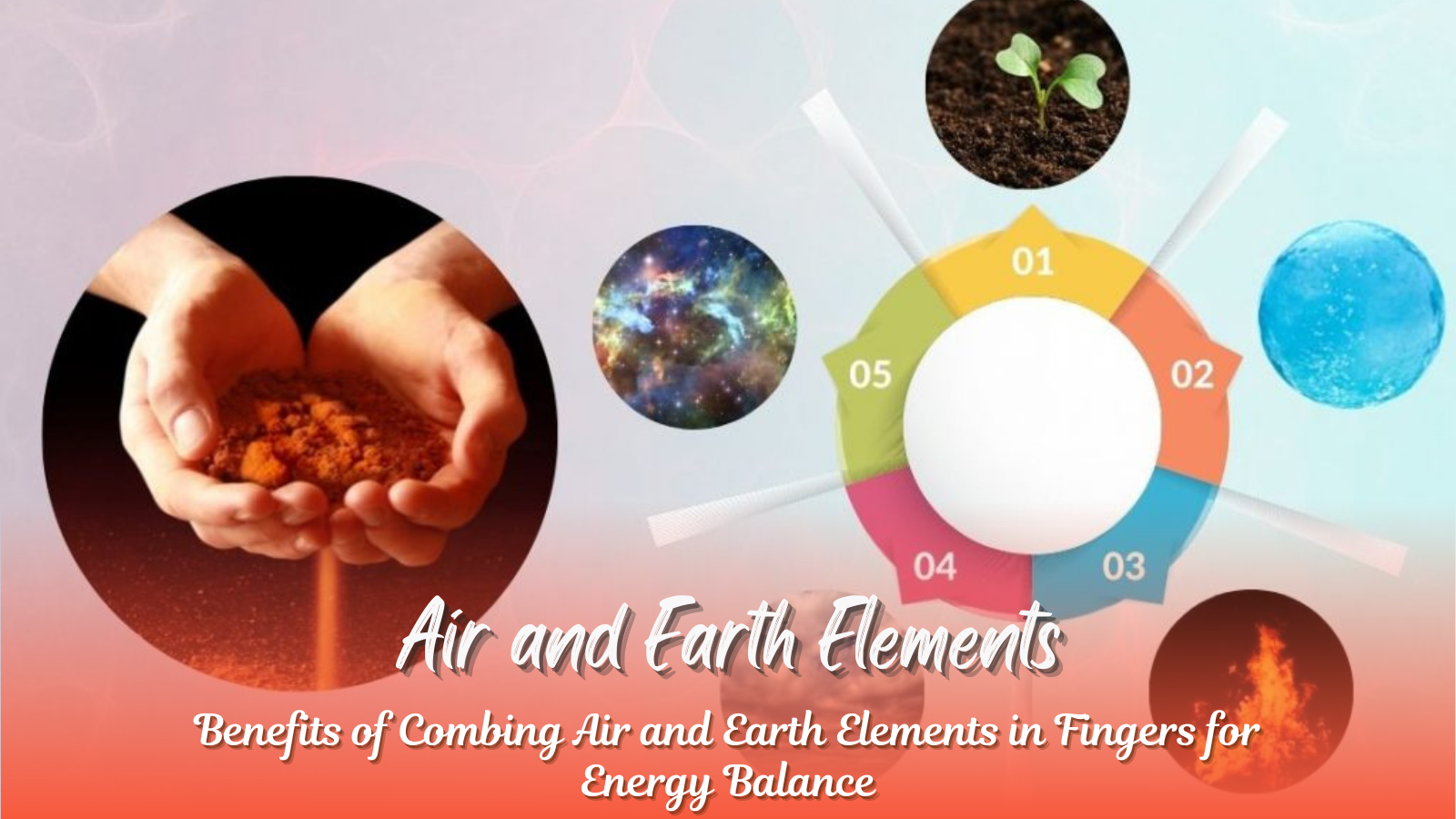
In yogic philosophy, each finger represents five different elements as mentioned below:

  • Thumb indicates Agni (Fire)
  • Index indicates Vayu (Air)
  • Middle indicates Akasha (Ether)
  • Ring indicates Prithivi (Earth)
  • Little indicates Jala (Water)

We can drive or suppress these internal circulations by touching or pressing together various fingers in particular combinations.

Combining Air and Earth Elements in Fingers

When we discuss the process of combing air and earth elements in fingers, we basically are referring to the union of the index finger (air) and ring finger (earth). This mixture makes a subtle and forceful energy loop that influences the nervous system, respiratory condition, and the stability of the mind.

Benefits of the Air-Earth Mudra

  • Balancing vata Dosha:

Ayurveda states that the Vata dosha is dominated by air and ether elements. When you actively meditate using the elements, the air and the earth, by mixing mud in a mental exercise, you help bring back the out-of-balance Vata energy, which tends to be expressed by anxiety, restlessness, or insomnia.

  • Improved Grounding and Stability:

The nature of the earth element is grounding. It is used with the mobile air part to fix flighty thoughts and introduce tranquillity and balance. This is even more advantageous to people who have overthinking or nervous energy.

  • Enhance Respiratory Function:

Air controls breathing and the circulation. By the use of specialized mudras involving a combination of air and earth, you assist in enhancing lung functions, oxygen uptake and indeed the general pranic flow in your body. These techniques are applied to enhance the practice of pranayama by many yoga teachers in special treatment programs like 300 Hour Yoga Teacher Training in Rishikesh.

  • Emotional Stability and Mindfulness:

This mix prevents stress and confusion of the mind. It allows a person to overcome emotional extremes by inducing an even flow of energy capable of making meditations and introspection.

  • Support in Meditation and Spiritual Practices

Most of those students who happen to participate in the Best Yoga Teacher Training in Rishikesh complain that this earth-touching exercise allows them to experience deeper levels of meditation. It is most relevant and important to balance air and earth, which helps to calm the mind, maintaining the present moment only.

Powerful Mudras that Use Air and Earth Elements

Vayu-Prithvi Mudra (Air-Earth Mudra):

  • How it should be done: Without using any force, the tip of the index finger (air) should be pressed to the tip of the finger (inner side of the ring or earth) and then on the tip of the thumb (fire), leaving the rest of the fingers straight.
  • Benefits: Supports mental focus, strengthens muscles, and stabilizes mood.

Gyan Mudra Variation:

  • Standard Gyan Mudra is the Gyan Mudra that is done with the thumb and index finger.
  • The fourth and final form of Gyan Mudra, the advanced Gyan Mudra in which the ring finger as well as the thumb touch each other, brings about the element of earth into the circuit, which brings concretization of the vast ideas in your thoughts and increases your awareness.

To feel the difference in 15-30 minutes, the everyday practice of every mudra will alter and enhance your state of mind, body, and soul.

Advanced Practice: Adding Ether Element for Deeper Chakra Work

When you travel deeper on your path of yoga, especially in those intensive experiences like the Yoga Teacher Training in Rishikesh, you might start gaining more interest in more complicated combinations of elemental energies in the body. An example of one of such high practices can include combing air, earth, and ether elements in fingers, a triple element configuration that combines the index finger (air), ring finger (earth), and middle finger (ether).

Such a delicate but forceful setup is more than mere energy neutrality. It constitutes a triangular channel of panic flow which blends in motion, grounding, and space: key forces in the physical and spiritual worlds. Much internal recognition can be advanced, and one can develop one’s meditative state at the highest level by putting into practice once familiarity with these three fingers when the transfer of the mudra is being carried out deliberately.

Why this triple-element combination matters

All of these elements have a certain vibrational characteristic and energy effect:

Vayu, which is the air and is symbolized by the index finger, controls breath, communication, thought, and mobility. It is associated with creativity, mobility, and the nervous system.

As a planet connected with the ring finger, there is the Kingdom of Earth (Prithvi), the pillar of stability, strength, and being in the moment. It ties you back to the base of your body and soul.

Ether (Akasha), which is represented by the middle finger, is the finest of the five elements. It is connected with space, intuition, contact with the divine, or higher consciousness.

When you combing air and earth elements in fingers, you are simultaneously balancing your body and your mind, as well as yourself and the material world into the spiritual. This orientation brings some room into your consciousness and helps you remain grounded at the moment-you must be in the present to perform any deep meditation, energy healing, or chakra work.

Energetic Benefits of the Practice

  • The connection to higher consciousness (ether): With the activation of the ether element, you get the inner space that allows access to intuitive wisdom, increased awareness, and the ability to connect with your higher being or God.
  • Earth Grounded Presence: The presence of the earth element makes sure that this expansion does not become destabilizing. It anchors your surging energy to the physical form, which will keep you anchored and grounded.
  • Control of breath and circulation of energy (Air): Air helps in circulating the life force or the prana within your subtle channels (nadis) and gives vitalization, clarity, and sharpness of your mind.

Mudras and Chakra Activation: Which Ones Are Affected?

This three-part mudra combination is particularly powerful in the Chakra activation. It mainly affects:

  • The Heart Chakra (Anahata): This chakra is in the middle of the chest and serves as an interconnection of the physical and spiritual. Love and compassion, and inner harmony take place there. This chakra is controlled by air; its healthy activation is a direct feed of emotional balance and relational balance.
  • Third Eye Chakra (Ajna): This is located between the eyebrows, and this particular energy point is involved with intuition, insight, along spiritual sight. Ether has a lot to do with this chakra, and so when practicing mudras incorporating ether, you will be able to see beyond our material world and enter a realm that is more spiritual.

Also, the grounding element of earth helps to support the Root Chakra (Muladhara) indirectly to provide your property to rise in unstable and unsafe positions during the process of raising through the higher chakras.

When and How to Practice These Mudras

The best time to do this combination of mudras is:

  • Intensive meditations
  • Chakra aligning exercises
  • Practicing pranayama involves alternate nostril breathing and breath retention
  • Guided visualization classes, Yoga Nidra

First is to sit in a comfortable meditative posture, with tips of index, middle, and ring fingers lightly touching the tip of the thumb (or make a triangular circuit with three fingers and thumb in a way that is comfortable to you and suits your lineage). Keep breathing and relax rhythmically, and concentrate on the flow of the energy in your body.

It is a marvelous combination of the philosophy of Pancha Mahabhutas (Five Great Elements) yoga into a practical, living insight on the physical plane. By actively exploring these more advanced mudras, not only will you look closer at yourself, but you will also open the doors of healing, transformation, and enlightenment, which are the distinctive features of yoga classes in the best yoga schools in Rishikesh.

What is Mudra in Yoga? (Definition and Importance)

Mudra in Yoga is described as a symbolic seal or hand gesture; mudra indicates the direction of flow of energy throughout the body. Mudra means gesture or mark in Sanskrit. Such gestures do not only mean some physical actions, but very difficult energetic keys to get in touch with states of consciousness.

What is mudra in yoga is an irreplaceable part of the traditional yoga and meditation system, which includes both the mind and the body. Mudras are considered great energy control and spiritual development practices taught at the best yoga school in Rishikesh.

FAQs (Frequently Asked Questions): Everything You Need to Know

1. How to control the element air?

Regulation of air elements starts with breathing techniques (pranayama) and a particular mudra. Vayu Mudra (thumb over the index finger) has the effect of decreasing excess air. To create a balance, combine the element air with the grounding elements, such as earth, by rubbing the index and the ring together.

2. What is the importance of Mudra?

Mudras play an important role in yoga in guiding prana (life force) around the body. They serve as a very dynamic switch that keeps the body, mind, and spirit aligned. Daily practice increases concentration, relaxes the nervous system, and promotes meditation.

3. What elements do the five fingers represent?

  • Thumb: Fire
  • Index Finger: Air
  • Middle Finger: Ether
  • Ring Finger: Earth
  • Little Finger: Water

When these fingers are joined in different ways, it is possible to influence physical, mental, and emotional health.

4. Which mudra is very powerful?

Whereas all mudras are strong, Shunya Mudra (the mudra of ether) and Gyan Mudra (the mudra of knowledge and concentration) are seen as those that can change a lot. Nevertheless, Vayu-Prithvi Mudra, which is a mixture of air and earth, is particularly effective when it comes to balancing emotional and mental energy.

How to Incorporate Mudras in Your Yoga Practice

  • Have a purpose before practice.
  • You can sit in a comfortable position-Padmasana or Sukhasana is the best.
  • Engage mudras when meditating or when practicing pranayama.
  • Begin with 10-15 minutes a day and take it up.
  • It is all about consistency; the more you do it, the greater the results.

Final Thoughts & Join a Yoga Teacher Training in Rishikesh

Air and earth elements of fingers give you a gentle yet effective possibility to restore a sense of balance to your body and mind through combing air and earth and ether elements in fingers. With the mudras, the science of fingers, you not only affect your physical condition, but also create access to higher spiritual cognition.

If you are starting on a 200 Hour Yoga Teacher Training in Rishikesh, or pressing on towards a 300 or 500 Hour Yoga Teacher Training, learning elemental balance via mudras is a tool that you will simply need in your collection of yogic tools.

Find out more about this practice with the help of the best yoga school in Rishikesh, guides, and allow your hands to open the door to the paths of healing, mindfulness, and personal change.

Want to broaden your knowledge about yoga? Take one of our well-known yoga teacher training courses in Rishikesh to learn how to fully utilize your inner power.

Yoga student practicing Scorpion Pose (Vrischikasana) in Rishikesh” “Forearm Scorpion pose variation demonstration” “Yoga training session at Gurukul Yogashala India”

Scorpion Pose (Vrischikasana) – How to Master It, Benefits & Variations

Scorpion Pose (Vrischikasana) – How to Master It, Benefits & Variations

Vrischikasana or the Scorpion Pose is among the most effective and the most eye-catching poses in yoga. This scorpion yoga pose is called scorpion because of the shape it takes, consisting of the tail of a scorpion. This yoga pose requires strength, balance, flexibility, and fearless concentration. Although not recommended to a novice, with the aid of practice and proper direction, gripping the scorpion position could be one of the most fulfilling adventures.

What is Vrischikasana or Scorpion Pose?

Also referred to as Scorpion Pose, Vrischikasana is a very strong and advanced yoga exercise that brings with it a quality of power, agility and flexibility. The name originated in Indian language Sanskrit a word of “Vrischika” and its meaning is scorpion, because of resemblance of the tail of a scorpion shape hence its name came because of arms stretching over the head and performing this intense backbend and inversion.

Scorpion position is a combination of the elegance and balance of a pose and inversion, like a forearm stand or handstand, with the flexibility of a deep backbend, like Wheel Pose (Urdhva Dhanurasana) or Cobra Pose (Bhujangasana). Consequently, the scorpion yoga pose needs not remarkable muscular strength of the arms, shoulders and the core but also flexibility and mobility of the spine, openness of the hips, and the entire awareness of the body.

As opposed to the statics, Vrischikasana poses a task on the practitioner to balance upside down and constantly make minor adjustments. The feeling of balance required develops unbelievable mental concentration and breath restraint, which are the essential qualities of an adult yoga practice. That is why it is commonly instructed in advanced vinyasa flows, acro yoga sequences, as well as in professional training such as the 200 hour yoga teacher training course in Rishikesh.

Within yoga groups in the United States and particularly India, the scorpion posture is considered an advanced position – an asana that conveys practice devotion, self-discipline, as well as self-transformation. In a yoga teacher training school in Rishikesh, preparatory drills and scorpion pose variations among students are mostly used to slowly get them through the process of being able to master this challenging asana.

You can also find a variant of this pose in competitive cheerleading outside the yoga studio, and it is called the scorpion cheer pose. Whereas the cheerleading scorpion is done on a standing basis with one leg stretched up to the scorpion position, they are similar in portraying symbolic strength and flexibility, although the method, motivation, and body forces are not the like in the traditional scorpion pose yoga.

I would say that in the case of scorpion handstand or scorpion twist pose, it is necessary to develop a good foundation and grow step by step. On your own or with the help of the best yoga school in Rishikesh, the practice takes time to master the safe and correct scorpion posture of alignment with the mind to have the capacity and the confidence.

To sum it all up, Vrischikasana is not merely an asana, it is a path towards balance, strength, flexibility and focus. Mastering how to do a scorpion can turn out to be a turning point in your yoga career, may be more so when pursued under well-formulated programs such as that of Rishikesh, the hub of yoga traditional education.

Top 5 Benefits of Scorpion Pose (Vrischikasana)

1. Full-Body Strength

Scorpion Pose is a whole-body workout. It builds:

  • Shoulder and arm strength (particular in the scorpion handstand)
  • Core stability
  • Your Spinal muscles and glutes due to the hard-back bend.

2. Advanced Spinal Flexibility

The profound bend of a scorpion posture allows articulation in the thoracic area, opens the heart centre, and neutralizes sedentary impact.

3. Balance & Body Awareness

Just balancing upside down trains gives proprioception (body awareness) a serious boost and increases coordination and orientation.

4. Mental Focus & Meditation

Equilibrium positions, such as vrischikasana are soothing to the nervous system, increase blood flow to the brain, and require complete focus, so it is a moving meditation.

5. Boosts Confidence & Courage

Beating the fear of falling and learning such a complicated pose liberates their hearts on and off the mat.

How to Do Scorpion Pose – Step-by-Step Guide

Note: See that your body is well warmed before you put your body into this pose. Seek the help of an experienced tutor or someone with a certified yoga teacher training school such as Rishikesh Yoga.

Preparation poses:

  • Downward Dog
  • Dolphin Pose
  • Forearm Stand (Pincha Mayurasana)
  • Cobra or Wheel Pose

Step-by-Step guidance:

1. Starting with Forearm Stand (Pincha Mayurasana)

  • Place forearms shoulder-width apart.
  • Kick up into a forearm balance.

2. Engaging with your core and beginning with the backend

  • Slowly fold your knees starting in the forearm stand position.
  • Start bending your back and allowing your feet to go towards your head.

3. Find the Scorpion Shape

  • Bring your feet to the top of your head.
  • It is pulled with the chest and pressed on the forearms.
  • Look Ahead, not down.

4. Hold and Breathe

  • Remain there for 5-10 breaths.
  • Concentrate on equal breathing and straight standing.

5. Exit Gently

  • Slowly go deeper in the forearm stand, extending your legs back.
  • Lower one leg first, then come down in Child’s Pose.

Scorpion Pose Variations for All Levels

A large number of variations of the scorpion pose exist depending on your level:

  • Forearm Scorpion: the easiest one, it is executed out of Pincha Mayurasana.
  • Handstand Scorpion (Scorpion Handstand): More advanced, where a person is kept on hands rather than forearms.
  • Wall-Assisted Scorpion: A perfect one to exercise confidence in beginners.
  • Scorpion Twist Pose: A grounded version of a spinal twist and backbend.
  • Scorpion Cheer Pose: The pose is usually performed in a standing position, with one leg traveling over the back and behind the head.

Pro Tips to Master Scorpion Pose Faster

1. Strengthen Your Foundation
Work the shoulders and core with plank, dolphin, and forearm stand exercises.

2. Increase Spine Flexibility
Do wheel pose, camel and cobra on regular intervals.

3. Use Props and the Wall
To learn how to perform a scorpion safely, use blocks, straps, or a wall as a support.

4. Breathe Deeply
Regulation of breathing has an effect of calming the mind and bringing balance.

5. Take a Yoga Course
Expert guidance, adjustments, and a deeper understanding can be achieved with the help of a proper training course; the latter of which can be a 200 hour yoga teacher training course in rishikesh.

Why Is Scorpion Pose So Popular?

Scorpion Pose (Vrischikasana) was no more than a small novel invention of yoga at one point, but now become one of the iconic and admirable yoga compositions, enviously popular among yoga enthusiasts and wellness pioneers. Its dramatic aesthetic look, which reflects an inversion coupled with a deep backbend, sets it out on social media where yoga practitioners post pictures and videos lying on the ground in full displays of their strength, control, and flexibility. However, the scorpion yoga pose is more than popular due to its aesthetics.

To the depths, the scorpion pose is a force of integration between bodily control and inner stillness. It involves a great body awareness, sense of balance and spinal flexibility and boldness to ignore fear particularly fear of falling. These factors not only render the yoga scorpion pose a pose, but also a personal achievement to most of the involved practitioners.

To a lot of yogis, the scorpion has long been the goal to be learned as an indication that they have grown and have persevered, and were committed to yoga. When you can arrive at this shape, you have acquired some basic strength in the shoulders, the arms, and the core, and deep spinal mobility, none of which a person is able to build quickly or with little concentration.

Due to its difficulties, usage of Vrischikasana is usually introduced in intermediate yoga sessions, as well as in general courses, such as the 200 hour yoga teacher training course in Rishikesh. At Rishikesh- the yoga capital of the world, there are some of the best yoga school in Rishikesh where the students can learn the difficult poses of yoga like the scorpion handstand in a safe and encouraging space. The yoga teacher training school in Rishikesh provides knowledgeable training, practical adjustments, and gradual progress to enable the students to develop their practice, step by step.

Besides the spiritual and physical meaning, the scorpion pose yoga is a point of reference when it comes to self-transformation and self-confidence. It is not a mirror of an external success accomplished by a challenging position, but rather the process of beating the doubt about oneself and finding the strength of discipline. When scientists practice poses such as the scorpion twist pose or any other forms of the scorpion pose, they are usually trying to unite closer with their bodies, minds and breaths.

The scorpion pose is popular, in other words, because it is challenging and inspirational. It becomes the representation of the things you can accomplish with the help of regular training, sound instructions, and a sheer lack of fear. Regardless whether you are pursuing it in the context of your daily practice or within a yoga teacher training school in Rishikesh, Vrischikasana is still one of the epitomes of power, beauty, and yoga change.

Frequently Asked Questions (FAQs)

What is Scorpion Pose good for?

It enhances physical capabilities, flexibility, and the ability to concentrate. It also helps an immense lot in enhancing practice and beating fear.

Is Scorpion Pose dangerous?

It is when it is done without preparation. When you are just starting, warm up, use props, and work under supervision.

How to improve the Scorpion Pose?

Practice, strengthening of shoulders, flexibility drills of the spine, and involvement of senior teachers are important.

Why is Scorpion Pose so popular?

It is a beautiful, unique, and demanding pose that can find many of its admirers among yogis. It also commonly appears in higher patterns and in instructional programs.

Learn Scorpion Pose in Rishikesh – The Yoga Capital of the World

In case you want to learn Vrischikasana doubtlessly or progress in yoga practice, then you can always join one of the 200-hour yoga teacher training course in Rishikesh. There is not a single part of the globe that does not know of Rishikesh as the Yoga capital of the world, which also houses some of the best yoga schools in Rishikesh.

Yoga teacher training school in Rishikesh will provide you with experiences that are immersive and as real as possible, whether you are hoping to achieve the skills required to become a master of the scorpion yoga pose or you want to become a certified yoga instructor.

Final Thoughts: Embrace the Journey of Scorpion Pose

The process of learning the Scorpion Pose (Vrischikasana) is not only about attaining a visually attractive pose, but also is an effective journey of transformation. As a dedicated practitioner or participant in a 200-hour yoga teacher training course in Rishikesh, you need commitment, courage, and self-awareness to learn how to be a scorpion.

The scorpion yoga pose strengthens both physical muscles and flexibility, as well as the mental strength of a person by practicing it regularly. Moving on poses to others- forearm scorpion pose or scorpion handstand- you will start to learn more about how your body is capable of performing. Practicing these difficult poses, you help yourself develop patience, discipline, and mindfulness.

All of a sudden, the scorpion pose is a sign of yoga balance between force and release, or both the things necessary in yoga and life. You may fall or you may stumble, though with each new attempt, you are getting one inch nearer to perfection in the scorpion posture. Depend on the props, the wall, and an expert opinion when necessary. It is not urgent; it is the process that makes the practitioner and not only the pose. And in case you are keen on going deeper and wondering how to enrich your scorpion pose, you should always attend a program at a yoga teacher training school in Rishikesh.

These intensive yoga programs, which are provided in one of the best yoga school in Rishikesh, consist of individualized teaching, practical body adjustments, and yoga philosophy to assist you in your physical and spiritual development.

You will want to master the yoga scorpion posture, or you will want to study the scorpion variations in the scorpion twist pose, or you will want to teach scorpion pose to other people, but the point is to be there on the mat regularly. Rishikesh, backdropped by religious power and master lecturers, presents the most appropriate climate to perfect difficult asanas such as Vrischikasana.

Ultimately, Vrischikasana is not only a pose but a party of power, elegance, and all that is inside you. Depending on time, breath and commitment, you will not only be able to bend like a scorpion but come up calmly, just like a real yogi would.

Best Yoga Centers in Rishikesh for Yoga Teacher Training Courses

Forget Bali—Discover the Top Yoga Centers in Rishikesh for Yoga Teacher Training

Forget Bali—Discover the Top Yoga Centers in Rishikesh for Yoga Teacher Training

If you’re searching for the most authentic yoga experience in the world, forget the beaches of Bali and head straight to the Himalayas. Rishikesh, known as the ‘Yoga Capital of the World,’ is where yoga was born—and where it’s still taught in its purest form today. Unlike commercial destinations, Rishikesh offers a deeply spiritual, traditional, and holistic environment that fosters real transformation.

Whether you’re looking to become a certified yoga teacher or dive deeper into your personal practice, Rishikesh is home to the most revered and immersive yoga centers in India. In this blog, we’ll introduce the top yoga centers in Rishikesh, with a special focus on the best one—Gurukul Yogashala—and explain why it should be your first choice.

Gurukul Yogashala – The Best Yoga Center in Rishikesh

When it comes to top-rated yoga centers in Rishikesh, Gurukul Yogashala is second to none. Nestled in the peaceful and spiritual neighborhood of Laxman Jhula, the school is surrounded by lush greenery and blessed by the sacred Ganges River.

What Makes Gurukul Yogashala Stand Out?

  • Yoga Alliance Certified (USA)
  • 200-Hour, 300-Hour & 500-Hour TTC Programs
  • Traditional Teachings in Hatha, Ashtanga & Vinyasa Yoga
  • Highly Experienced Indian Teachers
  • Comfortable Ashram-Style Accommodation
  • Nutritious Sattvic Meals Served Daily
  • Guided Ganga Aarti Visits, Kirtans & Excursions
  • Serene Yoga Hall with Himalayan Views

The atmosphere at Gurukul Yogashala is not just educational—it’s spiritual and rejuvenating. Students from around the world have praised the school for its structured curriculum, heart-led teaching approach, and life-changing energy.

You will be trained in Yoga Philosophy, Alignment & Adjustment, Pranayama, Anatomy, Teaching Methodology, and Meditation, with personal attention given to each student.

Other Top Yoga Centers in Rishikesh

Here are some of the other renowned yoga schools in Rishikesh that also offer quality Yoga Teacher Training Courses:

1. Rishikesh Yog Peeth

One of the most established yoga schools in India, known for its consistency, experienced faculty, and global reputation. Offers beginner to advanced YTTC programs.

2. Himalayan Yoga Association

Offers Yoga TTC and retreats with a blend of modern and ancient yogic techniques. It’s ideal for students looking for a well-rounded yoga education.

3. Samadhi Yoga Ashram

Focused on spiritual growth and self-realization, Samadhi offers both short retreats and full TTC programs rooted in Vedic knowledge.

4. Rishikul Yogshala

Popular for its multi-style Yoga TTCs and diverse teacher team. Their campus is modern and the community vibrant.

5. Vinyasa Yoga Ashram

Perfect for those who enjoy a dynamic practice. Known for strong Vinyasa flow classes and a welcoming community.

Why Choose Rishikesh for Yoga Teacher Training?

  • Global Publicity: Anyone practicing yoga or having a guru in the field is aware of the fact that yoga originated or was born in Rishikesh.
  • Spiritual Environment: Learn yoga in rishikesh can impact daily activities of the city and its old temples, ashrams, and the sacred waters of the Ganges, are the optimum ingredients to undergo inner change.
  • Choice of Options: This is the land of many accredited best Yoga School in Rishikesh and it is here that you can find something at any level and style, be it traditional Hatha or dynamic Vinyasa yoga or empowering Kundalini yoga.

Course Structures: What to Expect

Yoga Teacher Training 100 Hour

Beginner program aimed at instructing novices, as well as, first timers with regard to TTC format. Typically lasts 1 2 weeks, and is focused on yoga essentials, asanas, and background philosophy.

Yoga TTC of 200 Hours

Typical initial course (approximately 24-30 days) or course, in philosophy, anatomy, alignment, asanas, meditation and introductory teaching skills: enough to teach yoga in most countries in the world under the terms of the Yoga Alliance.

The 300 Hour Yoga TTC

Intermediate-level (4 weeks, beyond 200-hour certification) is all about practice solidification and extended asanas, yoga therapy and immersion teaching techniques. Yoga School In India have a lot of mostly excursions and other academic options in most courses.

Drop-In Yoga classes

The majority of the centers provide everyday yoga (all levels). The taught styles are Hatha, Vinyasa, Ashtanga, Kundalini and Iyengar yoga.

What makes Yoga Centers in Rishikesh Unique?

  • Authenticity: Yoga Centers in Rishikesh are highly entrenched in the Indian Yogic thought and tradition and could only be experienced in the schools.
  • Qualified instructors: Teaching done by Indian gurus and internationally acclaimed gurus.
  • Immersive Environment: Life in rishikesh yoga ashram or Yogic community exposes one to the yoga arts always and renders the living environment pure.
  • Flexible Courses: Yoga School In India ranging between fly-by drop-ins and immersive teacher training to weekend or full-month-long wellness/meditation retreats in rishikesh yoga ashram.
  • Culture and Spiritual Activities: The evening aarti, Ganges rituals and local Himalayan day trips are just a few added values for Yoga Centers in Rishikesh.

Rishikesh is also called the Yoga Capital of the World that drags yoga lovers towards this pilgrimage town. Either you find a life-changing yoga teacher training centers in rishikesh, or you want to take your practice to a new level, the ashrams and yoga schools of the city have a number of great programs based on the authentic Indian tradition.

What to Expect from Yoga Teacher Training in Rishikesh

  • Immersive Ashram Life: Simple life, vegetarian, spiritual atmosphere
  • Comprehensive Curriculum: This includes Asanas, pranayama, philosophy, anatomy, and meditation
  • Cultural Experiences: Ceremony of evening aarti, excursions, and Ayurveda integration.

Tips for Choosing the Right School

  • Verifying accreditation that indicates Yoga Alliance as well as government recognized activities
  • Comparing course content and faculty credentials
  • Location (riverfront, Hilltop, central)
  • See the latest students’ reviews
  • Look at accommodation, facilities, and culture of the community

Rishikesh is more of a traditional, authentic yet international location, and that is why it is the best location to experience yoga teacher training, far beyond the usual type of yoga retreat location.

Comparing Yoga Alliance Certified Programs in Rishikesh

The programs offered in Rishikesh to practice yoga are globally recognized and they have the strict standards of teaching as per Yoga Alliance. The comparison between the best schools and what they offer is as follows:

Key Features

Variety of programs: The popular programs consist of 100, 200, 300 and 500-hour Teacher Training Courses (TTC) that most of the centers offer, Hatha, Ashtanga, Vinayasa, and Kundalini yoga packages.

Accreditation: All the highlighted schools are successfully registered with Yoga Alliance USA where by the students who complete the course become awarded with a teaching certificate that is international in orientation.

Curriculum: Courses will consist of asana, pranayama, yoga philosophy, anatomy and teaching methodology, and sometimes additional courses such as Ayurveda, meditation or a specific style of yoga (e.g. prenatal or aerial).

Faculty & Class Sizes: In most programs, there are trained instructors and small groups; this time permits personal approach and real-world training conditions.

Practical Details

  • Fees: Training costs anywhere between $800-2,500 in relation to the course duration and provisions.
  • International Teaching: After graduating, graduates will be able to join as RYT (Registered yoga teacher) and instruct anywhere in the world.
  • Location: Programs combine ashram living, yogic food, and cultural experience to have a transformative experience.

All these programs have a common Yoga Alliance base, although various in their approach, specialization, and community environment. Select depending on your preferred style, length of the course that you want, and school culture.

Frequently Asked Questions

Is Rishikesh famous for yoga?

Yes, it is called the Yoga Capital of the World and widely known as Rishikesh world over. Its divine setting, presence of adorned ashrams and history as the spiritual center of sages and yogis has made it the dwelling point of yoga education and usage.

What is 100 Hour Yoga in Rishikesh?

Any 100 hour yoga program is an entry level type of yoga teacher training that introduces yoga postures, anatomy, philosophy, and also introduces teaching. It is perfect for those who are new in the practice but would want to gain a deeper understanding of it or those who simply cannot dedicate their time to longer programs.

Which city is known as yoga city?

Rishikesh is globally considered to be the Yoga City or the Yoga Capital of the World. Yoga classes in rishikesh is the most popular place in the world where yoga fans have a chance to go because it has a centuries-long tradition, as well as a high level of international recognition.

What is the Speciality of Rishikesh?

Rishikesh is a specialty, and that has to do with the spiritual power it has, its beautiful Himalayan backdrop, and the number of genuine yoga organizations. The city has an ashram type of culture, yoga classes in rishikesh, isolated rituals with the most sacred river, and an experience to be taught yoga by the Indian masters within the impressive environment.

How to Choose the Right Yoga Teacher Training Center in Rishikesh

Know What You Want: Do you want a personal growth experience, teacher certification or spiritual experience?

Accreditation: Give importance to internationally recognized Yoga Alliance registered classes as well as classes with certification of the Indian Government.

Compare Syllabi: It should be in the syllabus to study philosophy, anatomy, teaching methodology, and practice hours.

Location and Ambience: Determine whether you would like your ashram to be a riverside facility, a hill-top retreat or in the center of a city.

Facilities and Accommodation: Check the stay facilities, food (mostly yogic, vegetarian) and the facilities.

Cultural Integration: Pick centers that provide local excursion, paying homage to rituals, and integrating Ayurveda to experience the Rishikesh scene.

Conclusion

Although Bali is lovely, Rishikesh is the number one destination when considering the actual aspiration of learning yoga in its birth ground. Opting to either follow a basic 200 hour yoga ttc in rishikesh or an advanced 300 and 500-hour yoga training course in Rishikesh, the ashrams and the yoga schools in the city promise much more than a certificate, gifting you wisdom, self-reflection and spiritual metamorphosis that will last a lifetime.

Go on the journey of your life at a reputed yoga center in Rishikesh and make yourself a part of this living yoga tradition.

Aerial Yoga in Rishikesh

Discover Aerial Yoga in Rishikesh – Benefits, Classes & Why You Should Try It

Discover Aerial Yoga in Rishikesh – Benefits, Classes & Why You Should Try It

Introduction

Rishikesh, the globally revered Yoga Capital of the World, is not only the birthplace of classical yoga but also a thriving hub for modern styles like aerial yoga. With its spiritual energy, peaceful Himalayan surroundings, and Ganga’s sacred presence, Rishikesh offers a transformative setting for exploring aerial yoga Rishikesh—an innovative practice that fuses traditional yoga with dance, acrobatics, and mindfulness.

Whether you’re looking to deepen your personal practice, correct posture issues like bow legged posture or bow posture yoga, or become a certified instructor, this city offers some of the best training in the world. Enrolling in an aerial yoga teacher training Rishikesh program allows you to take your yoga journey to new heights.

What is Aerial Yoga?

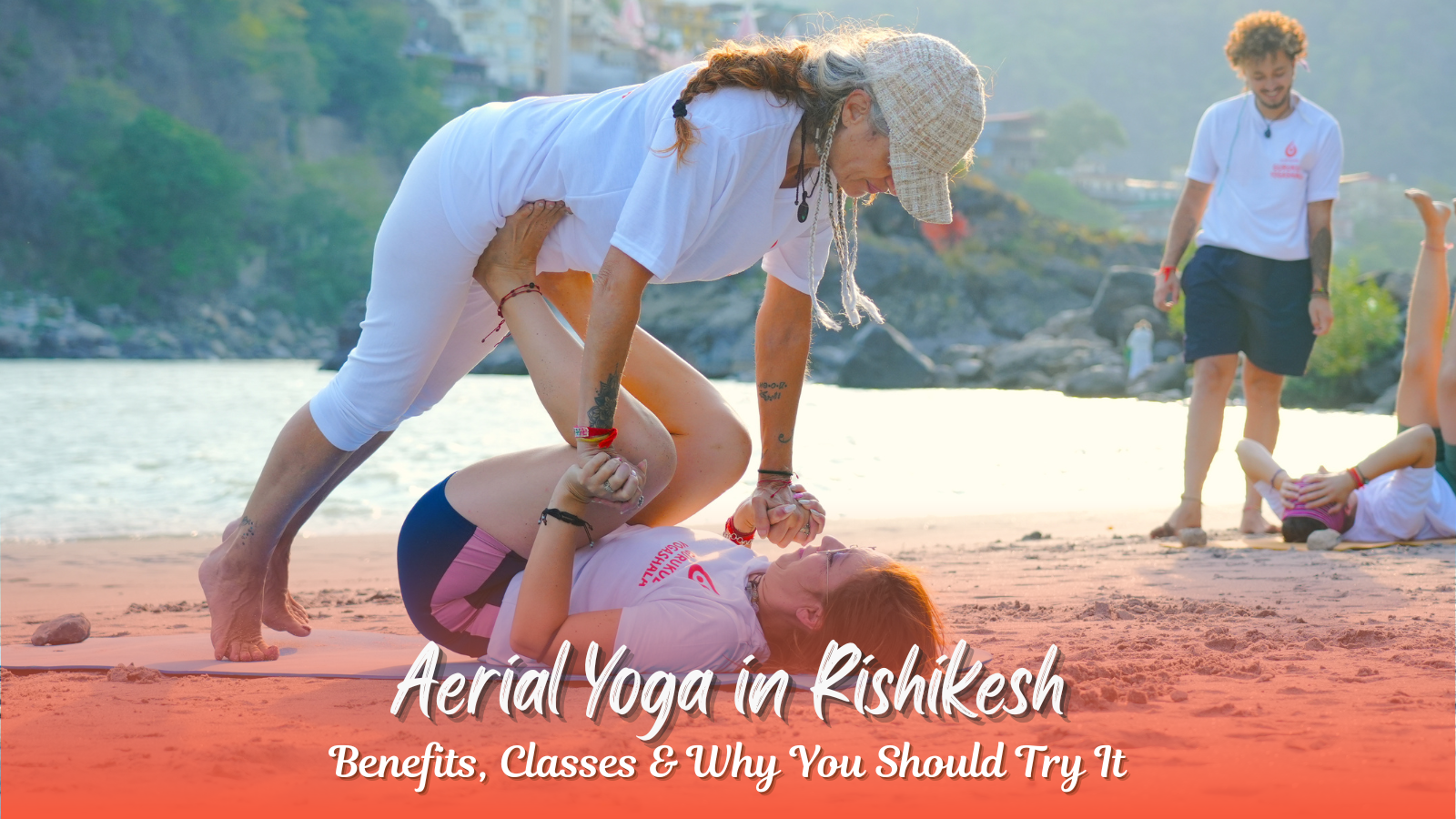
Aerial Yoga combines traditional yoga postures with the use of a soft silk hammock suspended from the ceiling. This support system allows you to explore new movements, align your body, and decompress your spine in ways not easily possible on a yoga mat.

In aerial yoga in Rishikesh, experienced instructors guide you through safe and structured sequences while staying deeply rooted in the yogic philosophy that Rishikesh is famous for.

Why Rishikesh for Aerial Yoga?

Spiritual Roots

Being the heart of yoga, Rishikesh creates a nurturing environment for holistic transformation. Practicing aerial yoga Rishikesh here connects you to centuries-old traditions while embracing innovative techniques.

Blending Ancient & Modern

Many of the best yoga school in Rishikesh combine aerial yoga with traditional Hatha, Vinyasa, and Ashtanga Yoga Teacher Training in Rishikesh, offering students a well-rounded experience.

Certified Teacher Training

Looking to become an instructor? Opt for aerial yoga teacher training Rishikesh programs recognized by Yoga Alliance. These programs often run alongside or after a 200 Hour Yoga Teacher Training in Rishikesh.

Global Community

Meet yoga lovers from across the globe and build lasting friendships while training at the best yoga TTC in Rishikesh.

Benefits of Aerial Yoga

  • Spinal Decompression: Hanging upside-down safely releases pressure from the spine and joints.
  • Posture Correction: Especially helpful for improving bow legs posture, child bow posture, and aligning the bow posture.
  • Enhanced Flexibility & Strength: The hammock acts as both a prop and a resistance tool.
  • Emotional Healing: Suspension helps in overcoming fear, building confidence, and relieving anxiety.
  • Deep Core Engagement: Every pose challenges your core stability.

Popular Aerial Yoga Poses

Aerial Bow Pose (Dhanurasana)

A floating version of the classic bow posture yoga, this asana opens up the chest and shoulders more deeply than floor-based variations.

Child Bow Posture

This calming pose, supported by the hammock, soothes the nervous system and lengthens the spine.

Inverted Pigeon & Backbends

These postures promote balance and are great for those working on spinal alignment and bow legged posture correction.

Aerial Yoga Teacher Training in Rishikesh

If you’re considering a professional path, a certified aerial yoga teacher training Rishikesh course is a powerful way to elevate your skills.

📝 What’s Covered in Training?

  • Basics of aerial yoga
  • Hammock rigging & safety
  • Anatomy & alignment
  • Asana sequencing & teaching methodology
  • Pranayama, Meditation & Philosophy
  • Integration with traditional yoga forms like Ashtanga Yoga and Prenatal Yoga

Some courses even combine this with Pre Natal Yoga Teacher Training in Rishikesh or 200 Hour Yoga Teacher Training in Rishikesh.

Choosing the Best Yoga School in Rishikesh

When selecting a yoga teacher training school in Rishikesh for aerial yoga, ensure it meets the following:

  • ✅ Yoga Alliance USA certification
  • ✅ Clean, safe, and well-rigged studio
  • ✅ Experienced teachers with aerial backgrounds
  • ✅ Integration with Ashtanga Yoga School in Rishikesh
  • ✅ Positive student testimonials

Several top-rated schools offer aerial yoga alongside the best yoga teacher training in Rishikesh programs.

How Aerial Yoga Compliments Traditional Practices

With Ashtanga Yoga

Practicing aerial yoga before or after your Ashtanga Yoga Teacher Training in Rishikesh can release muscle tension and enhance flexibility.

With Prenatal Yoga

Some poses are adapted for expecting mothers, making it complementary to Pre Natal Yoga Teacher Training in Rishikesh.

With Meditation & Pranayama

Hammocks allow for floating meditation and deep breathing exercises, enhancing mental clarity.

FAQs About Aerial Yoga in Rishikesh

Is aerial yoga good for beginners?

Absolutely! Aerial yoga is beginner-friendly. In fact, the hammock acts as a support mechanism, making complex poses easier. Instructors at the best yoga school in Rishikesh guide students step-by-step, ensuring a safe and encouraging experience.

How much does it cost to learn yoga in Rishikesh?

Courses vary in price. A standard 200 Hour Yoga Teacher Training in Rishikesh ranges from $1000 to $1800 USD, depending on the amenities and school. An aerial yoga teacher training Rishikesh add-on may cost around $300–$800 USD extra.

Who should not do aerial yoga?

Individuals with the following conditions should consult a doctor before practicing:

  • Glaucoma or other eye conditions
  • High blood pressure
  • Pregnancy (unless specifically trained in Pre Natal Yoga Teacher Training in Rishikesh)
  • Recent surgeries or injuries
  • Vertigo or spinal disorders

Is aerial yoga a good workout?

Yes, it’s a full-body workout that improves strength, flexibility, balance, and mental focus. It’s especially effective for people looking to build core strength and fix posture issues like bow legged posture and spinal misalignments.

Final Thoughts: Fly High with Aerial Yoga Rishikesh

Aerial yoga is more than a physical practice—it’s a journey of transformation. And what better place to begin that journey than Rishikesh?

With access to world-class instructors, immersive yogic culture, and internationally certified programs, aerial yoga Rishikesh is perfect for anyone seeking balance, confidence, and connection.

Whether you’re enrolling in a 200 Hour Yoga Teacher Training in Rishikesh, exploring Ashtanga Yoga School in Rishikesh, or diving deep into aerial yoga teacher training Rishikesh, this sacred town has something extraordinary to offer.


“woman practicing bhramari pranayama” “how to do sheetali pranayama” “pranayama steps for beginners”

Bhramari and Sheetali Pranayama: Steps, Benefits & Common Mistakes to Avoid

Bhramari and Sheetali Pranayama: Steps, Benefits & Common Mistakes to Avoid

Introduction In yoga, pranayama is a force to be reckoned with. It is more than mere breathing; it is an all-round method that controls the flow of energy, balances the mind, and builds the body. Of all the pranayama methods, Bhramari Pranayama and Sheetali Pranayama are known for their soothing, cooling, and refreshing effects.

Whether you are new to yogic breathing or a yoga instructor looking for systematic answers, this blog gives you a step-by-step, comprehensive overview of both the processes, their advantages, mistakes to be avoided, and how they can change your health and thought pattern. We also connect the knowledge to the ancient teachings of the top yoga schools in Rishikesh and emphasize its importance for Yoga Teacher Training in India.

What is Bhramari Pranayama (Bee Breath) & How to Do It?

What is Bhramari Pranayama? Bhramari Pranayama, which is commonly known as “Bee Breath,” is named after the Sanskrit term “Bhramar,” which refers to a black Indian bee. This technique consists of making a humming sound similar to a bee during exhalation, which calms the nervous system and leads to a state of deep meditation.

Top 7 Benefits of Bhramari Pranayama

Bhramari Pranayama Benefits

1. Reduces Stress and Anxiety: The vibrating hums calm the brain, lower cortisol levels, and create a feeling of inner calm.

2. Improves Sleep: Particularly helpful for insomnia, it quiets mental chatter and encourages sound sleep.

3. Balances Hormones: It stimulates the parasympathetic nervous system, which results in hormonal balance.

4. Improves Concentration and Memory: Helpful for students and business professionals, it refines focus and mental acuity.

5. Relieves Sinusitis and Migraines: The vibrations clear nasal passages and relieve pressure in the head.

6. Stimulates the Vagus Nerve: Facilitating improved digestion, emotional balance, and cardiovascular health.

7. Supports Emotional Healing: It calms trauma, lessens anger, and promotes emotional balance.

Bhramari Pranayama Steps

How to perform Bhramari Pranayama (Bhramari Pranayama Procedure):

1. Find a Comfortable Pose: Sit comfortably in Sukhasana (Easy Pose) or Padmasana (Lotus Pose). Maintain a straight spine.

2. Close Your Eyes: Direct attention inwards and unwind the body.

3. Position the Fingers: Put your index fingers on the cartilage of your ears (tragus). You may also use the Shanmukhi Mudra.

4. Deep Inhale: Inhale slowly and deeply through the nose.

5. Exhale with a Humming Sound: While pressing the cartilage softly, exhale slowly with a humming bee-like sound.

6. Repeat: Do 5–7 rounds to start with.

Bhramari Pranayama Pose Tip: Relax your face muscles and don’t strain your throat while humming.

Common Mistakes to Avoid During Bhramari Pranayama

1. Forcing the sound: Humming should be soft and not loud or strained.

2. Retaining breath unnecessarily: There should be a natural flow; don’t hold breath unless instructed by a teacher.

3. Poor posture: Keep your spine straight to facilitate full expansion of the lungs.

4. In a Noisy Place: Take a quiet area to feel the vibration fully.

5. Practicing after Meals: Practice pranayama always on an empty stomach.

Sheetali (Shitali) Pranayama: Cooling Breath Technique Explained

What is Sheetali Pranayama? Sheetali (or Shitali) Pranayama is a cooling breathing exercise in which the tongue is rolled and air is sucked in, and then is exhaled through the nose. The word “Sheetali” is derived from the Sanskrit word “Sheetal,” which means ‘cooling’ or ‘soothing.’

This practice is best suited for hot weather, summer months, or individuals who have to cope with body heat, acidity, and stress.

7 Amazing Benefits of Sheetali Pranayama

Sheetali Pranayama Benefits (Shitali Pranayama Benefits)

1. Lessens Body Heat: Particularly useful in a hot summer or for Pitta constitution individuals.

2. Soothes the Mind: Cooling breath calms mental restlessness and irritability.

3. Manages High Blood Pressure: Manages hypertension through soothing effects.

4. Digestion Improves: Relieves acidity, hyperacidity, and indigestion.

5. Detoxifies: Increases oxygenation and cleanses the system.

6. Skin Benefits: Cooling effect manifests in clearer, radiant skin.

7. Enhances Concentration: By soothing the nervous system, it induces better clarity.

How to Practice Sheetali Pranayama: Step-by-Step Guide

Sheetali Pranayama Steps (Sitali Pranayama Steps)

How to Perform Sheetali Pranayama:

1.            Seated Posture: Sit comfortably in a meditative pose.

2.            Roll the Tongue: Curl your tongue lengthwise into a tube (as shown in many Sheetali Pranayama images).

3.            Inhale Through the Tongue: Draw air in through the rolled tongue slowly.

4.            Close the Mouth: After inhaling, close the mouth and exhale slowly through the nose.

5.            Repeat: Practice for 8–10 rounds initially.

Alternate: If you are unable to roll the tongue, attempt Sheet Kari (an alternative where the breath is sucked in between tightly closed teeth).

Sheetali Pranayama Common Mistakes to Avoid

1. Breathing Quickly: The breath must be slow and regulated, not quick.

2. Failure to Clean the Tongue: Oral health is important prior to this exercise.

3. Practice in Cold Weather: It can unbalance the body temperature during winters.

4. Practicing After Meals: Practice always on an empty stomach.

5. Omitting Nasal Exhalation: Make sure to exhale only from the nose.

Difference Between Bhramari and Sheetali Pranayama

  • Feature Bhramari Pranayama Sheetali Pranayama
  • Purpose Meditative and calming Detoxifying and cooling
  • Sound Humming sound Silent
  • Pattern of Breath Normal inhale, humming exhale Inhale through tongue, nasal exhale
  • Best Time At any time (preferably morning/evening) Summer or hot weather
  • Effects Mind and nervous system Body heat and digestion
  • Plavini Pranayama and Other Cooling Practices

Though not discussed here, do mention Plavini Pranayama, another cooling exercise that is commonly taught on advanced training courses such as Yoga Teacher Training in Rishikesh. Swallowing air, Plavini is not normally practiced without wise guidance from qualified gurus at India’s best yoga schools.

Pranayama Practice Safety Tips

1. Learn in the class of a certified yoga teacher, preferably the best yoga schools in Rishikesh.

2. Never strain your body or breathe.

3. Practice in a regular manner but within limitations.

4. Keep yourself clean before performing any practice of mouth or nasal breathing.

5. Along with asanas and meditation, practice pranayama for complete benefit.

Why Learn from the Best Yoga School in Rishikesh?

Rishikesh, the yoga capital of the world, provides holistic yoga teacher training programs steeped in tradition. A Yoga Teacher Training in India or particularly in Rishikesh guarantees:

• Authentic instruction

• Certified and seasoned gurus

• Deeper immersion in the yogic way of life

• Exposure to all pranayama practices including Bhramari Pranayama, Sheetali Pranayama, and Plavini

Mistakes to be Avoided in Bhramari Pranayama

1. Forcing the Sound: Humming must be soft, not strained or loud.

2. Holding Breath Unnecessarily: Keep the flow natural; do not hold breath unless instructed by a teacher.

3. Poor Posture: Sit with your spine straight to enable complete lung expansion.

4. Performing it in a Noisy Environment: Find a quiet place to feel the entire vibration.

5. Practicing the Full Stomach: Always practice pranayama on an empty stomach.

Frequently Asked Questions (FAQs) – Detailed Answers

1. What is Bhramari Pranayama beneficial for? Bhramari Pranayama is very effective for:

• Stress Reduction: The humming vibration soothes the nervous system.

Emotional Healing: Continuous practice discourages anger, anxiety, and emotional disturbances.

Better Sleep: The mind calms down, leading to deeper, uninterrupted sleep.

Improved Concentration: Improves memory retention and focus.

Reduction of Migraines and Sinus Problems: Vibrations clear the nasal passage and ease cranial tension.

Blood Pressure Reduction: The relaxing effect aids heart health.

Facilitating Meditation: Best done before meditation as it induces mental calm.

2. What is Bhramari Pranayama’s mudra? The suggested mudra is Shanmukhi Mudra, or the “six gates gesture.”

• Shanmukhi Mudra Steps:

O Gently close the ears with the thumbs.

O Index fingers place above the eyebrows.

O Middle fingers lightly press the eyes.

O Ring fingers rest on the nostrils (optional), and little fingers are placed close to the lips or cheeks.

• This mudra increases inward focus and sensory withdrawal (pratyahara), heightening the meditative experience of Bhramari.

3. What sound is made by Bhramari Pranayama?

• The “mmm” sound—similar to the humming of a bee—is made on exhalation.

• This sound vibrates in the head, particularly in the nasal and forehead areas.

• The vibration arouses the vagus nerve and brings about calmness, which is for the welfare of the brain and heart.

• It is very important to maintain the sound soft, consistent, and continuous for optimal benefits.

4. How to practice Bhramari properly? To practice Bhramari properly, refer to these elaborate steps:

Posture: Sit somewhere quiet in a meditative position with your back straight.

Prepare: Close your eyes, relax your body.

•             Finger Position: Employ either index fingers on ear cartilage or take on Shanmukhi Mudra.

•             Inhale: Breathe in slowly and deeply through the nose.

•             Exhale with Hum: Press gently on the ear cartilage or cover the ears and exhale slowly, producing a low humming sound.

•             Awareness: Pay attention to the sound and its vibration in your head area.

•             Length: Practice 5 rounds initially and work up to 10–15.

•             Avoid: Breath retention, loud humming, or practicing with a full stomach.

5. Which Pranayama is best for memory power? Several pranayamas benefit memory, but the top ones include:

•             Bhramari Pranayama:

o             Activates the brain’s alpha waves.

o             Encourages deep concentration and reduces mental restlessness.

•             Anulom Vilom (Alternate Nostril Breathing):

o             Balances both brain hemispheres.

o             Enhances oxygen supply to the brain.

•             Kapalbhati:

o             Increases mental alertness and energy.

o             Should be practiced with caution and only under guidance if you’re a beginner.

•             Nadi Shodhana:

o             Cleanses the energy channels.

o             Enhances intellectual clarity and quality of decision-making.

All these methods, particularly when imparted by instructors in Best Yoga School in Rishikesh, go a long way in achieving clearer memory, mental tranquility, and improved retention.

If you want to dive deep into the yogic power of transformation, take a 200 Hour Yoga Teacher Training at a well-known Yoga Gurukul in Rishikesh. The course will provide you with the best yoga and meditation training but trains you to become a more balanced, aware life leader. You will find your reach in the practice in a real and supportive environment, have the confidence and tools necessary to fulfill all aspects of your life.

Gurukul Yogashala Rishikesh Yoga teachers in india Top yoga teacher in India 2024

Top 10 Yoga Teachers in India (2024) – Best-Rated Gurus, Schools & Career Insights

Top 10 Yoga Teachers in India (2024) – Best-Rated Gurus, Schools & Career Insights

India, the home of yoga, has presented to the world ancient knowledge, eternal practices, and some of the most enigmatic yoga teachers. From the Himalayan foothills to Goa’s seashores and Rishikesh, the spiritual core of India, yoga teachers in India provide much more than a sequence of postures and flows they provide a journey of transformation.

Whether you are a beginner wanting to discover your inner calm or an experienced practitioner wanting more, your search for the right yoga teacher in India is critical to your quest. In this blog post, we present to you a carefully selected list of some of the best-rated yoga teachers and schools that you must know of.

We start with one of the most highly regarded yoga schools of Rishikesh: Gurukul Yogashala

Gurukul Yogashala – Respecting the Traditional Origins of Yoga

 Address: Rishikesh, Uttarakhand

‍Specialties: Hatha Yoga, Vinyasa Yoga, Pranayama, Philosophy of Yoga

Gurukul Yogashala is one of the best yoga school in Rishikesh based on its strong roots in the traditional Gurukul system. Situated in the holy womb of India—Rishikesh—this school is renowned for its disciplined but loving method of teaching yoga.

Shikha Ji, an intuitive and committed yoga teacher, guides the classes here. Her teaching is soft yet deep, combining Vedic wisdom, Ayurveda, and traditional Hatha Yoga into every class. She is greatly revered not just for her yogic knowledge but also for her spiritual guidance and empathetic leadership.

Why Gurukul Yogashala Is Among the Top Yoga Schools in Rishikesh

•Focus on 100-hour and 200-hour Rishikesh yoga teacher training

•True ashram-style living experience

•Traditional Indian scriptures-based teachings

•One-on-one attention in small class sizes

•Certification from Yoga Alliance International

If you’re looking for yoga teacher training in India that’s immersive, disciplined, and spiritually nourishing—this is where you want to be.

Top-Rated Yoga Instructors in India (Detailed List)

‍Dr. Hansaji Yogendra – Director, The Yoga Institute, Mumbai

 Location: Mumbai, Maharashtra

‍Specialties: Classical Yoga, Lifestyle Management, Therapeutic Yoga

Dr. Hansaji Yogendra is one of India’s most prominent figures in the yoga world and today’s director of the world’s oldest established yoga center, The Yoga Institute, which was founded in 1918. She has transformed the methodology of classical yoga by bringing it to contemporary life and well-being requirements.

A spiritual force in herself, Dr. Hansaji’s teachings are rooted in the eight limbs of Ashtanga Yoga, with a focus on ethics, mental discipline, and holistic health. Her training programs are perfect for those looking to integrate yoga into everyday living.

Sadhguru – Founder, Isha Foundation

 Location: Coimbatore, Tamil Nadu

‍Specialties: Inner Engineering, Hatha Yoga, Meditation

One of the world’s best-known spiritual gurus and yoga teachers from India, Sadhguru Jaggi Vasudev founded Isha Yoga. His courses—particularly the life-changing Inner Engineering—have drawn millions of seekers around the world.

His system is based on traditional yogic science and the Shiva tradition, providing instruments for inner alignment, mental clarity, and spiritual growth.

Isha Hatha Yoga School provides senior-level training in Hatha Yoga and Kriya practices, and their teacher training is rigorous and authentic.

‍Yogrishi Vishvketu – Founder, Akhanda Yoga Institute

Location: Rishikesh, Uttarakhand

‍Specialties: Akhanda Yoga, Pranayama, Holistic Living

A Himalayan master and one of the world’s most respected yoga teachers, Yogrishi Vishvketu (Vishva-ji) is recognized for his distinctive approach—Akhanda Yoga—that weaves asana, pranayama, mantra, and yogic philosophy into a harmonious practice.

His 200-hour yoga teacher training in Rishikesh is a world favorite and one of India’s most in-depth courses for becoming a yoga teacher. With his soothing teaching style and profound yogic understanding, Vishva-ji focuses on self-discovery, healing, and bliss.

Baba Ramdev – Patanjali Yogpeeth, Haridwar

 Location: Haridwar, Uttarakhand

 Specialties: Pranayama, Ayurveda, Naturopathy

A national name in India, Baba Ramdev has been instrumental in getting yoga popularised as a mass movement. Through Patanjali Yogpeeth, he provides mass yoga training, Ayurvedic therapy, and open yoga camps.

Although his approach is populist and physical in form, his lectures on Pranayama and natural healing are highly beneficial for beginners venturing into yoga and health.

Anand Mehrotra – Founder, Sattva Yoga Academy

 Where: Rishikesh, Uttarakhand

 What they’re known for: Sattva Yoga, Kriya, Meditation

Anand Mehrotra is a young spiritual teacher from India and the creator of Sattva Yoga—a powerful fusion of ancient Himalayan wisdom and Kundalini, Tantra, and Vinyasa flow.

His Rishikesh yoga school is located in the peaceful foothills and teaches 200-hour and 300-hour yoga teacher training, retreats, and higher self-mastery programs. Sattva Yoga emphasizes individual evolution, emotional cleansing, and spiritual growth.

Read More About: AAMAX

Mini Thapar Shastri – Yoga Expert & Wellness Guide

Location: Delhi, India

Specialties: Therapeutic Yoga, Prenatal Yoga, Mindfulness

Mini Thapar Shastri is a familiar name in the urban wellness circuit. Her therapeutic yoga and women’s wellness interventions have changed numerous lives, particularly in Delhi and metropolitan cities.

An ever-present face on wellness panels and yoga television shows, Mini emphasizes personalized practice based on individual requirements—whether it is hormonal balance, spinal health, or mental peace.

Her sessions are commonly portrayed as soulful, healing, and utterly grounding.

Deepika Mehta – Ashtanga Yoga & Strength Training Specialist

Location: Mumbai, Maharashtra

Specialties: Ashtanga Yoga, Strength Training, Core Power Yoga

Deepika Mehta is one of India’s strongest and most empowering female yoga teachers. Famous for training celebrities and fitness gurus, her specialty is in Ashtanga Yoga, strength training, and contemporary yoga flows.

She blends the strict tradition of Mysore-style Ashtanga with breathing-led movement. Her workshops and teacher training courses regularly sell out worldwide.

If you’re looking for a contemporary yet traditional yoga practice, Deepika is someone you’d do well to learn about.

Namita Piparaiya – Holistic Wellness Educator

Location: Mumbai

Specialties: Hatha Yoga, Ayurveda, Breathwork

A corporate executive by past experience but now a full-time yoga teacher, Namita Piparaiya offers a scientific and integrative approach to yoga and Ayurveda. Her instruction involves breathwork, balancing the doshas, and aligning lifestyles with yogic knowledge.

Her content is widely followed on digital platforms, and her approach appeals especially to working professionals and urban audiences looking to reconnect with their well-being.

Other Noteworthy Mentions:

•             Bharat Thakur – Founder, Artistic Yoga

•             Seema Sondhi – The Yoga Studio, Delhi

•             Nupur Biswas – Yoga Chakra Founder

•             Rupali Tigga – Power Yoga Specialist, Bangalore

•             Moksha Priya Ji – Senior Teacher at Parmarth Niketan Ashram

Why Choose an Experienced Yoga Guru Over Just a Course?

India has numerous yoga schools, yet not all yoga teachers provide the depth, lineage, and discipline necessary to grow as a student or a teacher.

Whether you’re joining a 100 hour yoga teacher training in Rishikesh, a vinyasa yoga training in Goa, or looking for the top yoga school in India, it is actually the authenticity of the teacher that makes the real difference.

Excellent yoga teachers in India:

•Maintain the spiritual purity of yoga

•Unite yogic philosophy with asana

•Facilitate self-inquiry and awareness

•Lead students outside of the mat as well

•Provide certification courses such as Yoga Alliance TTC

FAQs About Yoga Teachers, Training & Careers in India

1. Who is India’s No. 1 Yoga Teacher

India has numerous famous yoga gurus, each being great in his or her own school of yoga. It’s hard to declare a single “No. 1” yoga teacher, but listed below are some of the most respected across the board:

 India’s Top Yoga Teachers (World-Recognized):

•             Dr. Hansaji Yogendra – Director, The Yoga Institute, Mumbai; one of the world’s oldest yoga institutions.

•             Sadhguru (Jaggi Vasudev) – Founder of Isha Foundation; famous for spiritual yoga and Inner Engineering courses.

•             Baba Ramdev – Made yoga popular among the masses with public camps and media.

•             Shikha Ji Mataji (Gurukul Yogashala, Rishikesh) – Famous for classical yoga teacher training based on Vedic knowledge.

•             Yogrishi Vishvketu – Founder of Akhanda Yoga, famous for international teacher training.

•             Anand Mehrotra – Founder of Sattva Yoga Academy; specializes in Kundalini, meditation, and self-control.

 What sets them apart as top-rated

• Authentic lineage and Vedic training

• Contribution to yoga teaching in India and worldwide

• Ongoing focus on whole-being wellness—mind, body, and spirit

• Pioneering work in teacher training programs such as 200-hour YTT in Rishikesh

So, while the “No. 1” might differ depending on preference and path, India’s best yoga teachers are respected for their integrity, expertise, and life-changing impact.

2. How Much Does a Yoga Trainer Cost in India

The cost of employing a yoga instructor in India can differ greatly by location, experience level, training style, and mode (groupprivateonline).

 Indian Yoga Trainers’ average cost:

 1. Home-based One-on-One Private Yoga Instructor

•Metro Cities (Delhi, Mumbai, Bangalore): ₹800 – ₹2500 per session

•Tier 2 Cities: ₹500 – ₹1500 per session

•Rural or Ashram Situations: Usually donation-based or part of retreat charges

 2. Offline Group Yoga Class

• Monthly packages start from ₹1500 – ₹5000, depending on frequency of classes

 3. Online Yoga Classes (ZoomYouTubeApps)

• Per session: ₹300 – ₹800

• MonthlySubscription plans: ₹1000 – ₹3000

 4. CorporateWorkshop Yoga Sessions

• Daily workshops: ₹5000 – ₹15,000

• Weeklymonthly corporate plans can reach up to ₹50,000 – ₹1 lakh+ based on the reputation of the instructor and years of experience

✅ Factors that determine pricing:

• Certification (Yoga Alliance, International boards)

• Location (yoga trainer in India vs yoga teacher training in Rishikesh)

• Specialization (Prenatal, Therapeutic, Power Yoga, etc.)

• Popularity or celebrity clientele of the instructor

3. How Much Does a Yoga Instructor Make in India

The salary of a yoga instructor in India can be significantly different depending on experience, certification, and employment type (freelancer, institute, online, etc.)

 Breakdown of Yoga Instructor Income:

‍1. New Yoga Teachers (0–2 Years Experience)

• ₹15,000 – ₹30,000month at yoga schools or studios

• Freelancers might make ₹300–₹800 per session

•Following 200 hour yoga teacher training in Rishikesh, most become assistants

‍2. Mid-Level Instructors (2–5 Years Experience)

•₹30,000 – ₹70,000month, particularly in tier 1 cities

•Part-time freelance trainers can earn ₹1000–₹2000session

•Teaching own classesretreats increases earnings

 3. Advanced Yoga Teachers (5+ Years Experience)

•₹80,000 – ₹2,00,000+month from a mix of:

  • Studio classes
  • Private clients
  • Retreats and workshops
  • YouTube influencer presence
  • Collaborations with wellness resorts

 4. Internationally Certified Trainers

With Yoga Alliance Certification, instructors can:

  • Teach abroad
  • Operate yoga teacher training in India (100hr200hr)
  • Charge high prices: ₹3000–₹5000+class

 5. Celebrity Yoga Instructors

• Earnings range from ₹5 lakhs to ₹15 lakhsmonth based on brand endorsement deals, clientele, and social media reach

4. Is Yoga Instructor a Good Career in India

Yes, it is as much a satisfying spiritual calling as an ever-more plausible long-term career option, particularly in the expanding health and wellness sector.

 Why Yoga is a Fulfilling Profession:

✅ 1. Huge Demand for Trained Trainers

•Wellness consciousness is booming in India and worldwide

•Schools, corporates, resorts, and hospitals are recruiting yoga professionals

✅ 2. Diversified Income Sources

•Offline + Online sessions

•YouTubeInstagram monetization

•Corporate sessions and workshops

•Retreats and international training courses

•Affiliate with top yoga school in Rishikesh

✅ 3. Inner Satisfaction

•A profession built on healing, mindfulness, and serving others

•A harmonious lifestyle that matches inner well-being

✅ 4. International Career Horizon

• With 100 hour yoga teacher training or 200 hour YTT certification in Rishikesh, teachers can:

o Work in foreign resorts and wellness centers

o Have international student pools

o Operate yoga classes in Europe, the USA, Southeast Asia, and the Middle East

✅ 5. Easy Work-Life

• Set your own schedule, students, and teaching methodology

• Most instructors turn into digital nomads with virtual yoga classes

Challenges to Remember:

•Competition market—standing out is a continuous effort and marketing

•Needs passion, discipline, and learning continuously

•Physical strain and burnout are possible without self-care

•Establishing a stable client base takes time, particularly in the early stages

How to Succeed as a Yoga Teacher in India:

1.  Get trained at well-known institutions like Gurukul Yogashala, Rishikesh

2. Choose a niche (prenatal, therapy, vinyasa yoga Rishikesh, etc.)

3. Establish a good personal brand online

4. Obtain 100 hour or 200 hour yoga teacher training Rishikesh Uttarakhand

5. Begin small private, small group instruction

6. Partner with spas, resorts, and corporate wellness programs

7. Understand the business side pricing, retention, outreach, and licensure

8. Keep current with workshops, new flows, and health trends

9. Create a multilingual offering (Hindi + English) to expand reach

10. Teach from the heart and with authenticity students will return for energy, not technique

How to Become a Certified Yoga Instructor in India

Pursuing a career as a yoga teacher in India is not only a job—it’s a vocation. As India sits at the center of the world yoga phenomenon, this is an optimal moment to join the field of work, particularly with yoga teacher training in Rishikesh or 100 hour yoga teacher training in Rishikesh, India.

Whether you aspire to teach in studios, open your own yoga school, or travel the world as a spiritual educator, the opportunities are abundant—and growing.

Tadasana yoga pose step-by-step image Standing yoga pose for balance - Vrikshasana

Top 10 Standing Yoga Poses (Asanas) with Benefits, Alignment Tips & Images

Top 10 Standing Yoga Poses (Asanas) with Benefits, Alignment Tips & Images

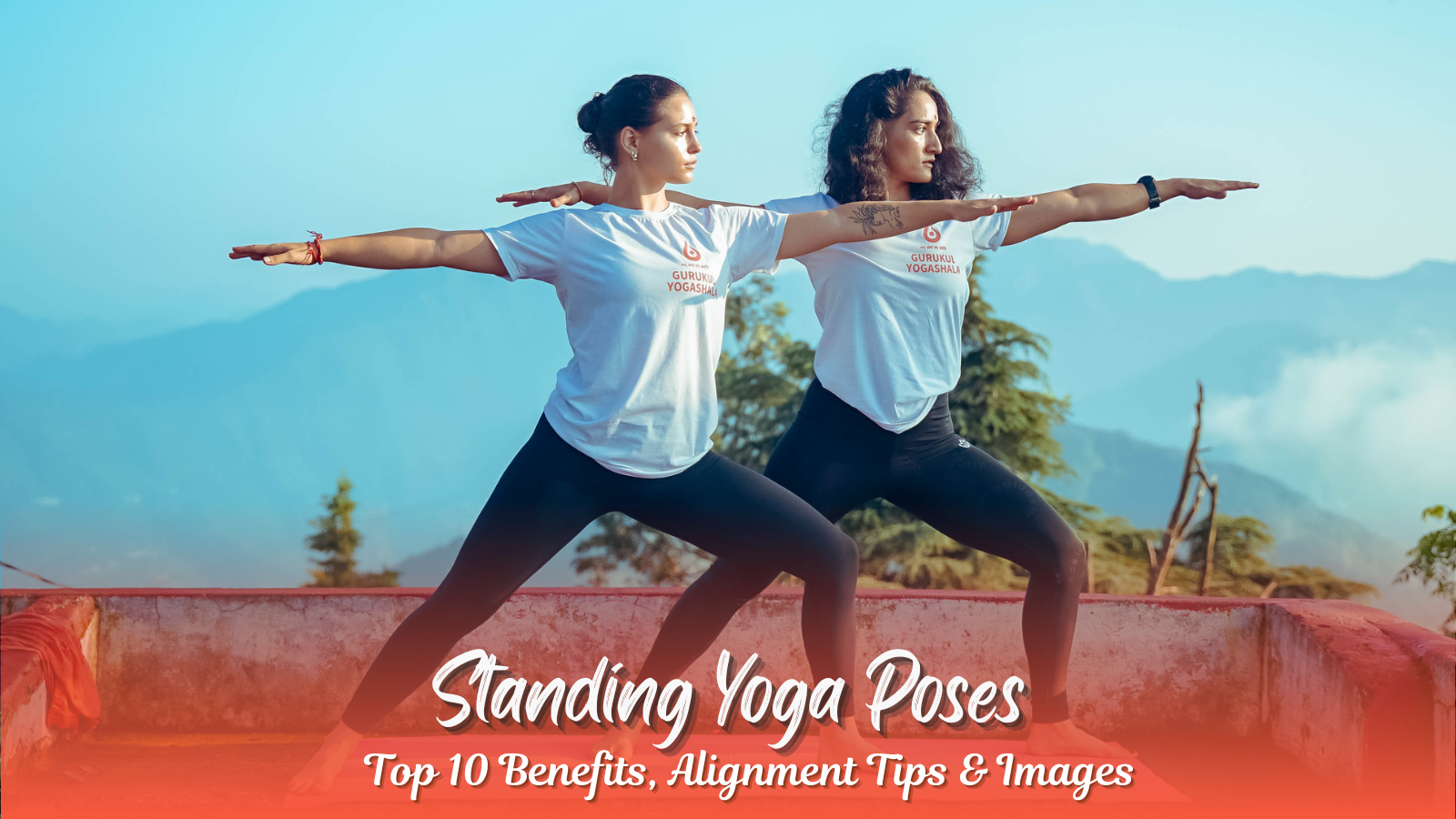
Standing yoga poses are also the fundamental basis of most yoga practices and comprise the anchor through which physical strength, stability, and balance are developed. The poses are crucial not only in correcting the posture and increasing body awareness but are also instrumental in building mental concentration and ease of feelings. Standing asanas are able to exercise more of our muscles at the same time and are therefore likely to build a strong and healthy body that will allow it to support other complex yoga postures. They are especially important on dynamic tracks like Surya Namaskar (Sun Salutation), which forms 12 dynamic and fluid poses and enhances the body as well as the mind.

Surya Namaskar is a masterpiece of Surya Kriya, as the 12 asanas in sun salute encompass strength, flexibility, and breath coordination to create a wholesome practice of standing asanas. All of the surya namaskar poses within this series train a variety of muscle groups, enhance the circulation, and stimulate the detoxification, so it is a comprehensive workout that prepares the practitioner for more serious requirements of yoga. Be it your first steps towards yoga or if you are already considered a yoga guru, your career could use a boost with these standing asanas, as they will grant you a strong foundation both physically and mentally.

What Are Standing Asanas in Yoga?

Standing asanas are standing yoga postures done on the feet and include some sort of balance, coordination, and strength. In standing asanas, unlike seated or supine ones, there is constant activation (by the nervous system) of the leg muscles, the abdominals, and the back muscles to stay balanced. These poses encourage circulation, boost cardiovascular health, and a sense of rootedness as they help the body be anchored to the ground.

The concentration and mindfulness stand asanas also require the mind of the practitioners to be attentive, as the process of striking balance and alignment is an uphill climb. This intellectual activity contributes to the cultivation of a man of a silent and stilled mind, which is the key to advancement in yoga. A lot of standing asanas are taken as the foundation of more sophisticated postures, and therefore cannot be merged out of any yoga practice. This is because they are included in types of sequences of exercises, such as Surya Namaskar, to emphasize a point when the entire body is being energized and set towards a higher state of meditation.

Why Standing Yoga Poses Are Important for Strength & Balance

The standing asanas are central in building up the core strength, whereby they stabilize the spine and enhance the posture. These poses help to make the legs, hips, and back stronger, increasing the flexibility and lowering the chance of injuries on and off the yoga mat. Also, there is a balance and coordination that is enhanced by practicing standing asanas, and these are skills that will involve better body mechanics and stability in daily life.

Other than the physical advantages, standing asanas are essential in the development of concentration and emotional fortitude. The stability and deep breathing needed to maintain these poses force the practitioner towards a state of presence and a meditative nature in practice. Such a state of the mind is necessary today when there is a very hectic lifestyle, and yoga has become a stress-free zone where one can find escape in the comfort of their own space and a place to relax.

Many standing asanas are present in the 12 yoga poses of Surya Namaskar (surya asana), and hence, the sequence forms a complete training session that balances strength, flexibility, and breath. These poses will help increase life energy, digestion, and systemize the nervous system with daily practice. In case one wants to improve on the knowledge and experience about standing asanas, a Yoga Teacher Training in Rishikesh is worth attending, or visiting a famous Yoga School in India, where they gain practical experience, and one can also have an in-depth training session.

The Best Yoga School in Rishikesh is located in Rishikesh, which is the yoga capital of the world; therefore, when one visits this yoga school, he/she can learn standing asanas in detail under the guidance of a well-trained teacher.

To conclude, the standing asanas cannot be omitted when it comes to a balanced and efficient yoga practice. They build a background of physical health, of psychological clarity and spiritual development, and therefore must be present in the case of every practitioner. When combined with the active movement of Surya Namaskar, or used separately, standing asanas can help yogis develop internal balance between body, mind, and breath, and enhance their yoga experience as a whole.

Top 10 Standing Yoga Asanas with Benefits & Alignment Tips

1. Tadasana (Mountain Pose)

Benefits:

All the standing asanas have the basis of tadasana. It straightens the body, toughens the thighs, knees, and ankles, and raises sensitivity to body alignment.

Alignment tips:

  • Place feet hip level or at one another.
  • Spread the weight on both feet correctly.
  • Activate thigh muscles and raise the kneecaps.
  • Stretch the back and soften the shoulders.
  • Take long and deep breaths.

2. Vrikshasana (Tree Pose)

Benefits:

Increases balance, leg strength, and hip openers.

Alignment Tips:

  • Load one foot.
  • Put the sole of the other foot in the vicinity (inner thigh or calf) of the opposite leg (not on the knee).
  • Put your hands to the heart centre or reach up.
  • Hips and spine are tall.

3. Trikonasana (Triangle pose)

Benefits:

Stretches the legs, hips and spine; enhances balance and digestion; reduces stress.

Alignment Tips:

  • Feet are wide apart.
  • Front foot front rotation, rear foot inward half a turn.
  • Put your hands at the right angle with the floor.
  • Extends the leg out in the front and forward-bends the torso across the front leg.
  • Rest the hand on the shin or floor, and the arm is pointing upwards.
  • Have an open chest and upward eyes.

4. Virabhadrasana I (Warrior I Pose)

Benefits:

Tone legs, opens hips and chest, raises stamina.

Alignment Tips:

  • Take one step backward, with one knee bent in front of the ankle.
  • Front-facing hip.
  • Put hands above the head with palms up or together.
  • Maintain the spine elongated and look forward or up.

5. Virabhadrasana II (Warrior II Pose)

Benefits:

Improves flexibility, builds power and stamina, extends the hip and groin, and enhances concentration.

Alignment Tips:

  • placed with feet apart and both front and rear parallel.
  • Make the front knee bend, back leg straight.
  • Sit arms outstretched on the floor.
  • Look at the front hand.

6. Parsvakonasana (Extended Side Angle Pose)

Benefits:

Tones leg muscles, lengthens groins, hips, and sides; increases endurance.

Alignment Tips:

  • In Warrior II, place the bottom front arm on the floor or the top of the thigh.
  • Take a long diagonal with the opposite arm raised.
  • Be sure the chest is open, look up.

7. Utkatasana (Chair Pose)

Benefits:

Tones the thighs, calves, and spine; excites heart and diaphragm.

Alignment Tips:

  • Keep your feet hip-width apart.
  • Bend your knees and lower hips as you are sitting on a chair.
  • Hold up arms with palms facing, as though one is trying to stop traffic.
  • Shoulders back, chest up, and long back.

8. Garudasana (Eagle Pose)

Benefits:

Brings a feeling of balance, opens the shoulders and upper back, and strengthens the lower extremities.

Alignment Tips:

  • Cross one leg over the other and, if possible, surround your foot with the calf.
  • Cross your hands in front, and clap all.
  • Bend to squatted knees and look out.

9. Skandasana (Side Lunge Pose)

Benefits:

It stretches hips and groins, tones the legs, and increases flexibility.

Alignment Tips:

  • Starting in a wide stance, bend one knee; the other leg should be straight.
  • Feet should be flat and torso straight or slightly forward.
  • Switch sides.

10. Chakrasana (Wheel Pose) – Note on Standing Asana

Since Chakrasana (Wheel Pose) is a backbend in the floor position, it has been regarded erroneously as standing asana because of its mobility.

FAQs: No, Chakrasana is not a standing asana; it is a back-bending asana.

Surya Namaskar: The Ultimate Standing Pose Sequence

The Sun Salutation or Surya Namaskar is a set that consists of 12 yoga poses, which consist of a combination of standing postures and forward and back stretches, together with lunge exercises. It is an all-around exercise that enhances body strength, stretching, and heart strength.

  • The 12 poses of Surya Namaskar consist of standing poses such as Tadasana, Uttanasana, among others.
  • To practice widely, it is necessary to know the names of the asanas of surya namaskar and understand their proper positioning.
  • Surya namaskar poses images provide an advantage to visual learners as they help to show not only the variations of a certain posture, but also show the clearest image on how everything is done.
  • Those who do regular practice of the 12 Surya Namaskar poses can rejuvenate the body and relax the mind.

Why Learn Standing Asanas in Rishikesh, India?

If yoga is to be taken seriously, then taking up a Yoga Teacher Training in Rishikesh or even being a part of a renowned Yoga School in Rishikesh or a Yoga School in India will provide pure yoga experiences. Rishikesh is already called the global spiritual center of yoga and offers one of the best learning environments to perfect standing asanas, as well as their alignment and breath control.

The teachers at the Best Yoga School in Rishikesh will teach you all these poses one by one, leading you to build up a safe and efficient practice. You can reach a deep yogic tradition, whether you wish to develop personally or have the ambition of professional certification, through booking a programm of training in Rishikesh.

Frequently Asked Questions About Standing Yoga Poses

Which asana has 12 poses?

Surya Namaskar pose is a series of 12 poses that are performed seamlessly in worshipping the sun and revitalizing the body.

Is Tadasana a standing asana?

Yes, Tadasana (Mountain Pose is the key standing pose, upon which most other poses are made.

Is Chakrasana a standing asana?

No, Chakrasana (Wheel Pose) is a back bend on the floor; it is not a standing asana.

Is Skandasana a standing pose?

Side Lunge Pose, Skandasana. Yes, one of the standing poses is Skandasana, which opens the hips and strengthens the legs.

Is Vrikshasana a standing asana?

Yes, Vrikshasana (Tree Pose) is a traditional standing balance pose.

Final Thoughts: Build Stability, Focus, and Energy with Standing Asanas

Learning standing asanas is fundamental to creating a strong, balanced, and detachable yoga. They not only build physical strength and stamina but also improve mental concentration and inner stability. A combination of standing asanas to your daily practice, combined with such routines as Surya Namaskar, can help you change your health and well-being.

To people who simply wish to learn more, attending a Yoga Teacher Training in India and particularly at a famous Yoga School in Rishikesh will be a revolutionary move. Here, you discover the art and science of standing asanas in the direction of an expert, in the atmosphere of the silent Himalayan energy.

Standing asanas give you power and promote the idea that through yoga, your body, mind, and soul will gain a higher status.

Learn the full alignment and purpose of each pose directly from certified teachers in the Yoga Capital of the World – Rishikesh, India.

📍 Join our upcoming 200-Hour Yoga Teacher Training at Gurukul Yogashala
🧘‍♀️ Learn Tadasana, Trikonasana, Warrior Poses, and more—step by step.

Marichyasana (Sage Pose)

Marichyasana (Sage Pose): Steps, 5 Benefits, Variations & How to Practice It Safely

Marichyasana (Sage Pose): Steps, 5 Benefits, Variations & How to Practice It Safely

Yoga is an ancient and comprehensive discipline whose beauty lies in bringing together the body, mind, and spirit in a harmonious balance, leading to holistic well-being at various levels. Among all the numerous postures of yoga, Marichyasana is a prominent one since it is an exhaustive seated twist that not only leads to physical wellness but also to mental stability and even emotional fulfilment. Marichyasana is a central pose of numerous yoga schools, and a posture known to cause significant changes on the spine, digestion, and energy circulation.

We shall explore Marichyasana in full detail, discussing its origin, a step-by-step guide, variations such as Marichyasana 2 and Marichyasana 3, and the numerous benefits that make it so popular among yoga enthusiasts worldwide. We will also discuss certain similar poses such as Vairagi, Ardha Mandalasana, and Mrigasana, making this family of twisting asanas bring in a wider picture.

Marichyasana also belongs to the history of Indian yoga heritage, and so, its understanding is also the comprehension of the role it plays. To the person who is now motivated to advance, a Rishikesh Yoga Teacher Training or a Yoga School in Rishikesh, or a Yoga School in India is a life-changing experience. The yoga capital of the world, Rishikesh, is the right place to learn the absolute as most of the schools and ashrams merge the traditional teachings with the modern methods, so it is the ideal place wanted by strict yogis.

What is Marichyasana? Origins & Meaning of the Sage Pose

Marichyasana, known as the Pose Dedicated to the Sage Marichi, is a sitting square spinal rotation that takes its name after Marichi, an ancient sage, who was one of the prized sons of Brahma in Hindu mythology. Marichi in the Sanskrit language is the Ray of light, which means light, enlightenment, and dispersion of knowledge. This is the symbolism that runs deep in the process of Marichyasana, which attempts to evoke inner light and clarity by means of physical and respiratory exercises.

Marichyasana is generally referred to as the Seated Twist Pose or Marichi Pose in English. This is a pose that is renowned for detoxifying the body, awakening the abdominal organs, and enhancing circulation. It also increases spinal mobility, which is important for healthy back and posture. It helps to massage internal organs with the twisting movement and benefits the digestive system, as well as facilitating the removal of toxins, which is why this pose is often chosen by people who are willing to improve their health on the whole.

The practice of Marichyasana is not merely an exercise but rather the portal to deeper self-realisation and balance of energy. This posture, when practiced habitually, may balance the circulation of prana (life force energy) within one’s body, and Simhasana yoga astrology, among many other yogic ideas, is supported by this. It does not matter whether you are a rookie or a world-renowned yoga master; introducing Marichyasana to your practice can change your yoga experience and your life dramatically.

How to Do Marichyasana (Step-by-Step Guide for Beginners)

Marichyasana variations have many things; the basic pose can be referred to as Marichyasana 1. The steps given below can help a person execute the Marichyasana 1 correctly and with caution:

Step 1: Begin in Dandasana (Staff Pose)

  • Sit down on the floor and then extend your legs straight in front of you.
  • Your spine should be straight, and your shoulders should be relieved.
  • Squeeze your thighs and bend your feet.

Step 2: Bend Your Right Knee

  • Bend the knee on the right and put your right foot flat on the ground near the pelvis.
  • Retain the extension of the left leg.

Step 3: Twist Your Torso

  • Relax by breathing, extending your back.
  • Inhale and reverse turn your torso to the opposite side and bring the right elbow towards the outside of the right knee.
  • Put the right hand behind you on the floor and support.

Step 4: Hold the Pose

  • Relax by breathing, extending your back.
  • Inhale and reverse turn your torso to the opposite side and bring the right elbow towards the outside of the right knee.
  • Put the right hand behind you on the floor and support.

Step 5: Release and Repeat on the Other side

  • Unwind and drop out of the twist.
  • Continue the procedures on the left side.

Marichyasana Variations and How to Practice Them

Marichyasana has different variations, and each offers unique challenges as well as benefits:

Marichyasana 2

  • Much like Marichyasana 2, expect the elevated leg should be flexed, and the foot placed flat to the ground.
  • It has the arm around the knee, which is in a flexed position, and the hands clasped behind the back.

Marichyasana 3

  • In Marichyasana 3 Greater twist so that the leg hanging out is raised above the floor.
  • This difference needs strength and balance of the core.

Vairagi Marichyasana

  • A further progressive innovation includes tying the arms around the back in case of Vairagi Marichyasana.
  • Liberated yogi pose is also known as Vairagi Asana because it requires the ability to be bendy and focus.

Ardha mandalasana and Mrigasana

  • They are complementing seated twist poses to Marichyasana.
  • In Ardha Mandolasa, there is a twist of a half-circle contrasted with Mrigasana (Deer Pose) that incorporates a twisted pose that is bent-legged.

Top 5 Benefits of Practicing Marichyasana Daily

Marichyasana Benefits in practice regularly may have numerous physical and mental advantages:

1. Improves Spinal Flexibility

The twisting movement activates the vertebrae so that he becomes more flexible and less stiff in the spine.

2. Stimulates Digestive Organs

The abdominal organs gripped in the massage, including the liver, kidneys, and intestines, are pressed and relaxed in the process of the twist massage, which helps digestion and detoxification.

3. Relieves Back Pain

Marichyasana can lessen lower back pain and enhance the posture by consolidating and elongating the back muscles.

4. Enhances Respiratory Function

The position widens the lung and chest, facilitating further breathing and oxygenation.

5. Calms the Mind

Twisting will stimulate the nervous system and may make it able to reduce stress and anxiety.

Marichyasana in Traditional Yoga & Energy Work

Traditional yoga and Simhasana yoga astrology think that the poses, such as Marichyasana are effective in regulating the movement of prana (life energy) and balancing the doshas (body energies). It is believed that the twist stimulates the Manipura chakra (solar plexus), which raises the feeling of willpower and confidence.

Marichyasana in Yoga Teacher Training Courses

In case you feel excited to study more on Marichyasana and other asanas, then you can opt to join a Yoga Teacher Training in Rishikesh. Rishikesh is a well-known Yoga School in Rishikesh, and even more, it provides the real training programs, but also the course comprises wisdom with new teaching styles.

  • Yoga School in Rishikesh and Yoga School in India offer a holistic course consisting of asana practice, philosophy, anatomy, and meditation as well.
  • Such schools may feature specific teaching on poses such as Marichyasana 2 and Marichyasana 3 in order to give students a sense of how to accomplish these twisting positions.

Safety Tips: Precautions and Contraindications of Marichyasana

Although Marichyasana is very beneficial, one should be careful with the practice:

  • This is not advised in case of recent abdominal surgery, hernia, or severe slackening of the back.
  • In pregnant women, deep twists are to be avoided.
  • Deep twists should never be undertaken without warming up.
  • In case any pain or discomfort occurs, come out of the pose, mention it to a yoga teacher or medical practitioner.

FAQs About Marichyasana (Seated Twist Pose)

What are the benefits of Marichyasana?

Marichyasana enhances the flexibility of the spine, activates digestive reactions, promotes back pain relief, improves respiration, and relaxes the mind.

What is Marichyasana in English?

Marichyasana means Marichi pose or Seated Twist in English.

What is the story behind Marichyasana?

This pose is called Sage Marichi, which is the son of Brahma, and it represents rays of light and wisdom. It rewards his inner wisdom and devotion.

What are the precautions for Marichyasana?

Do not practice deep twists when pregnant, when there are abdominal injuries, or when there are problems with the spine. Don’t strain by warming up and listening to your body.

Visual Guide: Image of Vakrasana and Related Poses

Image of Vakrasana (Twisted Pose) may resemble appearances with Marichyasana. To supplement your knowledge on twisting asanas, you can find detailed images of Vakrasana in yoga manuals as well as on the internet.

Final Thoughts + How to Learn Marichyasana Properly

Marichyasana is a great seated twist that is flexible and strong, and which provides significant value to both the body and the soul. Not only does this pose increase flexibility of the spine and cleanse the system of internal body organs, but the fact that the mindfulness and awareness of breath is achieved, makes it an invaluable asana to practitioners of all levels.

Being a novice, at the very beginning of your yoga experience, or an experienced yoga practitioner who wants to strengthen your yoga practice, Marichyasana could really help you strengthen your connection with your body, breath, and inner energy state! Whether it is Marichyasana 2, Marichyasana 3, or even Vairagi Marichyasana, just one or two Marichyasana variations may be the way to help you connect better with yourself.

To those who wish to become the masters of Marichyasana and embrace the rich history of yoga practices, twisting with Ardha Mandalasana and Mrigasira, the search for the original and gaining experience methods is important. One of the most appropriate ways of learning and having a practical experience is by enrolling in a Best Yoga Teacher Training School in India, especially at a renowned Yoga School in Rishikesh. The yoga capital of the world, Rishikesh, can help you gain an immense experience of studying with renowned masters of the field, living in the realm of yogic philosophy, and experience first-hand practicing in the most tranquil and spiritually elevated surroundings.

When selecting a Yoga School in Rishikesh, you not only get expert advice on how to do particular Yoga Asanas, such as Marichyasana, you also join a dynamic network of fellow practitioners, traditions, and Yoga teachings, such as the teachings of Simhasana yoga astrology, or other Yoga Sciences that date back thousands of years. Whether you are intending to improve yourself, better your physical health, or become a certified yoga teacher, Rishikesh training provides you knowledge and experience to revamp your practice and teaching.

Become a Sage Marichi and embrace the ancient teachings by the name of Marichyasana and allow it to become a guiding practice towards a bright and balanced yoga path in life. After implementing such an effective seated twist into your practice and engaging in the specialized practice by attending the Best Yoga School in Rishikesh, you open the gateway to the new levels of perception of the transformative power of yoga.

student practicing Kukkutasana with proper arm balance common mistakes in Kukkutasana pose yoga teacher helping in Kukkutasana correction

Kukkutasana (Rooster Pose): Top 5 Common Mistakes and How to Fix Them for Safer Practice

Kukkutasana (Rooster Pose): Top 5 Common Mistakes and How to Fix Them for Safer Practice

The Cockerel Pose or Kukkutasana is a difficult yoga pose in which one has to balance on their arms and therefore requires strength, dexterity, and concentration. Though its effects can be immense, frequent errors present problems to most practitioners, particularly those who are novices. This is an extensive tutorial to list the best and temporary five errors in Kukkutasana, ways to prevent them, and frequently asked questions about the posture. Backing instructions like kukkutasana benefits, utkatasana steps, chair pose benefits, etc, are well blended into a comprehensive yoga outlook.

What is Kukkutasana (Rooster Pose)?

Kukkutasana (Cockerel Pose) is an arm-balance asana relatively higher in degree of difficulty, practiced in Padmasana (Lotus Pose). The practitioner inserts the arms between the thighs and calves and places his palms on the ground and elevates the body, balancing with his hands completely. This pose is adored because it helps to cement the core stability, core strength, and concentration on upper body exercise.

Top 5 Common Mistakes in Kukkutasana and How to Avoid Them

1. Not involving the Core

Mistakes

A lack in the activation of the core muscles results in instability, such that it becomes cumbersome to lift the body and hence balance. This may also cause a strain on the wrists and shoulders.

How to Avoid?

  • Prior to picking up, think about the abdominal muscles.
  • Core-strengthening poses such as Navasana (Boat Pose) and Plank practice are a preparation.
  • Emphasis should be made on pulling the navel towards the spine during movement upwards.

2. Improper Arm Alignment

Mistakes

Having the arms that are too wide or too narrow or not pulling through the thighs and the calves creates less stability and provides the opportunity to lose balance and make the body fall in forward or backward.

How to Avoid?

  • Stick your arms all the way in and hopefully till the elbows get to the crease of the thigh and the calf.
  • Have the palms flattened, the fingers separate to provide a good foundation.
  • The wrists should be parallel to the shoulders.

3. Rushing into the Pose without Preparation

Mistakes

Trying to perform Kukkutasana without proper warming up and preparing poses involves the risk of injury, mainly knees, hips, and wrists.

How to Avoid?

  • Remember to warm up always using hip stretches and arm stretches
  • Lotus pose (master Padmasana) first.
  • Mula Bandha (root lock) and Tulasana (Scale Pose) are the standing poses that should be undertaken first

4. Holding the Breath or Breathing Shallowly

Mistakes

Tension and the lack of endurance and destabilization of the pose may arise when one forgets to breathe or breathe shallowly.

How to Avoid?

  • Breathe calmly and consistently as you do.
  • Utkatasana yoga is prepared with breathing in and breathing out.
  • The breath can be used to assist balance and focus.

5. Neglecting Safety and Overestimating Limits

Mistakes

Physical limitations should not be disregarded, nor should pain be forced through, as it can cause falls or injury, especially at the wrist, knees, or lower back.

How to Avoid?

  • Follow your body and don’t push your limits.
  • Other props can be used, such as a folded blanket or bolster.
  • It is best to practice with an experienced yoga instructor for utkatasana pose yoga, wherever you are new to arm balances.

How to Perform Kukkutasana: Step-by-Step Guide

Start with Lotus Pose (Padmasana): Slide down on your knees, crossing the legs with both feet on top of the other thigh.

Open the Arms: Place your arms between the calves and the thighs and insert them until the elbows are upon the knee folds.

Planting of the Palms: Keep the palms on the ground, with wide-spaced fingers.

The Activation of Core and Lift: Exhale, attract your core, and pound your muscles to break your body off the mat.

Have Balance and Breathe: Leave the back slightly arched, stare straight, and breathe well.

Focus on Holding and Releasing: Breathe and hold for a few seconds, and then gradually come back down to Padmasana and drop the arms.

Kukkutasana Benefits or Benefits of Kukkutasana for Body & Mind

  • Increases upper body and core muscles: Improves arm, shoulder, and chest strength.
  • Better digestion: The pressure applied in the abdomen massages the body organs, leading to a better digestive system.
  • Develop focus and balance: Need more coordination and focus with a clarified mentality.
  • Works abdominal muscles: Aids in the diversion of belly fats as well as toning the core.
  • Activates energy: Awakens the energy points of the body and invigorates.

The 12 poses of Surya Namaskar (Sun Salutation) constitute a dynamic exercise combining the movement of the body and mind. Poses are in sequential flow that facilitates flexibility, strength, and balance. Performance of the 12 poses of Surya Namaskar daily aids general well-being, enhances circulation, and prepares the body to perform other complex asanas such as Kukkutasana. The practice of this sequence as a part of your yoga practice will improve your flexibility, stamina, and focus of thoughts.

Who Should Avoid Kukkutasana & Safety Tips

  • People with damaged hips, knees, wrists, shoulders, or backs.
  • People who have high blood pressure, heart or lung conditions, grief, a condition known as hernia or prolapse, gastric ulcers, and an enlarged spleen.
  • Expectant women and women on their menstrual periods.
  • Individuals having carpal tunnel syndrome, arthritis, spondylitis, or migraine.

General Precautions

  • Do not lock the legs without the openings in the hips into Padmasana.
  • Do not stay in the pose in case of pain or tension.
  • The beginners should always practice under the guidance of an expert.

World Record for Kukkutasana

  • The world record set by Guinness World Records is 5 minutes and 45 seconds of Kukkutasana (Rooster Pose) maintained by Manish Katkar on April 13, 2024, in Nashik, India.
  • There is also a listing in the India Book of Records with 2 minutes and 53 seconds as an impressive time.

FAQs

What is Kukkutasana, and its benefits?

Kukkutasana is an arm-balance yoga practice that is practiced after Padmasana. It also tones the core, activates the upper body, improves digestion, promotes balance, and improves focus.

How to perform Kukkutasana?

Start with Padmasana, shove your hands through the thighs and legs, put both palms on the ground, tuck your stomach in, and raise your body off the ground by balancing on your hands.

What are the limitations of Kukkutasana?

Do not practice it in case you have hip, knee, wrist, back, heart, lung, or digestive disorders. Healthy people who are pregnant or are menstruating should not use this pose, either.

What is the world record for Kukkutasana?

Holding Kukkutasana, the world record of holding Kukkutasana is 5 minutes 45 seconds, performed by Manish Katkar in 2024.

Supporting Yoga Knowledge

Utkatasana Pose (Chair Pose) Steps

  • Be in Mountain Pose, that is Tadasana
  • Breathe, lift arms over.
  • Then exhale and bend your legs and your hips like you are sitting on a chair, which indicates the pose with chair.
  • Your knees should be over your ankles with the thighs parallel to the floor.
  • Wait, breathe, and reset.

Chair Pose benefits

  • Targets the gluteus muscles, legs, and core.
  • Pose with Chair can manage posture and balance
  • Increases cardiovascular wellness and endurance
  • Makes the spine and shoulders more flexible
  • Causes stress reduction and a gain of energy.

Virabhadrasana Benefits (Warrior Pose)

  • Virabhadrasana Benefits are to tone and tighten the arms, legs, and lower back.
  • Improves stability and endurance
  • Hip flexors and shoulders stretch
  • Become more concentrated and mentally strong
  • Makes you feel relaxed.

Learn Kukkutasana in Yoga Teacher Training in India

Modifying Poses: Padmasana, Tulasana, and core strengthening asanas.

Chair pose (Utkatasana), Warrior Pose (Virabhadrasana), and other arm balances

Child is on the floor performing the Child’s Pose and Dandasana after Kukkutasana.

Why Rishikesh is Ideal for Learning Advanced Asanas

To someone who wants to advance in yoga learning, or wants to learn advanced yoga asanas such as the Kukkutasana or even become a certified yoga instructor, joining a Yoga Teacher Training in Rishikesh or a Yoga School in India is a life-changing course. The location of yoga teaching in Rishikesh is commonly described as the yoga capital of the world, as well as the Best Yoga School in Rishikesh, and its teaching is authentic, immersive, and holistic. Here, we have listed some of the Best yoga schools in Rishikesh, which are unique in their ways, with a combination of traditional, modern approaches to teaching and spiritual development.

Why Choose Yoga Teacher Training in Rishikesh or India?

Real Tradition: Yoga originated in India, and the spirit of it is centered in Rishikesh. In this case, training implies studying the gurus, which preserves the old traditions and principles of yoga, as well as studying the Yoga Sutras, Ayurveda, and meditation.

Holistic Curriculum: Training programs like the 200-hour, 300-hour, and 500-hour Yoga Teacher Training in Rishikesh include a curriculum of asanas, pranayama, anatomy, yogic philosophy, teaching modules, and alignment. This will guarantee a comprehensive education for future teachers and serious practitioners.

Yoga Alliance Certification: The best schools of Yoga in Rishikesh are certified by Yoga Alliance, and your certification would be recognized all over the world and will also give you a chance to teach at various places.

Location: Rishikesh is a beautiful, laid-back place located in the Himalayas on the banks of the divine Ganges river, which develops a perfect setting to go deeper in the practice, learn more about yourself, and become more spiritual.

Community and Networking: Training in Rishikesh provides you access to a worldwide fraternity of like-minded yogis, lifetime friendship, mentorship, and support to your journey (professional as well as personal).

Comprehensive Learning: Most schools combine Ayurveda, sound healing, meditation, and the yogic way of life to have a comprehensive view of health and well-being.

Career and Personal Development: Yoga Teacher Training in India not only equips you with skills to teach others but also develops your level of confidence, communication, and in-depth understanding of yourself. A great number of graduates become teachers worldwide, start their studios, or further their studies.

Conclusion

Kukkutasana is an intense and advanced pose of yoga that, once practiced mindfully with correct form, would lead to greater physical and mental rewards. Knowing and preventing the five worst mistakes in Kukkutasana, you will make this stage of your experience with yoga successful and secure.

Both as a committed practitioner and as a prospective instructor, it will be your opportunity to incorporate such advanced poses as Kukkutasana into your practice, and the experience of the expert who can guide you, such as a Yoga Teacher Training in Rishikesh or a Yoga School in Rishikesh, India, will help you embrace your potential. Never underestimate what your body tells you and respect your limits, and always accept the changes that yoga can offer you towards a well-balanced, long life and inner harmony.

200 hour yoga teacher training students at Gurukul Yogashala meditation class in Rishikesh India student review Gurukul Yogashala Rishikesh

Best Yoga School in India – Gurukul Yogashala Review from Students Around the World

Best Yoga School in India – Gurukul Yogashala Review from Students Around the World

With the world more and more seeking balance and wellness, yoga has transcended the exercise, this is a way of life. As an exercise that nurtures the body, mind, and soul, yoga has come much further than its indigenous Indian roots to be global in focus. With increasing popularity, quality yoga training is needed more than ever. So how do you find the best among the rest? For the majority, the answer is Gurukul Yogashala, best yoga school in india.

Gurukul Yogashala, located in the holy town of Rishikesh, offers not only world-class yoga classes but an experience that touches the soul. This article delves into the reason why Gurukul Yogashala is India’s number one yoga school, with its student-tested approach and global confidence.

Why Yoga Training in India Matters More Than Ever

Picture yourself standing at the foot of the magnificent Himalayas, surrounded by the serene currents of the Ganges. The wind is fresh, and the sounds of nature hum within your heart. Surrounded by this serenity, a bunch of students congregate, with hearts purified by a common cause of their own self-transformation through yoga practice. This is the beauty of Gurukul Yogashala, where life fills every nook and corner by imparting yoga’s lesson.

It is not so much the natural surroundings or the ancient knowledge of yoga that makes Gurukul Yogashala different, but the intense emotional and spiritual experience that it has to offer. Yoga here is not merely a set of physical postures or breathing exercises. It is a journey towards healing, a path of self-discovery, and personal transformation.

Real Student Experiences: Transformation Through Yoga

At Gurukul Yogashala, the students are always at the center of all things. Their testimonials are not written words but living evidence of the school’s dedication to providing not only top-class training but also lasting change.

Priya, a New York student, has this to say:

“I arrived at Gurukul Yogashala lost and isolated. Life in the city was stressful, frantic, and unbalanced. Since graduating from the Yoga Teacher Training Course (TTC) at Gurukul Yogashala, my life has been reassessed entirely. The teachings I received were more than just physical. They allowed me to discover a higher sense of connection with myself and the world. I am now not only a yoga teacher but also a practitioner at peace with herself.”

This is but one of the thousands of student testimonies attesting to the life-altering effects of Gurukul Yogashala’s education. What differentiates this school is the highly personalized way that it delivers, allowing each student to have a life-altering experience tailored to his or her needs.

Internationally Certified & Government-Recognized Yoga Courses

While yoga may have been born in Rishikesh, Gurukul Yogashala’s reach extends around the world. By providing balanced, traditional training and fostering a global community of students from all corners of the world—America, Europe, the Middle East, and so on—the school is now India’s premier yoga school, both as a teacher and as a generator of an international base of practitioners and educators. Students come from far and wide for genuine, government-approved yoga instruction.

What really sets Gurukul Yogashala apart is its Government of India Yoga Certification Course, a course that gives students the qualifications they need to teach yoga professionally, either in India or overseas. This legitimation not only allows students to acquire a genuine education but are also provided with internationally recognized certificates such as Yoga Alliance registration.

Yoga Teacher Training in Rishikesh – Course Highlights

One of the hallmarks of Gurukul Yogashala’s reputation is its Yoga Teacher Training Course (Y TTC). Intended for individuals who wish to be trained yoga teachers, the course comes in different durations, including the highly sought-after 200-hour Yoga Teacher Training in Rishikesh. The training is comprehensive, covering everything from asanas (yoga postures) to yoga anatomy and physiology.

Moreover, the Gurukul Yogashala course has deep foundations in traditional yoga and focuses on both physical and mental well-being. The courses are designed to teach students not just the physical aspects of yoga but also its history, philosophy, and spiritual aspects.

200-Hour YTT Program Overview

At Gurukul Yogashala, yoga is taught in its true form. The instructors lay a strong stress on the holistic nature of the practice, teaching a syllabus that unites the body, mind, and spirit. A few of the key topics that are taught include:

1. Ashtanga Yoga: The eight-limbed system of traditional yoga practice, including moral discipline, control of self, posture, control of breath, and meditation.

2. Hatha Yoga: A physical posture style, which aligns the body for spiritual growth and mental concentration.

3. Pranayama: The art of regulating the breath, which balances the energy and quiets the mind.

4. Yoga Anatomy and Physiology: Close study of body structure and how yoga can improve physical well-being.

5. Meditation and Mindfulness: Hands-on methods for developing a peaceful, balanced mind.

6. Yoga Philosophy: Ancient teachings and texts that create the base for yoga, so students can see its nature.

With these wide-ranging modes of instruction, not only are students taught to instruct yoga—but encouraged to embody it. This training ensures Gurukul Yogashala alumni as some of the world’s most perceptive and empathetic yoga instructors.

What You’ll Learn: Curriculum Highlights

Gurukul Yogashala offers a means to become an internationally renowned yoga teacher with its Yoga Teacher Training Certificate (TTC) courses. The certificates are not documents but the gateway to teach yoga in every nook and corner of the world. With certificates that are Yoga Alliance-approved and other international yoga organizations, the students feel free to launch their teaching life anywhere in the world.

Besides this, the school also provides special classes such as Ashtanga Yoga, Hatha Yoga, and Restorative Yoga, which suit a variety of interests and levels. For those who want to deepen their own practice or who want to teach, there is a course that will suit them.

Why Choose Rishikesh for Yoga?

Though Gurukul Yogashala’s name reaches far outside of India, the location itself is a giant draw. Rishikesh is the World’s Yoga Capital, a town where the ancient art of yoga continues to this day to be practiced in its most traditional form. It is here, on the holy Ganges River and under the Himalayan shadow, that students come to take advantage of the incredible energies of yoga.

The serene setting of Rishikesh, complete with serene temples and energetic spiritual vibrations, provides the ideal setting to learn yoga. The serene surroundings are crafted to allow students to disconnect from the world and reconnect with themselves in order to facilitate higher levels of learning and personal growth.

A Traditional Yoga School In Rishikesh, India

The Spiritual Impact of Yoga at Gurukul Yogashala

Gurukul Yogashala is not only a school to study yoga—it’s a school of service, compassion, and community. The school’s philosophy is based on the concept of Seva—selfless service. The students are taught how to give back by teaching others in the community yoga or by sharing with others the importance of the practice.

This culture of service pervades every part of life at Gurukul Yogashala, which is more than a school to study and learn but a school of deep personal transformation. It’s a school where students are being trained as yoga teachers, but also as human beings as part of something larger than themselves.

Why Gurukul Yogashala is the Best Yoga School in India

Amongst a host of yoga schools and training institutions, Gurukul Yogashala stands out as the premier yoga school in India due to the following reasons:

1. Timeless Approach: Gurukul Yogashala never deviates from its heritage regarding yoga, presenting a course that covers ancient wisdom, spiritual practices, and bodily postures.

2. Government-Recognized Certification: The school’s government-approved certifications and Yoga Alliance registration make it a reliable destination for students across the globe.

3. Student-Centered Learning: With personalized training as the top priority, each student receives the individual care that they require to develop.

4. Holistic Experience: Gurukul Yogashala does not teach yoga, but rather engages students in a holistic process of change, both physical and internal.

5. Spiritual Atmosphere: Placed in the center of Rishikesh, the town’s spiritual ambience pervades each moment of time spent at the school, giving it a life-transforming experience.

6. World Community: Gurukul Yogashala does not just produce students as professional yoga instructors but also as members of a global yoga community of devoted practitioners.

FAQs: Yoga Courses in India Answered

Yoga, an ancient practice from India, has gained immense popularity all over the world. It offers physical, mental, and spiritual gain, and is a complete practice for those seeking equilibrium and peace. India, yoga’s homeland, remains the perfect destination to learn and practice. If you wish to teach yoga or want to intensify your practice, Gurukul Yogashala in the world capital of yoga, Rishikesh, is an ideal option. Here are the replies to some of the most popular questions that can help your journey of yoga in India.

1. What is the best yoga institute in India?

India is gifted with a number of world-famous yoga schools, but the best yoga school in India is Gurukul Yogashala in Rishikesh. Because of its high-quality training programs and student-friendly policy, Gurukul Yogashala has gained global recognition for quality yoga education.

•Detailed Courses:

Gurukul Yogashala provides numerous Yoga Teacher Training Courses (TTC), among which the highly sought-after 200-hour Yoga Teacher Training and 300-hour courses are most popular. All these courses combine different styles of yoga, such as Hatha Yoga, Ashtanga Yoga, and Vinyasa Yoga, and therefore it is the ideal destination for practitioners of every level.

Experienced Teachers: Gurukul Yogashala teachers are highly experienced in the classical instructions of yoga, with years of teaching experience and intimate familiarity to offer students not only physical training but also deep knowledge of yoga philosophy, anatomy, and meditation.

Global Acceptance: Gurukul Yogashala certification is recognized worldwide, especially by Yoga Alliance, hence a guaranteed choice for individuals looking to be yoga instructors abroad. Excellence in graduating great teachers is the reputation of the school, making it the top yoga school in India.

2. Who is the most popular yoga teacher in India?

While there have been numerous great yoga gurus in India, one whose name stands out internationally is B.K.S. Iyengar, who made a significant contribution to the development of yoga in the modern era.

B.K.S. Iyengar: Maybe the most popular yoga teacher, he is also the one who introduced yoga to the West. His Iyengar Yoga method focuses on alignment, detail, and the use of props so that students can execute postures correctly and safely. His book Light on Yoga is a yoga bible, and his teaching continues to motivate practitioners worldwide.

• Sri T. Krishnamacharya: The “father of contemporary yoga,” Krishnamacharya’s teachings laid the foundation for the majority of the contemporary yoga styles practiced nowadays, such as Ashtanga and Vinyasa. Among his famous pupils are legends like Pattabhi Jois and B.K.S. Iyengar, and therefore he is one of the most iconic yoga personalities of all time.

Swami Sivananda: As one of the most renowned spiritual teachers, Swami Sivananda played a major role in popularizing yoga in the West. It was him who initiated the Divine Life Society at Rishikesh, whose students are still learning from him until date. Swami Sivananda’s teachings included a mix of physical postures, ethics, and spirituality.

3. Which certification is best for yoga?

As far as yoga certification goes, Gurukul Yogashala has one of the most prestigious and recognized programs available to potential yoga teachers.

Yoga Alliance Certification: TTC courses by Gurukul Yogashala are certified by Yoga Alliance, the highest certifying body for yoga teachers globally. On successful completion of a 200-hour Yoga Teacher Training (YTT) course at Gurukul Yogashala, you will become a Registered Yoga Teacher (RYT), paving the way for teaching in India as well as abroad.

Government of India certification: The Government of India certification courses are also offered by Gurukul Yogashala. Not only does the course imbibe students with teaching skills but also provides them with a very thorough knowledge about the ancient past of yoga. The certification in this case takes a very prized status in India.

The TTC at Gurukul Yogashala is a blend of theory and practice, and when students finish the course, they have a deep understanding of yoga according to international standards.

4. Where in India is ideal for yoga?

India has several iconic yoga centers, but Rishikesh, where Gurukul Yogashala is located, is the ideal place for yoga training.

Be it Rishikesh – The Yoga Capital of the World:

Rishikesh has become the Yoga Capital of the World due to its profound yoga heritage and concentration on spiritual learning. At the base of the Himalayas, along the sacred Ganges River, lies Rishikesh, a tranquil place ideal for the intensification of your yoga practice. Rishikesh boasts numerous institutions of yoga, such as Gurukul Yogashala, which serves as a perfect institution for novices and experienced yogis.

• Kerala:

Renowned for its peaceful backwaters in addition to Ayurvedic healing resorts, Kerala is the ideal holiday destination for a person seeking to integrate yoga with Ayurveda. The scenic coast state has plenty of yoga retreats, particularly at places such as Varkala and Kovalam, where you will experience restorative yoga and full healing.

• Mysore

Renowned for its Ashtanga yoga origins, Mysore is the perfect place for those looking to learn Ashtanga Yoga from qualified instructors. Although Mysore is not as popular as Rishikesh for overall yoga training, it is definitely the place for Ashtanga lovers.

Goa:

Goa provides a more laid-back atmosphere, with most yoga centers providing retreats in lovely beachside settings. If relaxation and spiritual renewal are your preference of yoga, Goa is an excellent option.

5. Which state is renowned for yoga?

While yoga is practiced throughout India, Uttarakhand is the most renowned state for yoga, particularly because of the city of Rishikesh.

•Uttarakhand (Rishikesh):

Rishikesh enjoys the global reputation of being the Yoga Capital of the World, and Uttarakhand is, in turn, yoga’s synonym. Spiritual energies of the place, blended with the pure beauty of nature, render it an ideal destination for learning and practicing yoga. It is at Gurukul Yogashala here that students are able to live a true yoga life amidst nature.

Kerala:

Kerala is also famous for its yoga and Ayurveda combination, with most retreats providing holistic wellness retreats. The serene atmosphere of the state, especially around the backwaters and coastlines, provides a soothing setting for yoga practice.

•Mysore (Karnataka):

Mysore is famous for its Ashtanga Yoga practice and is a wonderful destination for fans of this physically challenging yoga. Less spiritually focused regarding yoga compared to Rishikesh, Mysore is still a venue for serious yogic practice that no serious yogic fan should miss.

6. Is yoga a good career in India

Yoga can prove to be a lucrative profession in India because of the rising awareness of its physical, mental, and spiritual benefits. A few of the reasons why yoga is a good career are:

•Growing Demand:

With increasing focus on health and wellness, more and more people are looking for yoga to improve their physical and mental well-being. This has resulted in an increasing demand for professional yoga instructors all over India, and hence it is a highly promising career. Yoga is now practiced in all sections of society, from schools and corporate offices to health clubs and gyms.

• International Opportunities:

Since yoga is well-accepted across the world, Indian yoga teachers are in demand all over the world. Most of those who receive training at Gurukul Yogashala are able to go on to teaching careers in countries like the U.S., the U.K., and Australia, where there are huge wellness tourism and yoga retreat industries.

•Diversified Career Options:

In addition to yoga teaching in conventional institutions, the career of yoga can extend to other fields like yoga therapy, corporate wellness programs, and individual coaching in yoga. Yoga teachers can even establish their own schools, teach online, or even author books on yoga.

•Job Satisfaction

Most yoga instructors report that they are extremely satisfied with their work, as they not only help other people improve their health but also grow spiritually and personally through practicing. For the people who are passionate about yoga, it may be a very rewarding and fulfilling career.

Yoga is so much more than a physical discipline—it’s a way of life. Selecting the best yoga school in rishikesh and certification is essential to advancing your practice and starting a rewarding yoga career. Gurukul Yogashala in Rishikesh provides the best yoga training courses in India with internationally certified certifications and true yoga experience. If you want to start teaching yoga or advance your practice, India, particularly Rishikesh, is the ideal place to learn, heal, and spiritually evolve.

If you want to dive deep into the yogic power of transformation, take a 200 Hour Yoga Teacher Training at a well-known Yoga Gurukul in Rishikesh. The course will provide you with the best yoga and meditation training but trains you to become a more balanced, aware life leader. You will find your reach in the practice in a real and supportive environment, have the confidence and tools necessary to fulfill all aspects of your life.

Final Thoughts: Begin Your Journey with Gurukul Yogashala

Selecting the best yoga school is not merely a choice—it’s an investment in your body, your soul, and yourself. Gurukul Yogashala is not merely a school of learning; it’s a school of healing, transformation, and empowerment. With its traditional yoga philosophy, top-shelf training, and sincere focus on student success, it richly deserves the title of the best yoga school in India.

Therefore, if you’re looking to start or further your yoga studies, whether in search of yoga classes local to you, a course in how to become a yoga teacher, or a yoga teacher certification from India, then search no further than Gurukul Yogashala. It’s not a question of how to become a yoga teacher—it’s about becoming your best.

Join students from around the world and experience traditional yoga teacher training in Rishikesh, India. Whether you’re a beginner or looking to teach internationally, Gurukul Yogashala offers certified 200-hour & 300-hour YTT courses that blend spirituality, science, and self-growth.