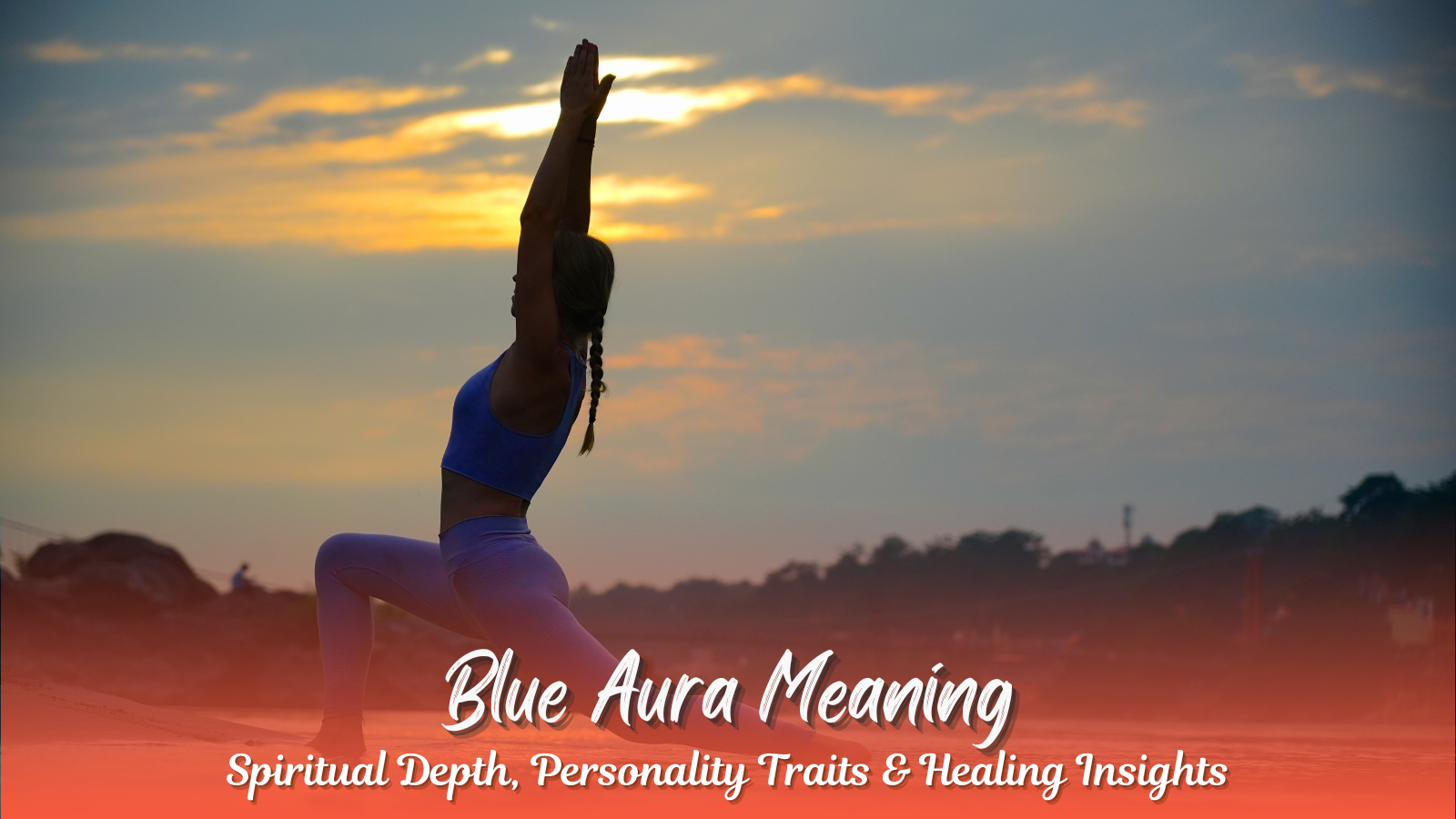
Blue Aura Meaning

Blue Aura Meaning: Spiritual Depth, Personality Traits & Healing Insights

Introduction: Understanding the Mystical World of Auras

In yogic philosophy, every living being radiates an energetic field known as an aura. This subtle light surrounds the body and reflects our emotions, mental state, spiritual evolution and overall health. Among all aura colors, the blue aura is considered one of the most spiritually potent—symbolizing intuition, peace, communication and divine connection.

At Gurukul Yogashala, a traditional yoga school in Rishikesh, students studying meditation, chakra science, pranayama and yoga philosophy often dive deep into aura studies to understand the relationship between energy and consciousness. This article explores the blue aura meaning, personality traits, variations, spiritual significance and how yoga can help you enhance and balance this aura.

What Does a Blue Aura Mean?

A blue aura is associated with clarity, calmness, intuition, honesty and a deep spiritual connection. People with a blue aura often possess a peaceful presence and an ability to communicate truthfully and compassionately.

Core Blue Aura Meaning

  • Strong communication skills
  • High emotional intelligence
  • Natural peace-givers
  • Deep intuition and inner wisdom
  • Spiritual sensitivity
  • Empathy and understanding
  • Desire for truth and authenticity

In yoga, the blue color corresponds to the Vishuddha (Throat Chakra), which governs communication, expression and purity of thought. When this chakra is balanced through yogic practices, the blue aura becomes brighter and clearer.

Aura Color Meanings: Blue in Yogic & Spiritual Science

From a yogic perspective, the blue aura meaning connects deeply with:

1. The Throat Chakra (Vishuddha)

Represents truth, expression, clarity and purity.

2. Calmness & Stillness (Shanti)

People with a blue aura naturally radiate peace and serenity.

3. Emotional Balance

They remain composed even in challenging situations.

4. Higher Intuition

Blue aura individuals often have a powerful inner voice guiding them.

5. Spiritual Wisdom

This aura reflects a soul that seeks truth, wisdom and higher purpose.

At Gurukul Yogashala, students learn traditional pranayama and meditation techniques that help purify the energy body and enhance the aura’s vibrancy.

Blue Aura Meaning Personality (Keyword Section)

People with a blue aura have distinct personality traits that set them apart:

Personality Traits of Blue Aura Individuals

  • Calm, grounded, peaceful
  • Excellent listeners and communicators
  • Natural healers and mentors
  • Deep thinkers
  • Highly intuitive
  • Emotionally mature
  • Honest and trustworthy
  • Spiritual and self-reflective

They often become:

  • Teachers
  • Counselors
  • Yoga instructors
  • Therapists
  • Healers
  • Artists
  • Writers
  • Spiritual guides

A blue aura personality reflects depth, compassion and emotional awareness—qualities that flourish during Yoga Teacher Training in Rishikesh at Gurukul Yogashala.

Variations of Blue Aura & Their Meanings

Every aura color has multiple shades. Here’s what each shade of blue reveals:

1. Light Blue Aura Meaning

A light blue aura indicates:

  • Openness
  • Free-flowing communication
  • Emotional healing
  • Fresh beginnings
  • Optimism and hope

People with a light blue aura are often:

  • Highly intuitive
  • Sensitive to subtle energies
  • Skilled at spiritual communication
  • Naturally creative and expressive

2. Dark Blue Aura Meaning (Keyword Section)

A dark blue aura can have two interpretations:

Positive Meaning

  • Intelligence
  • Deep loyalty
  • Inner strength
  • Highly intuitive (clairvoyant tendencies)

Challenging Meaning

  • Fear of communication
  • Emotional suppression
  • Overthinking
  • Stress or blocked throat chakra

At Gurukul Yogashala, meditation and chanting practices help release emotional stagnation from the throat chakra, bringing balance to darker shades of blue.

3. Blue-Green Aura Meaning

A blue-green aura blends the energy of the heart (green) with the throat (blue).

This aura signifies:

  • Compassionate communication
  • Healing energy
  • Strong intuition
  • Emotional wisdom
  • Empathy
  • Nurturing personality

Blue-green aura individuals are often healers, yoga practitioners and nurturing caregivers.

Yoga, Auras & Energy Healing at Gurukul Yogashala

At Gurukul Yogashala, aura-based teachings are incorporated into:

  • Chakra meditation
  • Pranayama
  • Mudras
  • Mantra chanting
  • Yogic cleansing (Shatkarmas)
  • Yogic philosophy (Samkhya, Upanishads)

Our experienced teachers help students understand how energetic blocks affect aura colors and how yogic practices can restore balance.

Practices That Strengthen a Blue Aura

  • Vishuddha Chakra Meditation
  • Bhramari Pranayama
  • Ujjayi Breath
  • Om Chanting
  • Jala Neti for energetic clarity
  • Journaling & expressive therapy

Each practice enhances inner clarity, emotional balance and spiritual communication.

Signs Your Blue Aura Is Balanced

When your blue aura is strong and clear, you will notice:

  • Calm and steady energy
  • Clear communication
  • Emotional stability
  • Strong intuition
  • A deep sense of peace
  • Ability to resolve conflicts gently
  • Confidence in expressing truth

Balanced blue aura people often feel naturally drawn to yoga and spiritual growth.

Signs Your Blue Aura Is Blocked or Dull

When the blue aura becomes cloudy, dim or disrupted, common signs include:

  • Difficulty speaking your truth
  • Fear of judgment
  • Anxiety
  • Excessive overthinking
  • Emotional heaviness
  • Feeling misunderstood
  • Creative block

These issues indicate an imbalance in the throat chakra that can be healed with the right yogic guidance.

How to Strengthen & Cleanse the Blue Aura

Using the wisdom of yoga, Ayurveda and energy science, you can heal and expand your blue aura.

1. Practice Daily Pranayama

Breathwork clears energetic pathways.

Effective techniques:

  • Ujjayi
  • Anulom Vilom
  • Bhramari
  • Nadi Shodhana

2. Meditation for Vishuddha Chakra

Focus on a blue light at the throat center.

3. Chant Mantras

  • Ham (Throat Chakra mantra)
  • Om (Universal sound)

4. Speak Your Truth

Authentic communication strengthens the aura.

5. Spend Time in Silence

Silence expands intuitive awareness.

6. Use Crystals

Some helpful stones:

  • Blue lace agate
  • Lapis lazuli
  • Aquamarine

7. Learn Under an Experienced Yoga School

Studying at traditional schools like Gurukul Yogashala helps deepen understanding of energy healing, chakras, pranayama and meditation.

FAQs

1. What does a blue aura mean?

A blue aura represents calmness, intuition, communication and emotional depth. It reflects a peaceful, spiritual and expressive personality.

2. What is the light blue aura meaning?

A light blue aura symbolizes openness, clarity, emotional healing and heightened intuition.

3. What does a dark blue aura meaning?

A dark blue aura suggests deep intuition and loyalty, but may also indicate stress, emotional suppression or communication blockages.

4. What is the Green blue aura meaning?

A blue-green aura blends heart and throat chakra energies, representing compassion, healing and expressive emotional wisdom.

5. What does blue aura mean in personality?

People with a blue aura are calm, intuitive, truthful, empathetic and spiritually aware.

6. Is a blue aura rare?

A blue aura is moderately common, especially among empaths, healers, teachers, and spiritually aware individuals.

7. Is a blue aura good?

Yes. A blue aura is considered highly positive, symbolizing calmness, truth, intuition and emotional maturity.

8. What chakra is connected to a blue aura?

The Throat Chakra (Vishuddha) is associated with the blue aura, governing communication, self-expression and authenticity.

9. Can your aura change colors?

Yes. Aura colors shift according to your emotional state, chakra balance, thoughts and spiritual evolution.

10. Is a blue aura connected to spirituality?

Absolutely. Blue auras reflect strong intuition, inner wisdom, clairvoyant abilities and deep spiritual awareness.

11. What does a cloudy blue aura mean?

A cloudy or muddy blue aura may indicate suppressed emotions, blocked communication or mental confusion.

12. Can anxiety affect a blue aura?

Yes. Anxiety can dull the blue aura, making it darker or less vibrant due to throat chakra imbalance.

13. Are blue auras sensitive?

People with blue auras are emotionally sensitive, empathetic, and highly intuitive about others’ feelings.

14. What careers suit someone with a blue aura?

Ideal careers include: counseling, teaching, yoga instruction, healing arts, writing, public speaking, coaching and spiritual mentorship.

15. How do you know if you have a blue aura?

You may resonate with blue aura personality traits—calmness, intuition, honesty, spiritual depth—or notice strong communication skills and emotional intelligence.

16. How do you strengthen a blue aura?

Practices like pranayama, meditation, throat chakra healing, chanting Ham, journaling, and expressive therapy strengthen the blue aura.

17. What emotions are linked to a blue aura?

Peace, clarity, compassion, truthfulness, intuition and emotional stability.

18. What does a bright blue aura meaning?

A bright blue aura indicates a highly balanced throat chakra, pure communication, strong intuition and spiritual alignment.

19. What does a navy blue aura meaning?

A deeper navy blue aura often represents deep wisdom but may also signal fear, emotional suppression or overthinking.

20. What stones help strengthen a blue aura?

Crystals like lapis lazuli, aquamarine, sodalite and blue lace agate enhance communication and throat chakra health.

21. Can relationships affect your aura color?

Yes. Emotional bonding, conflicts or communication issues can brighten or dim the blue aura based on energy exchanges.

22. What blocks a blue aura?

Fear of speaking, unresolved trauma, lies, emotional walls and self-doubt block the blue aura.

23. Can a blue aura indicate psychic abilities?

Yes. Blue aura individuals often have strong intuition, clairvoyance and empathetic sensitivity.

24. What does a blue aura say about love and relationships?

Blue aura individuals value honesty, emotional depth, communication, loyalty and spiritual connection in relationships.

25. What foods help balance a blue aura?

Blueberries, herbal teas, coconut water, throat-soothing soups and cooling Ayurveda foods balance the throat chakra.

Conclusion

A blue aura represents peace, truth, intuition, emotional depth and spiritual connection. Whether light blue, dark blue, or blue-green, each shade reveals unique aspects of personality and energy.

Through yogic practices, meditation, pranayama, and guidance from experienced teachers at Gurukul Yogashala, you can strengthen your aura, heal emotional imbalances and deepen your connection with your true self.

Understanding your aura is not just spiritual knowledge — it is a path to self-realization, emotional awareness and inner healing.

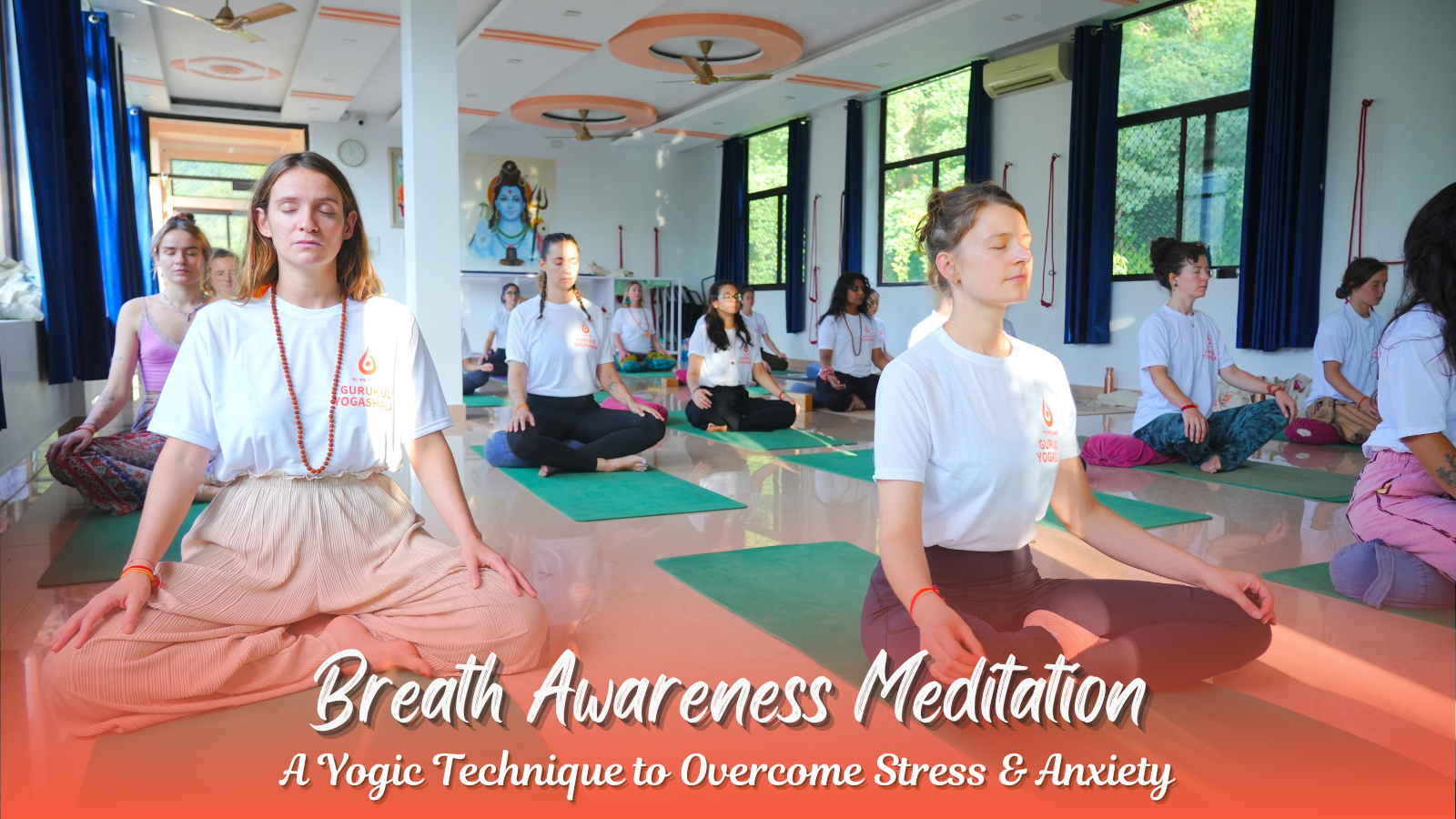
Breath Awareness Meditation

Breath Awareness Meditation: A Yogic Technique to Overcome Stress & Anxiety

Modern life has become increasingly fast-paced, and stress has silently taken over people’s physical, mental and emotional well-being. Even when we understand that worrying about uncontrollable things adds no value, most of us struggle to calm the mind. This is exactly where timeless yogic wisdom becomes your strongest ally. At Gurukul Yogashala, Rishikesh, we preserve and teach ancient meditation practices that bring peace, clarity, balance and inner stability.

One such powerful technique is Breath Awareness Meditation (Prana Dharana)—a simple yet transformative practice that helps release stress and anxiety and harmonize the body–mind connection. Whether you are a beginner or an advanced yoga practitioner, cultivating breath awareness is one of the most effective ways to realign your inner world.

In this detailed guide, you will learn:

  • What Breath Awareness Meditation is
  • How it works to reduce stress
  • Step-by-step instructions
  • Expert-recommended tips
  • Benefits supported by yogic science
  • Why Gurukul Yogashala is the best place to learn meditation in Rishikesh

Understanding Breath Awareness Meditation (Prana Dharana)

Breath Awareness Meditation—traditionally known as Anapanasati—is the yogic practice of observing the natural flow of breath without trying to control it. Breath and mind are deeply interconnected; when the breath is calm, the mind naturally becomes still.

At Gurukul Yogashala, our lineage masters teach this meditation as a foundational practice because it:

  • Reduces mental clutter
  • Activates the parasympathetic nervous system
  • Restores emotional balance
  • Improves clarity, focus, and inner peace

Stress and anxiety originate in the mind, but their symptoms appear in the body. Breath becomes shallow, the heartbeat increases and the mind enters survival mode. Through breath awareness, you learn to reverse this pattern, allowing the mind to relax effortlessly.

Power Breathing Awareness Meditation (Traditional Yogic Method)

Power Breathing Awareness Meditation is a deeper form of breath observation, where you consciously detach from distracting thoughts and anchor your awareness to your inhalations and exhalations. When practiced correctly, this technique slows down the mental fluctuations (chitta vritti) and creates a sense of grounding and calm.

At Gurukul Yogashala, our experienced meditation teachers guide students through both beginner and advanced variations of Power Breathing Awareness Meditation during our 200 Hour Yoga Teacher Training in Rishikesh and meditation electives.

Psychologically, breath awareness reduces emotional turbulence. Spiritually, it creates a doorway to self-awareness and inner silence. Yogic scriptures like the Hatha Yoga Pradipika teach that “when the breath wanders, the mind wanders; when the breath is steady, the mind is steady.”

This is why breath awareness meditation is one of the first practices taught in our Yoga Teacher Training Courses in Rishikesh, especially the 100 Hour, 200 Hour and 300 Hour YTTC in Rishikesh at Gurukul Yogashala.

Step-by-Step Technique for Practicing Breath Awareness Meditation

Follow these traditional steps to practice Breath Awareness Meditation safely and effectively:

1. Get Into a Comfortable Sitting Position

Comfort is essential for meditation. Sit on the floor with a cushion or on a chair if required. Keep your:

  • Spine naturally straight
  • Shoulders relaxed
  • Hands resting gently on your lap

This posture supports the energy flow in the body and helps prevent restlessness.

2. Gently Close Your Eyes and Relax

Closing your eyes helps reduce external distractions. Take a few deep breaths and allow the body to settle. Release tension from:

  • Neck
  • Jaw
  • Shoulders
  • Abdomen

Meditation begins with relaxation, so allow yourself to settle.

3. Shift Your Focus Toward the Breath

Now begin to observe the natural breath. Notice:

  • The temperature of the air
  • The rise and fall of the diaphragm
  • Movements of the nostrils
  • Subtle sensations in the chest and abdomen

Do not force the breath—simply observe.

4. Observe Without Judging

Thoughts will come. This is normal.
Whenever the mind wanders, gently bring your attention back to the breath. Witness your thoughts like clouds passing in the sky—without reacting.

This is the heart of meditation.

5. Continue for 5–15 Minutes

Beginners can start with 5 minutes and gradually increase to 15–20 minutes. With time, the breath becomes softer, the mind becomes calmer and emotional stability improves naturally.

Ayurvedic Perspective on Breath Awareness

Ayurveda teaches that breath awareness pacifies Vata dosha, the dosha responsible for movement, anxiety and nervous system imbalance. When Vata is high, the mind becomes restless.

Breath meditation helps:

  • ground Vata
  • regulate digestion
  • stabilize emotions
  • improve sleep quality

This is why breath awareness is a core practice in Ayurvedic healing retreats at Gurukul Yogashala.

Tips for Incorporating Breath Awareness Meditation Into Daily Life

Building a meditation habit requires patience and consistency. Here are expert yogic tips taught at Gurukul Yogashala:

1. Start Gradually

Small, sustainable steps are better than sudden drastic changes. Begin with 3–5 minutes and extend the duration as your mind adjusts.

2. Stay Consistent

Meditation should be practiced at the same time every day. Morning meditation is ideal because the mind is naturally quieter. Consistency strengthens the mind-body connection.

3. Explore Different Sensory Focal Points

If observing your breath feels difficult on some days, try shifting awareness to:

  • The movement of the diaphragm
  • The feeling of air at the nostrils
  • The expansion of the lungs

4. Practice at the Same Time Daily

Morning is the best (Brahma Muhurta), but practicing before bed can significantly improve sleep.

Each of these anchors supports mindfulness.

How Breath Awareness Meditation Benefits the Body & Mind

With regular practice, breath awareness can transform your physical, mental and emotional well-being. Yogic science explains the following benefits:

1. Reduces Stress Naturally

Breath meditation activates the parasympathetic nervous system, lowering cortisol and calming the mind.

2. Relieves Anxiety & Emotional Turbulence

By slowing down the mind, meditation reduces anxious thoughts and brings emotional clarity.

3. Enhances Concentration and Mental Focus

Consistent practice stabilizes attention and improves cognitive function—making it beneficial for students, professionals, and spiritual seekers.

4. Increases Self-Awareness

Breath is a mirror of the mind. Observing it daily deepens awareness of emotions, triggers and thought patterns.

5. Strengthens Mind–Body Connection

Meditation regulates breathing patterns, balances the nervous system and improves overall health and energetic alignment.

Who Should Practice Breath Awareness Meditation?

Breath Awareness Meditation is safe for:

  • Students
  • Working professionals
  • Parents
  • Senior citizens
  • Beginners in yoga
  • People experiencing stress, anxiety, or sleep issues

It is gentle, accessible, and beginner-friendly.

Why Learn Breath Awareness Meditation at Gurukul Yogashala?

Gurukul Yogashala is one of the most traditional, authentic yoga schools in Rishikesh. Our teachings are rooted in the classical Gurukul system, integrating:

  • Traditional Hatha & Ashtanga Yoga
  • Meditation & Pranayama
  • Ayurveda-based lifestyle practices
  • Yogic philosophy, alignment & ancient techniques

Our yoga teacher training courses in Rishikesh (100, 200, 300 & 500 Hours) are designed to help students adopt yogic practices as a lifestyle—not just a routine.

Our lineage teachers bring decades of experience, ensuring you receive guidance backed by tradition, knowledge and real-world mastery.

Breath Awareness Meditation at Gurukul Yogashala

At Gurukul Yogashala, every meditation technique — including breath awareness — is taught with:

  • Experienced teachers with decades of yogic training
  • Authentic teachings from Hatha Yoga & Pranayama scriptures
  • Safe and structured guidance
  • Personalized corrections & support
  • Traditional Himalayan yogic lineage

We integrate meditation with:

  • Yoga Philosophy
  • Pranayama
  • Mantra Chanting
  • Asanas
  • Yogic Psychology
  • Ayurveda

This holistic approach makes Gurukul Yogashala one of the best traditional yoga school in Rishikesh for those seeking stress relief, spiritual growth and yogic understanding.

Frequently Asked Questions (FAQs)

1. How does Breath Awareness Meditation reduce stress?

Breath Awareness Meditation activates the relaxation response, slows down the nervous system, reduces cortisol levels and brings calmness to the mind—making it highly effective for stress relief.

2. Can beginners practice Breath Awareness Meditation?

Yes. It is one of the simplest forms of meditation for beginners. Start with 5 minutes and increase gradually.

3. How long should I practice daily?

For best results, practice 10–15 minutes daily. With consistency, even 5 minutes can create noticeable changes.

4. Can meditation help with anxiety?

Absolutely. Breath meditation slows down overwhelming thoughts, improves emotional balance, and reduces anxiety naturally.

5. Why learn meditation at Gurukul Yogashala?

Gurukul Yogashala offers traditional, lineage-based meditation training guided by expert teachers in Rishikesh—the yoga capital of the world.

Conclusion

Breath Awareness Meditation is one of the most powerful yogic tools to manage stress, reduce anxiety, improve focus, and elevate overall well-being. With consistent practice, the mind becomes calmer, emotions become balanced and the practitioner develops excellent mental clarity.

If you wish to deepen your understanding of meditation, yoga philosophy and traditional breathwork, Gurukul Yogashala in Rishikesh offers transformative yoga teacher training india based on authentic Vedic principles.

Begin your journey into mindfulness and traditional yoga wisdom with Gurukul Yogashala—where ancient knowledge meets modern practice.

namaste-meaning-yoga

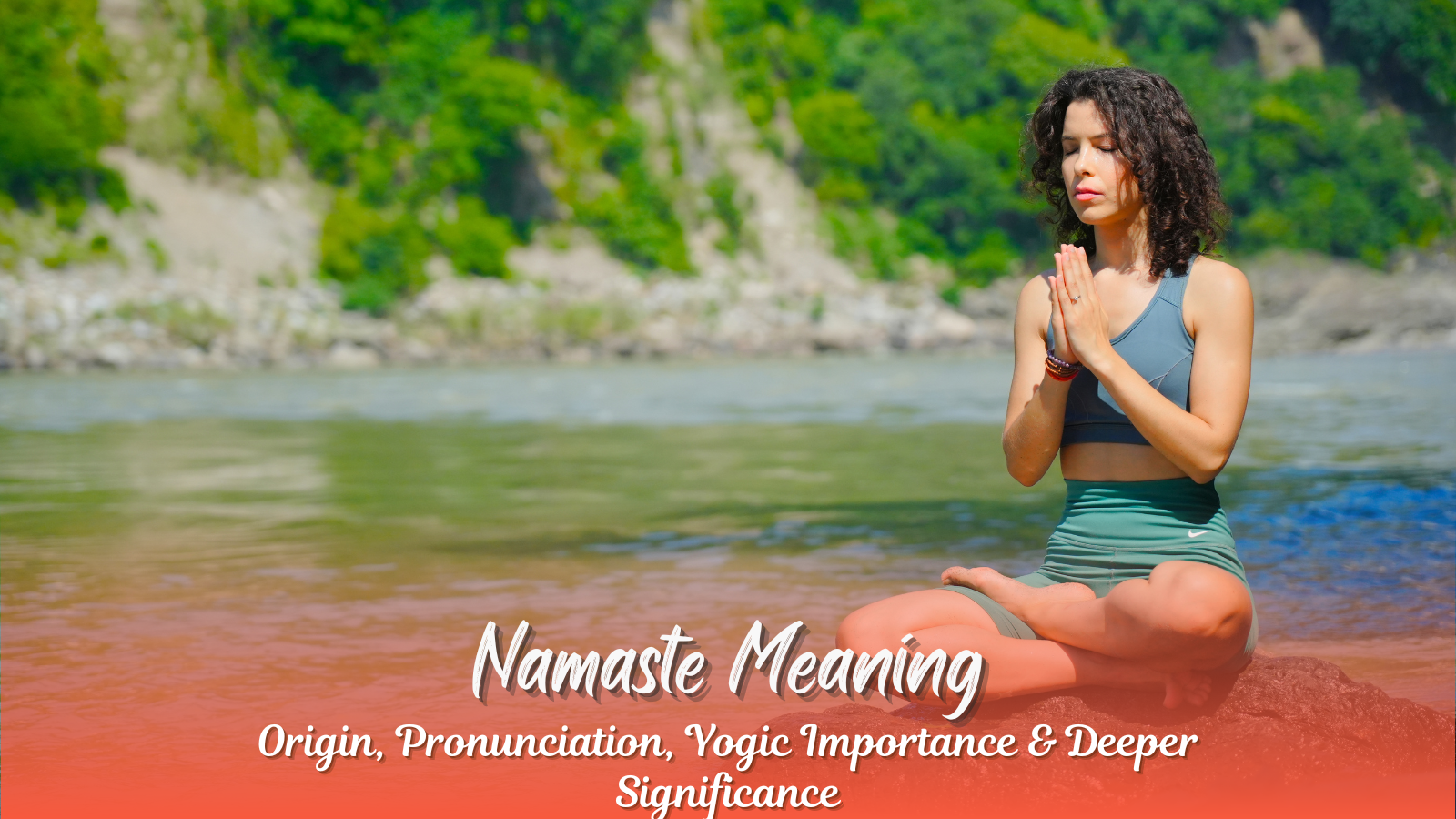
All About Namaste Meaning, Origin, Pronunciation, Yogic Importance & Deeper Significance

Namaste is one of the most recognized and sacred gestures in Indian culture. It is more than a greeting—it is an acknowledgment of the divine essence in every being. In the yoga tradition, Namaste is a symbol of humility, interconnectedness and conscious awareness. Whether used in the yoga shala, during meditation, in temples or in everyday interactions, this gesture embodies respect, gratitude, and unity.

At Gurukul Yogashala, we begin and end every yoga class with Namaste—not as a ritual, but as a profound reminder of yogic values. The gesture serves as a bridge between teacher and student, between self and the universe, between the physical and the spiritual.

In this detailed exploration, we dive into the meaning, pronunciation, symbolism and yogic effects of Namaste. This article is crafted based on our decades of experience as a traditional yoga school in Rishikesh, honoring both classical teachings and experiential wisdom.

What is the Meaning of Namaste

Namaste Symbol Meaning comes from the Sanskrit words:

  • “Namaḥ” → bow, adoration
  • “Te” → to you

Meaning: “I bow to the divine in you.”

“The divine light in me acknowledges and respects the divine light in you.”

It is performed with Anjali Mudra (palms together at the heart center), which expresses:

  • humility
  • gratitude
  • unity
  • connection between two souls

Deeper Yogic Meaning:

In yogic philosophy, Namaste signifies the recognition that all beings are interconnected. When you say Namaste from the heart, you acknowledge the sacredness, goodness and consciousness in the other person.

The gesture formed while saying Namaste is called Anjali Mudra, where palms join in front of the heart center (Anahata Chakra). This mudra is an expression of reverence, balance and unity.

✔ How to Perform Namaste Correctly

  1. Sit or stand comfortably with an erect spine.
  2. Bring both palms together.
  3. Place the thumbs gently against the sternum.
  4. Keep fingers pointing upward.
  5. Close eyes if guided.
  6. Whisper or internally say: NAH-muh-stay.

When performed with mindfulness, this simple gesture connects the practitioner to inner stillness, devotion, and self-awareness.

Symbolism and Spiritual Implications

Namaste is not just a physical gesture; it symbolizes profound yogic principles:

  • Union of Body, Mind & Soul

Bringing palms together balances the masculine and feminine energies (Shiva & Shakti).

  • Alignment of the Brain Hemispheres

The gesture integrates both hemispheres, enhancing coordination, clarity and emotional balance.

  • Activation of the Heart Chakra

When the thumbs gently touch Anahata Chakra, the heart opens, radiating compassion and love.

  • Harmonizing Ida & Pingala Nadis

Joining the hands symbolizes the unification of the lunar and solar energy channels, creating inner harmony.

  • Transmission of Energy

In yogic philosophy, the palms direct pranic flow. Namaste Meaning Yoga creates an energetic loop that stabilizes your aura.

At Gurukul Yogashala, we teach these subtle meanings to help students transform Namaste from a greeting into a spiritual experience.

Pronunciation and Ancient Roots

Namaste is pronounced as:

NAH-muh-stay

Though used widely in India, its origin is deeply rooted in Vedic literature and yogic scriptures. Some ancient interpretations even link the gesture to the sacred vibration of Om, representing creation and universal consciousness.

Yogic Context of Namaste

In yoga, Namaste symbolizes the acknowledgment of the divine light within each individual. Teachers use it to set the tone of the class—invoking presence, humility and connectedness.

According to yogic philosophy:

“Yoga is the union of individual consciousness with universal consciousness.”
Namaste is the gesture that expresses this union.

The moment palms meet, the practitioner becomes centered, aware and receptive. In classrooms at Gurukul Yogashala, this gesture builds a shared intention between teacher and student.

Effects of Namaste During Different Stages of Yoga Practice

Namaste is not limited to greetings. It plays a role across various stages of yoga practice, each with its own significance.

1. At the Beginning of Practice: Setting Intention

Performing Namaste before beginning asanas:

  • Aligns mental and physical energies
  • Helps the nervous system prepare for practice
  • Encourages grounding and focus
  • Activates the parasympathetic nervous system

It creates an entry point into the “yogic state,” shifting the practitioner from the external world toward internal awareness.

2. During Yoga Poses: Deepening Presence

Namaste (Anjali Mudra) is used in several foundational asanas:

When performed within a posture, Namaste:
✔ Stimulates subtle energy centers
✔ Helps maintain spinal alignment
✔ Enhances concentration & balance
✔ Deepens breath awareness

This helps practitioners transition from physical exertion to inner stillness.

3. At the End of Practice: Integration & Calm

After completing asanas, Namaste:

  • Normalizes breath and heart rate
  • Calms the nervous system
  • Balances circulating prana
  • Encourages gratitude for the body and teacher
  • Marks the integration of practice

This final gesture gently brings the practitioner out of the yoga journey and back into waking consciousness.

At Gurukul Yogashala, we encourage students to stay in the Namaste mudra for a few breaths, allowing the benefits of practice to settle deeply.

Namaste & Body Placement: Different Positions, Different Effects

Namaste can be performed in front of different chakras, each with unique effects:

1. In front of the Forehead (Ajna Chakra)

  • Enhances intuition
  • Strengthens inner guidance
  • Supports awareness and decision-making

2. In front of the Throat (Vishuddha Chakra)

  • Improves communication
  • Enhances clarity in speech
  • Opens self-expression

3. In front of the Heart (Anahata Chakra)

  • Develops compassion
  • Strengthens emotional stability
  • Harmonizes relationships

At Gurukul Yogashala, students learn to explore these subtle variations to deepen their yogic experience.

Applying the Meaning of Namaste in Daily Life

Namaste is not confined to yoga mats or spiritual gatherings—it is a lifestyle.

When applied daily:

✔ It cultivates humility
✔ Reduces ego-driven reactions
✔ Enhances mindful communication
✔ Strengthens emotional intelligence
✔ Encourages compassion & unity

Namaste helps practitioners recognize divinity in others and themselves, transforming relationships and inner dialogue.

You don’t have to bow to everyone externally—but cultivating the attitude of Namaste leads to greater inner peace, balance, and emotional grounding.

Namaste at Gurukul Yogashala – A Living Tradition

At our traditional yoga school in Rishikesh, Namaste is an embodiment of our teaching philosophy. Every class begins and ends with this sacred gesture. It:

  • Honors the lineage of yoga
  • Connects teacher and student
  • Establishes sacredness in each session
  • Reinforces yogic values of respect, gratitude, and oneness

Our students learn not only the physical gesture but also the emotional and spiritual depth behind it.

Namaste is not performed out of habit—it is performed with full awareness, the way it has been practiced by sages, yogis and teachers for thousands of years.

FAQs

1. What does Namaste truly mean in yoga?

Namaste means “I bow to the divine in you.” In yoga, it symbolizes respect, humility and the acknowledgment of shared universal consciousness.

2. Why do yoga teachers start and end class with Namaste?

Because Namaste establishes connection, sets intention, cultivates gratitude and helps students transition into and out of yogic awareness.

3. Is Namaste the same as Anjali Mudra?

Anjali Mudra is the hand gesture; Namaste is the verbal expression accompanying it. Together, they create a harmonious greeting.

4. What is the spiritual significance of Namaste?

It activates the heart chakra, unites energy channels, quiets the ego and promotes compassion and unity.

5. How should Namaste be pronounced?

It is correctly pronounced as NAH-muh-stay.

6. Can Namaste be used outside yoga class?

Absolutely. Namaste can be used in daily life to express respect, gratitude and mindful communication.

7. Does Namaste have healing benefits?

Yes. It reduces stress, improves focus, balances energy and calms the nervous system.

8. What is the connection between Namaste and chakras?

Depending on palm placement (heart, throat, third eye), Namaste activates different chakras and influences emotional and spiritual states.

9. Why is Namaste significant in Indian culture?

It is a timeless gesture symbolizing unity, humility and reverence, rooted deeply in Vedic tradition.

10. Where can I learn the deeper meaning of Namaste?

At Gurukul Yogashala, students learn traditional yogic philosophy, including the significance of Namaste, as part of Yoga Teacher Training in Rishikesh.

Conclusion

Namaste is far more than a gesture—it is a living philosophy that bridges the external world with inner consciousness. Rooted deeply in yogic traditions, it teaches humility, compassion, awareness and unity. When practiced with intention, Namaste harmonizes the mind, activates the heart chakra and reconnects the practitioner with the essence of yoga itself.

At Gurukul Yogashala, we honor Namaste as an integral part of our lineage and teachings. As a traditional yoga school in Rishikesh and one of the best yoga school in India, we ensure that students not only learn asanas but also the spiritual foundations that make yoga a complete lifestyle. Whether you join our 200 Hour Yoga Teacher Training in Rishikesh, advanced courses or daily asana sessions, Namaste becomes a tool for mindfulness, respect and self-elevation.

Choosing Gurukul Yogashala means learning the authentic meaning of yoga—not just the physical but the emotional, philosophical and spiritual dimensions. Here, the gesture of Namaste becomes a heartfelt reminder that the light in me honors the light in you, creating a sacred atmosphere among students and teachers.

As you carry Namaste into your daily life, let it guide your thoughts, interactions and inner journey. With continuous practice and awareness, this simple gesture transforms into a powerful spiritual discipline—one that embodies peace, connection and universal love.

Namaste from all of us at Gurukul Yogashala—your home for authentic and traditional yoga in Rishikesh.

Benefits of Shatkarma Kriyas

Benefits of Shatkarma Kriyas – A Deep Dive into Yogic Cleansing Techniques

Introduction

If you are practising asanas regularly but still feel stuck—physically, mentally or emotionally—then your body may be asking for something deeper. Yoga is not only about movement; it is about purification. Cleansing the exterior through asanas is important, but purifying the interior is what brings true transformation.

When your internal organs function smoothly, your energy flows effortlessly, your mind becomes clearer and your practice becomes more powerful. However, if your physiological processes are disrupted, it becomes difficult to progress in yoga or experience higher states of awareness.

At Gurukul Yogashala, a traditional yoga school in Rishikesh, students are introduced to the ancient yogic purification practices known as Shatkarma Kriyas. These internal cleansing processes are an essential part of Hatha Yoga and are deeply rooted in yogic scriptures like the Hatha Yoga Pradipika. They are also taught in detail in the 200 Hour Yoga Teacher Training in Rishikesh.

Shatkarma prepares the body for pranayama, meditation, and spiritual awakening. Before discovering the profound benefits of these kriyas, let us decode what they are and how each technique purifies specific areas of the body.

Decoding the Shatkarma Kriyas

The word Shatkarma comes from Sanskrit:

  • Shat = Six
  • Karma = Actions

Thus, Shatkarma means six cleansing techniques.

These powerful yogic kriyas help eliminate toxins (known as ama), balance the doshas, enhance organ function and prepare the mind for deeper yoga practices. The Hatha Yoga Pradipika mentions these kriyas as compulsory for any serious student of yoga.

It is essential to learn and practise them under expert guidance at a reputed yoga school in Rishikesh. Improper practice can cause harm. At Gurukul Yogashala, students learn the classical approach, correct techniques, contraindications and deeper purpose behind each kriya.

Below are the primary Shatkarma kriyas explained in detail.

Types of Shatkarma Kriyas

1. Dhauti Kriya

— Cleansing the digestive tract and upper alimentary canal

Dhauti Kriya purifies the digestive system and removes long-standing toxins.

There are different categories of Dhauti:

● Antar Dhauti

This involves swallowing a long, soft cotton cloth and pulling it out. The cloth absorbs mucus, harmful bacteria and undigested residues from the throat and stomach.

● Varisara Dhauti (Shankha Prakshalana)

A powerful digestive system cleansing practice performed by drinking large quantities of warm saline water and performing specific asanas until the water is eliminated through the anus. It removes toxins, improves digestion and enhances metabolism.

● Danta Dhauti

Cleansing of teeth, gums, and tongue to remove bacteria and improve oral health. Ayurveda considers oral hygiene vital for holistic well-being.

● Vyaghra Dhauti

This practice imitates the way a tiger cleanses its stomach by vomiting undigested food. Practised 3–4 hours after eating, it relieves indigestion and gastric discomfort.

At Gurukul Yogashala, students learn safe and traditional approaches to all Dhauti practices during advanced cleansing sessions.

2. Basti Kriya

— Colon cleansing/ yogic enema

Basti Kriya purifies the large intestine and removes trapped stool, gas and toxins.

There are two major types:

● Jala Basti

The practitioner sits in water up to the navel and uses yogic locks (bandhas) such as Uddiyana and Nauli to draw water into the rectum. This water is then expelled to flush out impurities.

● Sthala Basti (Dry Basti)

A more advanced air-based technique in which the practitioner draws air into the rectum while sitting in specific asanas. The air helps clean the colon and abdominal organs.

Regular Basti practice enhances digestion, reduces bloating and strengthens the abdominal region.

3. Neti Kriya

— Nasal cleansing and purification of the respiratory tract

Neti Kriya purifies the nasal passages, enhances breathing capacity and balances mental functions.

There are two types:

● Jal Neti

A warm saline solution is poured into one nostril using a Neti pot, allowing it to flow out through the other nostril. This clears mucus, dust and allergens.

● Sutra Neti

A thin thread or catheter is gently passed through one nostril and pulled out from the mouth. This technique removes deep-seated blockages and improves sinus health.

Neti helps in the free flow of Prana, making it an essential kriya before pranayama. Sutra Neti is also known to stimulate the third-eye region and enhance mental clarity.

Students at Gurukul Yogashala learn Neti techniques safely and in a guided environment.

4. Trataka Kriya

— Eye cleansing and concentration practice

Trataka is a meditative cleansing technique involving steady, blinkless gazing at a fixed point—usually a candle flame.

Benefits include:

✔ Strengthened eye muscles
✔ Improved concentration
✔ Nervous system activation
✔ Emotional stability

Trataka also enhances intuition and prepares the mind for deep meditation.

5. Nauli Kriya

— Abdominal massage and purification

Nauli is a powerful abdominal churning technique that massages the digestive organs and tones the core.

There are three forms:

  1. Madhyama Nauli – Central isolation
  2. Vama Nauli – Left side isolation
  3. Dakshina Nauli – Right side isolation

Regular Nauli practice:

✔ Strengthens digestive fire (Agni)
✔ Reduces bloating
✔ Improves metabolism
✔ Supports hormonal balance

This advanced kriya is taught systematically at Gurukul Yogashala.

6. Kapalbhati Kriya

— Cleansing the brain and respiratory system

Known as “Skull-Shining Breath,” Kapalbhati cleanses the lungs and energizes the mind.

It involves:

  • Passive inhalation
  • Strong, forceful exhalation

Benefits include:

✔ Improved brain function
✔ Reduced stress
✔ Better lung capacity
✔ Detoxification
✔ Relief from insomnia

Kapalbhati is both a Shatkarma Kriya and a Pranayama, making it one of the most powerful yogic cleansing practices.

FAQs – Shatkarma Kriyas

1. What are Shatkarma Kriyas in yoga?

Shatkarma Kriyas are six yogic cleansing techniques mentioned in Hatha Yoga to purify the body internally. They include Dhauti, Basti, Neti, Trataka, Nauli and Kapalbhati.


2. Why are Shatkarma practices important?

They remove toxins, improve organ function, balance energy, prepare the body for pranayama and support mental clarity. Without Shatkarma, deeper yoga practices become difficult.


3. Can beginners practise Shatkarma?

Beginners should only practise basic kriyas like Jal Neti or Kapalbhati under guidance. Advanced techniques like Nauli, Sutra Neti or Dhauti should only be learned from trained teachers at a yoga school like Gurukul Yogashala.


4. Is Shatkarma safe to do at home?

Only simple kriyas are safe at home. Advanced cleansing practices can cause harm if done incorrectly. Always learn from certified yoga instructors.


5. Does Shatkarma help in spiritual growth?

Yes. Internal purification calms the mind, enhances pranic flow and prepares the practitioner for meditation, pranayama and deeper states of awareness.


6. When is the best time to practise Shatkarma Kriyas?

Early morning (Brahma Muhurta) on an empty stomach is ideal for most cleansing practices.


7. Can Shatkarma cure digestive problems?

Practices like Dhauti, Basti and Nauli significantly improve digestion, constipation, bloating, acidity and overall gut health.


8. What equipment do I need for Shatkarma?

Common items include a Neti pot, catheter for Sutra Neti, clean cloth for Dhauti and saline water. Your yoga school will provide proper tools and training.


9. Is Kapalbhati a Shatkarma or Pranayama?

Kapalbhati is both—a cleansing kriya and a pranayama. It detoxifies the lungs and energizes the brain.


10. Can I learn Shatkarma in a Yoga Teacher Training course?

Yes. The 200 Hour Yoga Teacher Training in Rishikesh at Gurukul Yogashala includes detailed Shatkarma training with demonstrations, safety guidelines and practical sessions.

Final Words

Shatkarma Kriyas hold immense importance in the yogic journey. The internal organs constantly face stress due to modern lifestyle, diet and emotional fluctuations. Without inner cleansing, progress in pranayama, meditation and spiritual awakening remains limited.

Practicing these techniques under trained teachers at Gurukul Yogashala, one of the top yoga school in Rishikesh, provides a safe and structured pathway to purification, balance and transformation. These kriyas help harmonize the mind-body system, preparing practitioners for higher yogic pursuits.

Cleanse the body—and the soul will naturally rise.

Yoga & Ayurveda Tips for Naturally Glowing Skin

10 Effective Yoga & Ayurveda Tips for Naturally Glowing Skin

Glowing skin has always been considered a reflection of inner balance, purity and overall well-being. In Yoga and Ayurveda, beauty is not defined by cosmetics or external treatments—it is the natural radiance that emerges when the body is balanced, the mind is calm and lifestyle aligns with nature.

At Gurukul Yogashala, a traditional yoga school in Rishikesh, we believe true beauty begins within. Through yogic practices, Ayurvedic wisdom, a sattvic lifestyle and mindful living, anyone can develop naturally glowing skin that reflects inner harmony.

In this guide, we share 10 powerful Yoga and Ayurveda-based skin care tips that help detoxify the body, calm the mind and enhance natural radiance from the inside out.

1. Begin Your Day with Yogic Cleansing (Dinacharya Rituals)

In Ayurveda, the morning routine, known as Dinacharya, is considered essential for skin glow and overall health. These ancient cleansing rituals remove toxins (ama), stimulate circulation and prepare the body for the day.

Morning Yogic Cleansing Practices

Tongue scraping – removes toxins and improves digestion
Warm water drinking – flushes the digestive tract
Nasya (nasal oil application) – nourishes the sinuses and promotes pranic flow
Jal Neti – clears nasal passages
Oil pulling – detoxifies the mouth and brightens facial complexion

When practised daily, these simple rituals reduce dullness, clear congestion, and create a natural glow.

2. Hydrate with Ayurvedic Herbal Waters for Radiant Skin

Hydration is one of the strongest pillars of glowing skin—but Ayurveda takes it further by recommending herbal infused waters that purify and cool the body.

Ayurvedic Herbal Waters for Glowing Skin

  • Cumin water – reduces toxins
  • Fennel water – improves digestion & reduces heat
  • Coriander water – promotes clear, soft skin
  • Warm water – improves detoxification
  • Amla water – rich in vitamin C for radiance

Instead of cold water, warm or room-temperature water supports healthy digestion, which directly influences skin clarity.

3. Nourish Your Skin Through Balanced Diet & Ayurvedic Nutrition

Your skin reflects what you eat. A sattvic, nutrient-rich diet naturally enhances radiance and prevents common skin issues such as dryness, dullness and inflammation.

Ayurvedic Foods for Glowing Skin

Ghee – nourishes tissues from within
Amla – boosts collagen
Turmeric – reduces inflammation
Leafy greens – purify blood
Seasonal fruits – hydrate and brighten
Coconut water – improves elasticity

Avoiding fried foods, excessive spices and processed sugar prevents skin breakouts and enhances natural glow.

At Gurukul Yogashala, we emphasize sattvic meals—fresh, light, plant-based foods that promote mental clarity and glowing skin.

4. Practice Yoga Asanas That Promote Natural Skin Glow

Yoga asanas stimulate circulation, improve digestion, balance hormones and support detoxification—all of which contribute to glowing skin.

Best Yoga Poses for Radiant Skin

  • Surya Namaskar – improves full-body circulation
  • Sarvangasana (Shoulder Stand) – increases blood flow to the face
  • Matsyasana (Fish Pose) – opens the chest & throat
  • Trikonasana (Triangle Pose) – enhances digestion
  • Bhujangasana (Cobra Pose) – improves oxygen flow
  • Twisting postures – detoxify internal organs

When practised daily, these asanas naturally reduce dullness, acne, and stress-induced skin issues.

At Gurukul Yogashala, such asanas are part of our daily yoga classes, encouraging a lifestyle that radiates beauty from within.

5. Use Pranayama to Purify and Oxygenate the Skin

Breathwork (Pranayama) is one of the most powerful yogic tools for glowing skin. When you breathe deeply, you increase oxygen flow, reduce stress and purify the blood.

Best Pranayama Techniques for Skin Glow

Kapalabhati – detoxifies the body
Anulom Vilom (Alternate Nostril Breathing) – balances hormones
Bhastrika – boosts circulation
Sheetali/Sheetkari – cools the skin
Deep belly breathing – reduces stress

“Kapala” means forehead—Kapalabhati literally creates a radiant glow on the face.

6. Apply Ayurvedic Skincare Using Natural Herbs & Oils

Ayurveda offers rich herbal remedies that cleanse, nourish and rejuvenate the skin without harsh chemicals.

Ayurvedic Skincare Essentials

  • Turmeric + chickpea flour ubtan – brightens complexion
  • Aloe vera gel – hydrates and heals
  • Rose water – tones and cools
  • Sandalwood paste – reduces inflammation
  • Neem paste – prevents acne
  • Sesame or coconut oil – nourishes deeply

These herbal treatments purify the skin from the surface while supporting internal health.

7. Improve Sleep Through Yogic Relaxation Practices

Beauty sleep is not a myth—your skin regenerates while you rest. Lack of sleep leads to dullness, dark circles and premature ageing.

Yogic Practices for Better Sleep

Yoga Nidra – deep relaxation practice
Meditation before bed
Warm turmeric milk at night
Avoiding screens & heavy meals

Good sleep balances hormones, reduces stress and enhances the natural glow.

At Gurukul Yogashala, evening meditation and relaxation sessions help students restore their natural energy and achieve deeper rest.

8. Manage Stress with Meditation & Mindfulness

Stress directly affects the skin by triggering hormonal imbalances and inflammation. Yoga philosophy says: calm mind = calm skin.

Effective Yogic Stress-Reduction Techniques

  • Daily meditation
  • Mindful breathing
  • Mantra chanting
  • Walking meditation near the Ganga
  • Gratitude journaling

Meditation brings a soft, serene glow to the face—often called the yogic radiance.

9. Cleanse the Body with Ayurvedic Detox & Yogic Kriyas

Toxins (ama) are the root cause of many skin issues. Detoxification helps clear the blood, reduce inflammation and enhance complexion.

Effective Detox Practices

Triphala at night
Warm lemon water in the morning
Simple fasting once a week
Kunjal Kriya (saltwater cleansing)
Sattvic diet

Cleansing improves metabolism, reduces acne and brings a natural shine to the skin.

10. Join Wellness Retreats for Holistic Skin & Health Transformation

A yoga retreat in rishikesh combines nature, healing food, meditation, detox and asana practice—creating a complete transformation in the body and skin.

Benefits of Yoga Retreats for Skin

  • Detoxifies the entire system
  • Reduces stress
  • Improves sleep
  • Enhances digestion
  • Promotes deep relaxation

At Gurukul Yogashala in Rishikesh, students experience:
✔ Ganga-side meditation
✔ Yogic cleansing
✔ Ayurvedic meals
✔ Daily asanas
✔ Pranayama
✔ Nature walks

Such retreats reset your lifestyle and help your natural radiance emerge effortlessly.

FAQs

1. How does yoga help in getting naturally glowing skin?

Yoga improves blood circulation, reduces stress, boosts digestion and balances hormones—factors that directly influence skin glow. Poses like Surya Namaskar, Sarvangasana and twists help purify the body and give the face a natural radiance.


2. Which yoga poses are best for glowing skin?

The best poses include:

  • Surya Namaskar
  • Sarvangasana
  • Bhujangasana
  • Matsyasana
  • Trikonasana
    These asanas enhance oxygen flow, detoxify organs and improve complexion.

3. Can Ayurveda really improve skin health?

Yes. Ayurveda supports natural radiance by balancing the doshas, improving digestion, cleansing toxins and nourishing the skin. Herbs like turmeric, amla, neem, aloe vera and sandalwood are highly effective for skin health.


4. What should I drink for glowing skin according to Ayurveda?

Ayurveda recommends warm water, cumin–fennel–coriander water, herbal teas, coconut water and Amla-infused water for clear and radiant skin.


5. How does stress affect skin glow?

Stress triggers hormonal imbalances that cause breakouts, dullness, and premature ageing. Meditation, pranayama and mindful living—practised at Gurukul Yogashala—help calm the mind and enhance the skin’s natural glow.


6. Does pranayama make skin glow?

Absolutely. Techniques like Kapalabhati, Anulom Vilom, and Bhastrika oxygenate the blood, purify toxins, improve circulation and give the skin a fresh, bright appearance.


7. What Ayurvedic skincare ingredients are best for glowing skin?

Top Ayurvedic ingredients include turmeric, aloe vera, rose water, sandalwood, neem, tulsi and sesame or coconut oil. These herbs calm inflammation, brighten the skin and nourish deeply.


8. Can poor sleep affect skin glow?

Yes. Poor sleep leads to dullness, dark circles and early wrinkles. Practices like Yoga Nidra, meditation and warm turmeric milk before bed improve sleep and skin health.


9. How does detoxification help the skin?

When toxins accumulate in the body, they appear as acne, dullness and uneven skin tone. Ayurvedic detox (Triphala, warm water therapy, sattvic diet) and yogic kriyas cleanse the system, resulting in glowing skin.


10. Can yoga retreats improve skin health?

Yes. 7, 14 and 21 Days Yoga retreats at Gurukul Yogashala Rishikesh include detoxifying meals, asanas, pranayama, meditation and and time in nature—all of which deeply rejuvenate the skin and restore natural radiance.

Conclusion

Glowing skin isn’t just about external treatments—it is a reflection of inner harmony and balanced living. Through Yoga, Ayurveda, mindful habits, and sattvic nourishment, anyone can achieve naturally radiant skin.

At Gurukul Yogashala, we guide students toward a holistic lifestyle rooted in ancient yogic wisdom. When the mind is calm, the body balanced, and the spirit nourished, beauty flows naturally from within.

If you wish to experience this transformation, join our yoga programs and wellness retreats in Rishikesh and discover how traditional yoga brings glow to both skin and soul.

Arm Balance Tips

Protect Your Wrists: Safe Arm Balance Tips for Yogis

When you look at arm balances from a distance, they simply look amazing. However, if you try them out, without understanding the background prep and the nuances, you will be in for a rude shock. Yes, you can seriously injure yourself, while doing arm balances, if you do not do them the right way. That is why, you must join a yoga school in Rishikesh for proper guidance on such postures that require you to hold your own body weight with the help of your arms.

Today, you will gain complete knowledge of various arm balances and how you can acquire the skills to do them safely. Let us delve into the details.

Arm Balances In Yoga

Yoga arm balances are challenging poses that require the practitioner to have a lot of shoulder, arm and wrist strength. These poses mainly involve balancing the entire weight of the body on the hands, while engaging the core muscles. The legs are floating most of the time, in arm balance poses. You will likely gain in terms of a fitter core, improved balance and focus. Some of the most popular arm balance poses that you may come across are Bakasana, Kakasana, Eka Hasta Bhujasana, Vrschikasana and Parsva Bakasana. You can join a yoga teacher training india, to get down to the details.

Most beginners fail to do these arm balances, for lack of strength and power. They also require you to be a bit flexible. However, there are tons of benefits that you can derive from them. One of them is, it sharpens your mental focus. These poses challenge the mind to remain balanced no matter what happens. You can also get the power to face your insecurities, through regular practice of arm balances. Such practices also make you more adaptive to your surroundings. You can now learn about them in complete detail, as a part of the yoga teacher training in Rishikesh.

Why Wrist Health Is Important In Arm Balances?

You have to pay a lot of attention to your shoulders, triceps, forearms and the core if you want to practice arm balances, without stress. However, the wrists are the most important, as they are the point of contact between the body and the floor. If you have never lifted weights then your arms may not be as strong.

However, arm balances can train your upper body strength and help you to navigate through arm balances effortlessly. There are three main things, through which you can keep your wrists happy in various ways, so as to reduce the risk of injuries. They are correct warmups, strengthening exercises, correct alignments and therapeutic exercises. Gurukul Yogashala’s yoga teachers have complete knowledge about the above nuances and will definitely guide you through it.

As a part of the yoga teacher training in Rishikesh, you will learn about the anatomy first. This is extremely important before you embark on a series of practices to enhance your wrist strength. Let us find out how you can go about it.

Wrist Anatomy Decoded

The wrist has 8 small carpal bones, which form the carpus. These are strung together, providing stability. The bottom side of the carpus is concave, thereby creating a channel through which tendons, nerves and ligaments navigate. This is collectively called the Carpal tunnel.

The carpal bones connect to the end of the bones, radius and ulna, along with the five metacarpals. The joint has a web of ligaments, for mobility and stability. When you keep the joints mobile, they remain mobile. When you exercise the joints, the gel-like material remains in a fluid condition.

If you stop movement, it solidifies. Thus, you must engage in various exercises to keep the wrists functioning smoothly. In Hatha Yoga, joint health gets a lot of importance, as it helps in achieving finesse in your poses. Learn about these through diagrams at Gurukul Yogashala, as a part of their 200 hours yoga teacher training in Rishikesh.

How To Prepare The Wrists With Warm-Up Exercises?

Here are a few warm-ups as suggested by the yoga school, that will keep your wrists mobile, so that you can develop their strength with better engagement.

  • Wrist Rotations – You can stretch the arms in front of you and rotate the wrists towards the left and right. This is an excellent way to mobilize the wrists.
  • Anjali Mudra – This is another important practice to strengthen the wrists. You can start by sitting with your arms on a table for support. Press the palms against one another, while allowing the elbows to rest on the table. Slowly, you can lower your hands towards the table and that is when you feel a stretch.
  • Hand Lifts – You can also practice hand lifts, by keeping your hands on a table, with the hands hanging downward from the free edge. A rolled up towel underneath the wrists can make it better. While keeping the fingers free, you can just rotate your hands upwards and then come back.

These are excellent preparatory exercises for the wrists, before you embark on the arm balance journey.

Proper Alignment In Arm Balances

Alignment is very important, when it comes to arm balances. Take the example of Bakasana. It is the easiest one of the lot. If you can get through the Bakasana, without any injuries, then you can do any of the arm balances without any difficulty.

You can start in the Malasana pose, with knees jutting out and the feet flat on the ground. Keep the hands on the ground before you, with the palms in contact with it.

Various Techniques For Arm Balance – By Yoga Experts

A few techniques that should help you with your arm balances are:

  • Improving your wrist flexibility
  • Knowing where to exert your weight
  • Building scapular strength
  • Learning core stability
  • Adding mindfulness to the movements

These are a few techniques that should help you to get your arm balances right. Learn about the above in more detail at the yoga school in Rishikesh.

FAQS

1. How do you protect your wrists during arm balances?

Protect your wrists by warming up with gentle stretches, spreading the fingers wide, pressing evenly through the palms and keeping the shoulders aligned over the wrists. Strengthening the forearms and engaging the core also reduces excess pressure.


2. Why do my wrists hurt during arm balances?

Wrist pain occurs when too much weight collapses into the palms, poor alignment, weak forearms, tight shoulders or lack of warm-up. Incorrect hand placement or overuse can also strain the wrist joints.


3. How can I strengthen my wrists for yoga?

Practice exercises like wrist circles, fist push-ups, fingertip holds, forearm strengthening and weight-bearing drills such as tabletop and Plank Pose. Regular mobility work improves flexibility and endurance.


4. Are arm balances safe for beginners?

Yes, arm balances are safe for beginners when practiced with proper alignment, warm-up, wrist preparation and guidance from a certified instructor. Starting with beginner-friendly poses like Crow Pose reduces risk.


5. Should I avoid arm balances if I have wrist pain?

If your wrists hurt, avoid intense arm balances until the pain reduces. Rest, stretch gently, strengthen the wrist muscles and correct alignment before attempting weight-bearing poses again.


6. How can I improve my wrist mobility for yoga?

Practice daily mobility drills such as flexion/extension stretches, palm lifts, wrist waves and forearm stretches. Slow, controlled movements increase joint range and reduce stiffness.


7. What are the safest arm balances for weak wrists?

Beginner-friendly and wrist-safe options include Dolphin Pose, Forearm Crow and modified Crow using blocks. These poses reduce pressure by shifting weight toward the forearms and shoulders.


8. Does wrist alignment matter in arm balances?

Yes. Proper wrist alignment—fingers spread, weight evenly distributed, shoulders stacked over wrists—prevents strain and enhances stability. Misalignment is a major cause of pain and injury.


9. How long does it take to build wrist strength for arm balances?

With consistent practice, most yogis notice improved wrist strength in 2–6 weeks. Progress depends on regular warm-ups, alignment awareness and strengthening exercises.


10. Can yoga props help protect the wrists?

Absolutely. Blocks, wedges and straps reduce pressure, improve alignment, elevate the palms and make arm balances more accessible for those with wrist sensitivity.

Conclusion

At Gurukul Yogashala, during the asana practice and alignment practices, the teachers and the gurus understand your problems related to alignments. As a part of the teacher training courses, you can understand how to avoid injuries yourself and also for your students. Gurukul Yogashala is a Yoga Alliance registered yoga school, where you will learn alignments, adjustments and modifications in complete detail, not just related to arm balances, but to all poses. This will help you to initiate a safe practice in your sessions.

10 Homemade Juices to Strengthen Your Immune System Naturally

10 Homemade Juices to Strengthen Your Immune System Naturally

Discover easy homemade juices recipes that naturally strengthen your immune system. Fresh, nutritious and packed with vitamins for daily wellness. Every day, our bodies are exposed to different microbes in the air, water and soil. And, some of these are disease-causing, as well. However, we do not fall ill daily, as the immune system inside our bodies is at work 24×7. The immune system fights off pathogens such as bacteria, fungi, viruses and parasites, to name a few. You will get a sneak peek at the human immune system, in the yoga anatomy and physiology classes held at the best yoga school in Rishikesh, like Gurukul Yogashala.

Our immune system helps in fighting with several disease-causing organisms, counteracts changes in the body and also helps in detecting toxins. If you have a strong immune system, you can fight against foreign pathogens, thus leading to fewer infections in the daily course of your life. A healthy immune system is mainly responsible for generating white blood cells and proteins that fight foreign toxins. Those with a strong immune system will also notice that their wounds heal quickly.

Additionally, you will always feel energetic, if your immunity is strong. You can also make your immune system strong by exercising regularly. If that is not your choice, you can also do yoga. You can head to the hills, for yoga in Rishikesh, to recuperate from the cluttered life in the cities. It is there that you will learn about the nuances related to yogic practices, clubbed with a healthy lifestyle.

You can enhance your immunity through better lifestyle choices and food habits. Today, we will discuss the edibles which you can include in your daily diet, so as to boost your immunity. But, first, let us understand how nutrition plays an important role in boosting immunity.

Role Of Nutrition In Boosting Immunity

Gurukul Yogashala is one of the prominent yoga schools in Rishikesh, where you can learn about the background of yoga and the role of food in enhancing one’s vital capacities. As one goes about their daily tasks, nutrition often takes a back seat. Most of you are busy chasing work deadlines or meeting family commitments. So, more often than not, you will grab a burger or unhealthy sandwich in the morning and rush to work. Additionally, most working people eat unhealthy, fried snacks at work. Ayurveda is the science, which leads the yogic realm. And there are many different food choices mentioned underneath, that you will get to follow at the yoga school in India.

The students and attendees, who enrol for the 200 hour yoga teacher training in India or the retreat courses lead a Sattvic lifestyle, which relies on nothing but healthy and nutritious food. Some of the nutrients that are considered important for ingestion on a daily basis are Vitamin C, Vitamin D, antioxidants and probiotics. You can get loads of these nutrients from foods like oranges, lemons, grapefruits, strawberries, tomatoes, beets, spinach, kale and kefir, to name a few. Juices play an important role in turning your health around. Learn about the top ones here.

Homemade Juices As Immune-Boosting Agents

●      Green Apple, Carrot and Orange Juice

This is a great combination if you are looking towards boosting your immunity. You get a generous dose of Vitamin C from apples and oranges. And, Vitamin A comes from carrots. It is present in carrots in the form of beta-carotene. Additionally, carrots also contain Vitamin B6, which helps in the growth and expansion of immune cells and antibodies. To add to it, oranges also supply the necessary reserves of Vitamin B9.

●      Beet, Carrot, Ginger and Apple Juice

This juice contains three root vegetables and is one of the perfect ones to boost your immunity. With all those anti-inflammatory ingredients, no inflammation will show up, if you happen to come in contact with bacteria or viruses. Say ‘Goodbye’ to colds, flu and coughs. Ginger is another wonder ingredient which can positively impact patients, who are suffering from rheumatoid arthritis.

●      Kale, Tomato and Celery Juice

Kale is the base ingredient of many healthy green juices. The tomatoes simply add that tang. You will get a generous supply of magnesium, manganese, potassium, Vitamin A, Vitamin B-6, Vitamin B-9, Vitamin C and Vitamin K, from the above juice. The above nutrients are known for their anti-inflammatory quality, thus boosting your immune levels.

●      Strawberry and Kiwi Juice

Those with a sweet tooth, and fond of fruits will love this juice. Packed with Vitamin C, it takes just one blender to puree the fruits and generate a glassful of healthy juice. You can also add probiotic yogurt, to boost the Vitamin D reserves. Probiotics also help in increasing the number of healthy gut bacteria. The juice is packed with numerous nutrients including calcium, manganese, phosphorus, Vitamin B1, B6 and Vitamin B9.

●      Strawberry and Mango Juice

This is another sweet, but healthy concoction that anybody would love in the summer. And it is a very healthy way to satisfy your cravings. The mangoes have plenty of Vitamin D, while the extra almond milk that you can add, supplies a generous dose of antioxidants. Additionally, the almond milk also contains calcium and Vitamin E.

●      Watermelon Mint Juice

Watermelons are very nutritious and delicious to the core, and loved by all. Moreover, they also contain Vitamin C and arginine. These nutrients can give a huge boost to the immune system. The heavy water content is a bonus, as the human body is mostly made up of water. You can make juice with the fruit pieces and fresh leaves, to add a dash of minty flavour to the juice. Moreover, you can even carry it with you, wherever you go.

●      Celery Juice

This is another very popular immunity-boosting juice that you can go for, in your busy life. One of the main reasons, behind a lack of immunity, is less water in the body. Celery, on the other hand, is 94% water. So, all those of you, who are bored with plain water, can have it. It is a healthier as well as a tastier option. The students who undertake the yoga teacher training india also get to have such wonderful concoctions as long as they stay on the yoga school premises.

●      Tomato Mint Juice

This is another healthy and tasty juice, which can make you healthy and your immune system strong. The juices extracted from these wonder vegetables and greens, supply the body with huge amounts of antioxidants and also regulate digestion. Furthermore, tomatoes are rich in Folate, Vitamin C and potassium. It aids in immune function and also supports mental health. So, you can go for it, anytime.

●      Cucumber, Kale and Spinach Juice

If it’s winter, then this is something you just cannot miss. Juice up the above ingredients in a blender and have it. This healthy drink will give a huge boost to your health in the winter months. Cucumber provides that much-needed hydration, while Kale and Spinach have Vitamin C, K, Folate, Iron, Potassium and Zinc. These are great immunity boosters.

●      Orange and Basil Juice

Ayurveda also mentions the use of different varieties of herbs, among which basil is one. And these are the highlights of the winter months. Have them aplenty to boost your immunity. Vitamin C from oranges needs no introduction and basil is a holy herb with loads of benefits. This revitalizing drink is just perfect for good health. Asians consider it an ancient herbal medicine. The antibacterial action also helps prevent fevers.

Incorporating Juices Into Your Routine

You can start the day with the above juices, to give your day a jumpstart. The above juices can also give a kick to your metabolism. Replace your morning tea and coffee with the same. Additionally, you can marinate some of the food that you eat with the above juices, as marinade. Some people are also choosing juices for snacking, today.

FAQ

1. What juice boosts your immune system?

Juices rich in vitamin C, antioxidants and anti-inflammatory compounds boost immunity the most. The best immune-boosting juices include:

  • Orange & lemon juice
  • Amla (Indian gooseberry) juice
  • Ginger–turmeric shot
  • Carrot–orange juice
  • Beetroot–apple juice
    These ingredients support white blood cells, reduce inflammation, and help the body fight infections naturally.

2. What are the best natural juices?

The best natural juices are those made from fresh fruits, vegetables and herbs without added sugar or preservatives. Popular options include:

  • Carrot juice
  • Pomegranate juice
  • Celery juice
  • Beetroot juice
  • Pineapple–ginger juice
    These juices are nutrient-dense and help improve digestion, immunity, skin health and overall wellness.

3. What is the unhealthiest juice?

The unhealthiest juices are highly processed, packaged, or contain added sugars, artificial flavors and preservatives. Examples include:

  • Store-bought fruit cocktails
  • Concentrated sugary juices
  • “Fruit-flavored” drinks
    These juices spike blood sugar, offer low nutritional value and contribute to weight gain and inflammation.

4. What juice burns belly fat?

No juice alone burns belly fat, but certain juices support better digestion, metabolism and fat breakdown. Helpful juices include:

  • Lemon–ginger juice
  • Cucumber–mint detox juice
  • Green juice (spinach, celery, apple)
  • Pineapple juice
  • Aloe vera juice
    These juices help reduce bloating, improve digestion and boost metabolism when paired with a healthy diet.

5. Which juice is best on an empty stomach?

The best juices to drink on an empty stomach are those that detoxify the body and improve digestion. Recommended options include:

  • Warm lemon water
  • Aloe vera juice
  • Amla juice
  • Celery juice
  • Carrot–ginger juice
    These juices cleanse the digestive system, boost immunity and provide a strong energy start to the day.

Conclusion

At Gurukul Yogashala, one of the most renowned yoga school in Rishikesh, you will be able to develop a feeding routine around the above concoctions. And the habit stays on. Join the popular yoga teacher training in Rishikesh and give a healthy direction to your life. Enhance the functioning of your immune system today, and live a healthy and infection-free life thereafter.

Kundalini & The Chakras: A Complete Traditional Guide

Kundalini & The Chakras: A Complete Traditional Guide

Introduction — The Sacred Science of Kundalini

For thousands of years, India has preserved the deepest yogic secrets through its ancient lineages, scriptures and living traditions. Among these sacred sciences, Kundalini Yoga is considered the highest and most transformative path — the path that awakens the dormant spiritual energy within every human being.

In yogic philosophy, Kundalini is described as the divine force of Śakti, resting at the base of the spine, coiled like a serpent, waiting for the seeker’s readiness. When awakened through discipline, purity, mantra, meditation and the guidance of a Guru, this sacred energy rises through the chakras, purifying the physical, mental and spiritual layers of the being, finally merging into Śiva-consciousness at the crown.

At Gurukul Yogashala, Yoga School in Rishikesh our traditional teachers carry this ancient wisdom with deep reverence. Through authentic practices rooted in Himalayan yogic traditions, seekers are guided toward self-realization with patience, purity and divine grace.

Kundalini Yoga is not merely a practice — it is a transformational journey of consciousness, awakening the inner light, expanding awareness and revealing one’s true nature.

What is Kundalini? – The Traditional Understanding

Kundalini (Kuṇḍalinī Śakti) is described in yogic scriptures as the primordial cosmic energy within human beings. The word “Kundalini” comes from the Sanskrit root “kundal”, meaning coiled, referring to the three-and-a-half coils of the spiritual force resting at the Mūlādhāra Chakra.

Traditional texts such as the Śiva Saṁhitā, Hatha Yoga Pradipika, and Gheranda Samhita describe Kundalini as the Mother of Yoga, the inner Guru and the ultimate gateway to liberation (moksha).

Kundalini energy is:

  • The source of life
  • The force behind spiritual growth
  • The power of awareness
  • The essence of prana
  • The key to higher consciousness

When awakened, Kundalini travels upward through the central channel Sushumna Nadi, piercing each chakra until it reaches the Sahasrara, where Śakti unites with Śiva — the union of pure energy and pure consciousness.

This is the true purpose of yoga: union of the individual self with the universal self.

Why Kundalini Awakening is Important

A human being lives only a fraction of their true potential. Our perception is limited, consciousness is fragmented and prana remains confined to lower centers. Kundalini awakening:

  • Expands awareness
  • Awakens intuition
  • Purifies karma
  • Enhances inner strength
  • Activates hidden potentials
  • Connects the practitioner to their spiritual purpose

Kundalini Yoga does not add anything new — it simply reveals what already exists within you.

Who Can Awaken Kundalini?

Traditionally, Kundalini was taught only to disciplined practitioners who lived a sattvic life and practiced under the direct guidance of a Guru. Today, seekers from all walks of life can begin the journey, provided they approach it with:

  • Purity
  • Discipline
  • Patience
  • Devotion
  • Humility
  • Guidance from a knowledgeable teacher

At Gurukul Yogashala, students are trained through a structured, safe and authentic path, ensuring Kundalini rises naturally, not forcefully.


Kundalini Physiology — The Yogic Body

Modern science studies the physical body; yoga studies the subtle body — the energetic dimension beyond material existence.

Kundalini Yoga works through:

  • Chakras (energy centers)
  • Nadis (energy channels)
  • Prana (life force)
  • Bindu (nectar points)
  • Koshas (five layers of existence)
  • Granthis (energetic knots)

Kundalini awakening is possible only when:

  • the nadis are purified,
  • the prana flows correctly,
  • and the mind becomes still through spiritual practice.

The main channel of Kundalini awakening is the Sushumna Nadi, flanked by Ida and Pingala, forming the sacred yogic trinity.

The Seven Chakras — The Sacred Pathway of Kundalini

The chakras are not physical organs but energetic spiritual centers within the subtle body, controlling emotions, awareness, prana flow and consciousness.

Below begins the full rewritten section of each chakra.

1. Mooladhara Chakra — The Root of Existence

Location: Base of the spine
Element: Earth
Seed Mantra: LAM
Color: Red
Deity: Ganesh, the remover of obstacles

Mooladhara is the foundation of physical existence. Here lies the sleeping Kundalini Shakti. This chakra governs survival, stability, grounding and the instinctual mind.

When balanced, you feel secure and connected to life.
When imbalanced, fear, anxiety and instability arise.

Kundalini begins her journey from this sacred root.

2. Swadhisthana Chakra — Seat of Emotions & Creativity

Location: Sacral region
Element: Water
Seed Mantra: VAM
Color: Orange

This chakra governs creativity, emotions, sensuality and fluidity of prana. Blockages here create emotional instability, addictions and creative stagnation.

Purification of Swadhisthana through mantra, pranayama and meditation helps the seeker rise above desires and emotional turbulence.

3. Manipura Chakra — Fire of Transformation

Location: Navel center
Element: Fire
Seed Mantra: RAM
Color: Yellow

Manipura is the chakra of power, will, discipline and transformation. A strong Manipura gives:

  • Confidence
  • Vitality
  • Strong digestion
  • Clarity
  • Courage

This chakra fuels the upward movement of Kundalini.

4. Anahata Chakra — The Heart of Consciousness

Location: Center of the chest
Element: Air
Seed Mantra: YAM
Color: Green

This is the chakra of unconditional love, compassion, balance and inner peace.

Awakening Anahata connects the seeker to higher intuition and divine love.

5. Vishuddhi Chakra — Center of Purification

Location: Throat
Element: Ether
Seed Mantra: HAM
Color: Blue

This chakra governs communication, truth, creativity and purification of prana. A balanced Vishuddhi leads to pure expression and spiritual clarity.

6. Ajna Chakra — The Third Eye of Wisdom

Location: Between the eyebrows
Element: Mind
Seed Mantra: OM
Color: Indigo

Ajna Chakra is the seat of intuition, inner vision and spiritual insight. Activation of Ajna grants:

  • clairvoyance
  • intuitive knowledge
  • deep meditation
  • mastery of the mind

7. Sahasrara Chakra — The Thousand-Petaled Lotus

Location: Crown of the head
Element: Beyond elements
Mantra: Silence

This is the final destination of Kundalini. When Shakti reaches Sahasrara, the practitioner experiences:

  • Samadhi
  • bliss
  • unity consciousness
  • liberation

This is the true goal of yoga.

Nadis — The Sacred Channels of Pranic Flow

In yogic anatomy, Nadis are subtle energy channels through which prana (life force) flows. Though thousands of nadis exist, three are of supreme importance in Kundalini Yoga:

1. Ida Nadi — The Lunar Channel

  • Represents moon, cooling energy, intuition
  • Flows on the left side
  • Controls the parasympathetic system
  • Associated with calmness, creativity, emotions

When Ida dominates, the mind becomes inward, reflective and peaceful.

2. Pingala Nadi — The Solar Channel

  • Represents sun, heat, vitality
  • Flows on the right side
  • Controls the sympathetic system
  • Associated with action, logic, strength

When Pingala dominates, the body becomes active and energetic.

3. Sushumna Nadi — The Central Channel

This is the royal path for Kundalini’s ascent.
Ida and Pingala must be balanced for prana to enter Sushumna.

When prana flows through Sushumna:

  • Meditation deepens
  • The senses withdraw
  • The mind becomes silent
  • Kundalini begins to rise

This is the most sacred moment in a yogi’s journey.

Kundalini and the Human Brain

Ancient yogic texts reveal that the brain has subtle energetic centers that work in harmony with the chakras.
When Kundalini awakens:

  • Dormant brain regions activate
  • Pineal gland (Ajna center) awakens
  • Perception expands beyond the physical senses
  • New neural pathways form
  • Intuition and insight increase
  • Thought patterns dissolve into clarity

Modern neuroscience now confirms many of these effects, proving the depth of ancient yogic wisdom.

The Process of Kundalini Awakening

Kundalini awakening cannot be forced. It must unfold naturally through purification, discipline and divine grace.

1. Purification (Śodhana)

The nadis must be cleansed through:

  • Pranayama
  • Asana
  • Meditation
  • Mudras & bandhas

2. Activation (Uddhāra)

Awakening begins at Mooladhara through practices such as:

  • Moola bandha
  • Ashwini mudra
  • Bhastrika pranayama
  • Kriya Yoga

3. Ascension (Arohana)

Kundalini then rises through the chakras in the Sushumna, purifying each center.

4. Union (Samavesha)

At Sahasrara, union with Shiva-consciousness occurs.
This is enlightenment — the final goal of yoga.

Types of Kundalini Awakenings

There are three classical awakenings:

1. Nadi Awakening

Here the nadis are purified, preparing the path for future ascent.
This is the safe and gradual awakening.

2. Chakra Awakening

Each chakra awakens individually. Sensitivity increases and deep emotional and energetic cleansing occurs.

3. Sushumna Awakening

The most powerful and transformative.
Prana enters the central channel and ascends uninterrupted.

This awakening is considered the true Kundalini rise.

Signs of Kundalini Awakening

The classical signs are described in the Tantras:

  • Blissful sensations
  • Heat or energy rising in the spine
  • Spontaneous breath suspension
  • Enhanced intuition
  • Emotional purification
  • Inner visions or light
  • Deep silence of mind
  • Connection to divine presence
  • Expansion of consciousness

These signs vary according to the seeker’s karma, purity and readiness.

Experiences During Awakening

Depending on one’s mental, emotional and energetic health, experiences may be:

Pleasant:

  • Joy
  • Lightness
  • Clear mind
  • Heightened perception

Challenging:

  • Emotional release
  • Restlessness
  • Heat
  • Sudden shifts in awareness

These experiences are temporary and part of the purification process.

Under proper guidance, the journey becomes smoother and deeply transformational

Kriya Yoga — The Fastest Path to Awakening

Kriya Yoga, passed down through ancient Himalayan masters, is a powerful method that purifies the nadis and accelerates spiritual growth.

Kriya Yoga includes:

  • Breath control (pranayama)
  • Internal locks (bandhas)
  • Psychic gestures (mudras)
  • Energy circulation techniques
  • Chakra concentration
  • Mantra repetition

When practiced regularly, Kriya Yoga harmonizes prana and prepares the seeker for Kundalini awakening.

Bandhas — The Locks of Pranic Flow

Bandhas are energetic locks that guide prana into Sushumna.

1. Moola Bandha

A contraction at the perineum that awakens Mooladhara.

2. Uddiyana Bandha

Abdominal lift that directs prana upward.

3. Jalandhara Bandha

Throat lock that prevents prana from leaking upward.

4. Maha Bandha

All three locks applied together — the king of bandhas.

These practices must be learned with proper instruction.

Mudras — Gestures for Kundalini Activation

Traditional mudras help seal energy and awaken internal awareness.

Important Kundalini mudras include:

  • Khechari Mudra
  • Yoni Mudra
  • Shambhavi Mudra
  • Ashwini Mudra
  • Vajroli Mudra

Each mudra activates specific chakras and enhances meditation.

Diet for Kundalini Awakening

A sattvic diet supports the purification process.

Foods that increase prana:

  • Fresh fruits
  • Vegetables
  • Grains
  • Nuts
  • Seeds
  • Herbal teas
  • Cow’s milk (for those who take dairy)

Foods to avoid:

  • Meat
  • Alcohol
  • Processed foods
  • Excessive spices
  • Overstimulation

Purity of diet creates purity of mind.

Risks of Improper Kundalini Awakening

Improper practice can cause:

  • Emotional imbalance
  • Overstimulation
  • Confusion
  • Energetic discomfort

This is why ancient texts insist on Guru guidance.

At Gurukul Yogashala, students learn Kundalini gradually, safely and with full understanding.

Chakra Sadhana — Complete Yogic Practice

Each chakra is awakened using:

  • Mantra
  • Meditation
  • Pranayama
  • Visualization
  • Yantra
  • Mudra
  • Bandha

Chakra sadhana cleanses karmic impressions and strengthens energetic stability.

The Goal — Union of Shiva and Shakti

The true purpose of Kundalini Yoga is not physical sensation or curiosity.
It is to awaken the sacred energy of Shakti and merge it with Shiva at the crown chakra.

This is the final goal of all yoga.

Conclusion — Begin Your Kundalini Journey at Gurukul Yogashala

Kundalini Yoga is the most sacred, powerful and transformative path of yoga. It awakens the dormant divine energy within, purifies the chakras and leads the practitioner toward ultimate liberation.

But this journey must be approached with purity, humility and proper guidance.
In the spiritual environment of Rishikesh, surrounded by the Himalayas and the holy Ganga, Gurukul Yogashala, best yoga school in rishikesh carries forward the ancient lineage of Kundalini and Chakra teachings with authenticity and devotion.

If you feel called to explore your inner awakening, deepen your spiritual practice and learn traditional Kundalini techniques safely and correctly, the doors of Gurukul Yogashala are always open.

Discover Marma Therapy: Benefits, Techniques & Healing Power

Discover Marma Therapy: Benefits, Techniques & Healing Power

Marma are vital points in the body, described in Ayurveda and Yoga, believed to be areas where vital life force (Prana) flows through subtle channels called nadis. These points are considered junctions of physical, mental and emotional energy. There are traditionally 108 Marmani in the body, which are classified into different categories based on their location, importance and influence on the body’s functions. Marmas are central to Marma therapy, a healing technique that involves the manipulation of these points to balance energy flow, enhance vitality and address physical, mental and emotional health.

Classification: Marmani are categorized into five types:

  • Mamsa (Muscle)
  • Sira (Vascular)
  • Snayu (Ligament)
  • Asthi (Bone)
  • Sandhi (Joint)

There are 107 Marmani, classified based on life-threatening potential and functionality. These points are considered to be places where vital life forces, or prana, can be accessed or regulated. The 108 marma points are mentioned across various classical Ayurvedic texts, including the Charaka Samhita, Sushruta Samhita and Vagbhatta’s Ashtanga Hridaya.

How Marma Therapy is Related to Trauma & Emotional Healing

The Marmas not only correspond to physical health but also play a key role in emotional healing and trauma resolution. Trauma—both physical and emotional—can block or disrupt the flow of energy through the Marmas, leading to dis-ease in the body and mind. When these points are gently stimulated, they can help release emotional blockages and unresolved trauma, facilitating deep healing. By working with the Marmas, practitioners can access the subtle body, where emotional imprints are stored and help the individual regain balance, release suppressed emotions and heal from past wounds. This spiritual and emotional dimension of Marma therapy helps re-align the energy systems, leading to emotional stability and inner peace.

  • Marmani as Gateways: These points connect the body, mind and soul, holding impressions of past experiences. Stimulating Marmani can release emotional trauma, fostering self-awareness and spiritual growth.
  • Emotional Healing: Points like Hridaya Marma (heart) and Nabhi Marma (navel) can alleviate grief and self-esteem issues, respectively by unblocking emotional energy.
  • Spiritual Integration: Techniques like meditation and chanting amplify Marma therapy’s effects, helping align energy systems and promote spiritual consciousness.

History & Significance of Marmani

Marmani have been described in ancient Ayurvedic texts, particularly in the Sushruta Samhita, an important classical Ayurvedic treatise. Historically, these points were studied by healers and martial artists and their knowledge was kept secret, passed down through oral traditions and specialized teachings. The significance of Marmani lies in their holistic impact on the body, mind and spirit, as they link the physical structure with subtle energies. Marmas were used in the past not only for healing but also for combat training and self-defense, where precise strikes to these points could incapacitate an opponent or cause long-term damage.

Trauma Caused by Disturbance of Marmani

When Marmas are disturbed—either due to injury, mental stress or emotional upheaval—they can cause imbalances in the vital energies (Prana, Tejas, Ojas). Such disturbances can result in chronic pain, discomfort, psychological distress or more serious health issues. An imbalance in a Marma point may manifest as mental confusion, physical ailments or emotional disorders. Marma-related trauma often requires specific techniques and therapies to restore balance, alleviate pain and heal the body-mind system.

Physical Effects: Trauma to Marmani, such as Hridaya Marma, can lead to severe conditions like cardiac dysfunction or paralysis.

Emotional Impact: Marmani store emotions and injury can cause anxiety or depression. Therapy helps release blockages and restores balance.

Spiritual Disruption: Damage hinders the flow of Prana (life force), obstructing spiritual growth. Techniques like Marma Chikitsa and pranayama are used to restore harmony.

Treatments & Therapies by Use of Marmani

Marma therapy includes several therapeutic approaches that focus on stimulating or soothing the Marmas to restore balance. These treatments may include:

  • Gentle pressure or massage: Applying specific pressure or massage techniques to Marma points to release blocked energy.
  • Pranayama (Breathwork): Specific breathing techniques to regulate the flow of energy to and from the Marmas.
  • Herbal applications: Oils, pastes, or herbal concoctions are often applied to Marmas to support healing.
  • Sound therapy: Using vibrations or mantras to activate or calm the energy flow in the Marmas.
  •  Panchakarma: Detoxification therapies that target energy blocks in the Marmas.

Techniques for Marma Stimulation

Marma stimulation can be achieved through a variety of techniques. The most common ones include:

  •  Manual Techniques: Gentle massage and circular motions are used to activate Marmani.
  •  Herbal Applications: Oils like Brahmi Taila enhance healing during therapy.
  •  Advanced Tools: Devices like marma sticks ensure precise stimulation.
  •  Digital Pressure: Applying gentle pressure using fingers or thumbs on specific Marma points.
  •  Circular Motions: Using hands or fingers in circular motions to stimulate energy flow.
  • Tapping or Percussion: Light tapping or tapping with specific instruments to awaken or balance the energy in the Marmas.
  • Vibrational Therapy: Sound or energy-based techniques, such as singing bowls, chanting or tuning forks.
  •  Aromatherapy: The use of essential oils to enhance the effectiveness of Marma therapy.

Regional Marmani

Here is a list of the marma points

1. Marmas in the Head

  • Sthapani (Frontal region) Located between the eyebrows (third eye). It influences the mind and intellect.
  • Shankha (Temples) Located on both sides of the forehead. They are important for mental clarity.
  •  Adhipati (Crown of the head) The top of the skull, the marma point of higher consciousness.
  • Talu (Palate) Located on the roof of the mouth. It is connected to speech and communication.
  • Karnaprasrava (Behind the ears) Located just behind the ears, it controls hearing and mental balance.
  • Apanga (Eye region) Around the eyes, affecting vision and perception.
  • Nasya (Nasal region) Located at the nostrils, crucial for breathing and mental clarity.

2. Marmas in the Neck

  • Gulpha (Throat) The throat area, controls voice and communication.
  • Kantha (Throat) Affects the thyroid and parathyroid, involved in metabolism and voice.

3. Marmas in the Chest

  •  Hrudaya (Heart) Located in the chest, related to emotions and overall vitality.
  • Vishuddha (Throat chakra) The center for communication and expression, linked with the thyroid.
  • Anahata (Heart chakra) Located near the heart. Affects emotional health and relationships.
  •  Brahmarandhra (Crown of the head) Represents the highest spiritual center and universal consciousness.

4. Marmas in the Abdomen

  • Nabhi (Navel) Located at the center of the abdomen, linked to digestion and vitality.
  • Swananta (Below the navel) Below the navel, connected to the lower abdominal functions.
  • Stana (Breasts) Involved in the production of energy and nourishment (often associated with lactation).

5. Marmas in the Back

  • Basti (Kidney area) Located on both sides of the lower back, regulating kidney function.
  • Madhyama (Middle of the back) Located in the spine, associated with strength and vitality.
  •  Kati (Lower back) Vital for movement and stability, connected with the hips.

6. Marmas in the Limbs

  • Uttara Basti (Upper limbs) Located in the upper arms, these points are related to upper limb mobility and energy.
  • Chaturmukha (Elbows) Points at the elbows, influencing the arm’s movement and flexibility.
  • Kshipra (Wrists) Located at the wrists, connected with the flow of energy through the hands.
  • Knee (Janu) The knee is a crucial marma point, associated with the strength and flexibility of the leg.
  • Talahridaya (Feet) Located at the soles of the feet, it is a key point for grounding and stability.

7. Other Key Marmas

  • Manibandha (Wrists) Located on the wrist joint, affecting flexibility and dexterity.
  • Karna (Ear) Found near the ear, affecting balance, hearing and communication.
  • Vishuddhi (Throat) Influences vocal cords and communication.
  • Janu (Knee) The knee marma is associated with lower body movement.
  • Talasthana (Feet) A vital point that helps with balance, energy flow and stability.

8. Yoga Therapy & Marma (Asana Explanation)

Certain yoga asanas can directly influence the Marmani by stretching, pressing or aligning the Marmas to promote the flow of Prana and balance. These include:

  •  Savasana (Corpse Pose): For relaxation and energy integration.
  • Paschimottanasana (Seated Forward Bend): Stimulates the spine Marmani, aiding in detoxification and grounding.
  • Setu Bandhasana (Bridge Pose): Works on heart Marmani and stimulates energy flow to the chest and upper back.
  •  Trikonasana (Triangle Pose): Helps open the chest and work on energy in the limbs.

FAQs on Marma Therapy

1. What are Marmani in Ayurveda and Yoga?

Marmani are vital energy points in the body where prana, the life force, flows through subtle channels called nadis.

2. How many Marma points are there in the body?

Traditionally, there are 108 Marma points described in classical texts like the Sushruta Samhita, Charaka Samhita, and Ashtanga Hridaya. Out of these, 107 are located on the body and one is considered the Atma Marma (the energy of consciousness).

3. How does Marma therapy help with emotional trauma?

Marma therapy gently stimulates specific points to release stored emotions, past impressions and energetic blocks. This helps reduce anxiety, stress, emotional heaviness and unresolved trauma, bringing clarity, peace and emotional stability.

4. Can Marma therapy be combined with yoga practices?

Yes. Many yoga asanas naturally activate energy points by stretching or applying gentle pressure. Combining Marma therapy with regular yoga practice increases pranic flow and promotes overall well-being.

5. Is Marma therapy safe for beginners?

Marma therapy is gentle and safe when practiced with proper guidance. Beginners can start with basic points and light pressure.

6. Who can learn Marma therapy?

Anyone interested in healing, yoga, Ayurveda or wellness can learn Marma therapy.

7. What techniques are used in Marma therapy?

Techniques include gentle pressure, circular motions, tapping, herbal oils, pranayama, meditation and sound therapy. Each technique is chosen based on the individual’s needs and the specific Marma being treated.

9. Where can I learn Marma therapy in Rishikesh?

You can learn Marma therapy at a traditional yoga ashram in Rishikesh. Gurukul Yogashala offers workshops under 200 Hour Yoga Teacher Training Course in Rishikesh and an Ayurveda short course covering Marma points, healing techniques and practical applications.

Conclusion

Marma therapy is one of the most effective healing systems in Ayurveda and Yoga. It helps restore balance in the body and mind. It also supports the smooth flow of subtle energy. By understanding these 108 vital points, practitioners can address physical discomfort, emotional blockages, trauma and energy imbalance at a deeper level. Whether practiced on its own or along with pranayama, meditation, sound healing or yoga asana, Marma therapy creates a gentle and effective way to support overall well-being.

For students visiting a traditional yoga ashram in Rishikesh, learning Marma therapy provides a deep understanding of Prana, subtle anatomy and self-healing. Many students who come for Yoga Teacher Training in Rishikesh, India also choose to explore Marma therapy to enhance their teaching skills and deepen their personal practice. If you want to learn more about healing through Ayurveda, you can also join the Ayurveda teacher training course at Gurukul Yogashala, where ancient techniques like Marma Chikitsa are taught in an authentic and practical way.

In simple terms, Marma therapy helps your body feel better, your mind feel calmer, your emotions flow freely, and your inner self feel stronger.

Dincharya

Dincharya & Yoga Lifestyle: Ayurvedic Daily Routine for Health

In Modern fast paced lives, stress, poor habits and lack of movements have become part of our daily life. Slowly, these habits lead to what we now call lifestyle diseases- obesity, diabetes, hypertension and even mental health challenges. Ayurveda and Yoga, two ancient practices of India, remind us that a healthy lifestyle is built on small daily habits. The Sanskrit word Dincharya literally means ‘’daily routine’’. In Ayurveda, Dincharya is a set of mindfulness performed from sunrise to bed time that bring the body, mind and spirit into balance with nature’s rhythms.

When combined with the discipline of yoga, Dincharya becomes a powerful lifestyle tool. It not only supports physical health but also nurtures mental clarity, emotional stability and spiritual growth. This article explores how Dincharya and Yoga Lifestyle can transform your life, one small habit at a time.

What Is Dincharya and Why It Matters

The word Dincharya comes from Sanskrit: Din means day and Charya means routine or discipline.

So Dincharya means a daily routine. This routine consists of self-care practices designed to cleanse and rejuvenate the body and mind. Ayurveda describe dincharya as a living in harmony with the cycle of nature like rising with the sun, eating according to digestion strength, practicing yoga, meditation and maintaining a healthy sleep pattern.

To stay healthy, we need to tune our bodies to the natural cycles of the universe.

Each day, there are two repeating cycles that affect the balance of the three main energies (or doshas) in our body — Vata, Pitta, and Kapha.

These energies dominate at different times of the day:

TimeDominant Dosha
6:00 AM – 10:00 AM           Kapha
10:00 AM – 2:00 PM           Pitta
2:00 PM – 6:00 PM           Vata
6:00 PM – 10:00 PM           Kapha
10:00 PM – 2:00 AM           Pitta
2:00 AM – 6:00 AM           Vata

The ideal daily routine (Dincharya) is designed to work in harmony with these natural cycles to keep the doshas balanced and support overall well-being.

According to Ayurveda following Dincharya helps:

  • Balance the three doshas (Vata, Pitta, Kapha)
  • Improves digestion and immunity
  • Prevent lifestyle disease
  • Maintain mental clarity and emotional stability
  • Support spiritual growth

In simple words, Dincharya is about creating a lifestyle that nourishes the body and calms the mind, instead of draining them.

Why Dincharya Matters in Modern Life

Think about your daily routine—rushed mornings, irregular meals, sitting long hours at work, late nights on screens. These habits slowly weaken your health.

Ayurveda explains that the body is naturally tuned to cycles of day and night. When we align with these cycles, the body heals and stays balanced. Ignoring them creates imbalance, which shows up as fatigue, poor digestion, irritability, or illness.

Dincharya is not about adding more work to your day. Instead, it’s about making small changes that lead to big transformation over time.

Ayurvedic Daily Routine (Dincharya) for Health and Balance

Dinacharya (daily routine) is a traditional Ayurvedic practice that helps maintain good health and balance in the body and mind.

According to Ayurveda: Health is a state of complete physical, mental, social and spiritual well-being and not merely the absence of infirmity or disease.

Here’s a simple outline of Ayurvedic dincharya you can adapt to your own lifestyle:

1. Wake Up Early (Brahma Muhurta)

  • Best time: around 4:30–6:00 AM
  • Why: The air is fresh, prana is high and the mind is naturally calm. Perfect for yoga, meditation and spiritual practice.

2. Cleanse and Hydrate

  • Brush teeth, scrape tongue, wash face, and drink a glass of warm water.
  • This flushes toxins and activates digestion.

3. Elimination

  • Going to the toilet at the same time daily balances digestion and improves gut health.

4. Self-Care Rituals                                                                                              

  • Abhyanga (oil massage for head and body) with warm sesame or coconut oil.
  • Nasya (nasal drops) and neti (cleansing) for respiratory health.

5. Yoga and Pranayama

  • Gentle asanas to stretch the body.
  • Pranayama to energize and balance the mind.
  • Meditation for inner calm.

6. Bathing

  • Take a bath and wear clean and comfortable clothes
  • Apply natural perfume or scent

7. Breakfast (Light and Nourishing)

  • Seasonal fruits, porridge or herbal teas.

8. Work / Study with Balance

  • Take short breaks to stretch and breathe.
  • Avoid sitting for hours without movement.

9. Perform Achamana (mouth wash)

  • Should be done by after meals, after shower, after passing urine, after sneezing, after coming home from outside, after getting up from sleep.

10. Lunch (Main Meal of the Day)

  • Best time: 12–1 PM (digestive fire is strongest).
  • Eat warm, freshly prepared meals.

11. Short Rest / Light Activity

  • A short walk after meals supports digestion.

12. Evening Routine

  • Light dinner before sunset or at least 2 hours before sleep.
  • Gentle yoga, meditation or relaxation practices.

13. Sleep (10 PM – 11 PM)

  • Restful sleep is the best healer.
  • Avoid screens before bed.

This may look simple but by following this daily routine, you can stay in harmony with nature, support your health and promote overall well-being.

The Connection Between Dincharya and Yogic Lifestyle

Yoga is not only about postures—it is about how we live each moment. A yogic lifestyle means living with awareness, discipline and balance.

Some principles of a yogic lifestyle include:

  • Practicing yoga and meditation daily
  • Eating sattvic (pure and nourishing) food
  • Speaking truth and practicing kindness
  • Living mindfully and avoiding excess
  • Respecting nature and living in harmony with it

These habits bring clarity of mind, reduce stress and make life more meaningful.

Small Habits That Create Big Change in Mind & Body

When you combine Ayurveda’s dincharya with yogic principles, transformation becomes natural. You don’t need to change everything overnight. Start with one or two small habits and build from there.

Here are some small daily practices that bring powerful results:

  • Wake up 30 minutes earlier and sit quietly in meditation.
  • Practice 15 minutes of yoga asanas daily.
  • Drink warm water in the morning to cleanse the system.
  • Eat meals at fixed times instead of irregular snacking.
  • Spend 10 minutes in nature—walking barefoot on grass, sitting under a tree or watching the sky.
  • Switch off screens 1 hour before sleep for better rest.
  • Keep gratitude journal—write 3 things you’re thankful for daily.

Each of these habits may feel small but together they shift your energy, health, and mindset in powerful ways.

Yoga for Preventing Lifestyle Diseases

Lifestyle diseases like diabetes, hypertension, heart issues, and obesity are rooted in stress, poor diet, and inactivity. Yoga acts as a preventive medicine because it:

  • Improves flexibility, circulation and digestion
  • Reduces stress through breathing and meditation
  • Balances hormones and immunity
  • Helps manage weight naturally
  • Brings awareness, so unhealthy habits slowly reduce

When yoga is combined with Ayurveda’s dincharya (daily routine), it becomes a complete lifestyle medicine that heals body, mind, and spirit.

How Dincharya Builds a Healthy Mind, Body & Spirit

Ayurveda teaches that health is not just the absence of disease—it is a state of balance and joy. Dincharya is the foundation of that balance. By aligning your routine with nature’s rhythm, you build resilience and energy.

Yoga, when added to this daily discipline, helps you connect body with breath and mind with soul. Together, Yoga and Ayurveda create a holistic lifestyle for physical vitality, emotional well-being, and spiritual growth.

Learn Yogic Lifestyle at Yoga Teacher Training in Rishikesh

If you wish to deepen your knowledge and share it with others, joining a Yoga Teacher Training In Rishikesh can be life-changing. At schools in Rishikesh you can explore:

These trainings don’t just make you a yoga teacher—they help you live yoga off the mat by embracing habits like dincharya and yogic living.

FAQs on Dincharya, Ayurveda, and Yogic Living

1. What is dincharya in Ayurveda?

Dincharya means daily routine. It is a way of living in harmony with nature’s cycles through habits like waking early, eating on time, practicing yoga and sleeping early.

2. How does dincharya help in preventing lifestyle diseases?

By regulating digestion, reducing stress, balancing doshas and improving immunity, dincharya prevents problems like diabetes, obesity, hypertension and fatigue.

3. What is the role of yoga in daily routine?

Yoga keeps the body flexible, mind calm and energy balanced. Adding yoga and pranayama to daily life improves physical and mental health.

4. I am a beginner. Should I start with 200 Hour Yoga Teacher Training?

Yes, the 200-hour TTC is the best choice for beginners. It builds a strong foundation in yoga practice, lifestyle and teaching methods.

5. Can small habits really create big change?

Yes. Habits like waking early, mindful eating and short daily yoga practices create long-term transformation. Small consistent actions shape a healthy and happy life.

Conclusion: Live in Harmony with Nature through Dincharya

In a world where health problems are rising due to poor habits and stress, dincharya and yogic lifestyle are powerful solutions. By following simple daily routines—waking early, practicing yoga, eating mindfully and resting well—you create long-term balance and prevent disease.

Remember, transformation does not happen in a day. It happens when you repeat small healthy habits every day. With patience, discipline, and awareness, you can truly live a joyful, healthy and meaningful life.

Ready to bring balance to your body and mind? Join our 200 Hour Yoga Teacher Training in Rishikesh to learn Ayurveda and Yogic Living deeply.